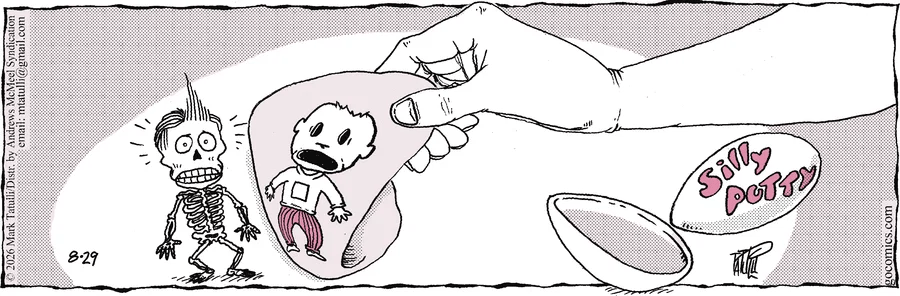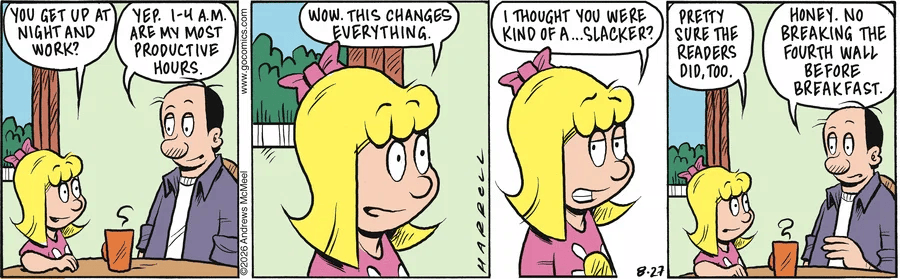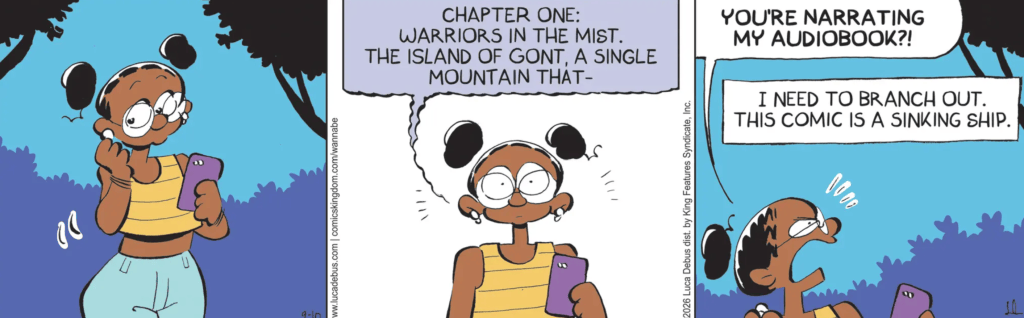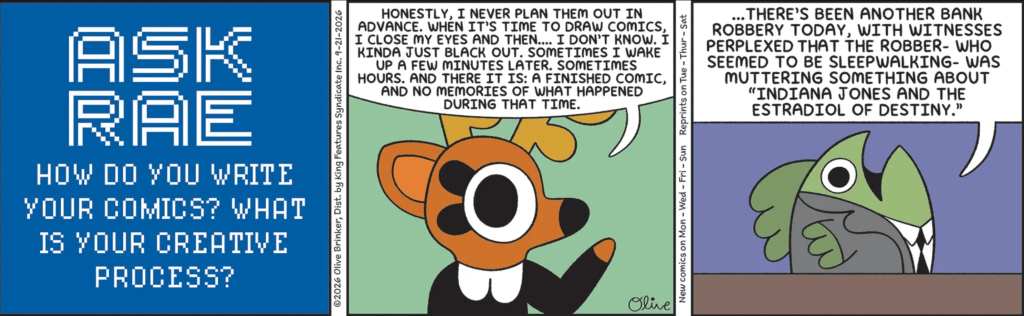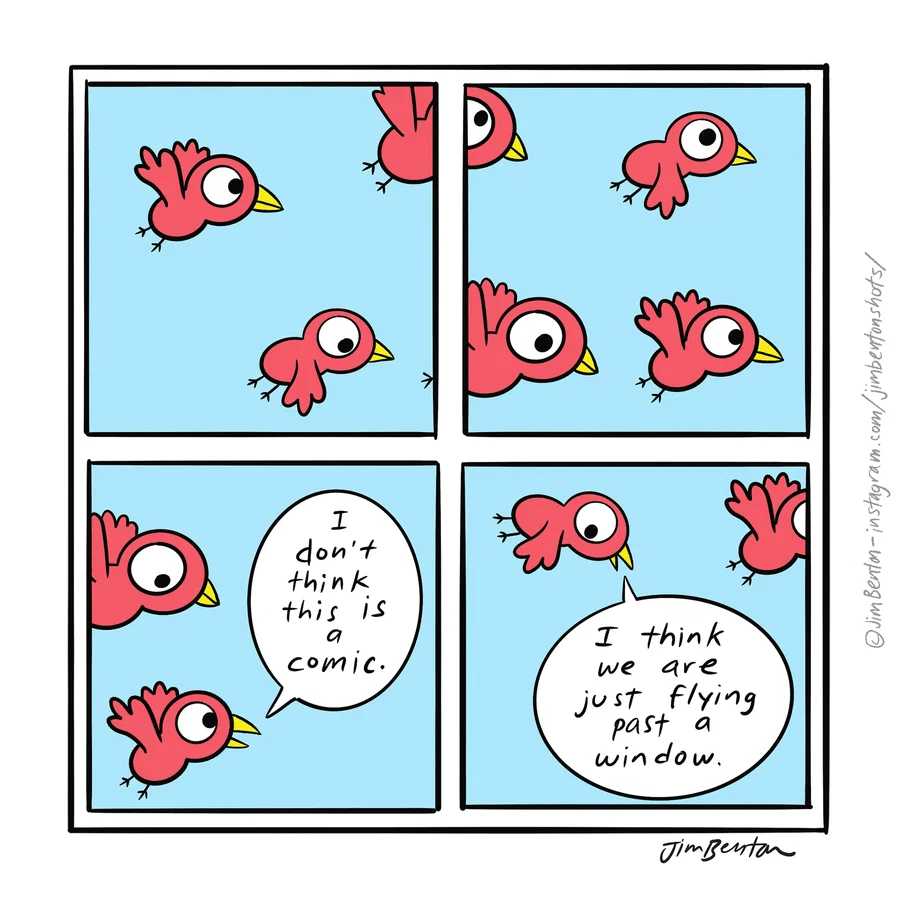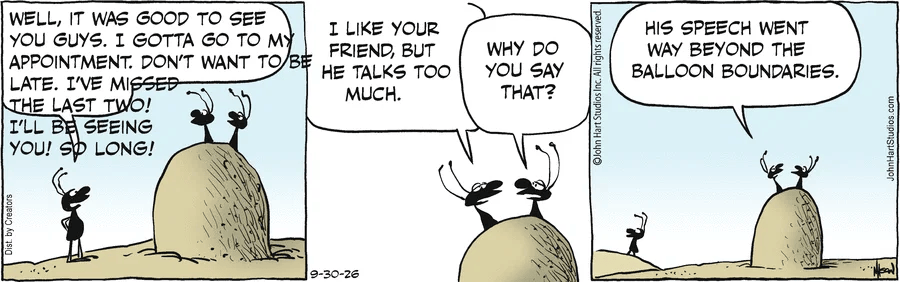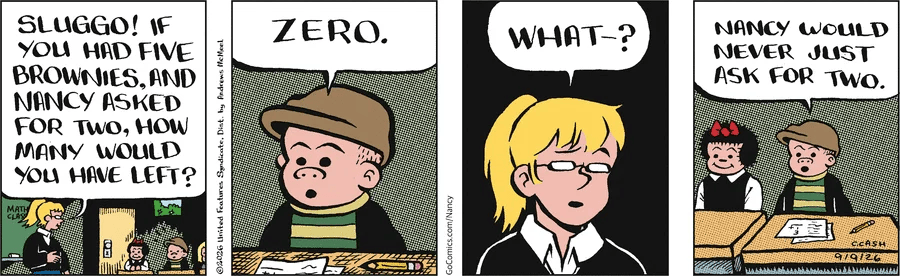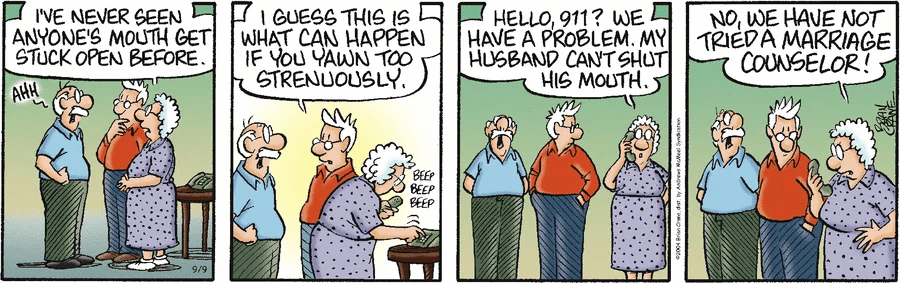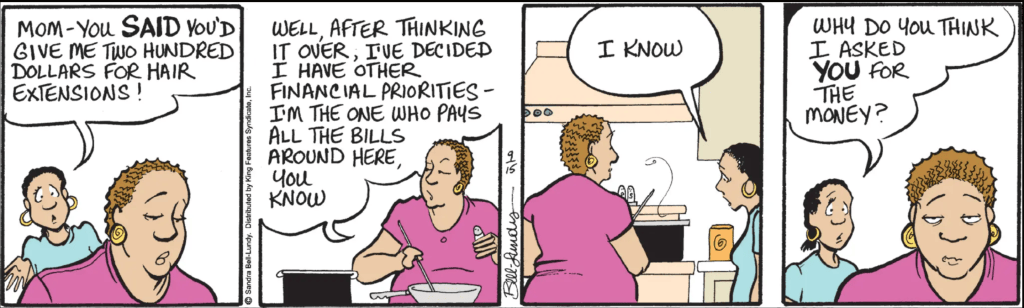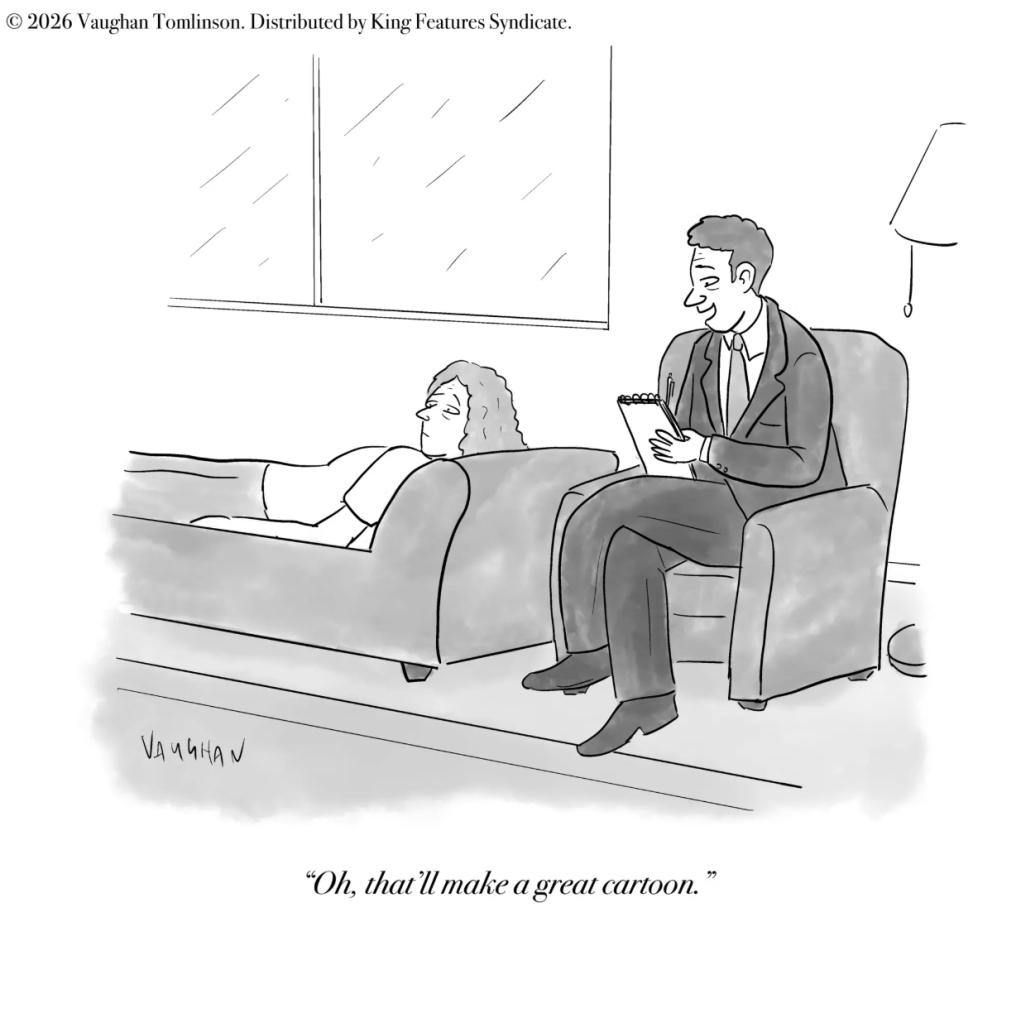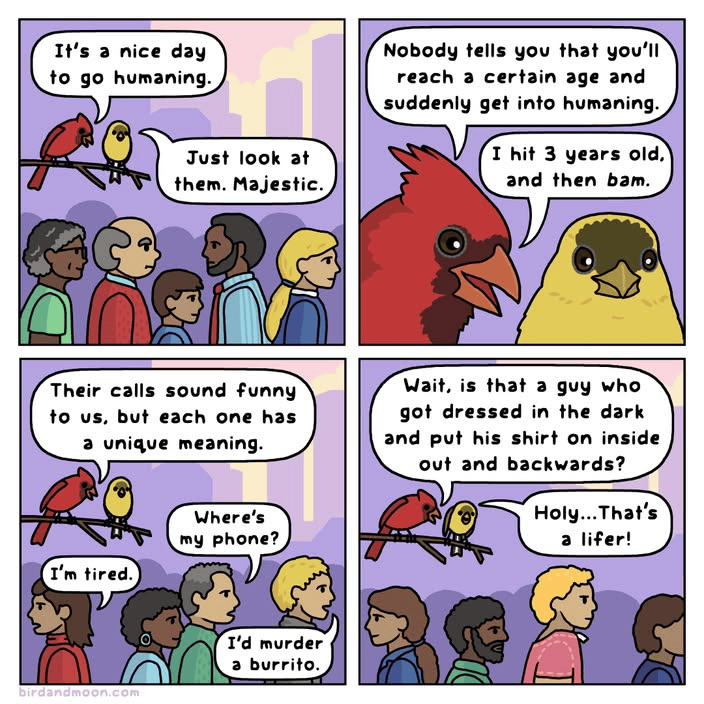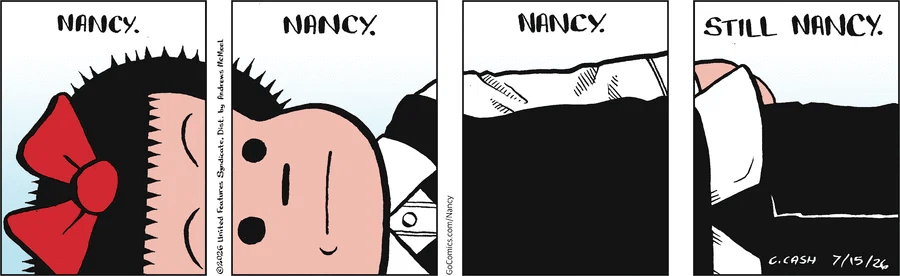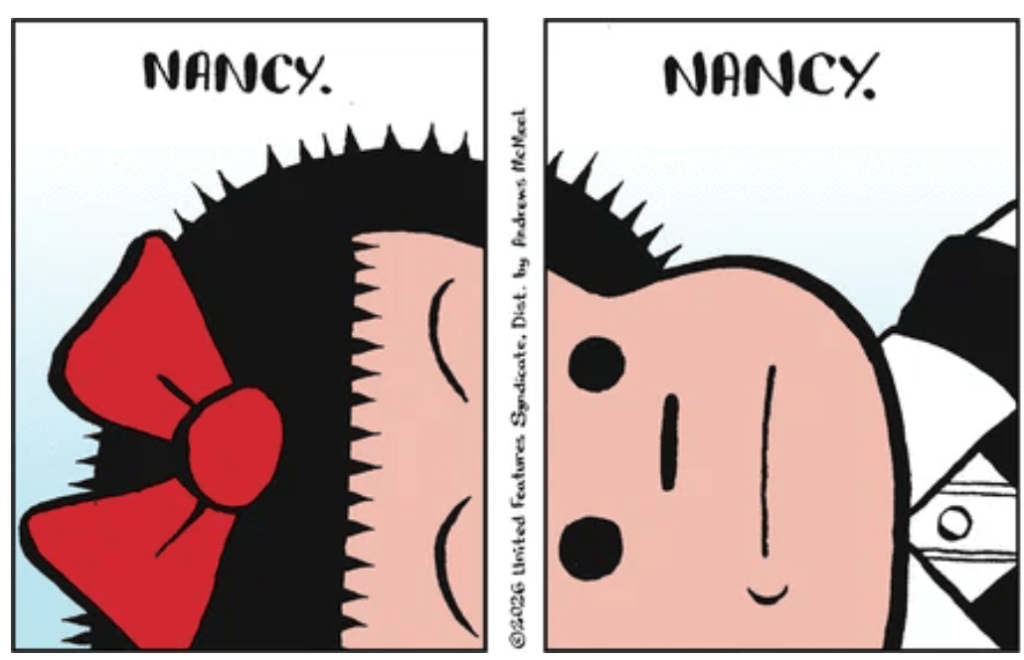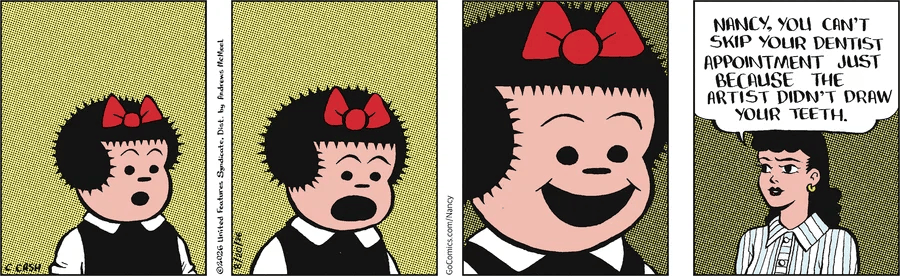
Mark H. sends this in: “If there’s actually a wall at all.”


Mark H. sends this in: “If there’s actually a wall at all.”


Found on the internet, with some speculation about its origin. One theory is that it was Ernie Bushmiller’s cheat sheet, so he could be consistent in his expression of various emotions. Another person speculated that he could use this for some early version of cut-and-paste, in particular to save time with that hairdo. Perhaps it was in some guide for young cartoonists to help them learn to express emotions, and Nancy was just a familiar face to use.
The CoPilot AI engine covers most of these bases:
“Bushmiller developed this chart as a reference sheet cataloging facial expressions for Nancy, his iconic character known for her deadpan humor and minimalist design. Each numbered face corresponds to an emotion or reaction, helping Bushmiller (and later artists) maintain consistency in Nancy’s look while conveying a wide range of feelings.
The chart circulated among cartoonists and illustrators as an example of how to express emotion economically — a hallmark of Bushmiller’s style.
It likely dates from the mid‑20th century, when Bushmiller was refining Nancy’s visual language for syndication.”
Nancy has had several different authors:
Ernie Bushmiller (1938–1982)
Al Plastino (1982–1984)
Mark Lasky (1982–1983)
Jerry Scott (1983–1995)
Guy and Brad Gilchrist (1995–2018)
Olivia Jaimes (2018–2025)
Caroline Cash (2026–)
Larry Whittington began Fritzi Ritz in 1922 and turned the strip over to Bushmiller in 1925, but Nancy didn’t appear in that strip until 1933. The strip was renamed Nancy in 1938.
This brings up the controversial issue of when to let a comic strip die. At one end, we have Bill Waterson (Calvin and Hobbes), who ended the strip and avoided licensing. Just after we have Gary Larson, who ended The Far Side, but has mined his old material for licensing purposes and attempted to keep others from using it. This included asking CIDU to remove Far Side strips from our archives. We did this, but a glance across the internet shows many Far Side groups continually popping up like weeds in my lawn.
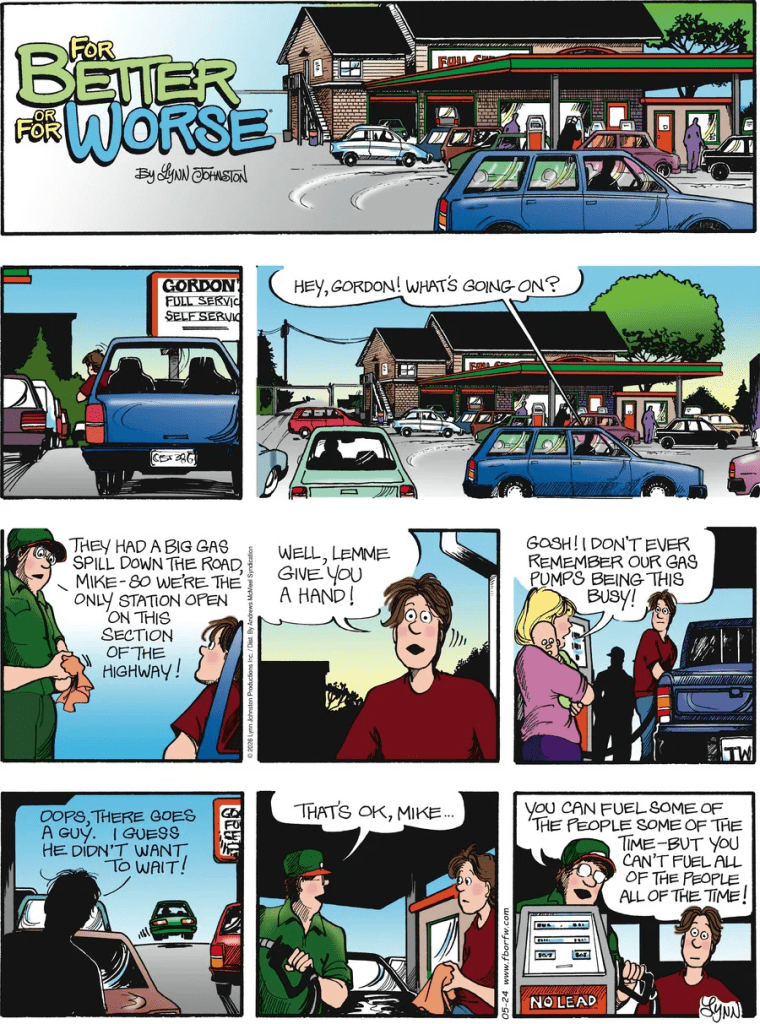
Then there are strips that have been transitioned to family members: Hagar the Horrible, for example, or Family circus, or Luann, now with Greg and Karen Evans listed as authors.
In the middle, I guess, are strips that are popular in reruns: Peanuts, and for that matter Classic Nancy, which recycles Ernie’s material.
At the far end of this spectrum are strips like Nancy, which shows several sets of authors over time, each with their own take on the characters (Fritzi is now bisexual) and with variation in drawing styles.
And on a very slightly related note, perhaps Dave Coverly should have her cycle through all 54 of them.


Mitch4 has some questions:
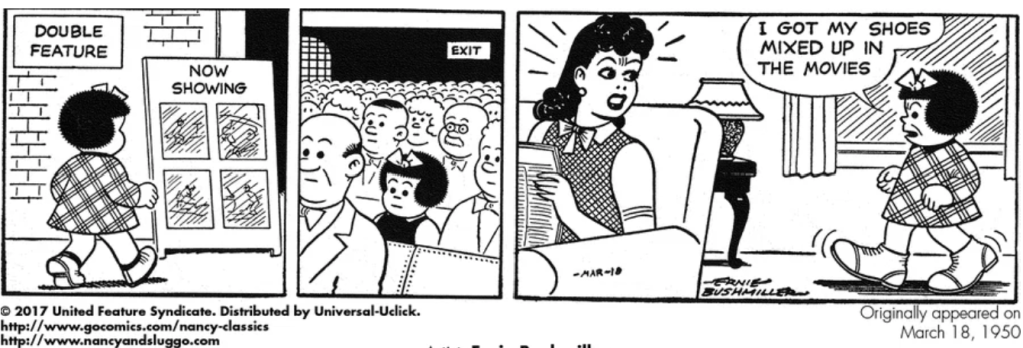
“1) Are the shoes in the last panel meant to be actually larger, or just drawn that way to call our attention to them? Are these her own shoes with left and right exchanged, or maybe even somebody else’s shoes?
“2) What does her seating behind that tall, bald man have to do with getting her shoes “mixed up” [regardless of which kind of mixing up it was]? Does it mean she stood up on her seat to see past him, but was courteous enough to take off her shoes so as to not dirty up the seat as much?”
A couple with long setups.


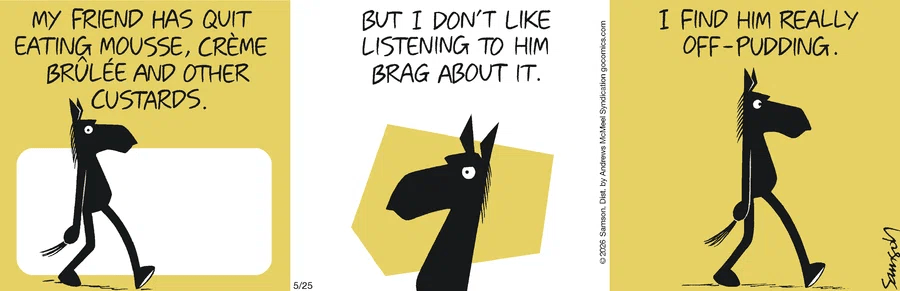
A pun so bad, I had to include it.


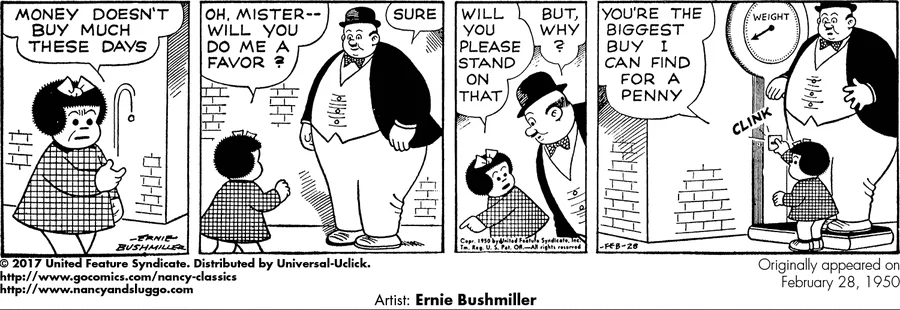
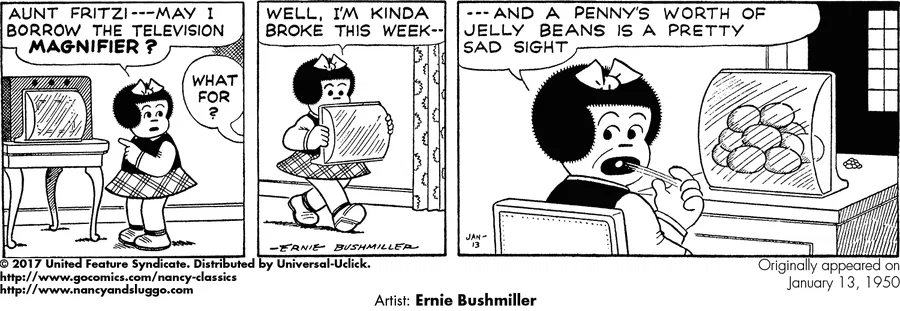
A Geezer Alert? I can’t remember the last time I’ve seen a scale like this one. If you have, do they still use pennies?

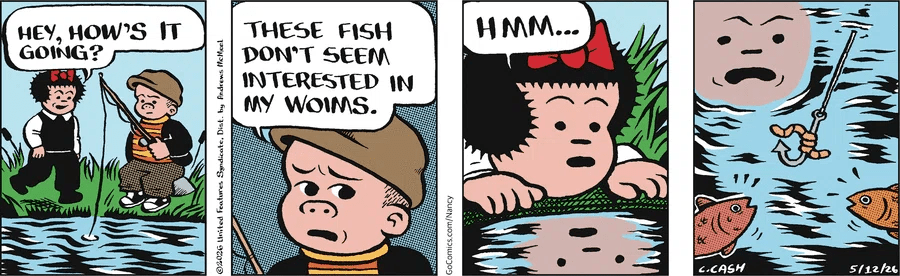
Is it as simple as Sluggo not understanding, after all these decades fending for himself, how to attach a worm to a hook? Is Nancy scaring the fish?

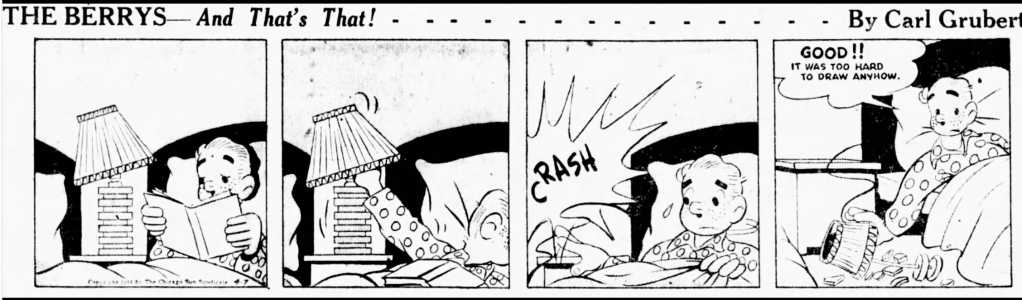
The Berrys, by Walt Ditzen: April 7, 1944. While filling in for Carl Grubert during World War Two, Walt Ditzen grew increasingly tired of drawing the elaborate lamp in the Berry bedroom. This strip was his solution. (Source: Mort Walker’s Backstage at the Strips: 1975).
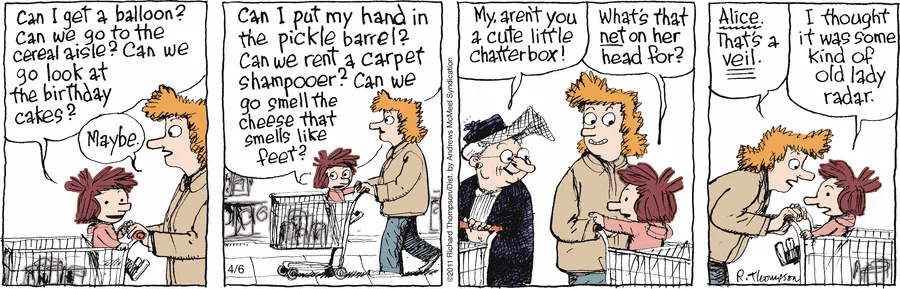
One of my favorite Cul de Sac comics:


Not really an LOL, but was this a real thing?


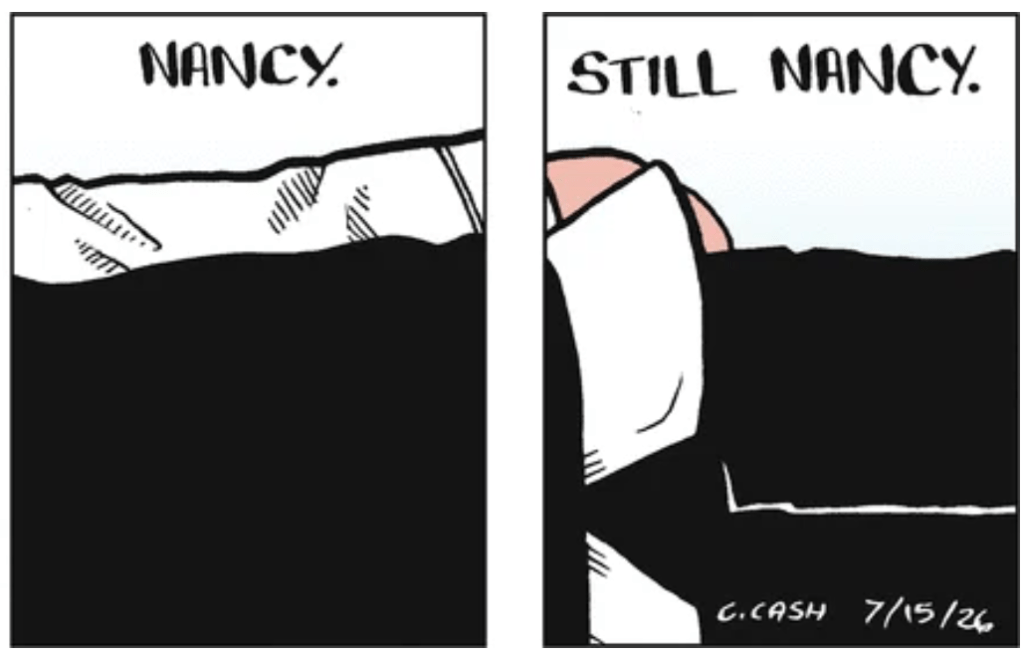
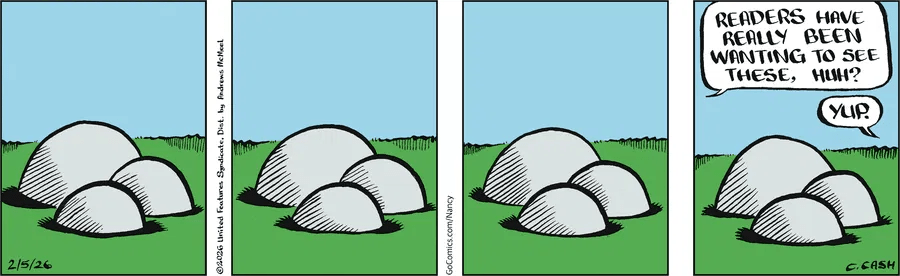
Is there a pun somewhere hidden — maybe under a rock?

The following day, Cash indicated these rocks stood for Nancy, Sluggo, and Aunt Fritzi, clarifying her intention a bit.


Janice Rey sends this in:


By one definition, “4th wall comic refers to a comic book where characters become aware of their own fictional existence and address the audience directly. This concept, known as the Fourth Wall, separates the characters from the readers, allowing them to comment on the narrative and its limitations.” By that definition, not all of these fit. In some of these, it’s that the cartoonist lets us acknowledge the cartoonist’s existence, while the characters remain unaware. Is there a separate term that should be used for that?


It’s Thanksgiving Day. So it’s not a bad idea at all to stop right here and think of 3+ things you are thankful for. Go ahead. We’ll wait.


Even Thanksgiving can be prone to scams: