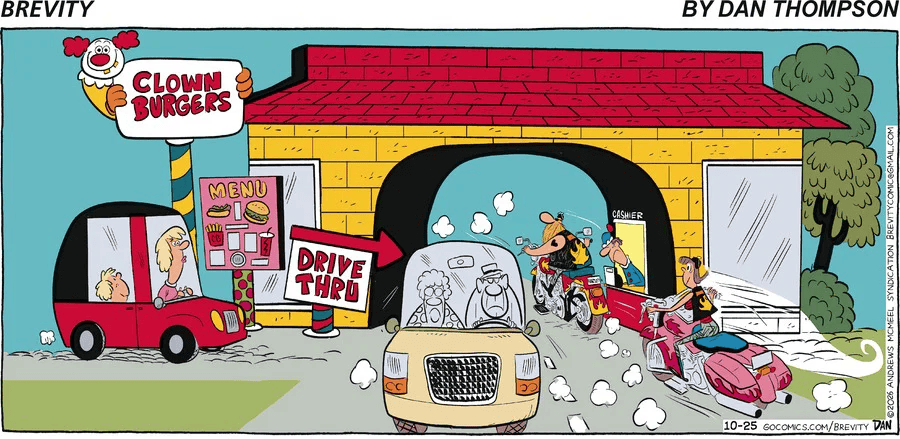
I don’t get it. The couple in the tan car aren’t colored. Is that a colorist’s error, or part of a joke?
I don’t get it. The couple in the tan car aren’t colored. Is that a colorist’s error, or part of a joke?
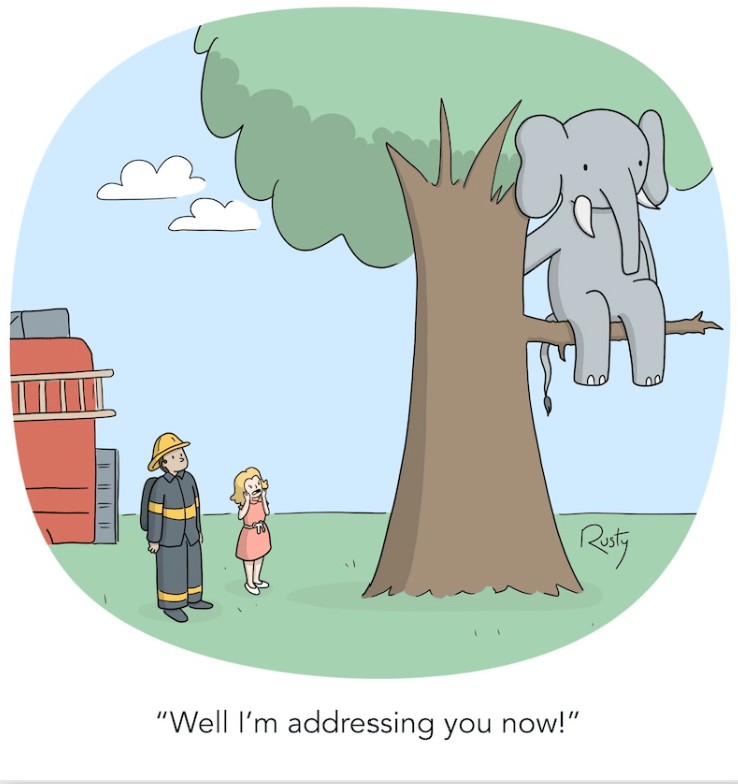
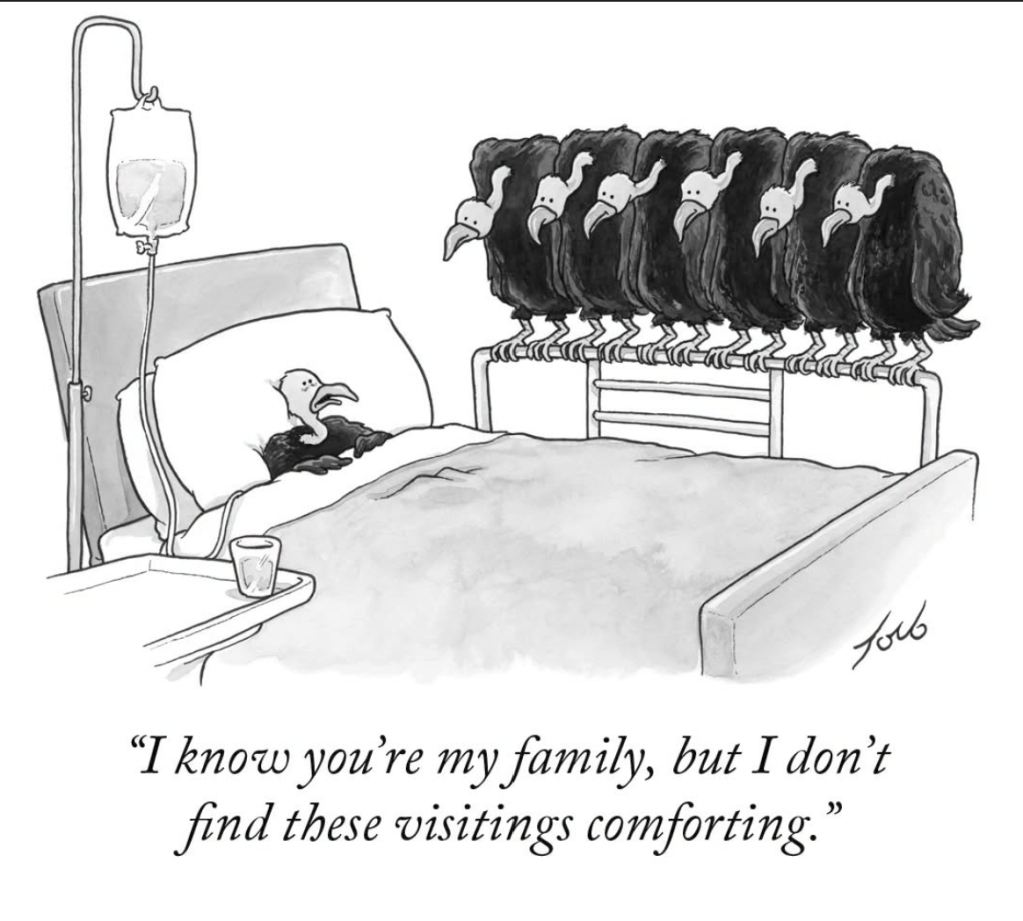
David Montgomery sends in this pair of chiasmuses? chaismi? chiasmae? Both are from October 18.


I went to Merriam-Webster online to look up the plural, but they don’t provide one; nor does the M-W Collegiate Dictionary, 11th edition. The example given online of the use of chiasmus cleverly avoids committing to a particular plural:

The word comes from Greek, so chiasmae would be confusing a Greek root and a Latin plural form, but stranger things have occurred in English. I think Sam Bray had it right: find a way to duck the issue.
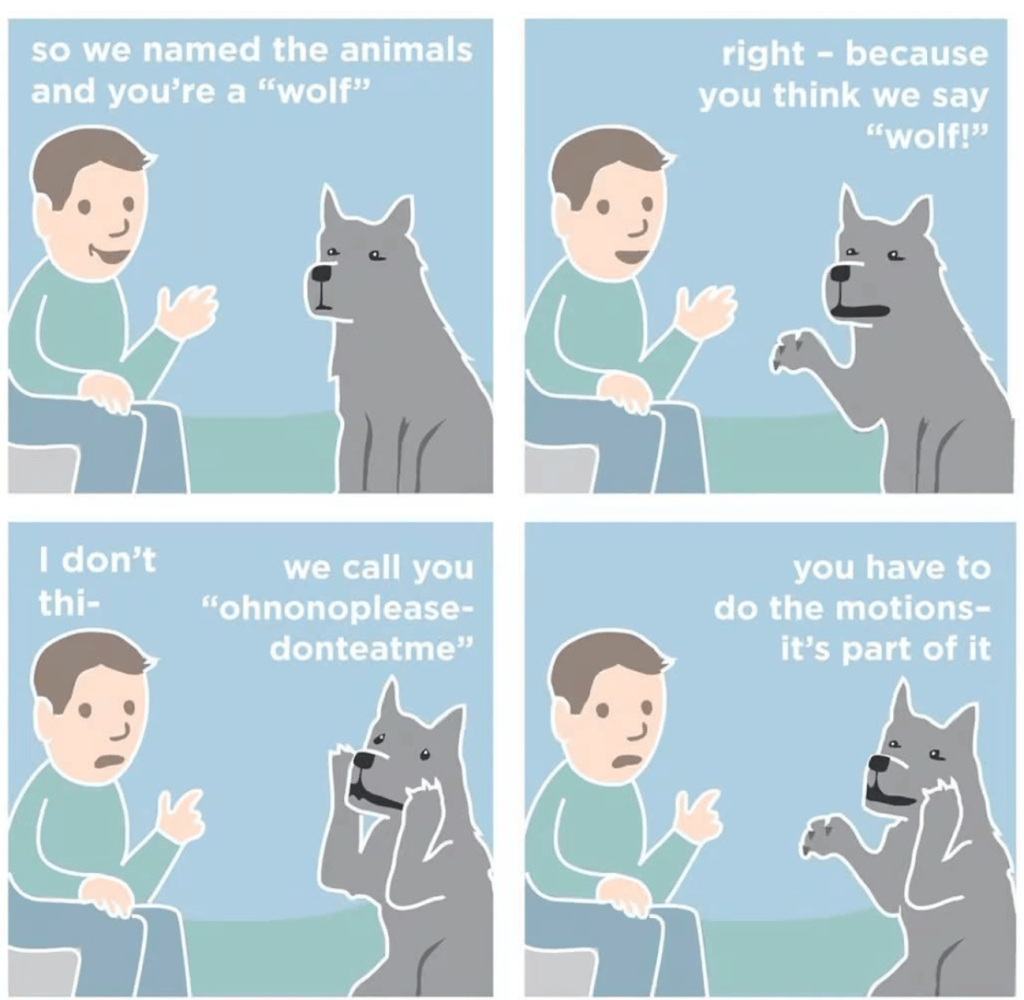
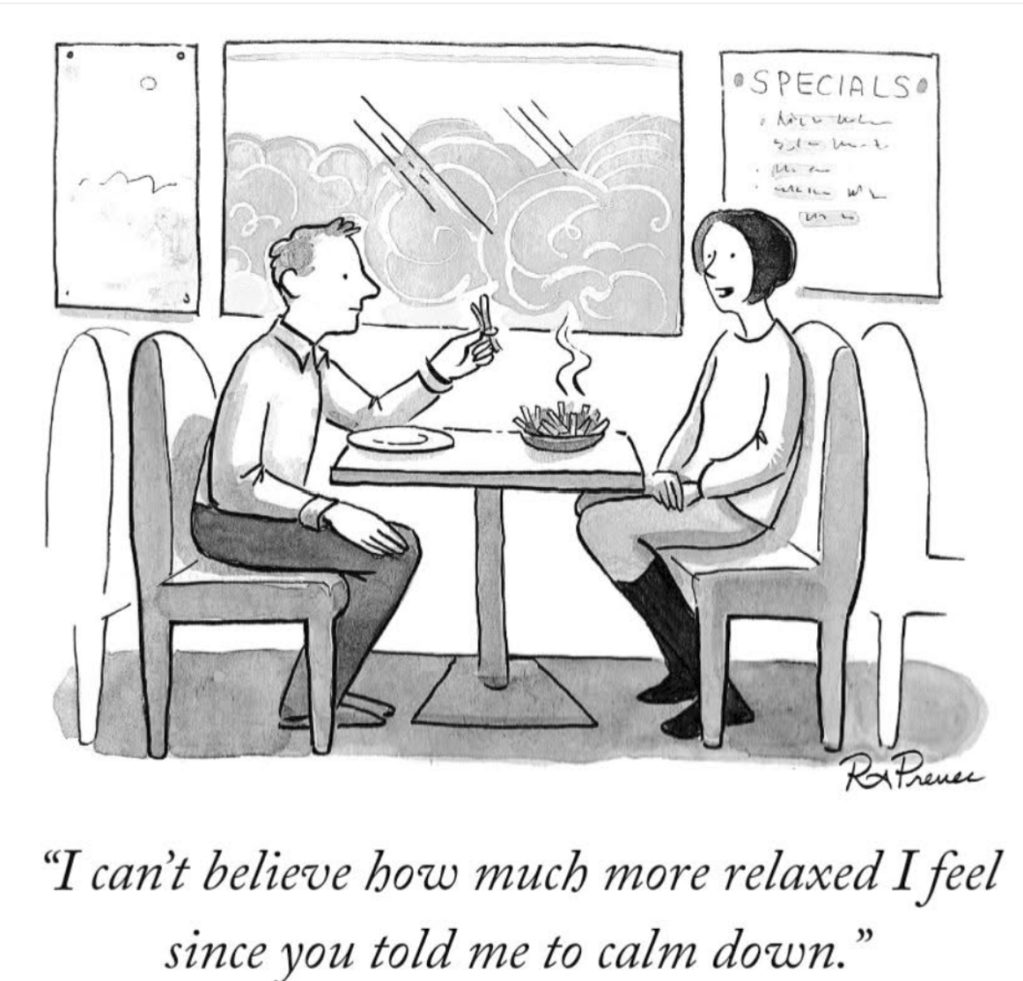
File this under “conversations that seldom actually occur” — which is, of course, the joke.
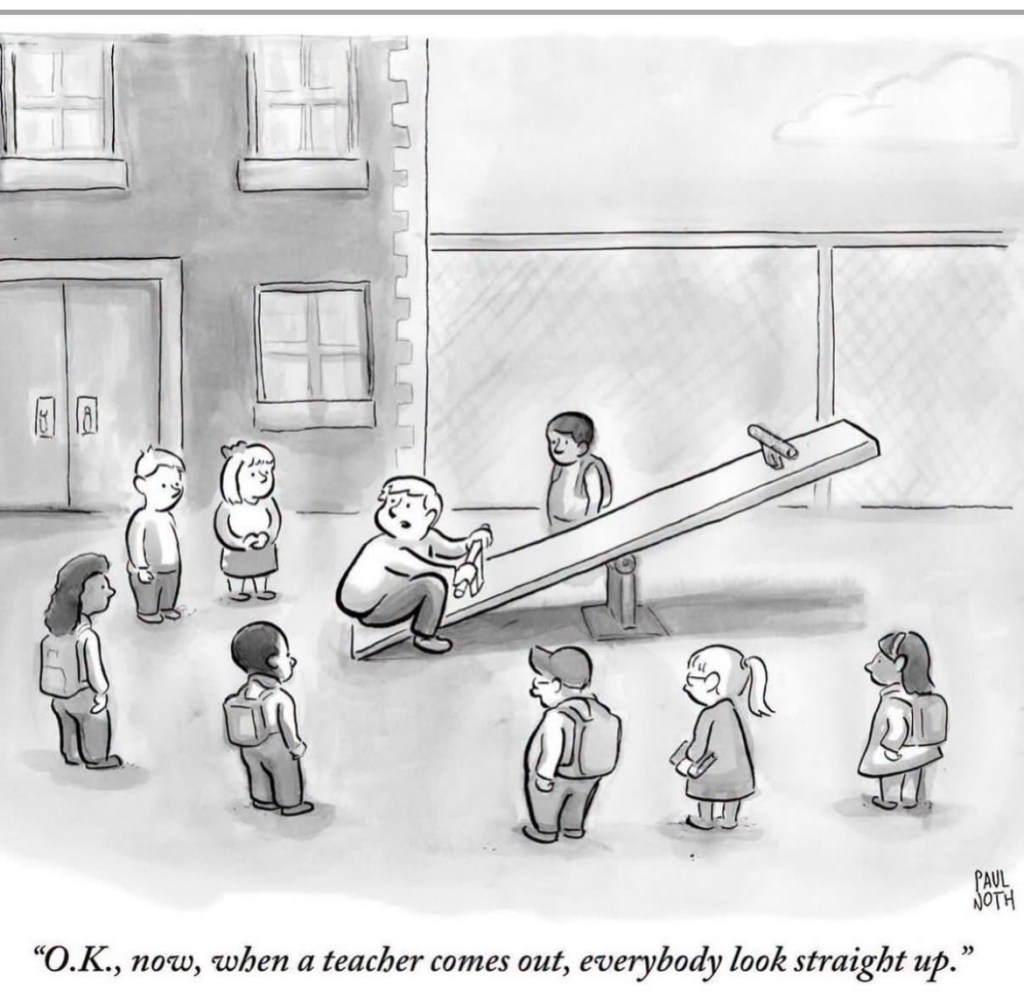
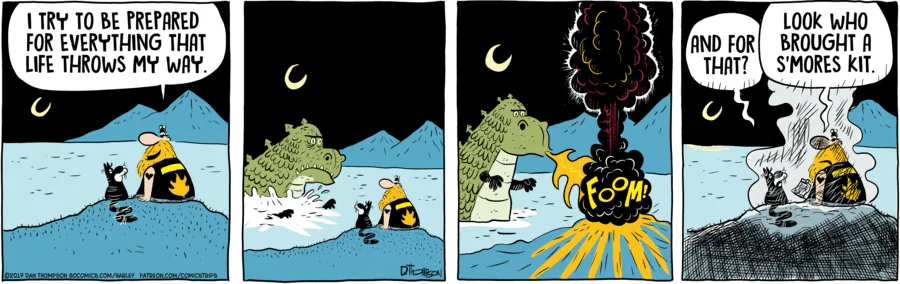

Dirk the Daring sends this in: “I have no idea what this is about. Cat is always ready to hunt zebras but I don’t see any zebras around this time. “
The previous day and the next day deal with entirely different subjects, so they are no help.


Mitch4 sends in this OY (maybe a momentary CIDU).

So, as a cure, will that leg have to be Hermetically sealed?
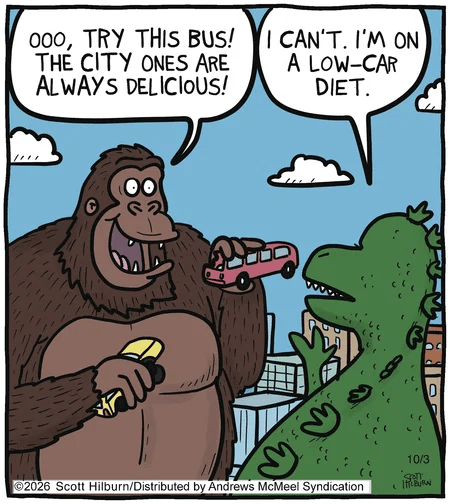
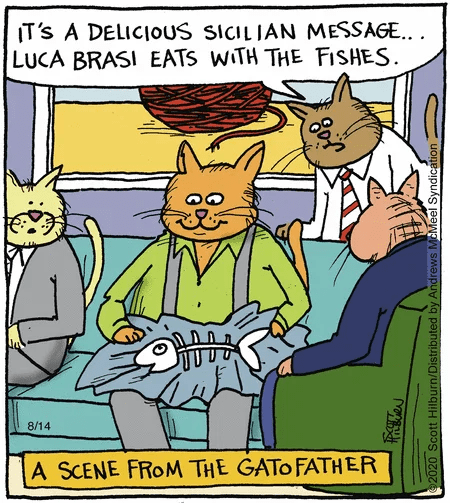
Marrose sends this in:
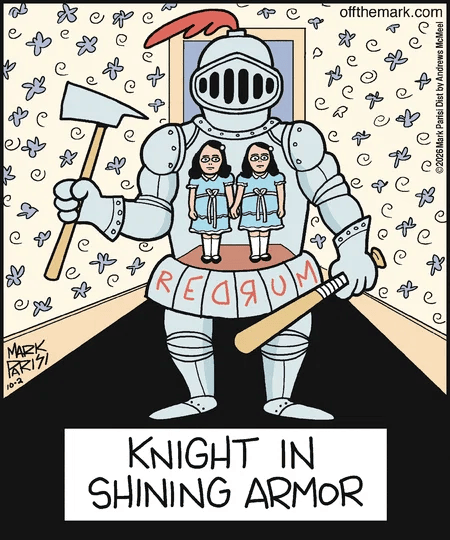
That famous scene:

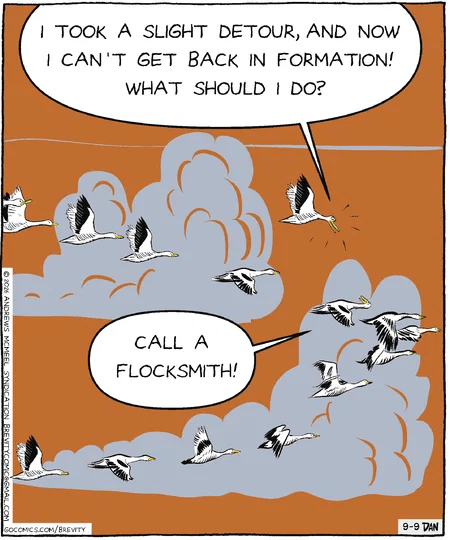
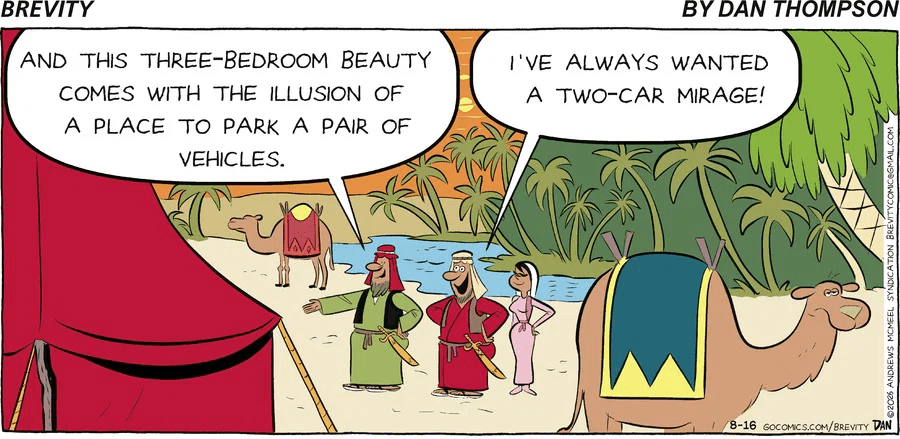
This is Dan Thompson’s Brevity, so it’s almost certainly a pun, and probably one that is easily explained, so I’m not posting it as a CIDU. But I don’t get it, so pan-der to your editor and explain it to me.
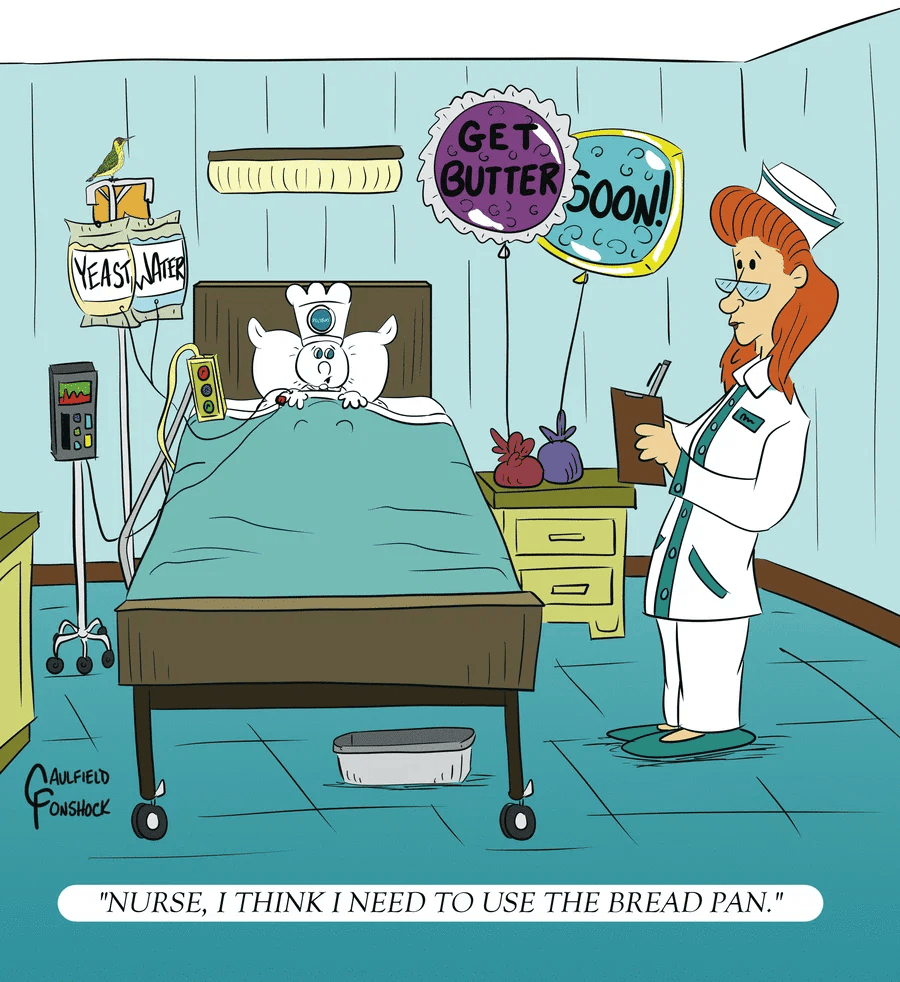

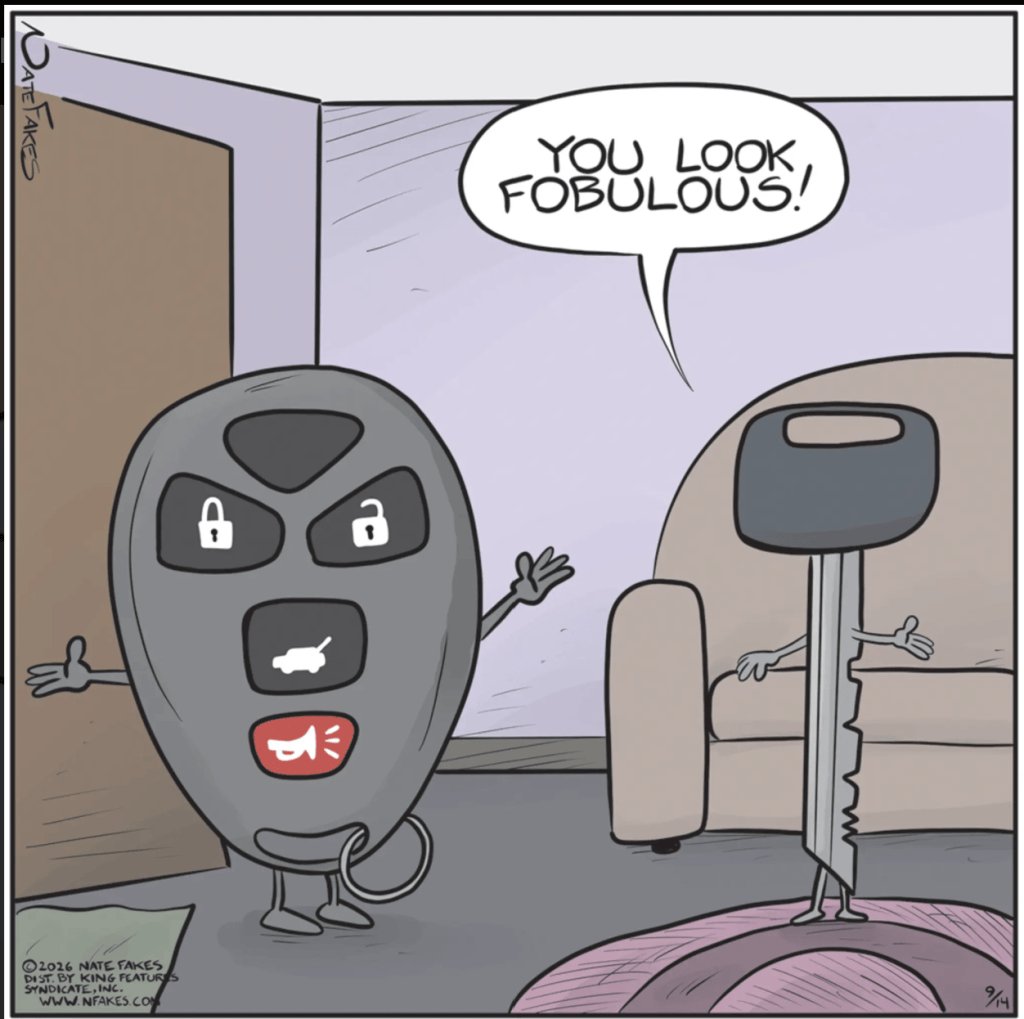

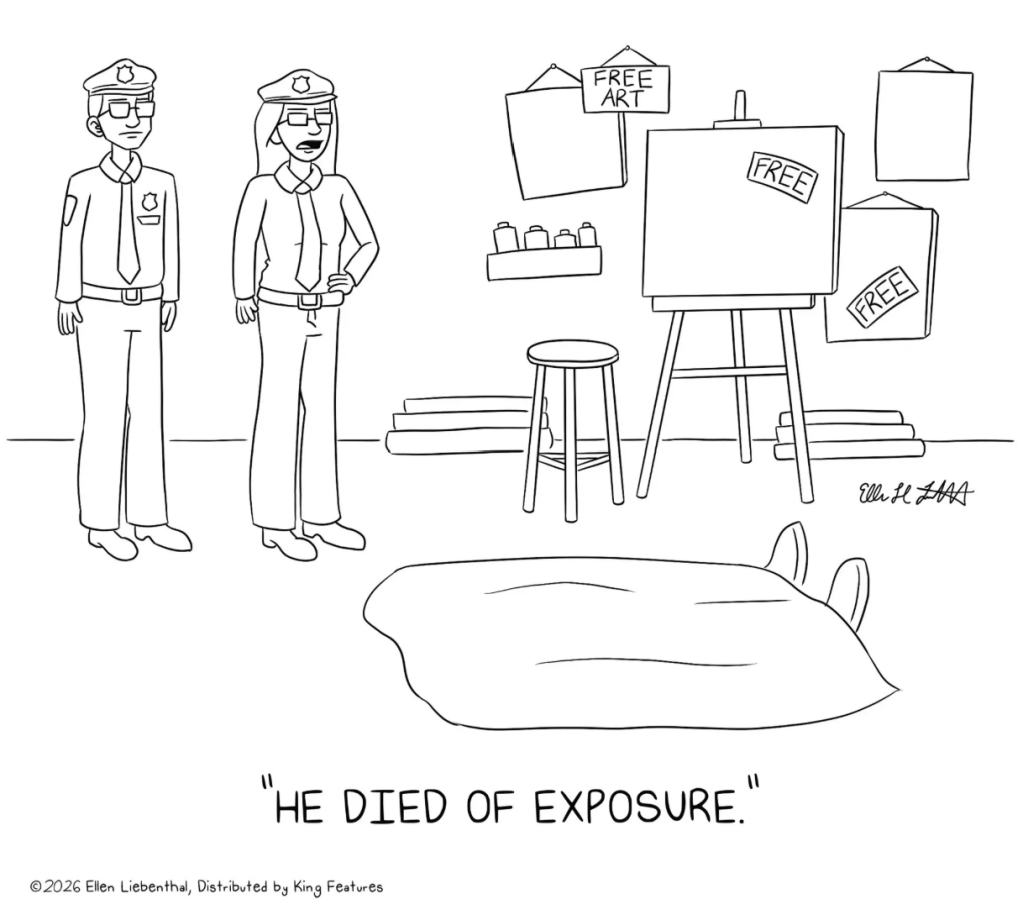
Mitch4 sends this in: “A bit labored, but in the end the pun works!”

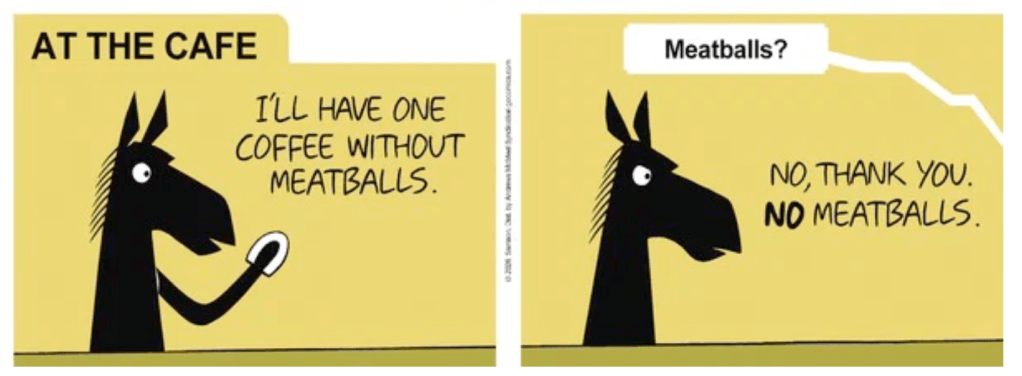


guero sends this in:


Probably missing some weak pun here.

Phred and Boise Ed sent this in: “I definitely didn’t get this until I read the comments on the page… Certainly fits the bill here.”
Bob Ball sends this in: “Don’t those small bubbles rising from near the stern mean that whoever’s behind the wheel is drunk?”

The bubbles seem like a odd addition to an otherwise clever double pun. There’s the obvious pun around the sailors being on the mast, and the alternative definition of mast: “fruits, seeds, or nuts (such as berries, pine seeds, or acorns) of trees or shrubs that serve as food for wild or domestic animals and typically accumulate on the ground”

