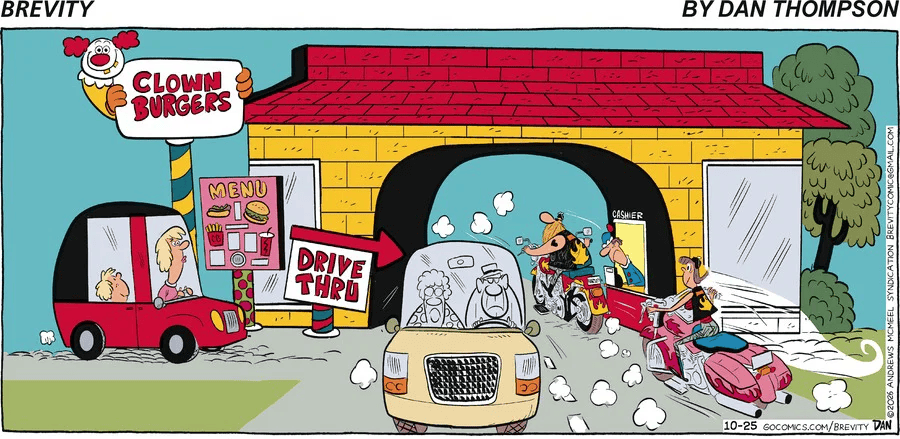
I don’t get it. The couple in the tan car aren’t colored. Is that a colorist’s error, or part of a joke?
I don’t get it. The couple in the tan car aren’t colored. Is that a colorist’s error, or part of a joke?
Mitch4 sends this in as a momentary CIDU / OY

This comic has had a week of these microbrew jokes. Here’s another:

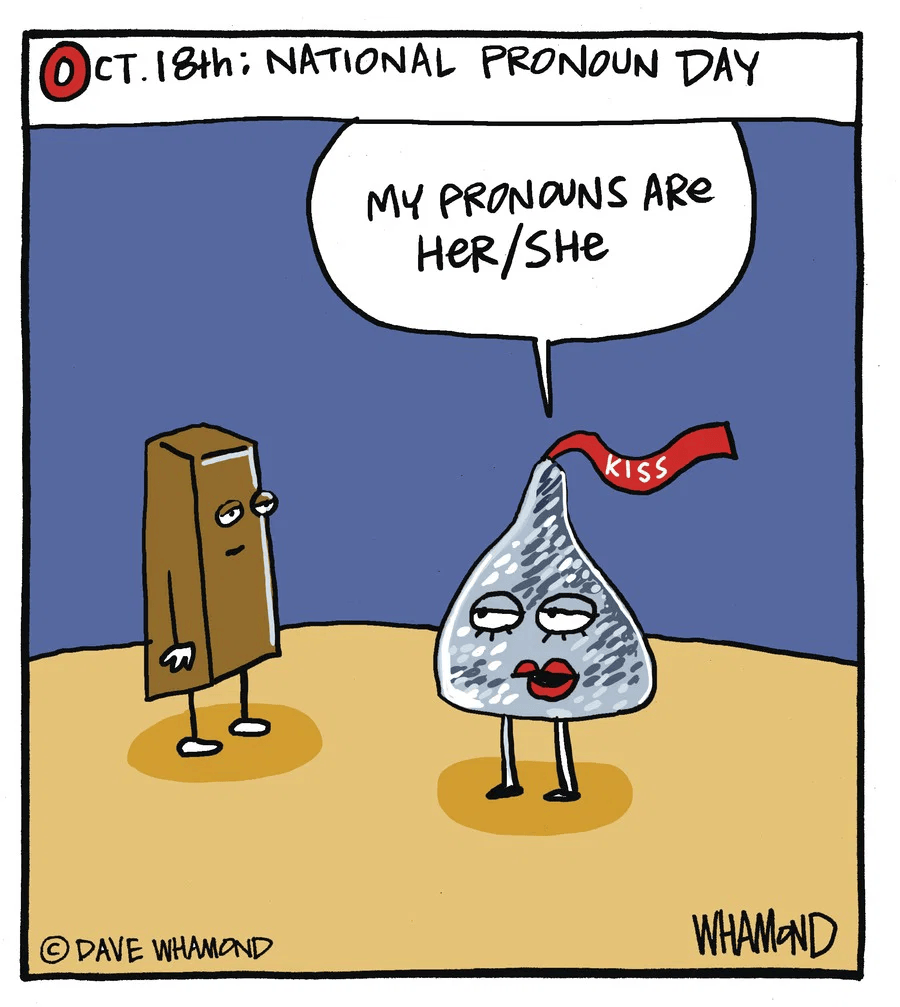
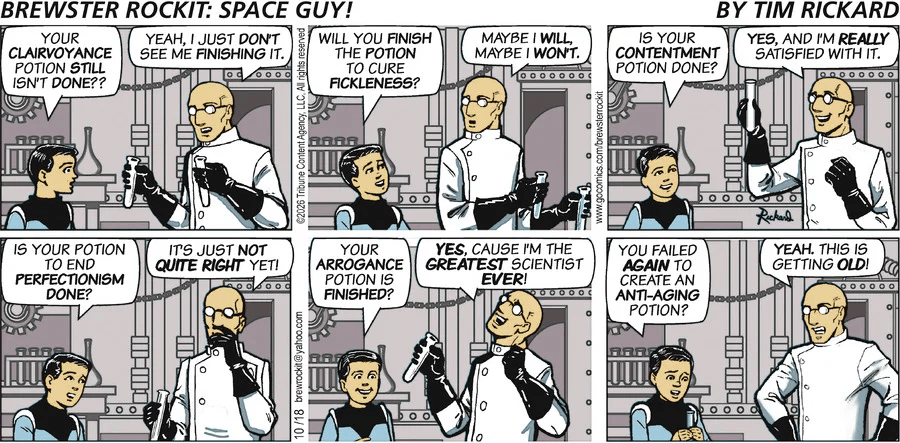
David Montgomery sends in this pair of chiasmuses? chaismi? chiasmae? Both are from October 18.
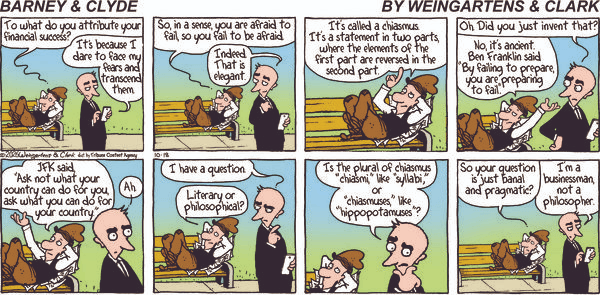
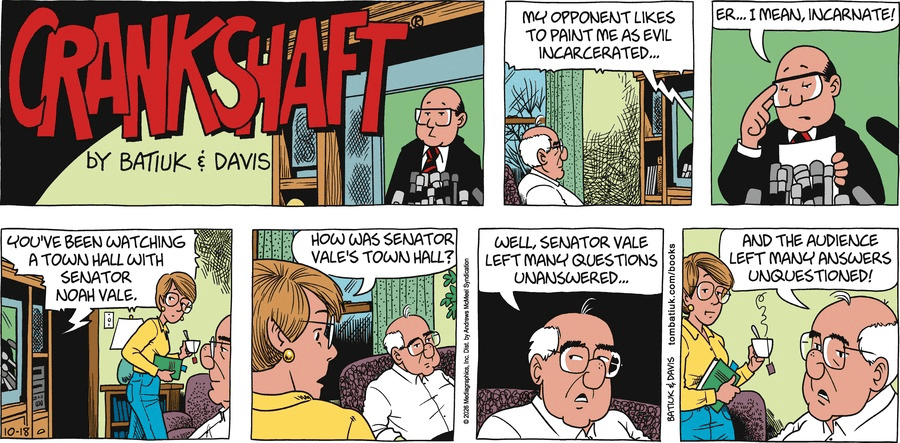
I went to Merriam-Webster online to look up the plural, but they don’t provide one; nor does the M-W Collegiate Dictionary, 11th edition. The example given online of the use of chiasmus cleverly avoids committing to a particular plural:

The word comes from Greek, so chiasmae would be confusing a Greek root and a Latin plural form, but stranger things have occurred in English. I think Sam Bray had it right: find a way to duck the issue.
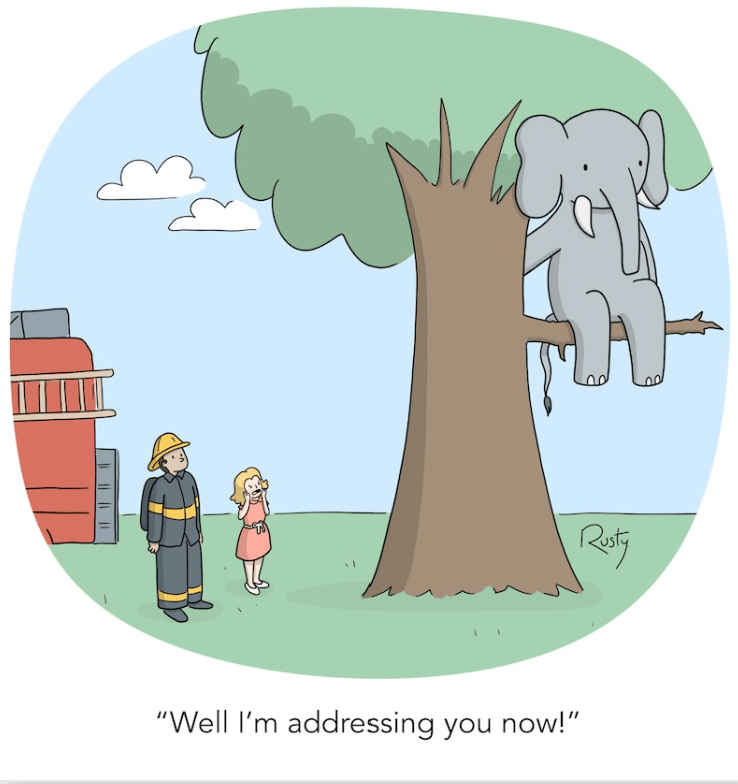
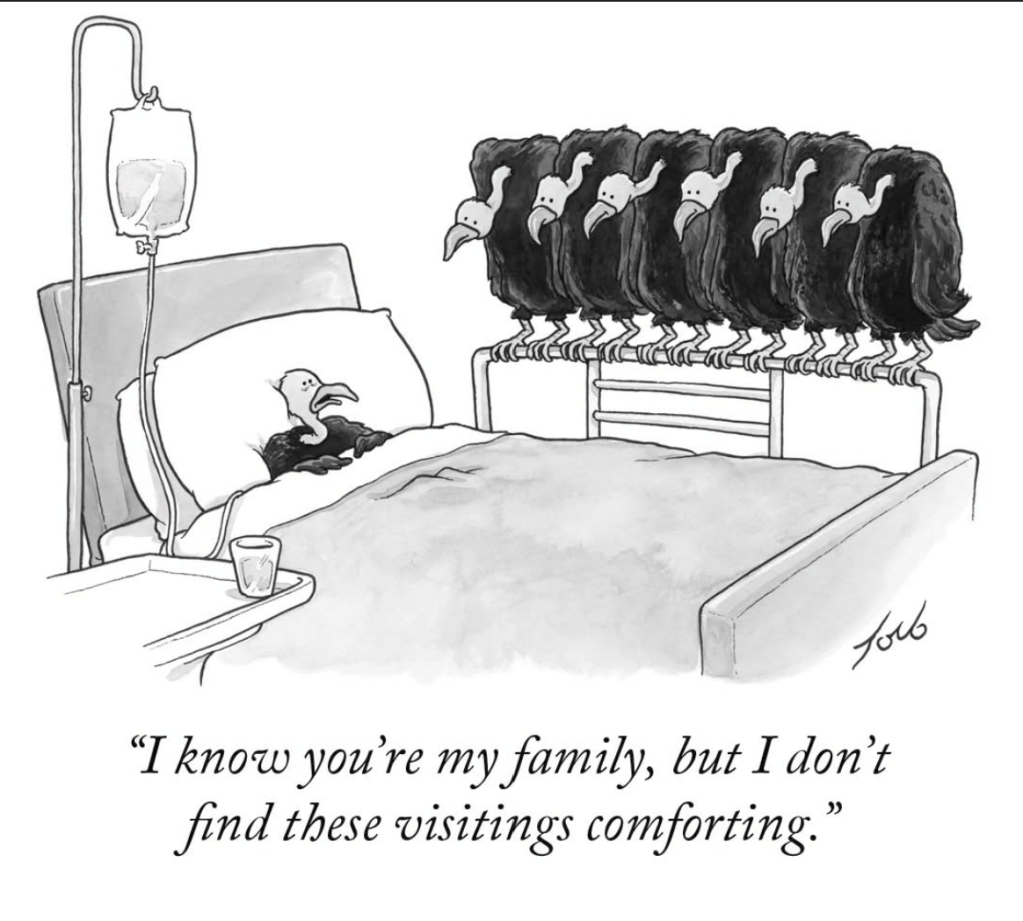
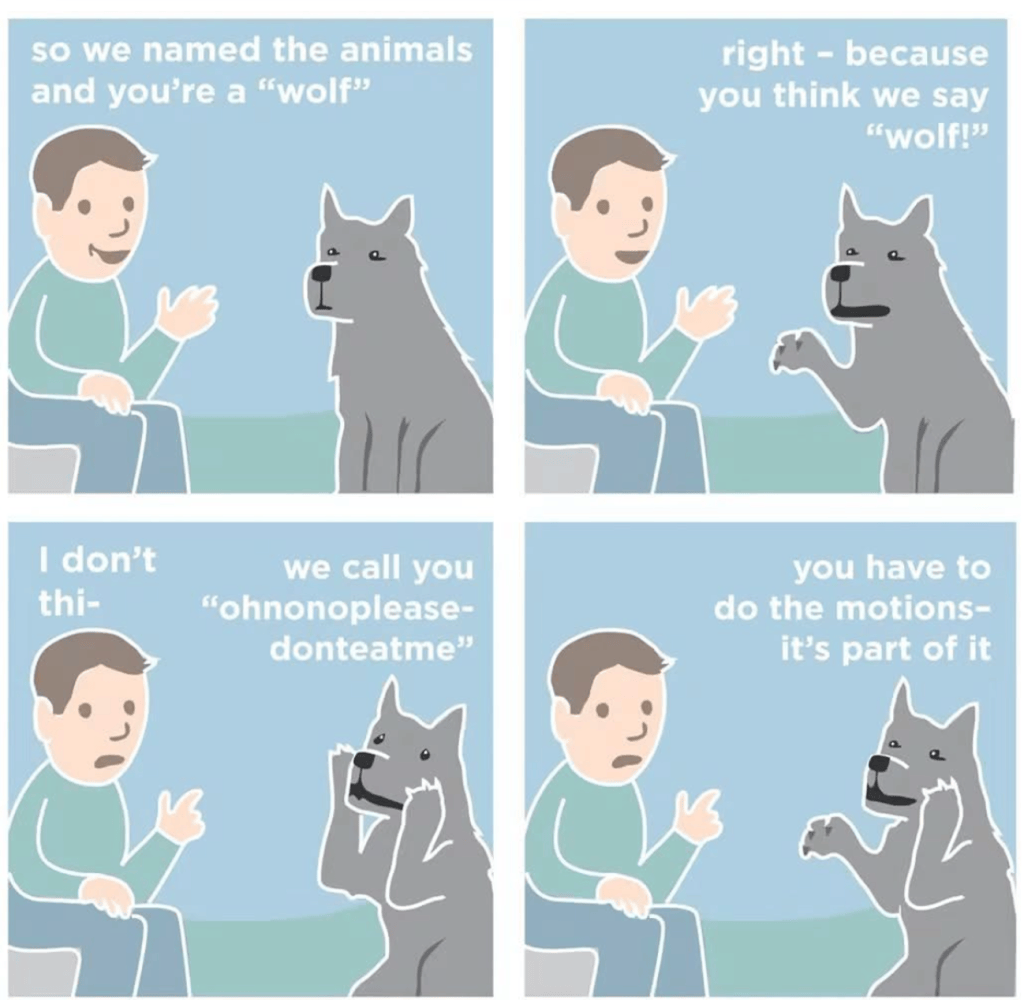
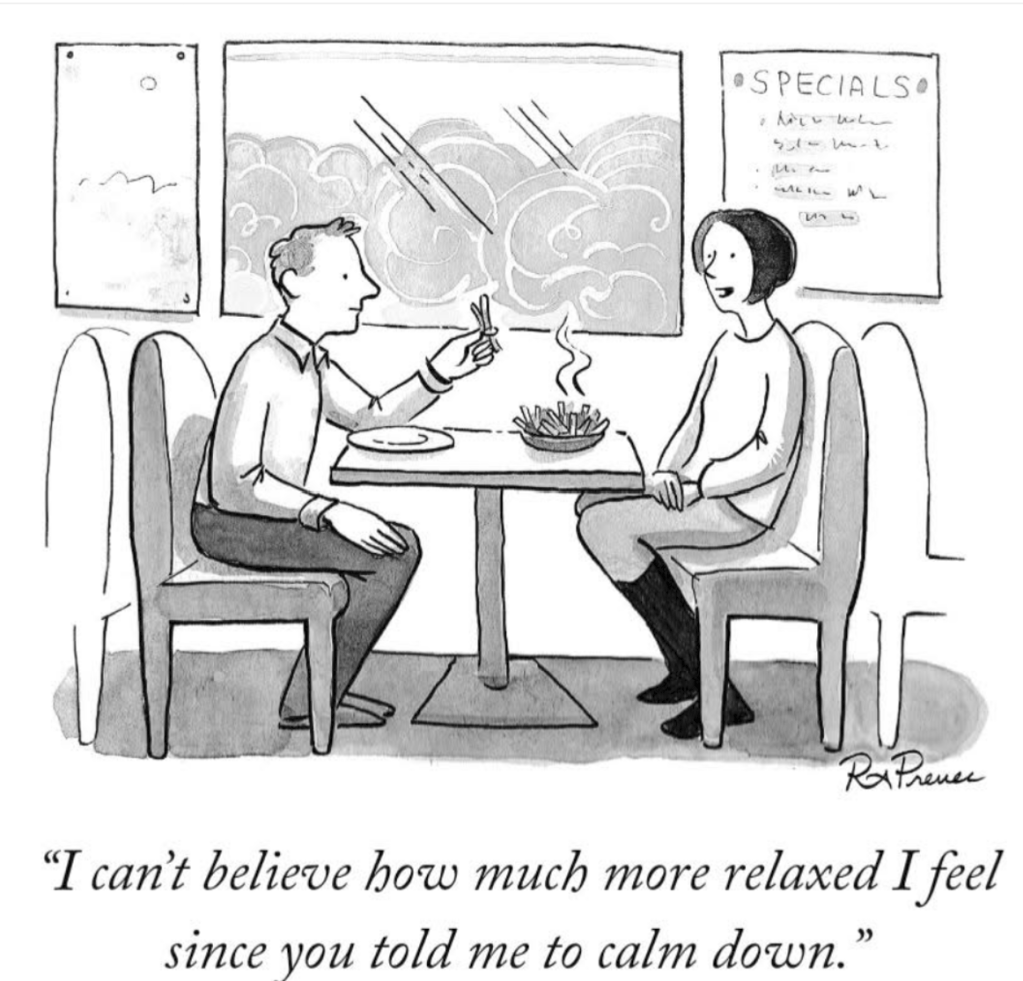
File this under “conversations that seldom actually occur” — which is, of course, the joke.

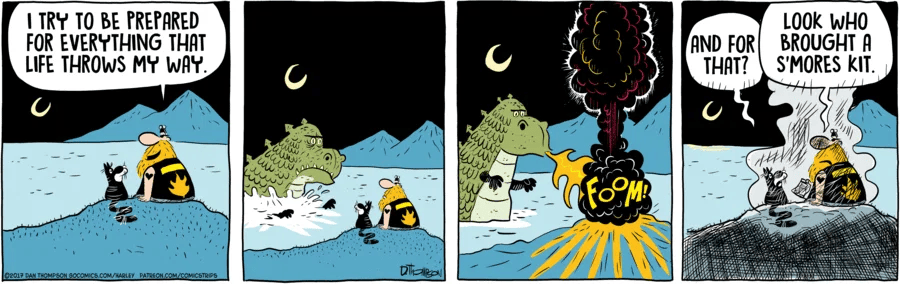
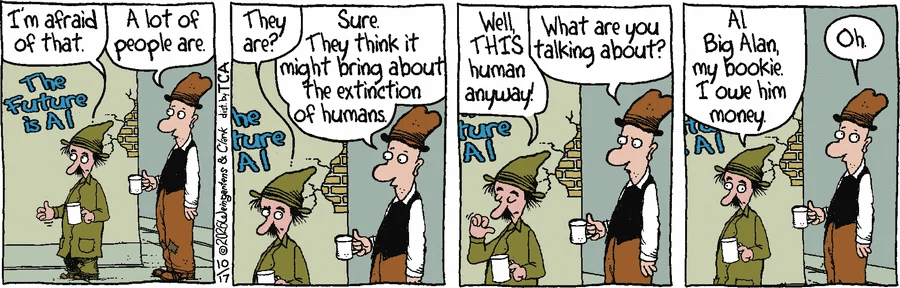


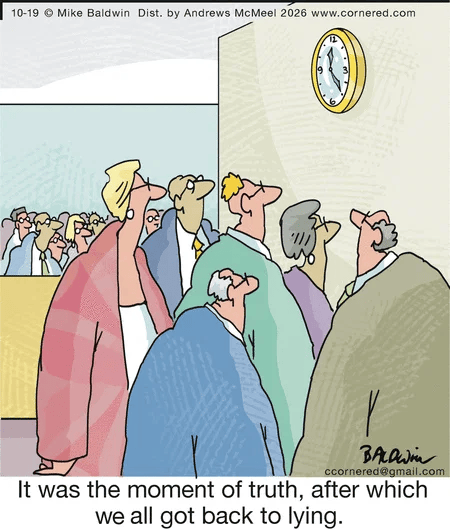
billr sends this in: “Looks like the clock is at 12:25, although maybe it’s 5:00. That doesn’t mean anything to me either way.”
If it’s 5:00 p.m., that’s an iconic end to the 9 to 5 workday. But while you may do a certain amount of lying while working in corporate America [“Your call is important to us. Please stay on the line and a representative will be with you shortly.” or “You’re the first customer who’s ever complained about that.”] after 5 you’re off the clock.
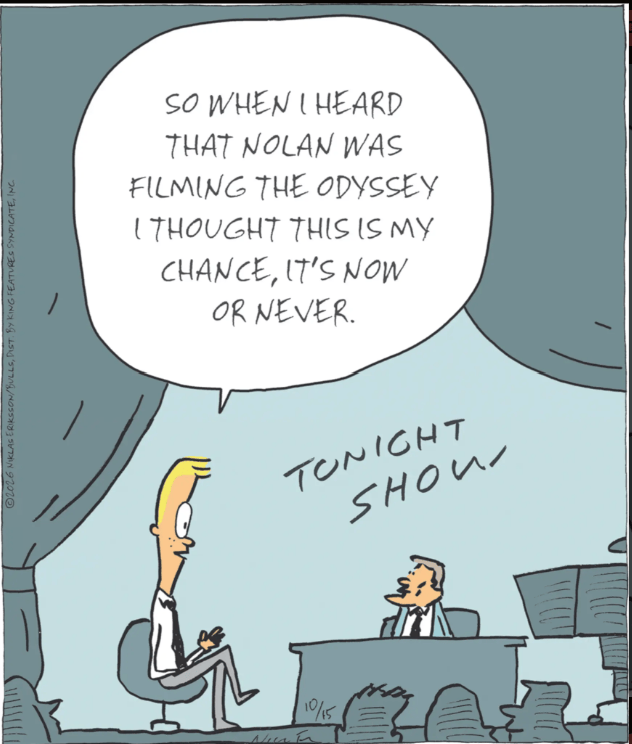
Matt Damon has been blond in past pictures, so I guess the blond guy is supposed to be him. But, if so, where’s the joke? Every big actor is always looking for their next big role.
His head is elongated, but I don’t understand that part, either.

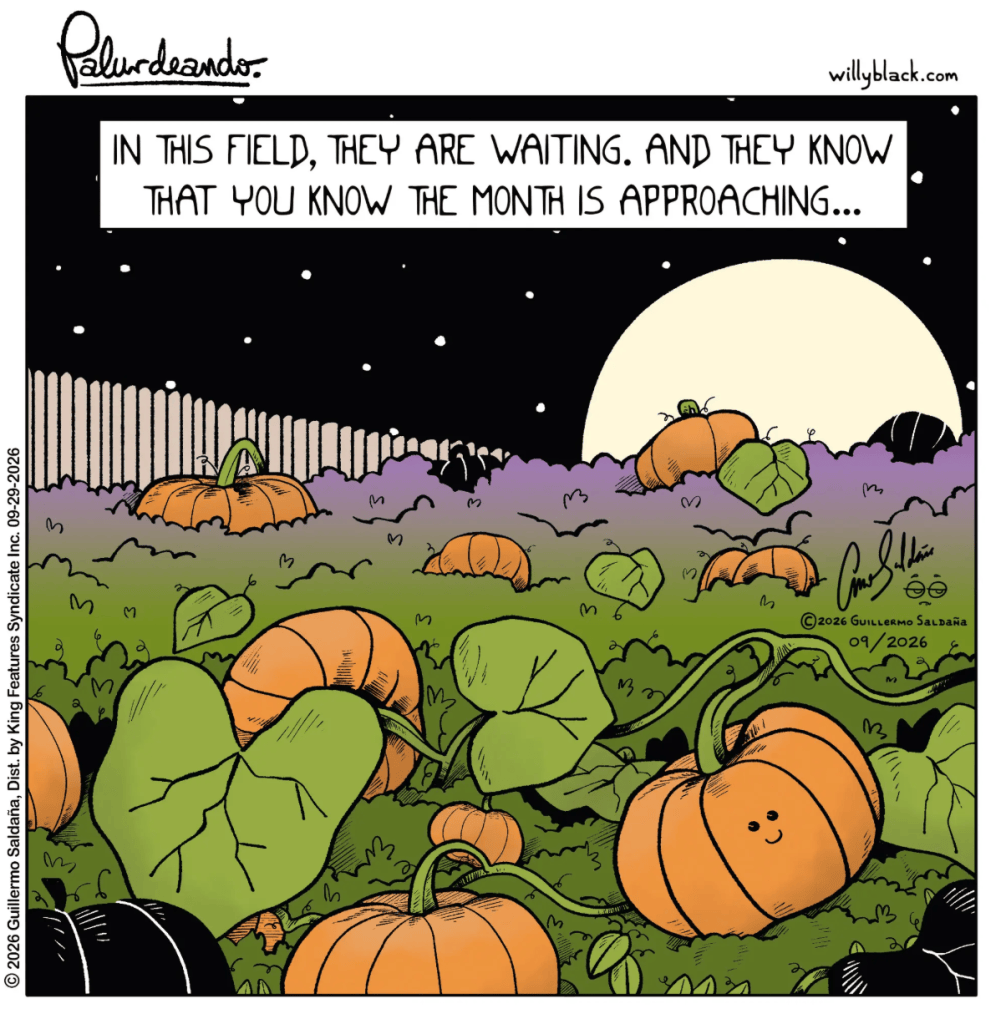
A lit Jack-O-Lantern around Halloween? Seems entirely expectable.
On a whimsical note, we have this one (not a CIDU):
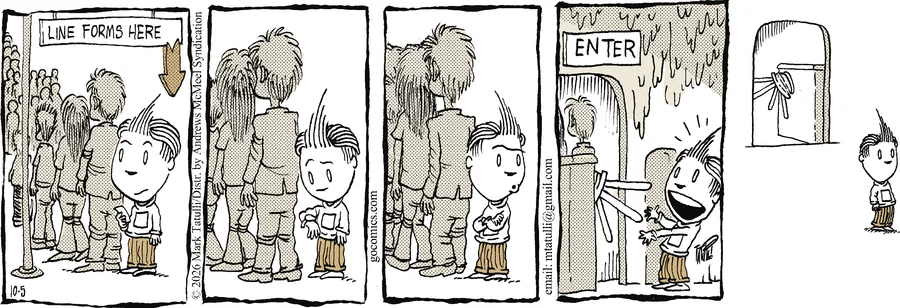
Jack Applin sends this in: “Liō’s waiting in line, holding his ticket. The line progresses to a turnstile and oozing walls. Liō walks away. Why? Are the walls that scary? Is this the path to Hell, or some other afterlife realm?”
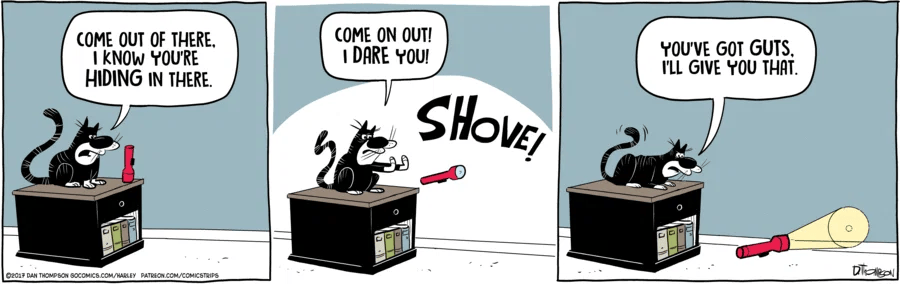
Dirk the Daring sends this in: “I have no idea what this is about. Cat is always ready to hunt zebras but I don’t see any zebras around this time. “
The previous day and the next day deal with entirely different subjects, so they are no help.
All a matter of perspective.
You won’t believe #4!
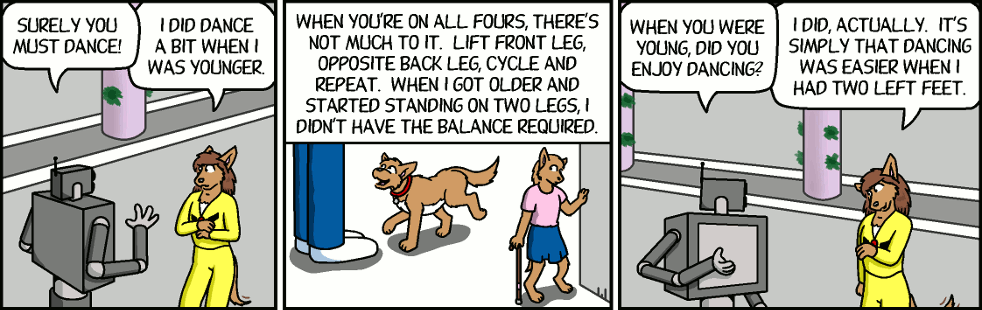
Boise Ed sends this one in: “The background is that Florence is a dog who was uplifted to human-level intelligence with walking and talking capability. She now interacts with people pretty much like any other human of a different origin. I thought the “two left feet” line was delightful.”

