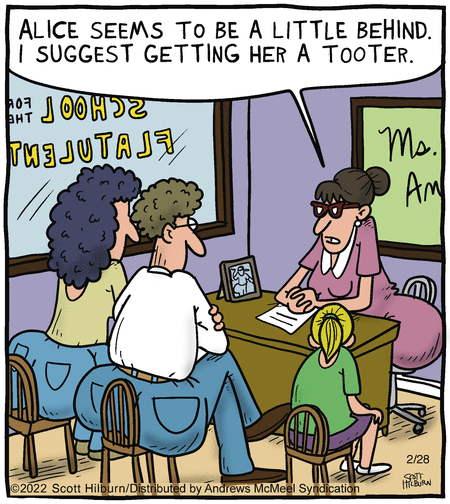
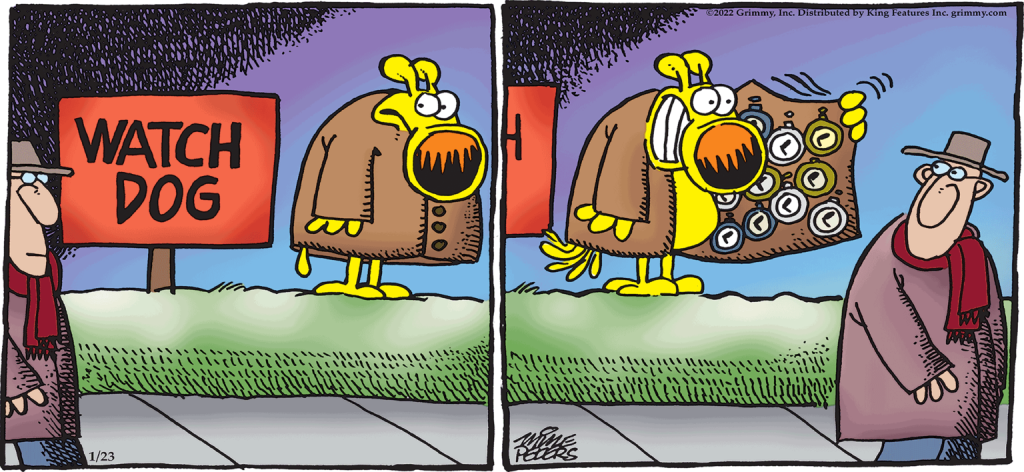
Sent by BillR, who says “I know Scott Hilburn likes puns. A lot, in fact. But I don’t get this one.”
I don’t get it either. The GoComics comments do give a possible explanation, though IMO a rather feeble one — and not much like a pun.

Sent by BillR, who says “I know Scott Hilburn likes puns. A lot, in fact. But I don’t get this one.”
I don’t get it either. The GoComics comments do give a possible explanation, though IMO a rather feeble one — and not much like a pun.


Well, there’s a good OY on the left, and a good LOL on the right, and I’m feeling too lazy to get out the cropper, so let’s print it twice, once today, and once yesterday or tomorrow.

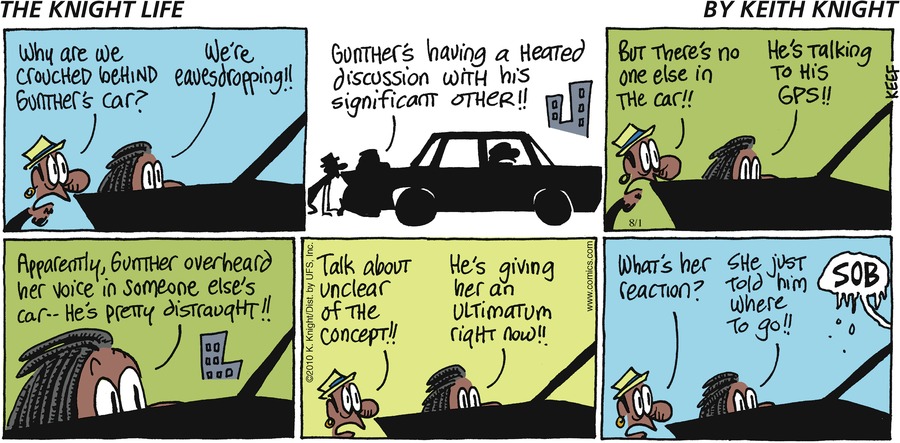
“Told him where to go …”
Middle school favorite: “You’ve got a point there …. But you could hide it under a hat!”
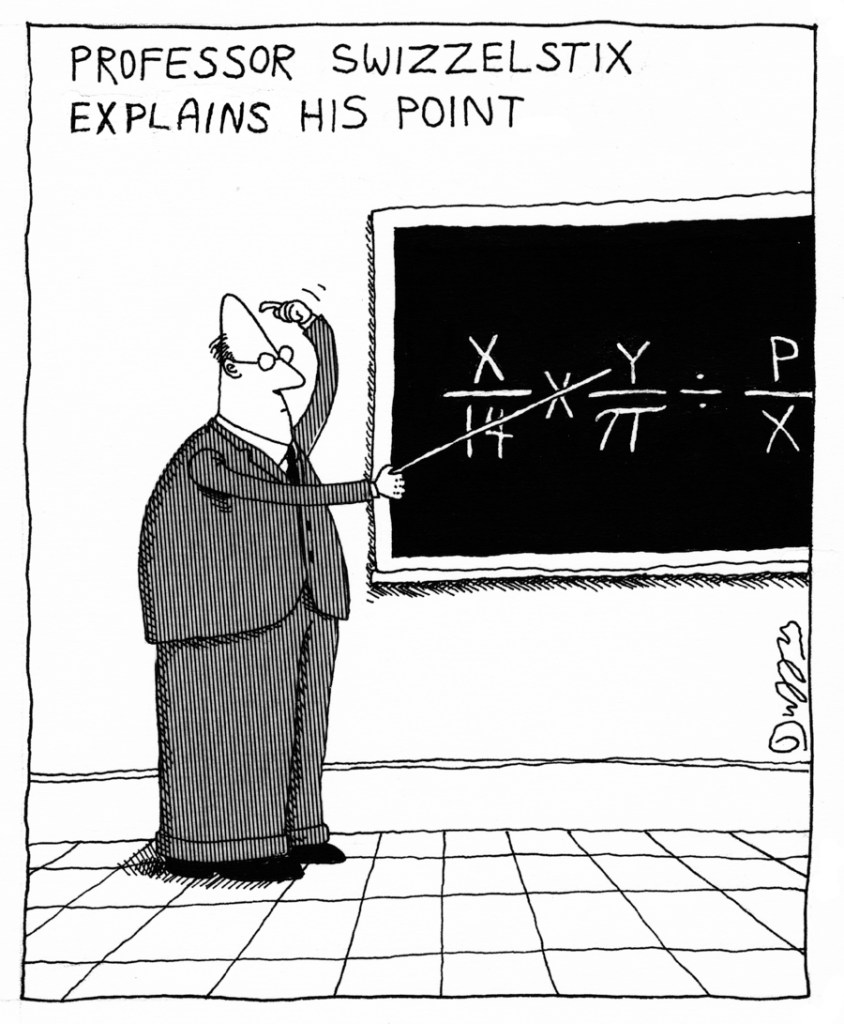
An OY-Ewww :
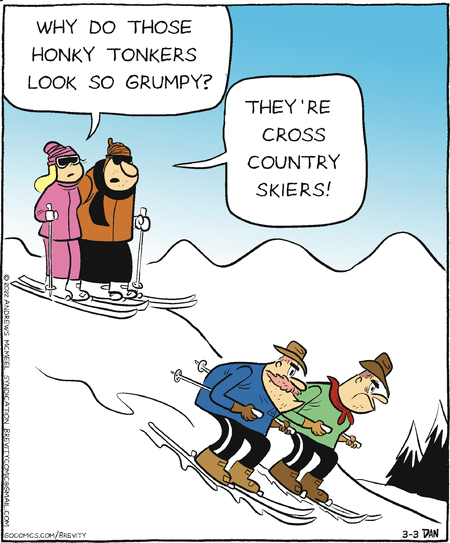
This semi-CIDU OY is from Boise Ed, who notes the apparent error that they are doing downhill skiing but the text is about cross-country. But why is it not actually in error? Hmm?


P.S. This Zippy has in the meantime received the Arnold Zwicky professional treatment.
P.P.S. Here’s that word ‘serf’ again:
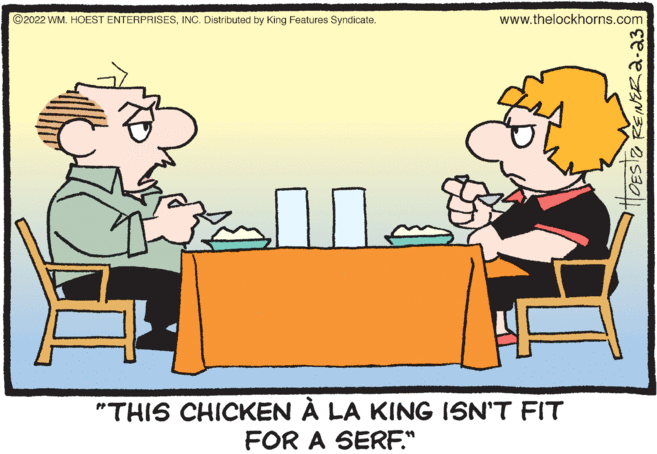

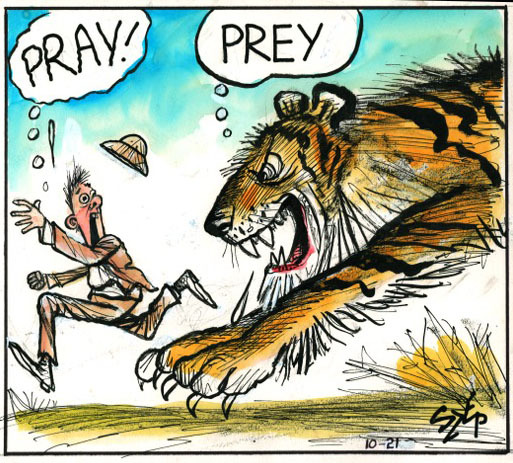
I just like this, more than I can defend.


A photo-OY, from Facebook group “Daily Pun”


I trust even the non-geezers will recognize “feghoot” as a term for a story that ends with an Oy as the punch. Is it a dig at PBS to point out it often uses feghoots?

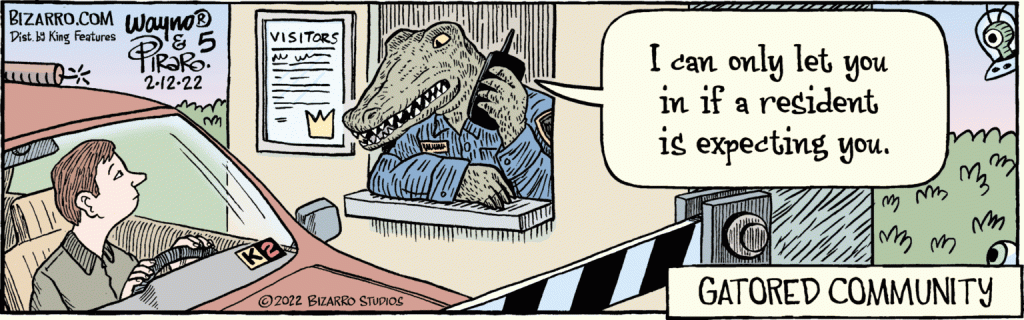
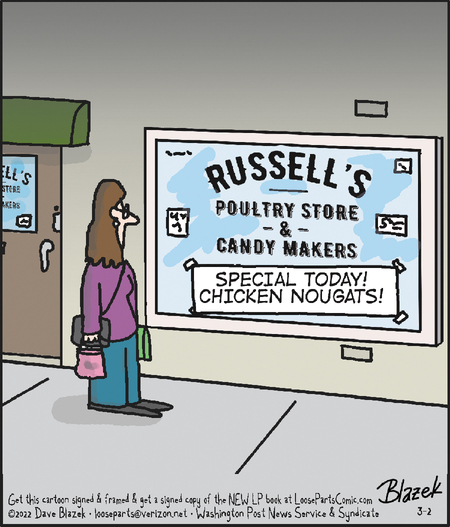
Double dose of Loose Parts.
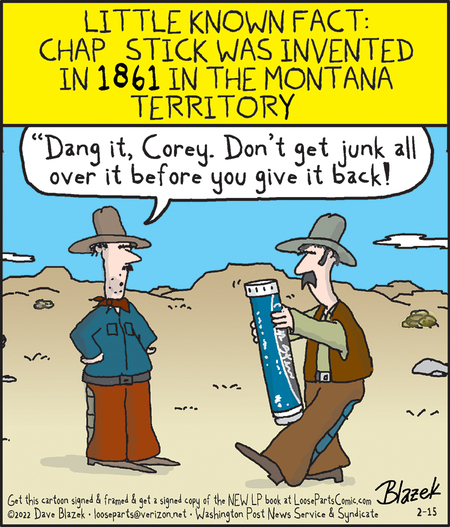
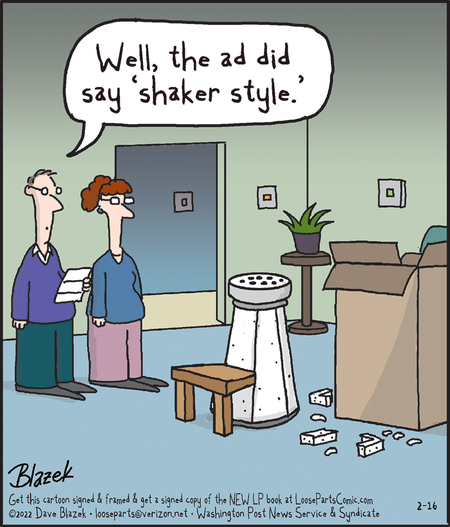
Let’s mark this Lard’s as a CIDU-Oy, inasmuch as it does a rather nice word-play joke, but may take a couple beats to figure out.


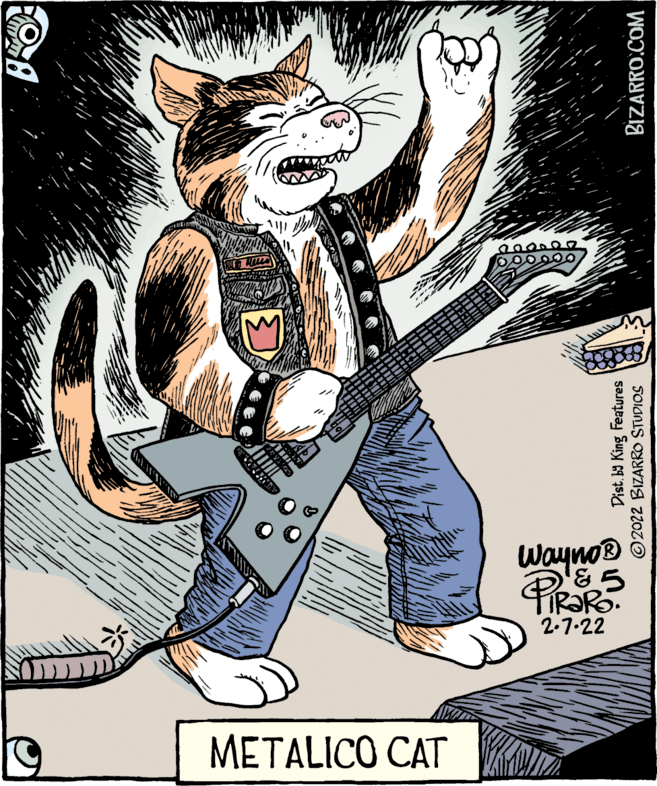
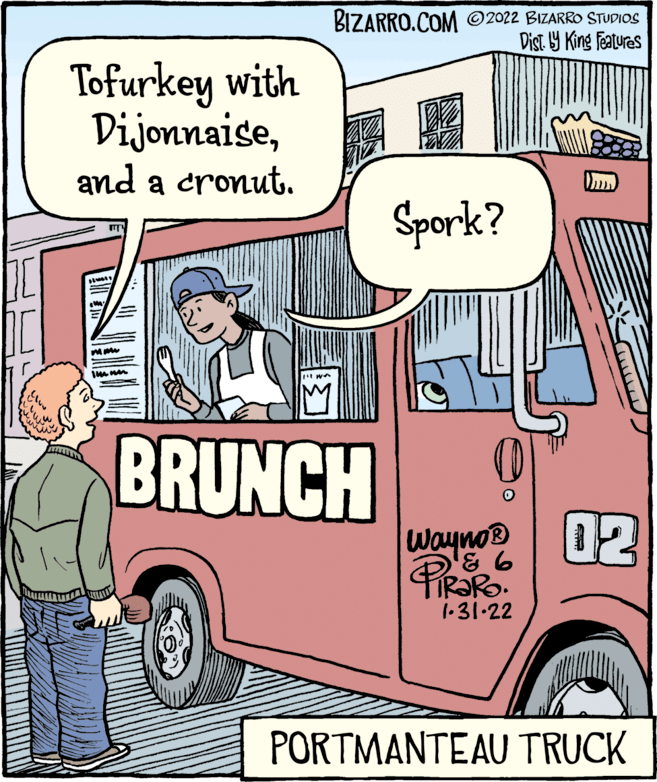
Not a perfect portmanteau but it’ll do, and we get to treat the cat fans. For those not into cats, you may not be aware that a vernacular name for this sort of tricolor marking is “calico cat”.

And not-a-perfect exemplar of “pun”, but this is certainly word-play!



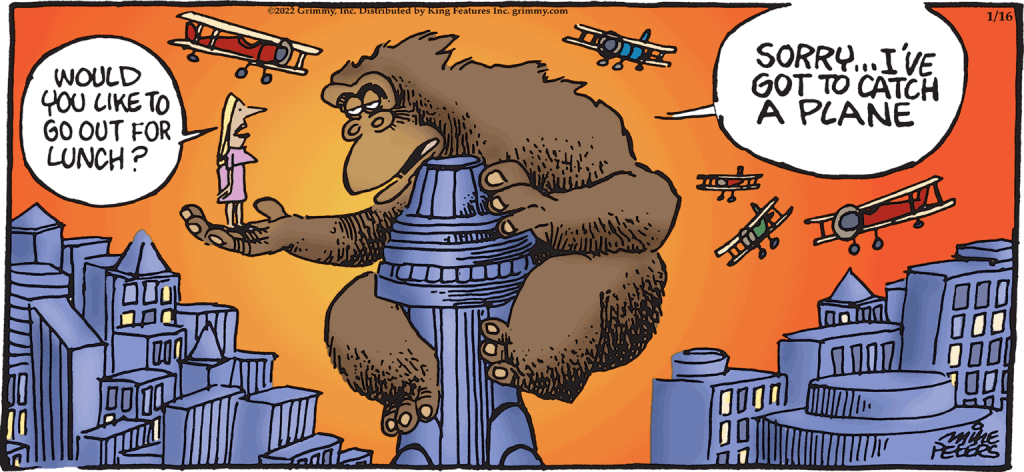
I only recently started sometimes reading One Big Happy, and evidently don’t yet have a good handle on the age and attitude of the intended audience. But these are all clear OYs on familiar sayings.


Is this Horace himself, doing some kind of costumed performance? Or an ancestor or other predecessor, who looked like that in his heyday?

And a definite meta-OY:




Gotta wonder what Grawlix will make of all that punctuation …

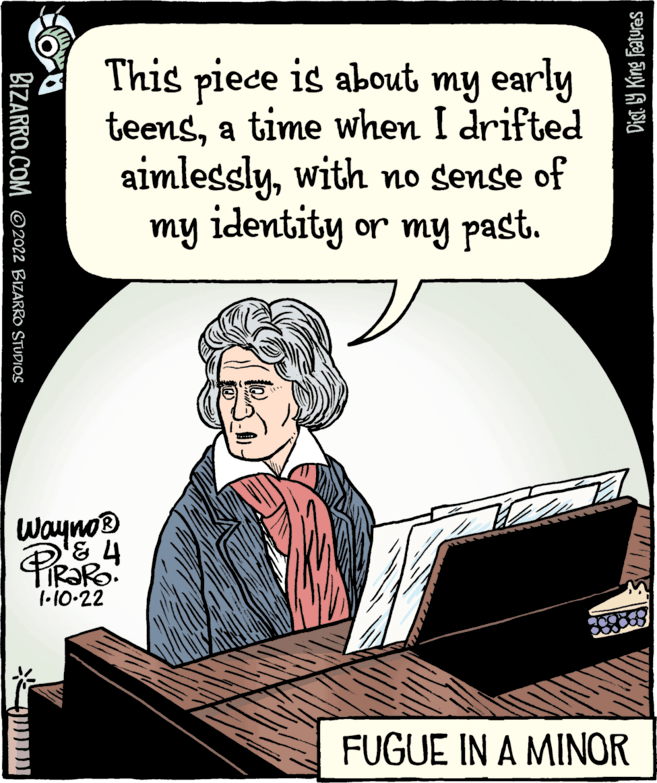
We can discuss how dictionaries work, but I think I’m seeing (at https://www.lexico.com/en/definition/fugue and https://www.merriam-webster.com/dictionary/fugue ) that the musical and the psychiatric meanings of fugue are senses listed in one word entry, with just one etymology section for the joint entry — thus, that they are the same word historically. Etymonline is not helpful this time.
Not only is this playing between the musical and psychiatric senses of 𝘧𝘶𝘨𝘶𝘦, the caption depends on 𝐴 as both a musical key and the indefinite article, and 𝘮𝘪𝘯𝘰𝘳 as both musical mode and an age classification.
P.S. This cartoon along with an earlier Bizarro and other aspects of fugue, minor, a-minor, and somehow emo, are all fodder for Arnold Zwicky’s blog.


When I saw the first panel I knew what the second one would be! Ókay, it’s corny and obvious — but that’s what’s fun about it.
Here’s your chance to duplicate that experience.
First:
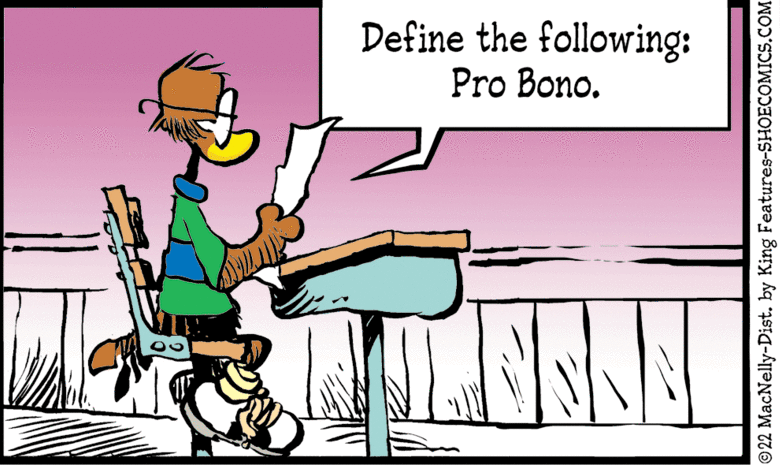
And here the answer (slide up to uncover):


 Comics I Don't Understand