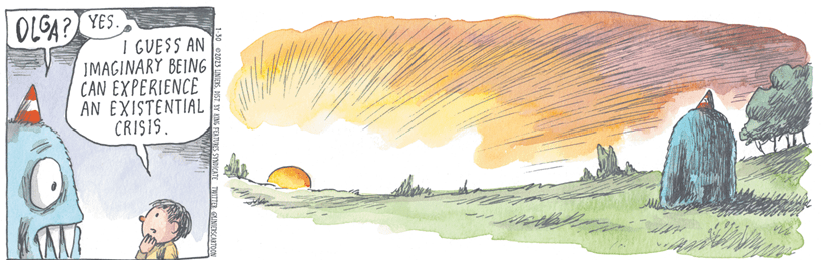
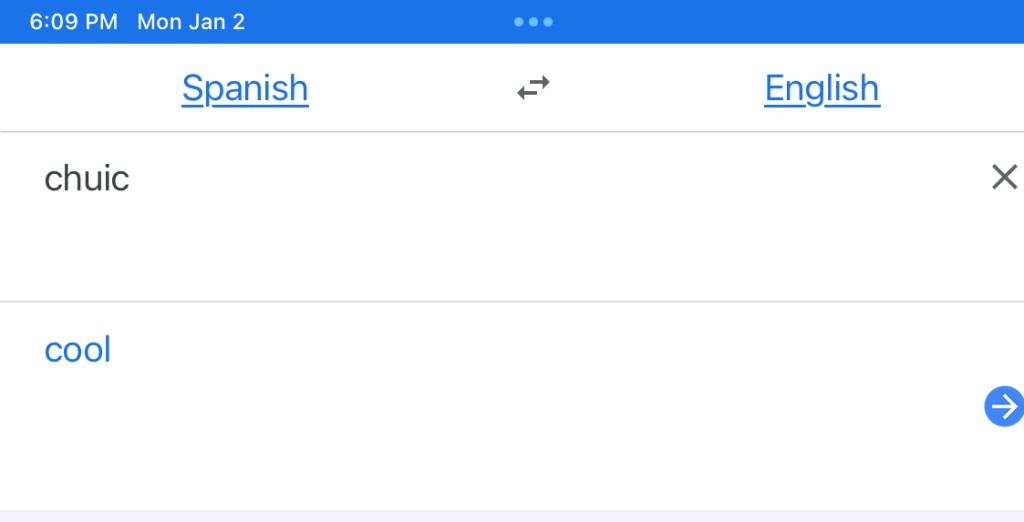
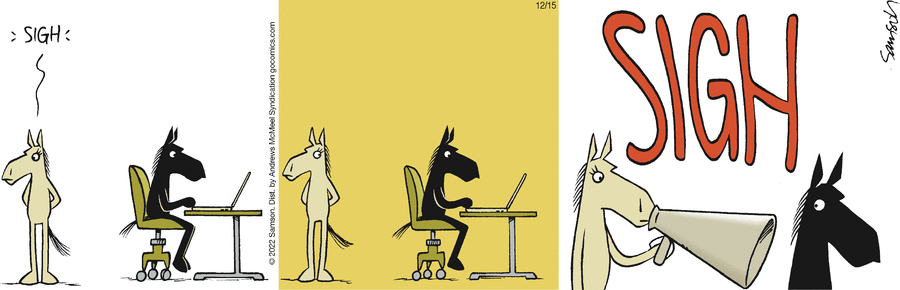
Parallel to our question for Baldo, but probably with opposite conclusion, this pair suggests confirmation that for Macanudo the Spanish version comes first and the English results from translation.
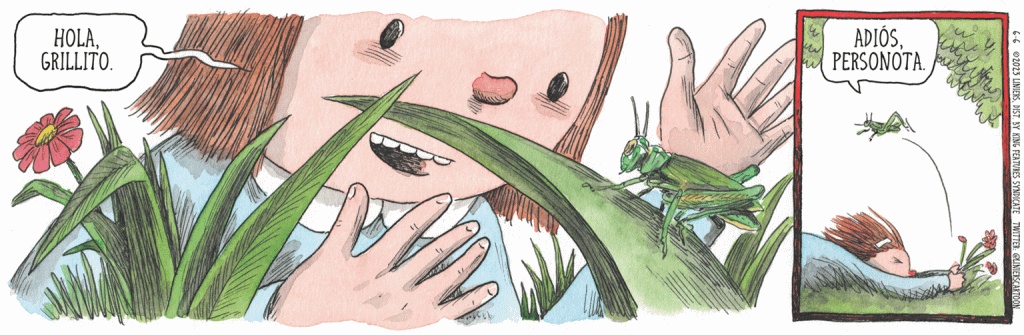

The humor is from, well first of all the behaviors of the two species, but after that the creative way the suffixes are used in the Spanish. (I don’t think the -ota is entirely standard. but is creatively deployed to convey “large”. Comments welcome from experts and fluent or native speakers!)