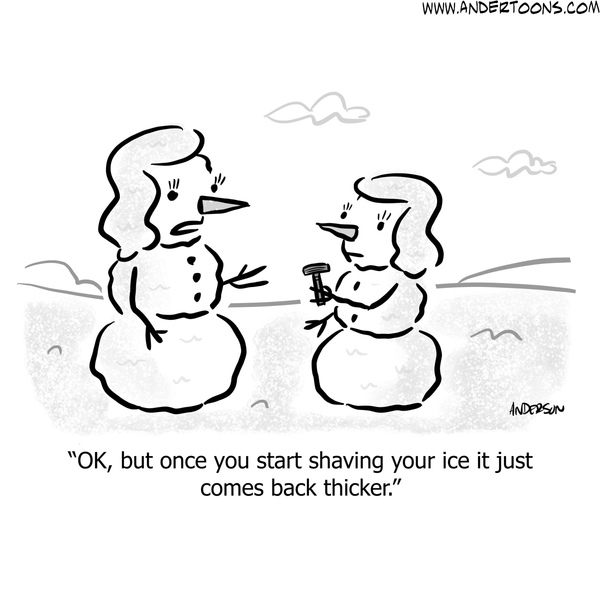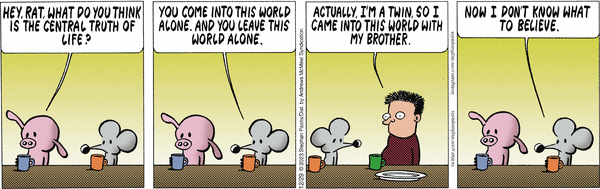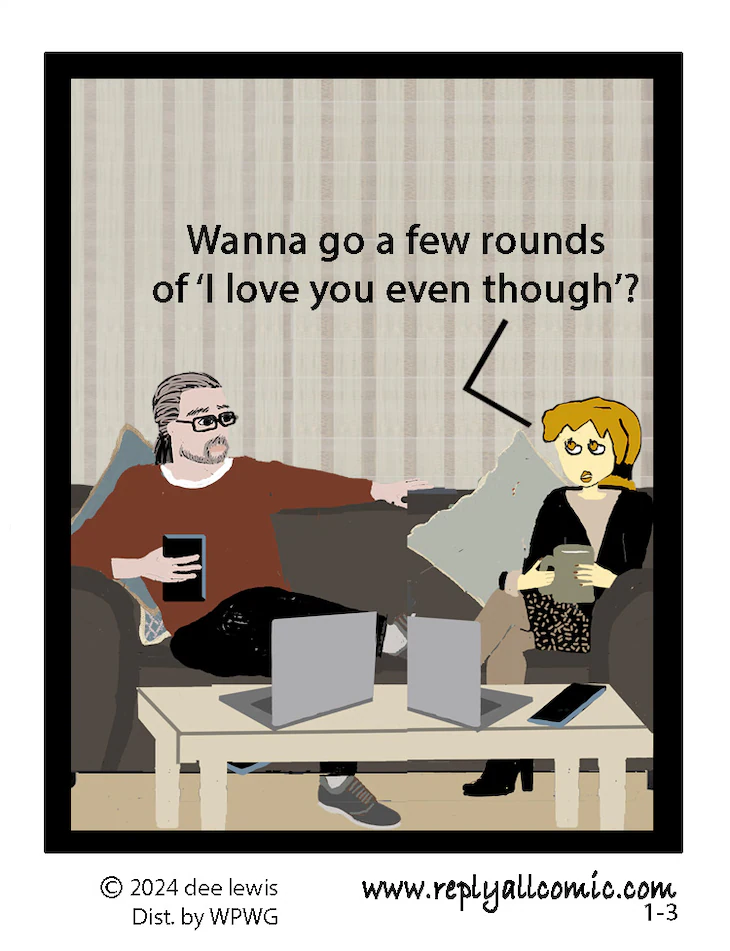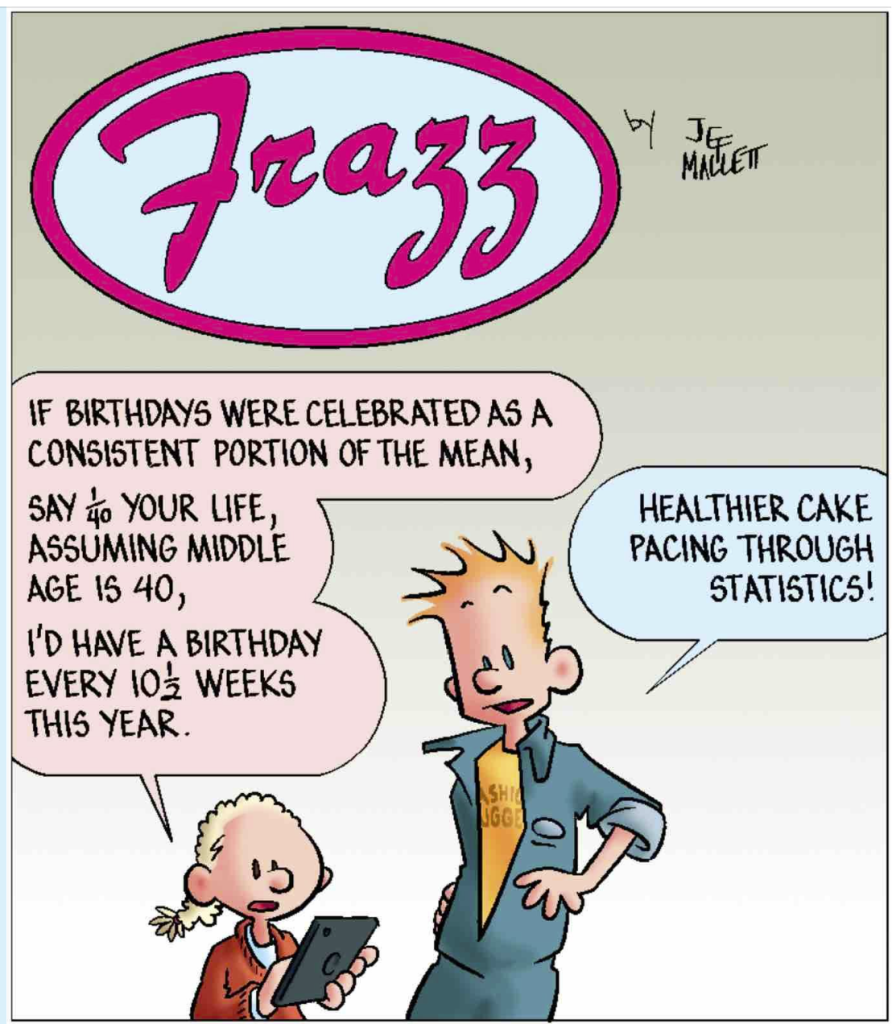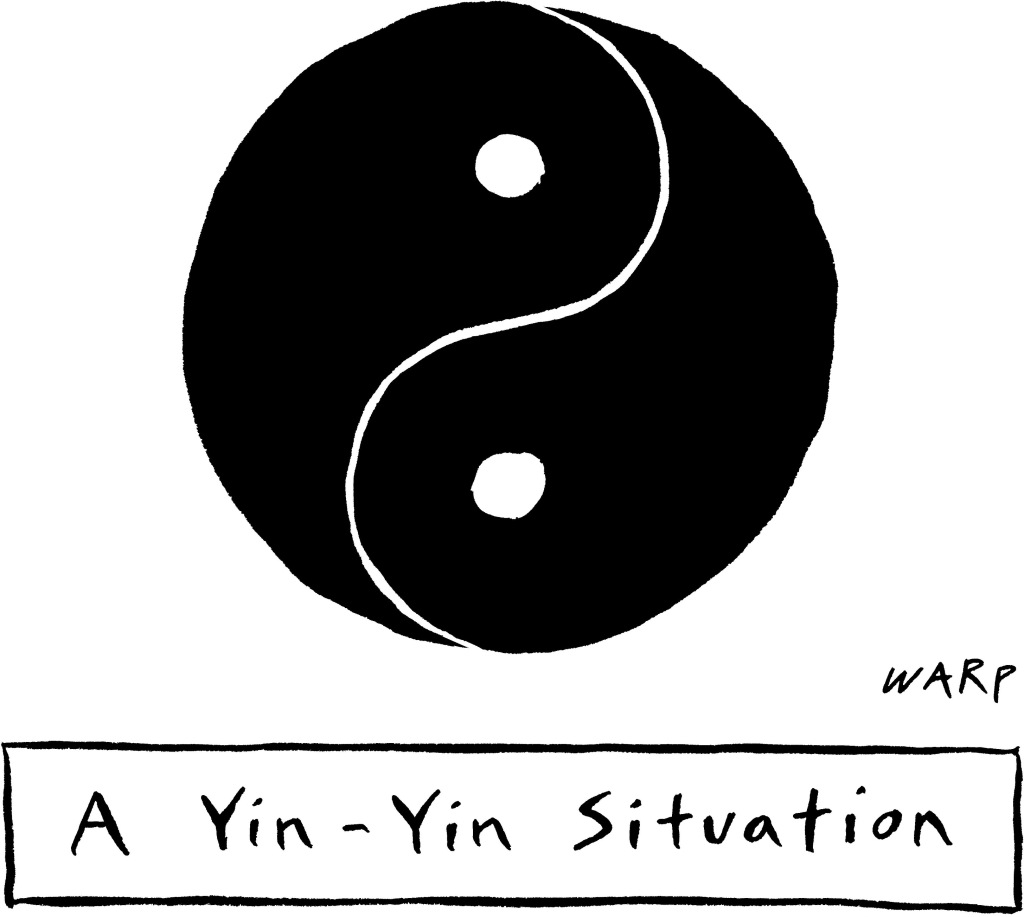
And then, do we think it was intentional, or something went wrong along the way?
And then, do we think it was intentional, or something went wrong along the way?
TBH, this Rae the Doe isn’t really a LOL; but it needed to go in a list-post as not fully justifying a standalone daily post or even a bonus. What’s special about it is that you don’t often see a genuinely informative infographic as panel or strip of a regular comic (that is, excluding those that purport to bring you facts every day). Also, the artist’s note is endearingly unassertive, as usual (yes, she does put in notes somewhat often).


Happy Belated National Peanut Butter Day (January 24th).


BCN does Alice!


No, I kan’t make any sense of this Calvin and Hobbes:

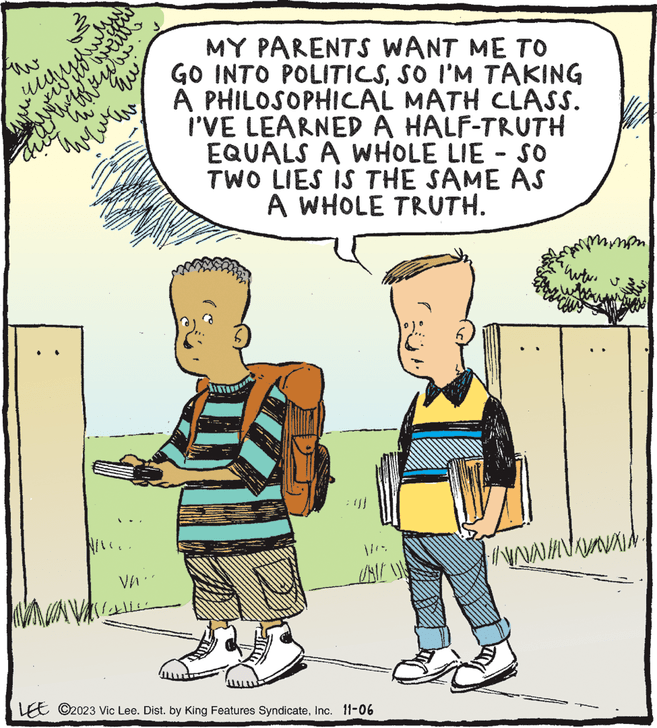
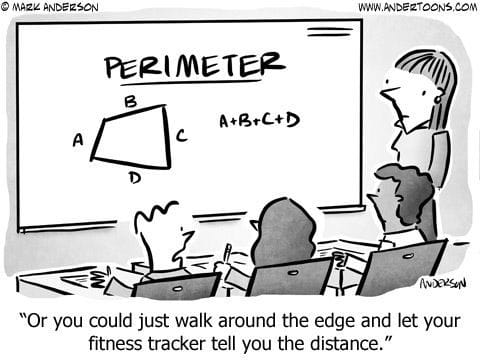
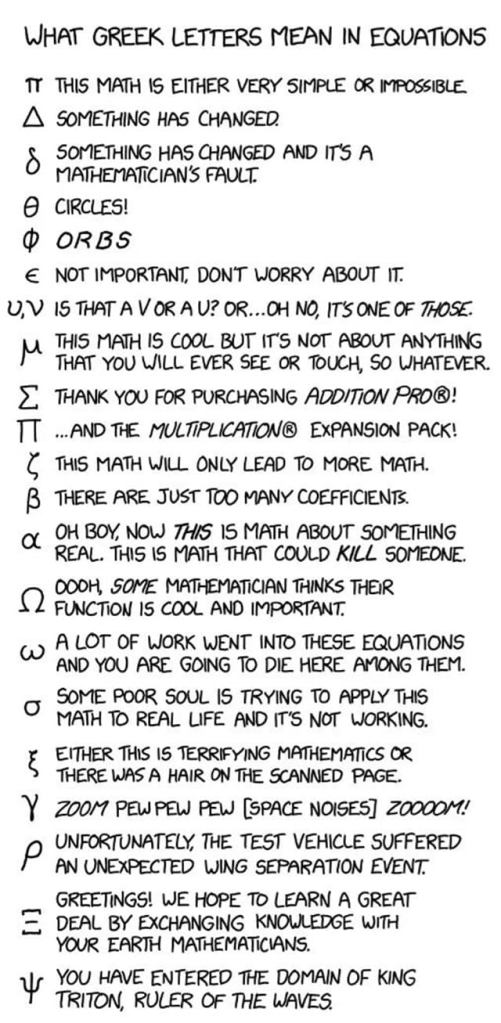
Pi Day (March 14, or 3/14) gets a lot of play in the U.S., but doesn’t work in other countries that write dates as DD/MM/YYYY, so it becomes 14/3. An alternative in those areas is e day, after the base of natural logarithms, e, (2.71) on 27 January. So, we’re going to avoid the Pi Day rush and post some math cartoons today.
Like pi, e shows up in a variety of places in mathematics, and is associated with some of the greats in mathematical development. From Wikipedia:
“The number e is sometimes called Euler’s number …—after the Swiss mathematician Leonhard Euler —or Napier’s constant—after John Napier. The constant was discovered by the Swiss mathematician Jacob Bernoulli while studying compound interest.”
Some fuzzy math from websites. The first is from Kiva.org.

This one is from MyVirtualMission.com, a site where you can virtually pretend to climb Everest or complete the Camino de Santiago as you run/walk/bike around your neighborhood. Somehow, their counter of missions (trips) has gone awry. Or maybe I did one backwards?


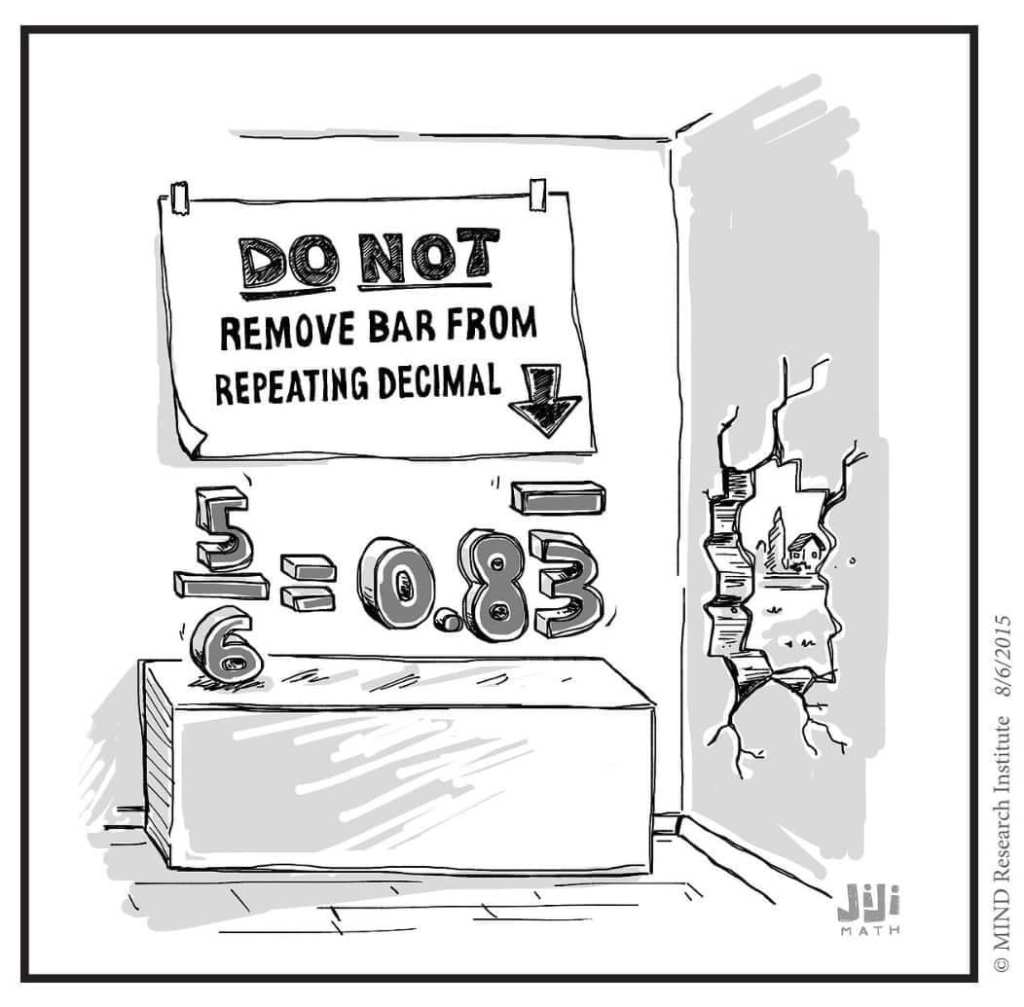


A few takes on Mickey Mouse entering public domain. The Pinocchio one is particularly apropos.


Thanks to Boise Ed for this LOL from Tundra:

Every so often we see, or are sent, a comic that has something awry in its setup or presuppositions, and are tempted to run as a CIDU because “I don’t understand how we can proceed from a faulty premise” or something like that. But then on the other hand we, on principle, aren’t here to condemn and cast out any cartoonist or their work.
So, as an outlet for the first impulse, here are some collected examples, of cartoons from sources one certainly respects highly, but contain boners that just demand to be called out.

This is actually pretty funny … once you get past the multiple problems in the setup and the text giving the premise.

But this seems to depend on fission being more dramatically explosive than fusion.

Except there are no imaginary numbers involved!

Okay, it’s no doubt just a typo, but maybe today there isn’t a pass for that. The issue is that Argon is almost exclusively encountered as a gas, never an oil. But there is something called argan oil, currently a popular component of skin and hair products.
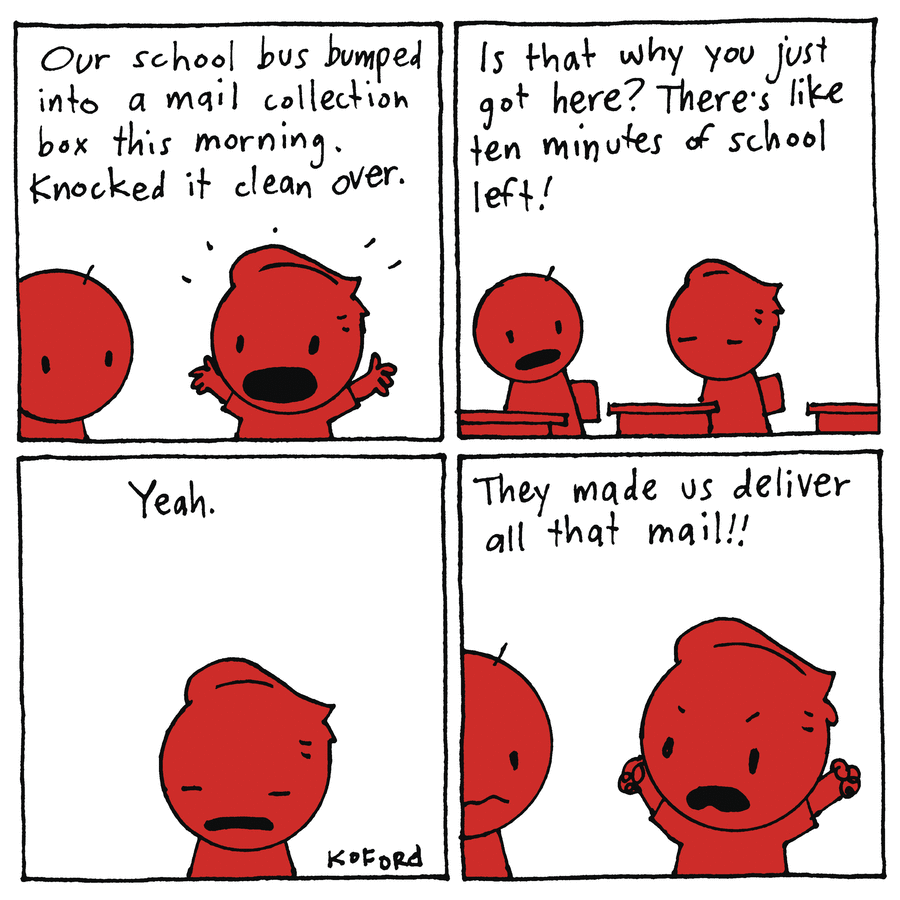
The error here is probably noticeable only to someone familiar with the workings of USPS local operations in urban localities. A collection box is the more commonly seen, the mostly blue boxes we call just “a mailbox”, with some kind of opening where anyone can slide in a letter. They will contain mail for anyplace on earth, or anyhow in the USA, and certainly not limited to local destinations. There’s no way the buskids could deliver all that.
The joke could perhaps be saved by making it a [postal] relay box. These are the somewhat larger boxes, in a khaki-green, with no public deposit latch, only a side door with a lock. When a local delivery carrier with a bike or pushcart sets out from the station to begin their route for the day, it would be awkward to have to carry all the mail for the whole route. So it gets broken into two or three stages, and a truck from the station goes around to the relay boxes in the area and drops off the packets for the later stages of the routes being serviced by bike or hand-cart carriers. If the bus in our cartoon had knocked over one of these, the buskids could plausibly have delivered them. (You don’t need to know the route — just “follow the mail”.)