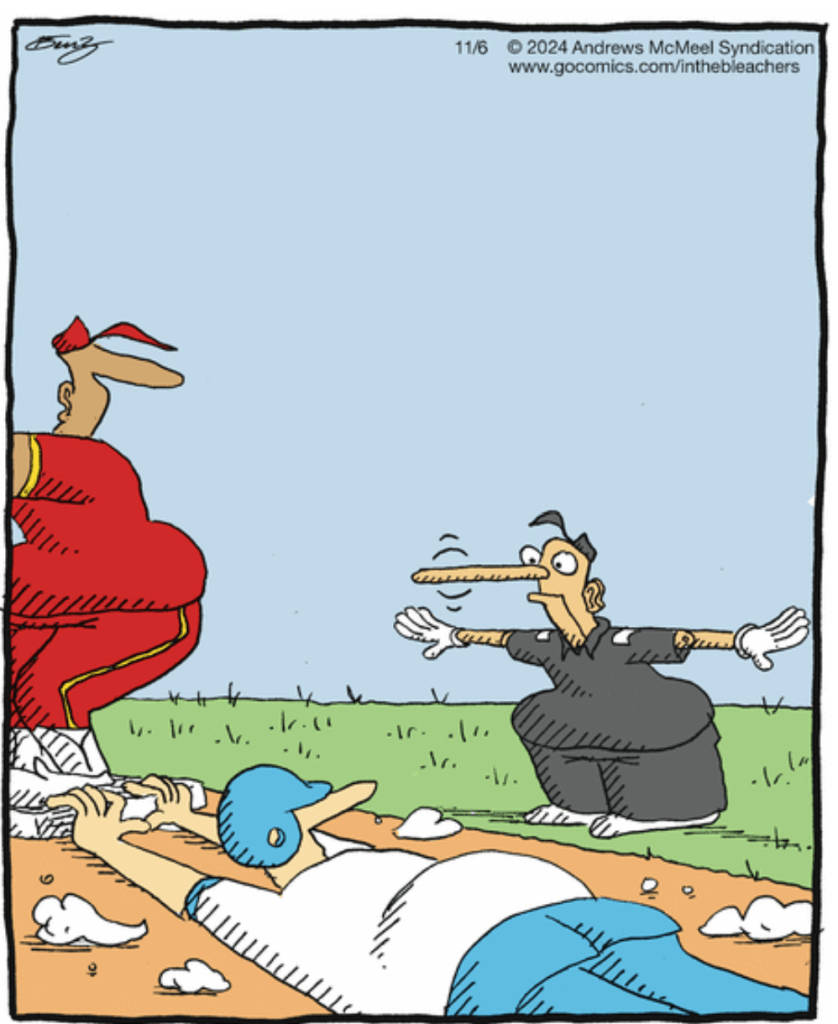
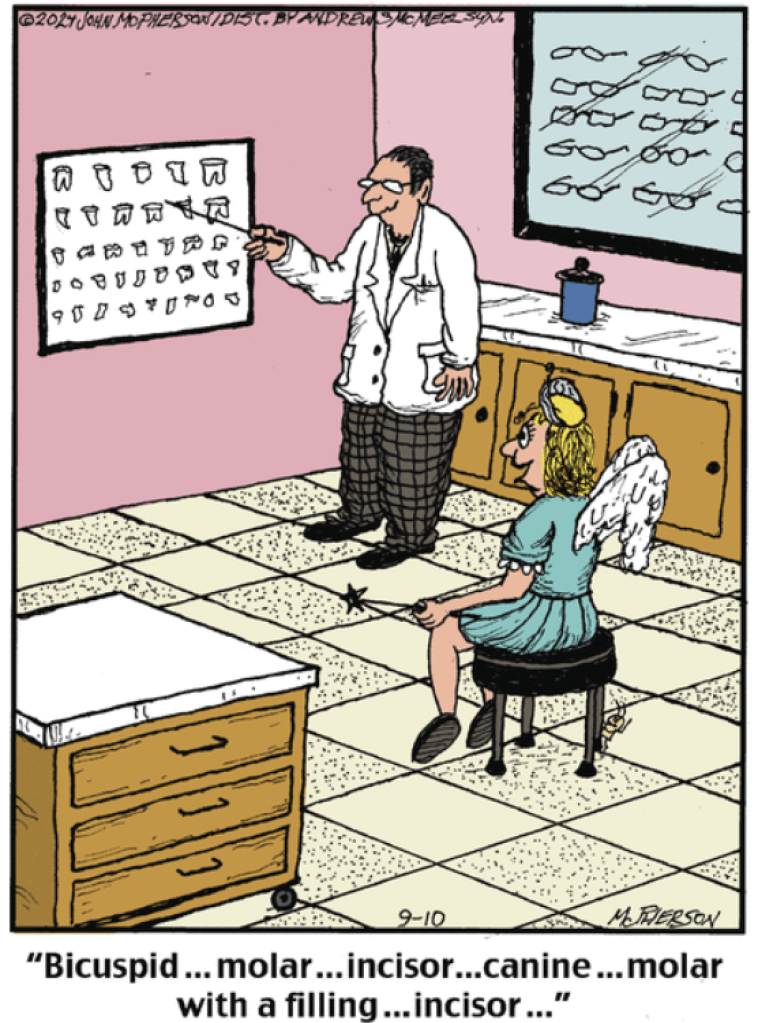
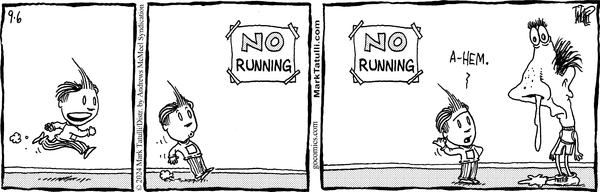
Okey-doke, an accents joke. Or a pronunciations joke. Why not?


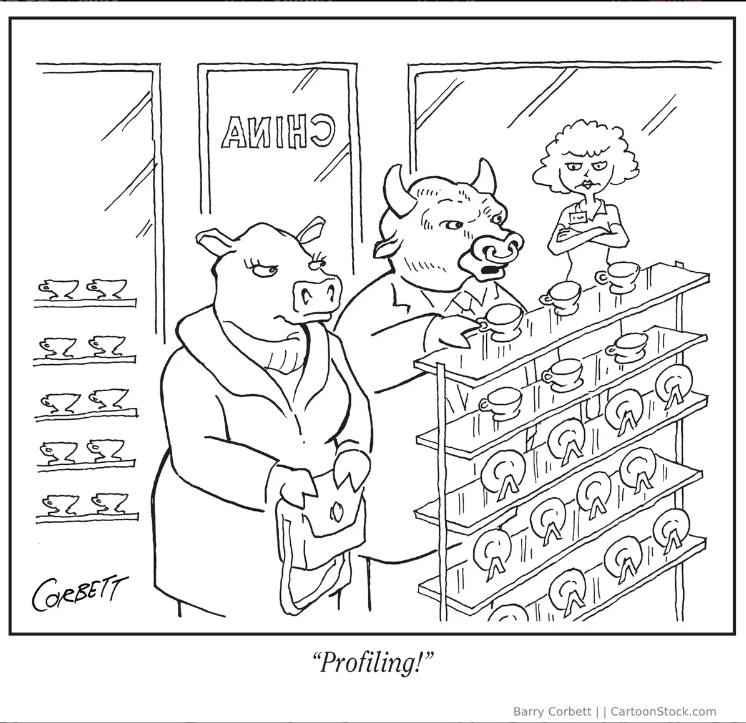
Yeah, don’t say that! 🙀[“Caring” emoji, did I get it right?]


Okey-doke, an accents joke. Or a pronunciations joke. Why not?


Yeah, don’t say that! 🙀[“Caring” emoji, did I get it right?]


This is close to a CIDU, as there doesn’t seem to be a single best / obvious answer to the question.

Tim Harrod sends this in: “Whether you laugh or not, Jim Davis is historically reliable at coming up with a punchline. But here, the joke is apparently that the eggs are really spicy… and a lot of people ordered them. It could have been a scheme to sell a lot of milk, but then Irma should have more of a sly grin in the last panel.”
The gag seems straightforward, but Tim’s right: she should have a sly, knowing grin on her face.
On Monday, will we see Irma’s lasagna?

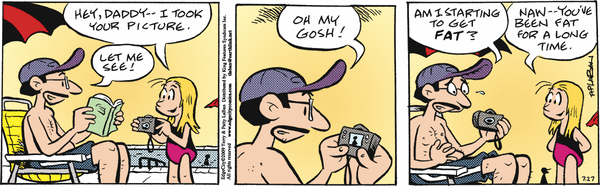
Probably more of an Awww than strictly an LOL.


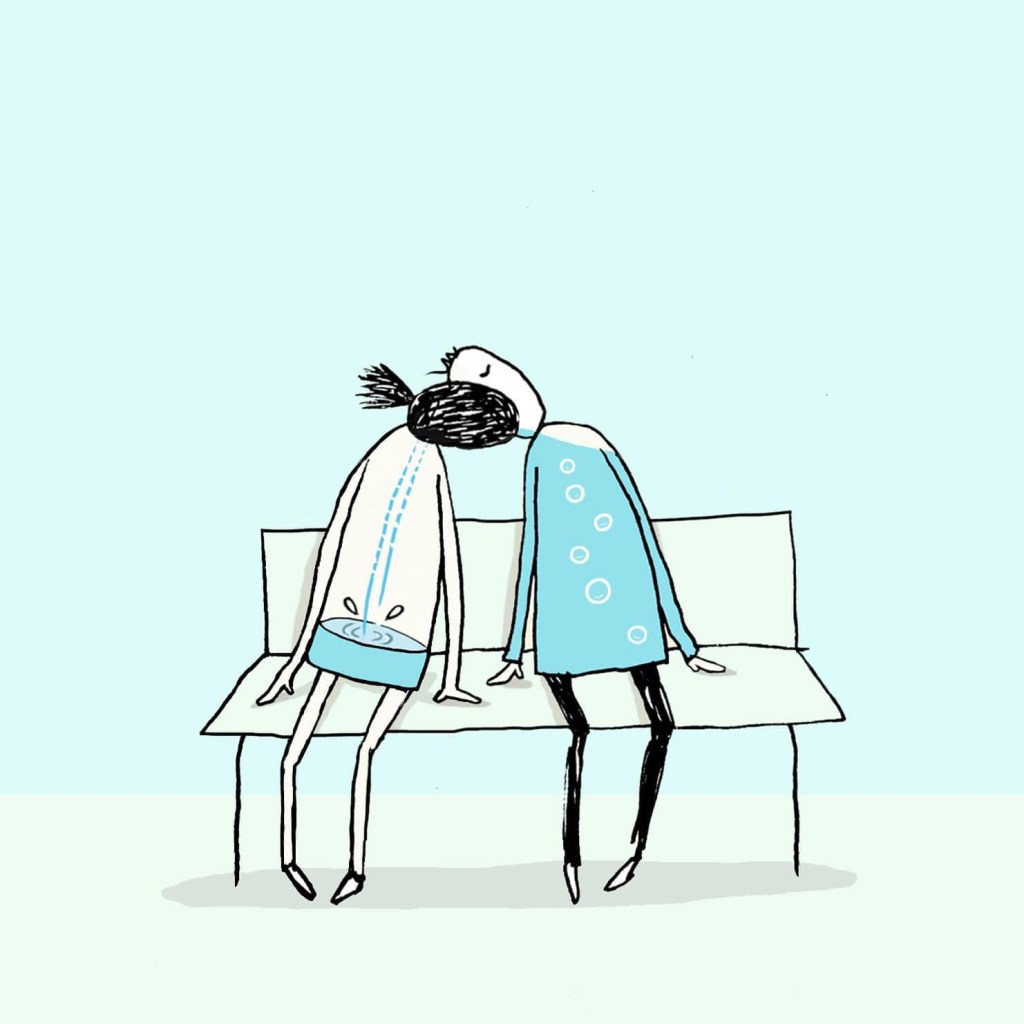
Keeping hydrated??


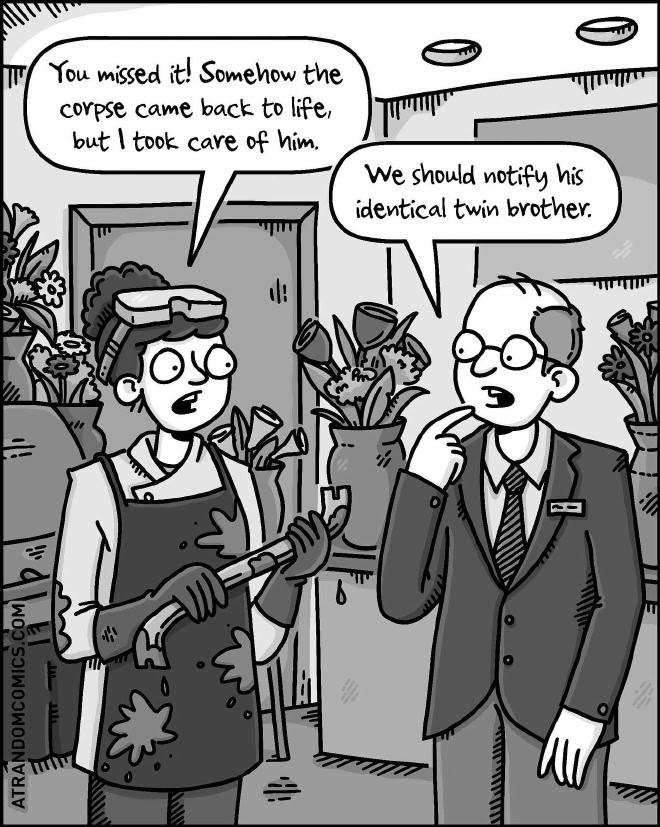
Here’s a LOL/semi-CIDU courtesy of Dale Eltoft – and thanks for the intro to Ryan Mason / At Random Comics.


I had trouble with the premises of the original Topper TV series because I didn’t understand the distinction between when the ghosts would “dematerialize” and when they were simply invisible.

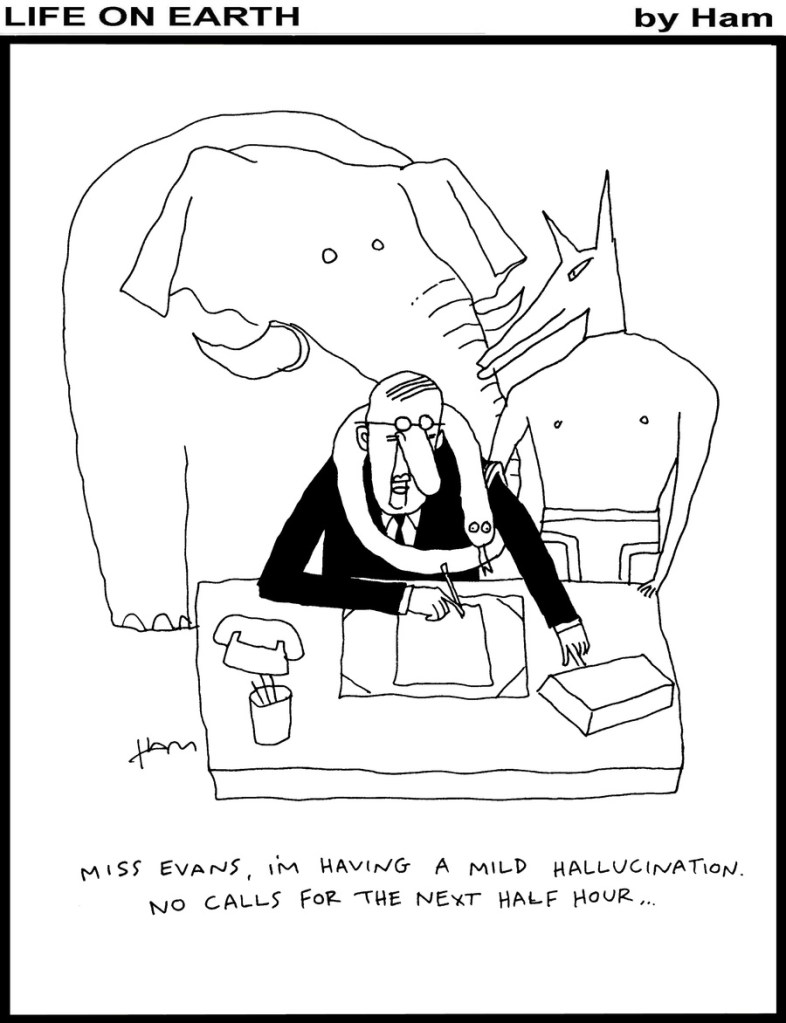
Just a touch of CIDU perhaps…


CIDU note: So what was their plan? Or is it merely a non-coordination mixup. The usual TV story would be that they planned to go to town and do something wild.


Continuing the metaphor: orange traffic cones are like the Legos strewn around the floor for the enjoyment of our feet. Potholes are teenage acne. Tickets are tuition bills.
A little cross-strip banter –


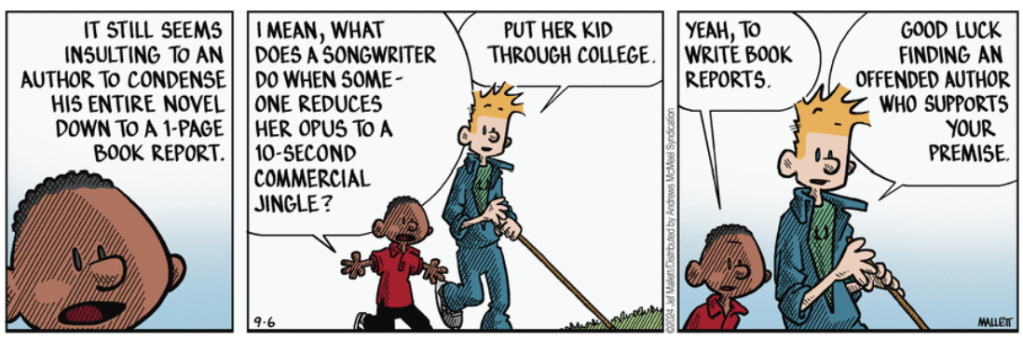
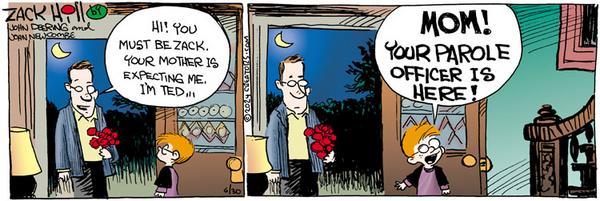
Hey, I don’t care that it’s been debunked, we can still have jokes based on it!


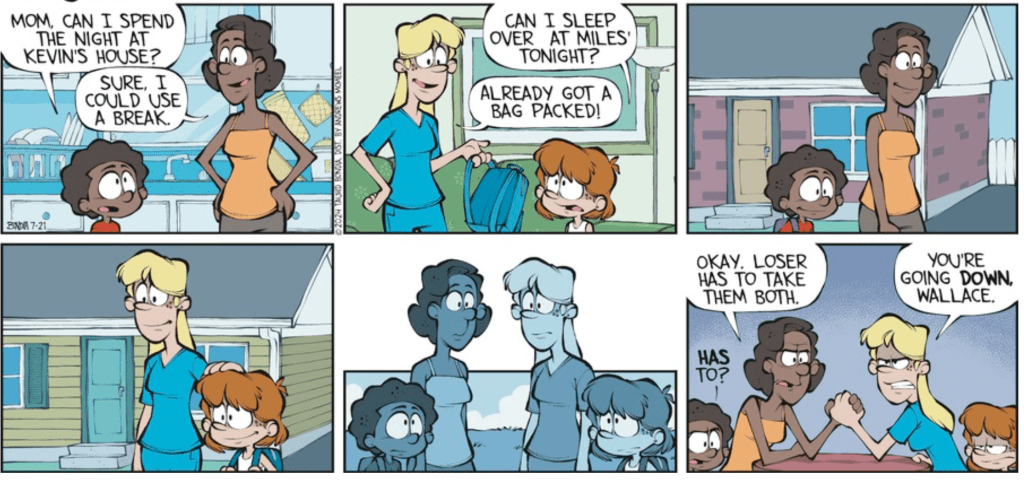
Awright, going meta on the meta, eh? And why not?

Boise Ed, sending this in, suggested that the cookie-based business card could be a great idea!


And I still maintain that the ugly Internet phenomenon of “trolling” started being called that from a metaphor on the fishing practice (dragging a baited hook behind a quiet small boat), and not the Scandinavian bridge-dwelling threateners.
Are we done with Bizarro for this post? Never say so!


I was preparing to protest that the expression is traditionally “strait and narrow” — which would be preferable despite its redundancy. The pattern of redundancy in rhetorical pairs remains hale and hearty, though some may wish it null and void.
But no! The useful sources recognize only “straight and narrow”, with just a nod to the echoes of “strait”. Here’s Etymonline f’ristance [in entry for straight (adj.2) = “conventional,” especially “heterosexual,” 1941]:
probably suggested by the stock phrase straight and narrow path or way, “course of conventional morality and law-abiding behavior” (by 1842), which is based on a misreading of Matthew vii.14 (where the gate is actually strait); another influence seems to be strait-laced.
No, let’s not get started on straight-jacket!


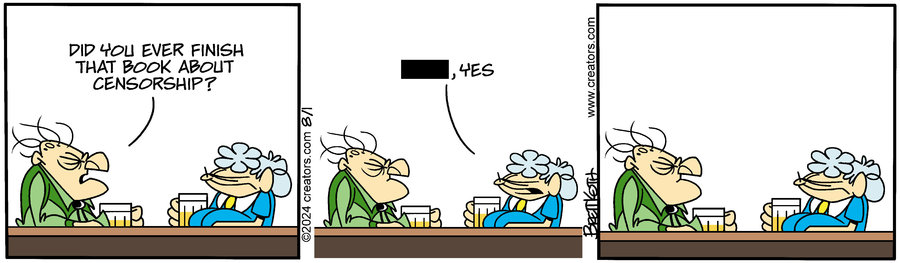
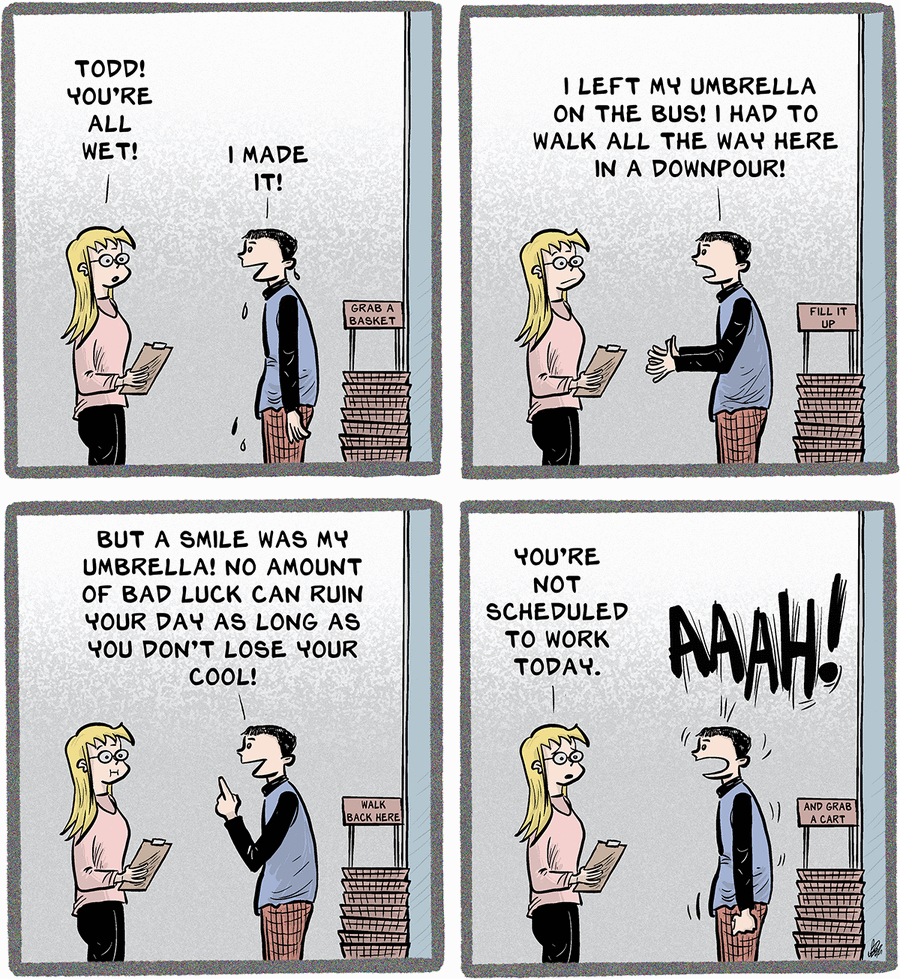
Et tu, Jeremy?

Nice variation on a standard cat-behavior joke. (Do you’all remember Business Cat #1?)

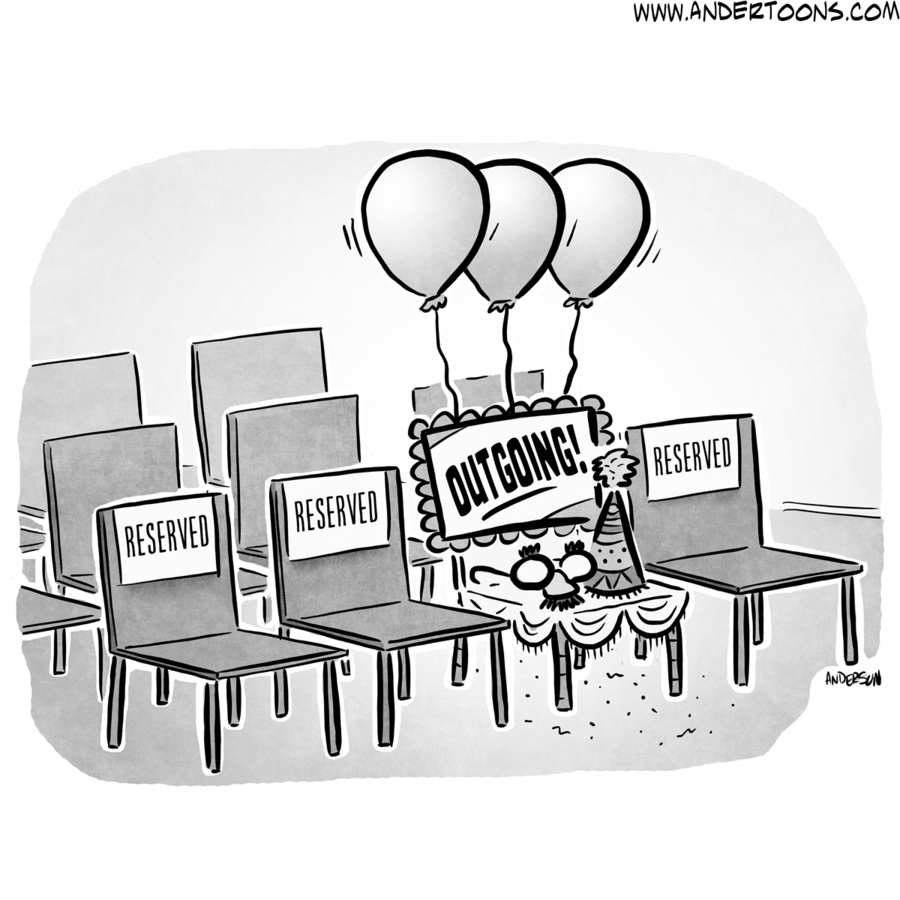
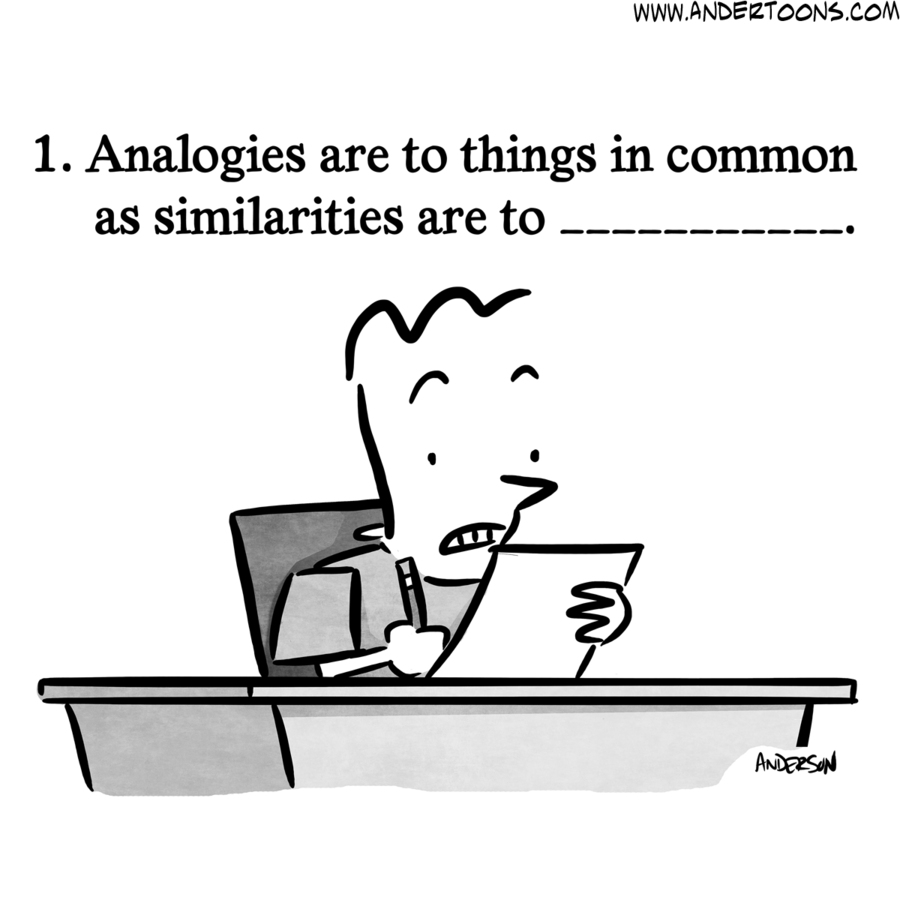
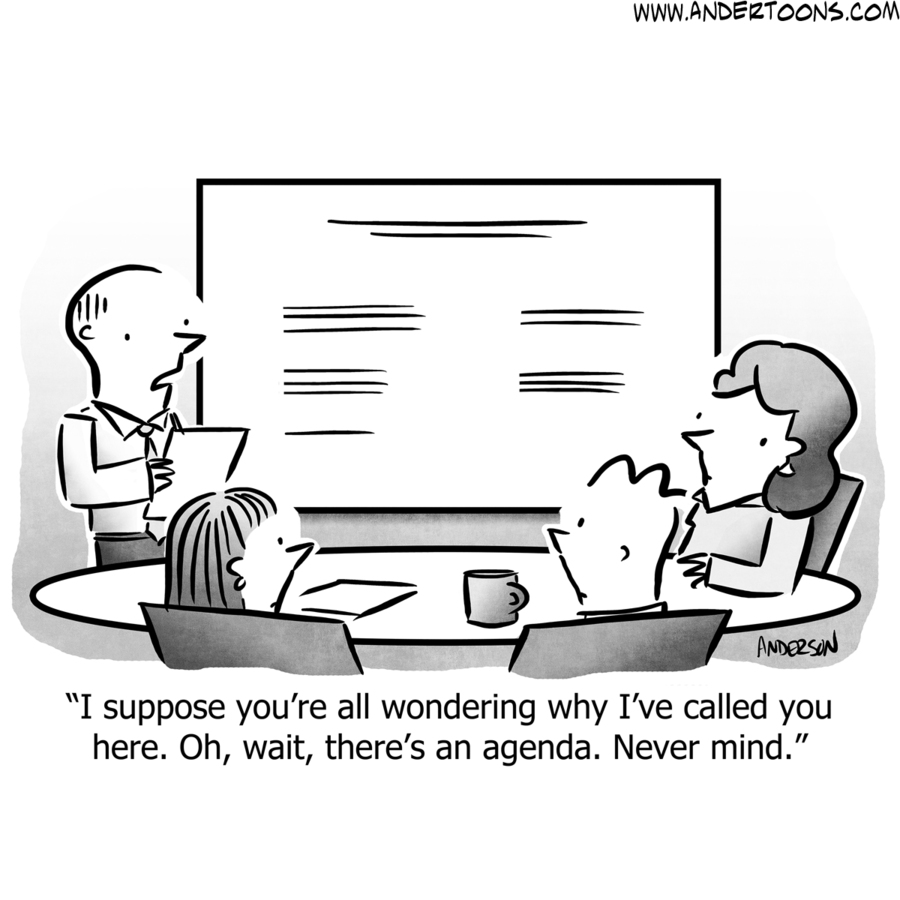
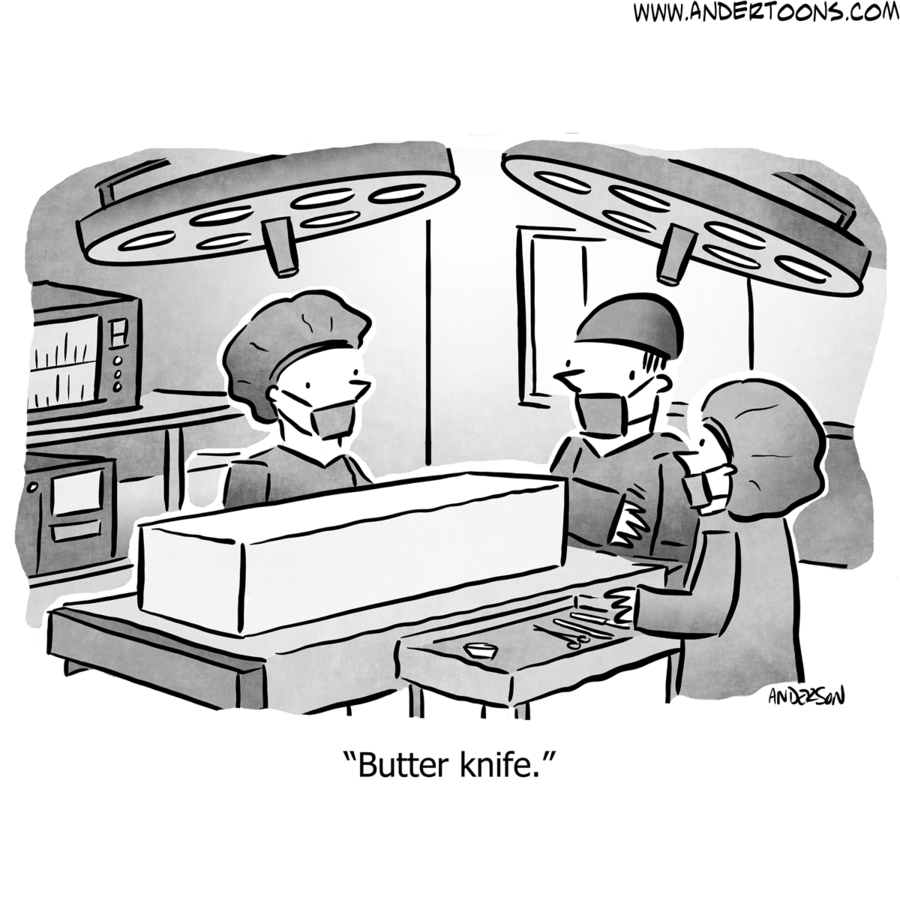
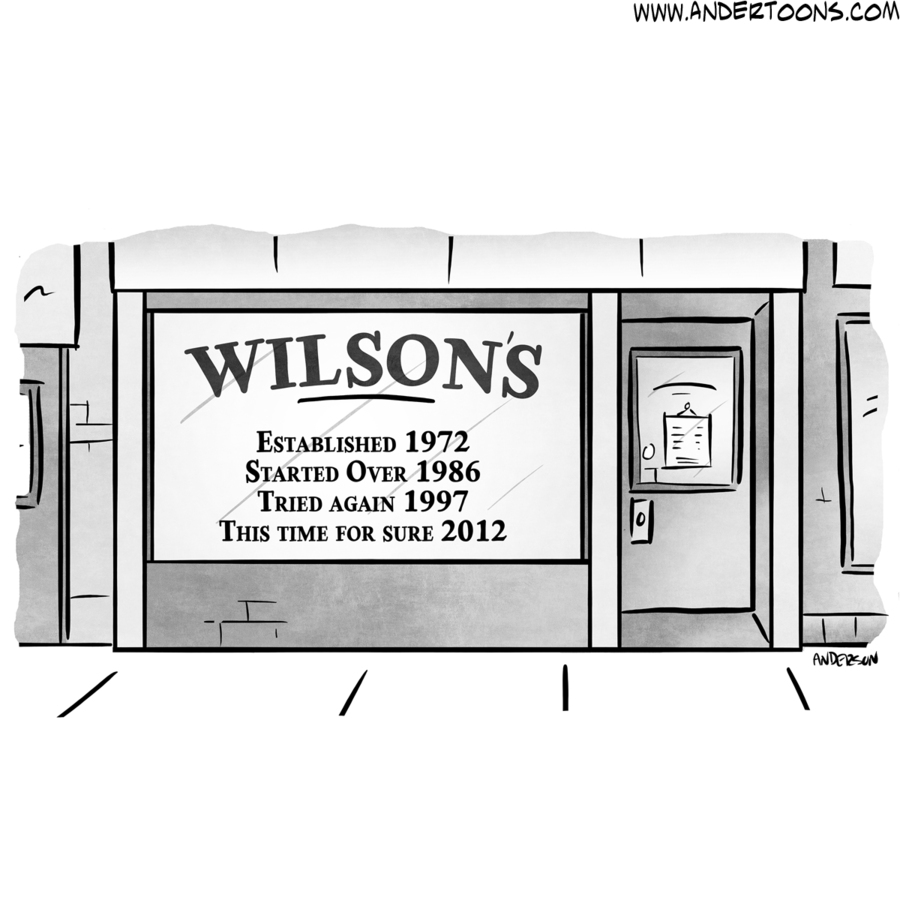
I’d call this Andertoons just about perfect!


Hmm, would it be better if the two ideas in the last panel were reversed? First “wonder why” then “and how”?

Subscribe in the Founding Member tier.
Comics Kingdom is heavily promoting Goomer:


Rather dumb word-argument. But it prompts memory of an assortment of senior-targeted advertising campaigns which for a while used the phrasing “age 50 or better” or “age seventy-and-a-half or better” etcetera. It was supposed to be obvious, yet a sort of joke, that better would mean older. At least one that I heard regularly for a while did change to older; but then later reverted to better ; so I guess there was some complaint but it got resolved, or just overruled.


Come to think of it, probably the word-level associations of squashing things must have played a role in my lifelong aversion to the vegetable of that name.

Chak notes “I’ve read En attendant Godot several times, and I still don’t have a clue.”
Could one expect Godot to comment? Waiting for your comments below.