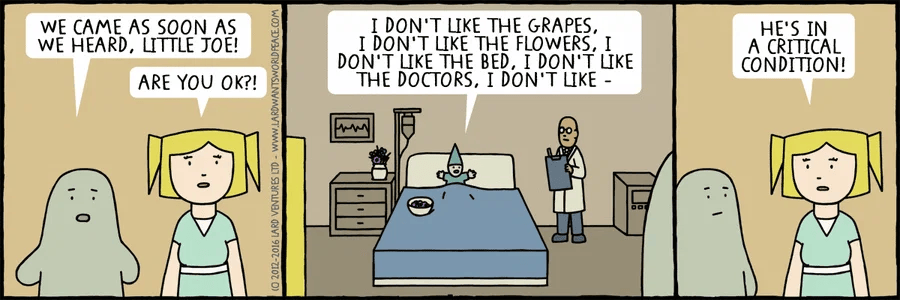
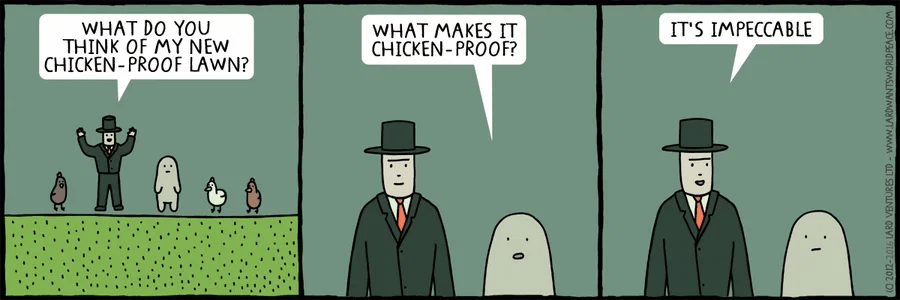
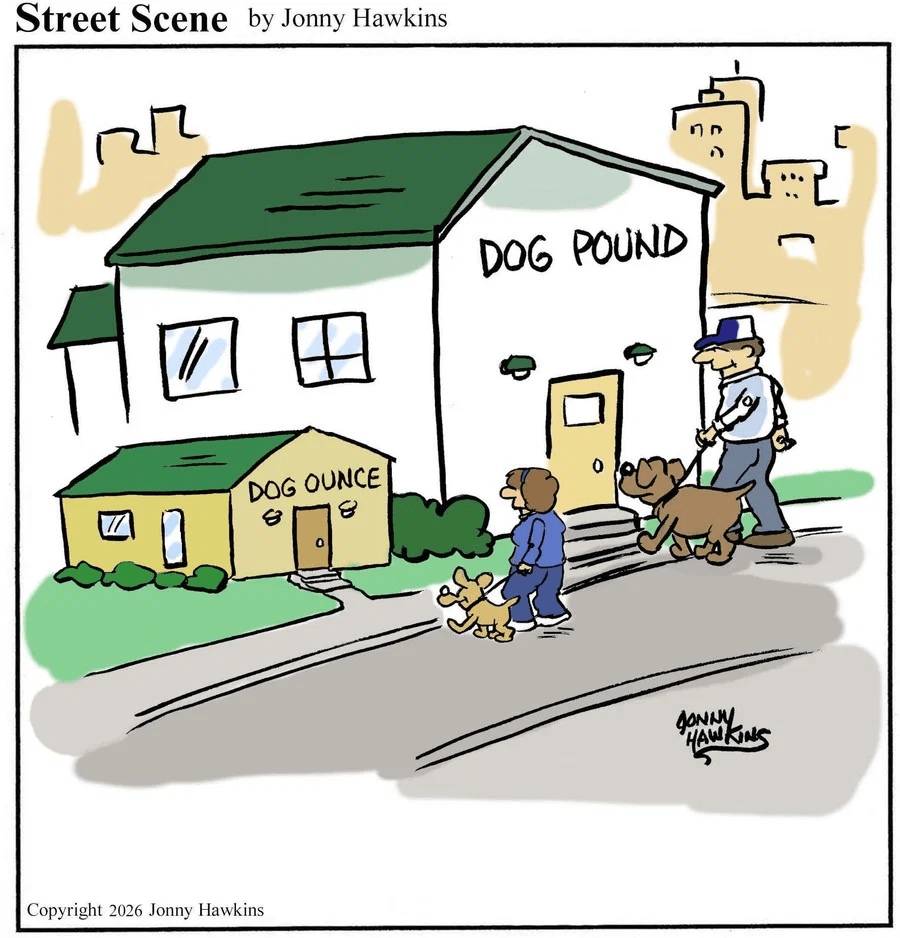
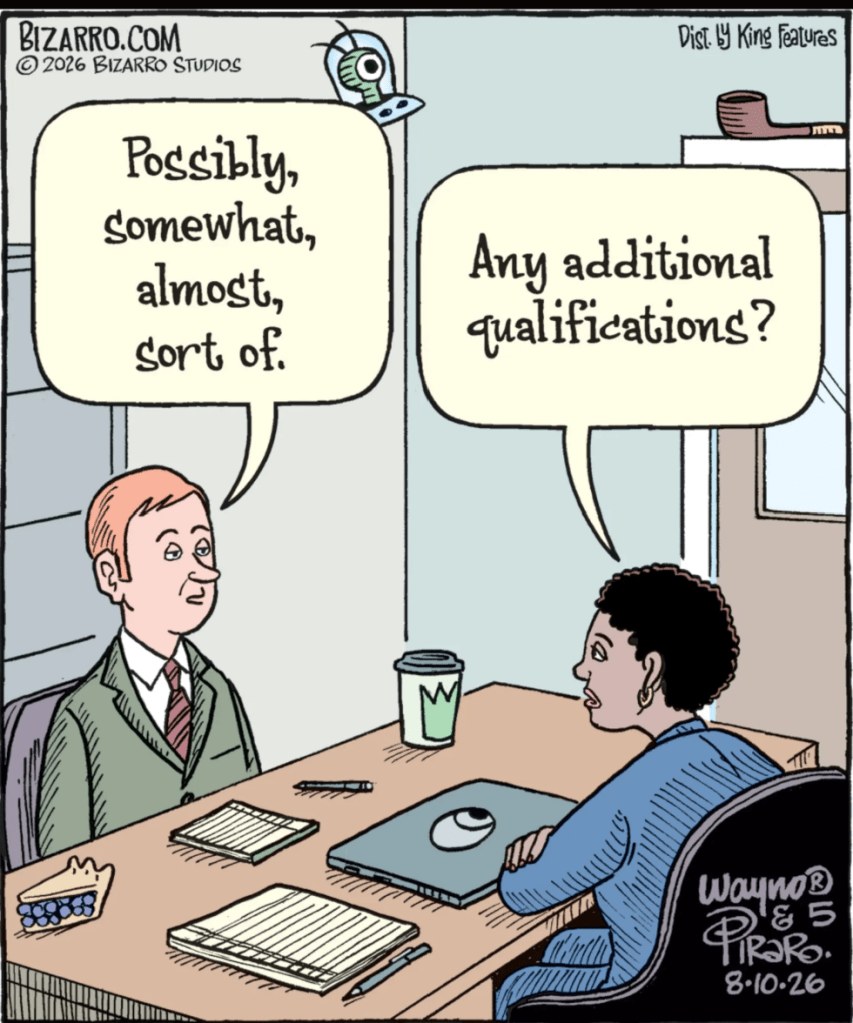
Mitch4 sends this in: “An OY with a self-conscious (or “meta”) element.”
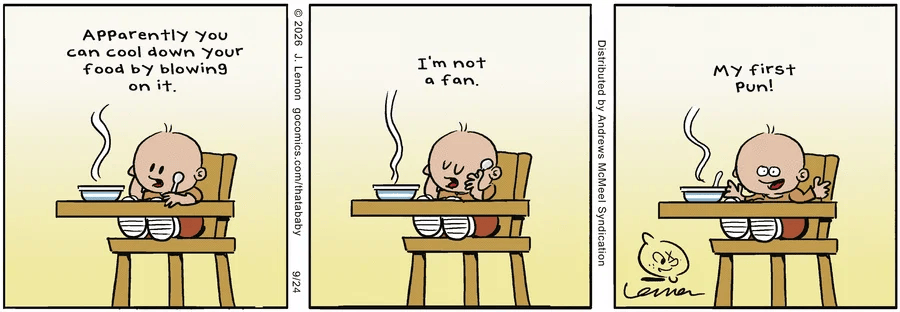
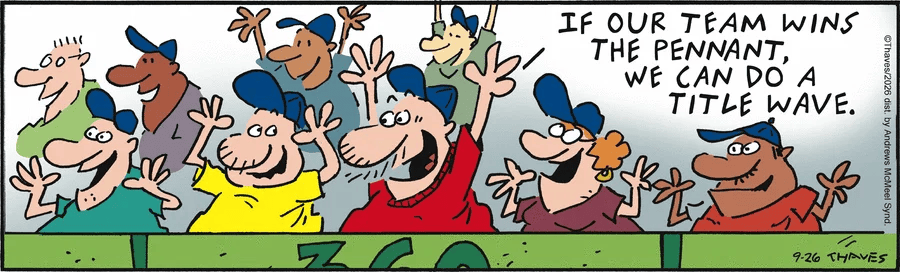
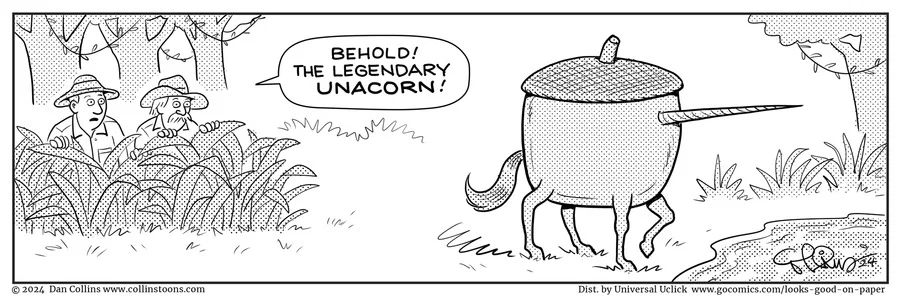
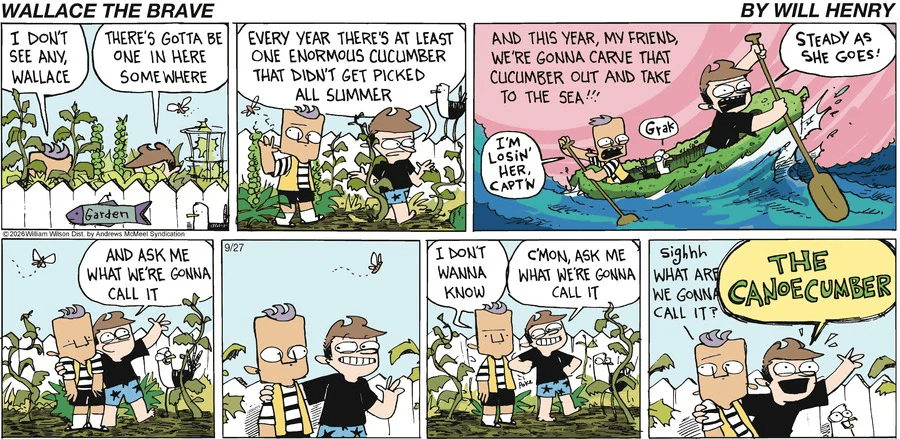
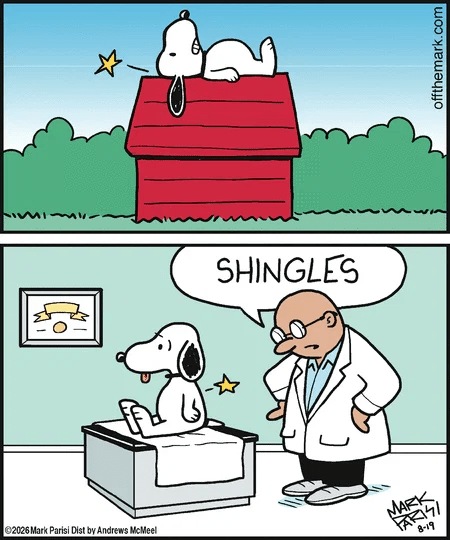
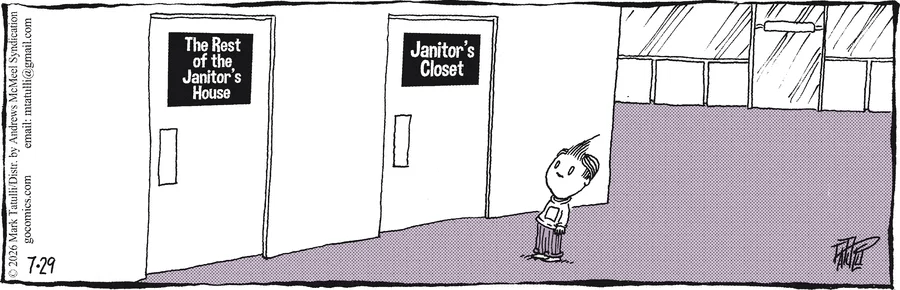
A zucchini boat would be an alternative.
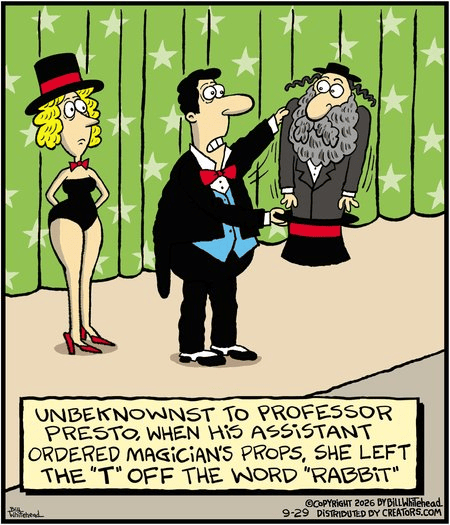
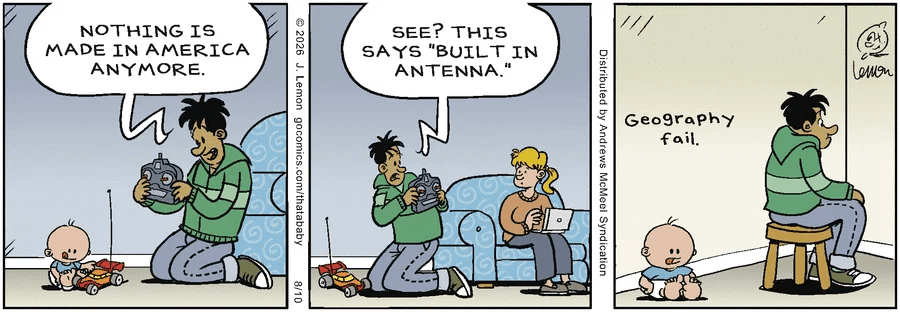
Quoth the rabbi: “Oy vey!”
Mitch4 sends this in: “An OY with a self-conscious (or “meta”) element.”
A zucchini boat would be an alternative.
Quoth the rabbi: “Oy vey!”
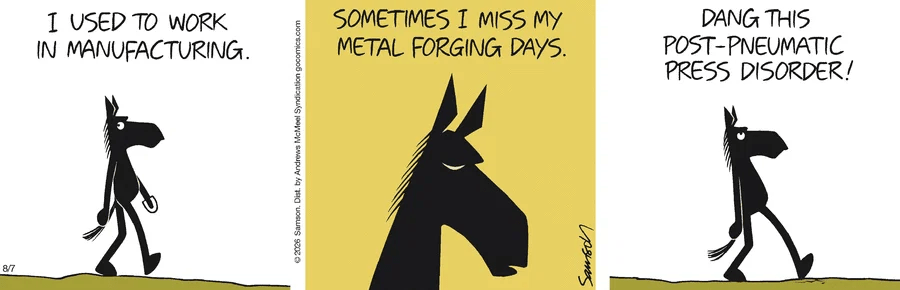
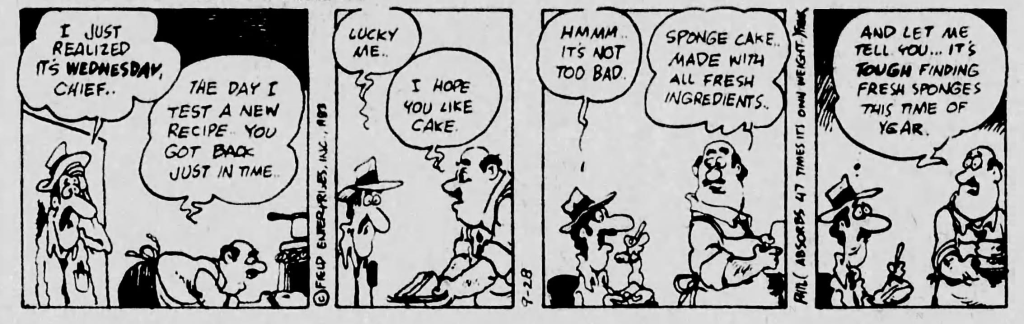
Mitch4 sends this in:
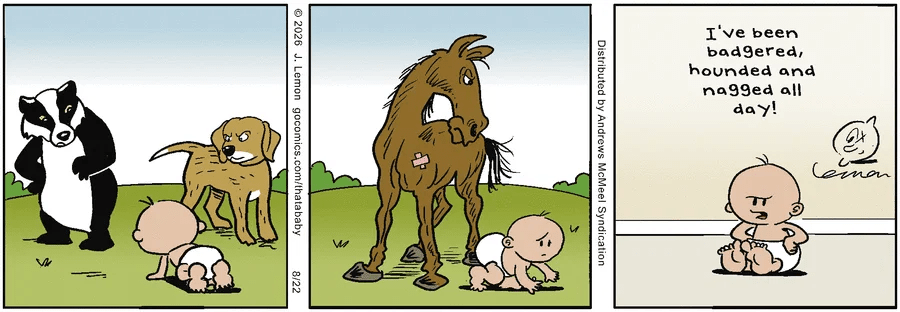
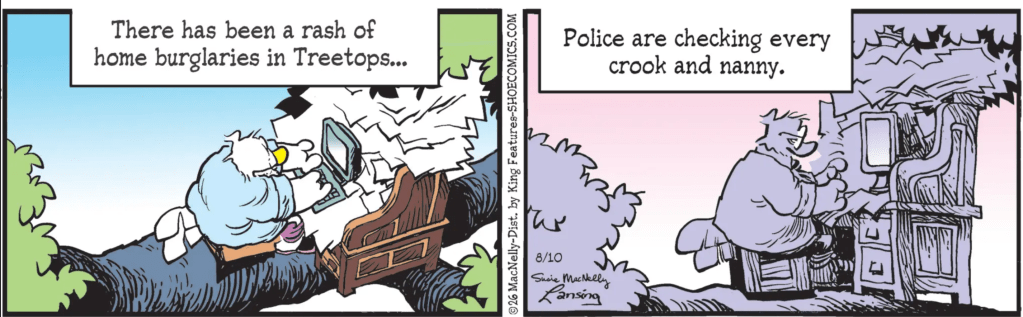

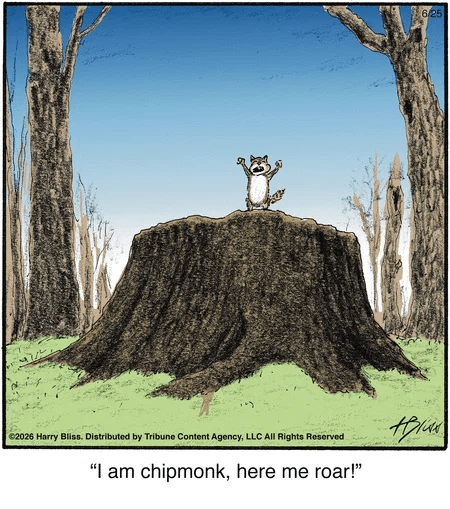
BVCC sends this in, suggesting: “How about a new category: Joke or Typo? Is “chipmonk” some pun that I don’t understand, or was the editor asleep at the switch?”
Thanks for the suggestion, BVCC. Category added.
There are a variety of chip monk jokes, such as this one:
A monastery in the English countryside has fallen on hard times, and the monks decide to open a fish-and-chips restaurant. The establishment soon became very popular, attracting people from all over.
One city fellow, thinking himself clever, asked one of the brothers standing nearby, “I suppose you’re the ‘fish friar?’”
“No,” answered the brother, straight-faced. “I’m the ‘chip monk.'”
Perhaps this comic is an allusion to a joke I’ve not heard. A cultural reference that comes to mind is to Helen Reddy’s “I am Woman, hear me roar”, but that would make this clearly a typo.
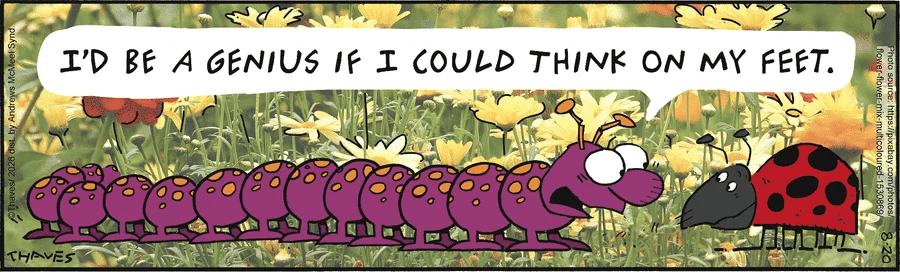
Darren sends this in, to continue of the day’s theme of typos:
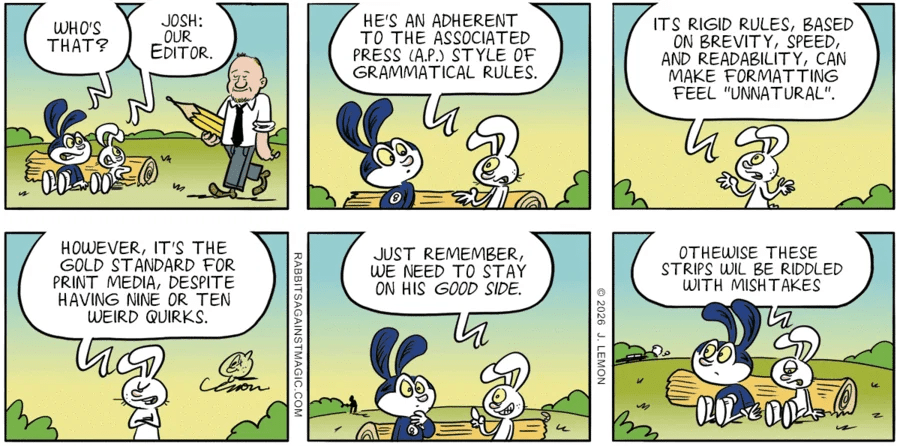
From Dan Sachs:
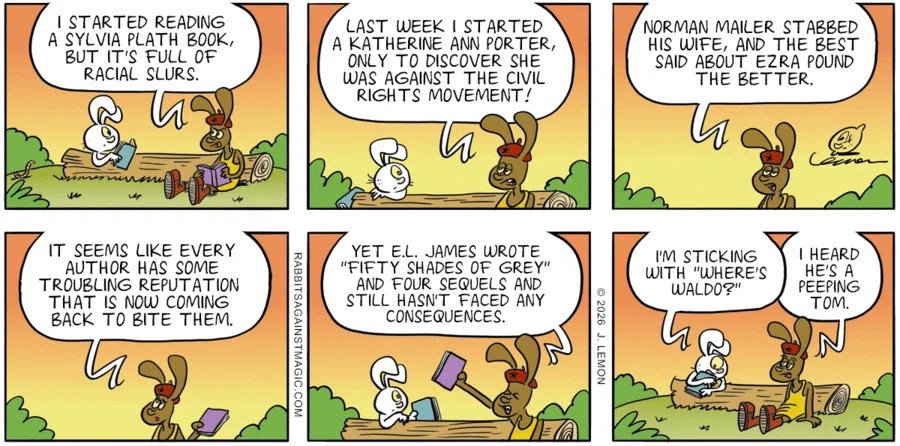
“Best said”?
Indeed. Surely “less said” was intended. Back in the day, there were these people called “editors”, who might have caught this and had it fixed (though perhaps not, since they would have to go back to the cartoonist, unlike local edits).
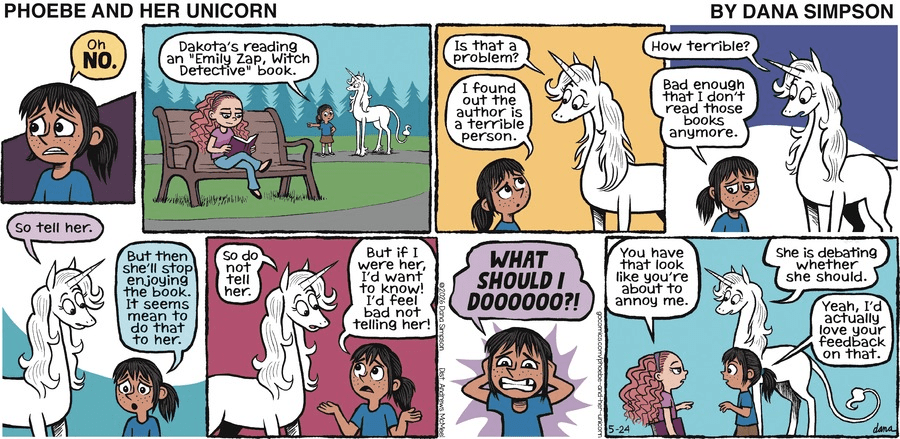
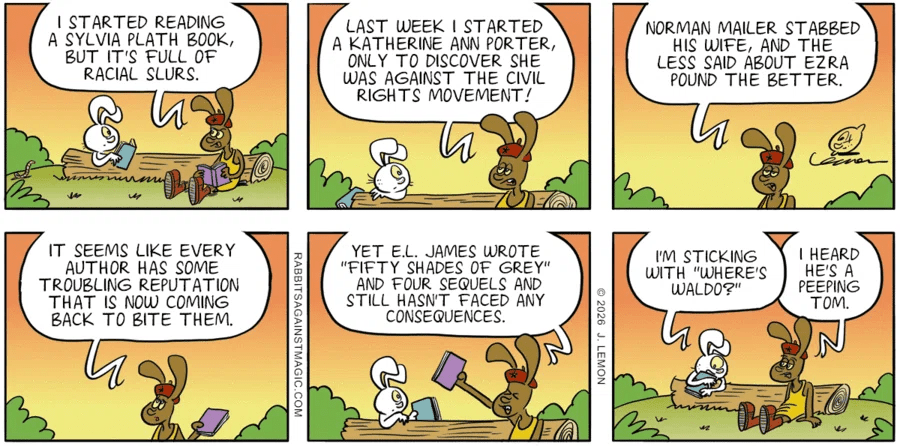
Jack Applin wants to make us think, aided by these two comics that ran the same day: “I’m certainly inconsistent when I try to separate the artist from their art. I can no longer watch one actor for his stance in vaccination, and yet I enjoy the music of another performer despite his dubious actions concerning minors.”
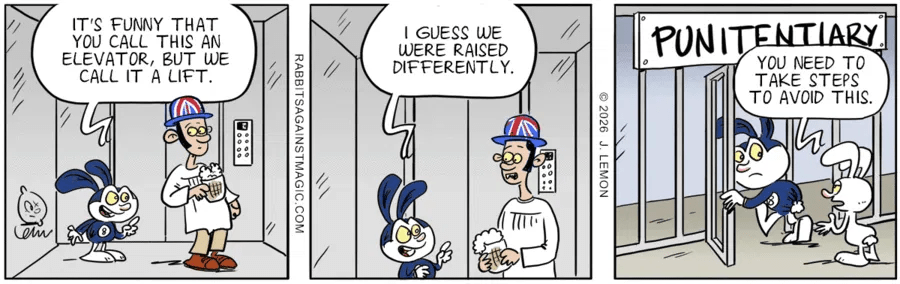
Jack Applin sends this in: “The rabbit, Eightball, seems to have it backward—he states that the British caricature calls this an elevator, but the British generally call that vertically-mobile conveyance a lift. He also states that “we” call it a lift, but I’m not sure where “we” are. I always figured that Rabbits Against Magic took place in the USA (the January 12 states that “we invaded Venezuela”).
Also, where is Mr. Wriggly, the worm who is generally in all the strips?”
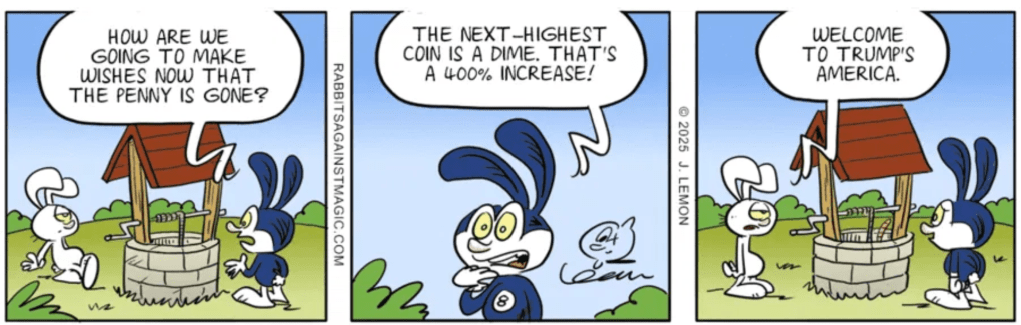
Jack Applin sends this in: “In the world of Rabbits Against Magic, dimes are worth 5¢. I suppose that nickels are worth 10¢? Unfortunately, since the word “dime” comes from “one-tenth”, this means that a dollar is worth 50¢. Dear oh dear. On the other hand, he did correctly say “400% increase”, as opposed to the common but incorrect “500% increase”, so that’s worth something.”
CIDU is a non-political space. Please confine comments to the odd math shown, rather than the particular politician mentioned in the last panel.
Boise Ed sends this in. It might be a CIDU if you don’t get the reference. If you do, it’s definitely an OY.

Boise Ed submitted this Rabbits Against Magic strip as a CIDU almost exactly two years ago, but his commentary may have made it seem too political to appear here. I’ve adjusted Ed’s comment to remove the political adjectives: “I don’t get it. Why would a Twitter bankruptcy make the … fox move out of his parents’ basement? Someone [else] replied ‘Because without Twitter, he’s got nothing else to do‘, but I still don’t see a connection [between] … ‘Twitter’ and ‘basement’.“
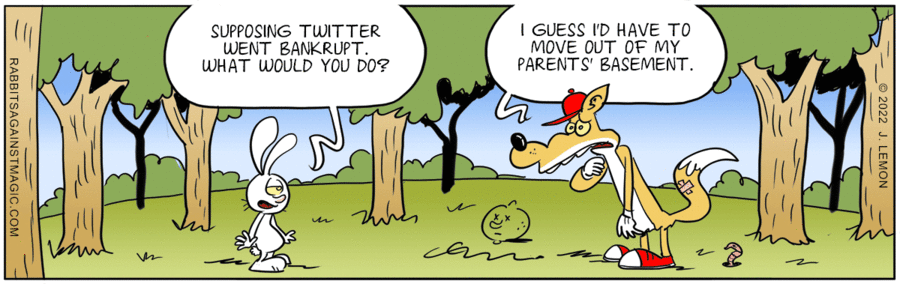
…
P.S. “Xitter” hasn’t gone bankrupt since it was senselessly renamed, but hasn’t been for lack of effort.

