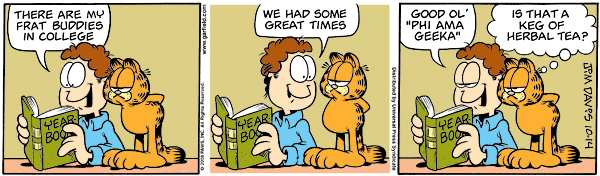
It’s difficult to say which caffeinated drink is more popular; it depends on who and where you are (in America the answer would probably be “cola”).
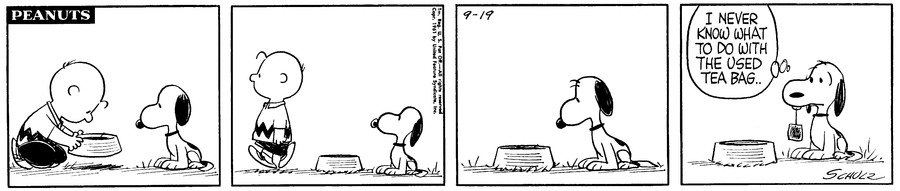
… I was once offered (hot) tea at a friend’s house (in high school); he dropped a tea bag into a mug of cold water, and put it all into the microwave for a minute or two. Just like Calvin’s attempt, it was a complete failure.
… For several years a German brand of hair care products called “Alpecin” advertised its overloaded caffeine content as “doping for the hair“. This caused a fair amount of controversy, especially when the company later started sponsoring a bicycle racing team.
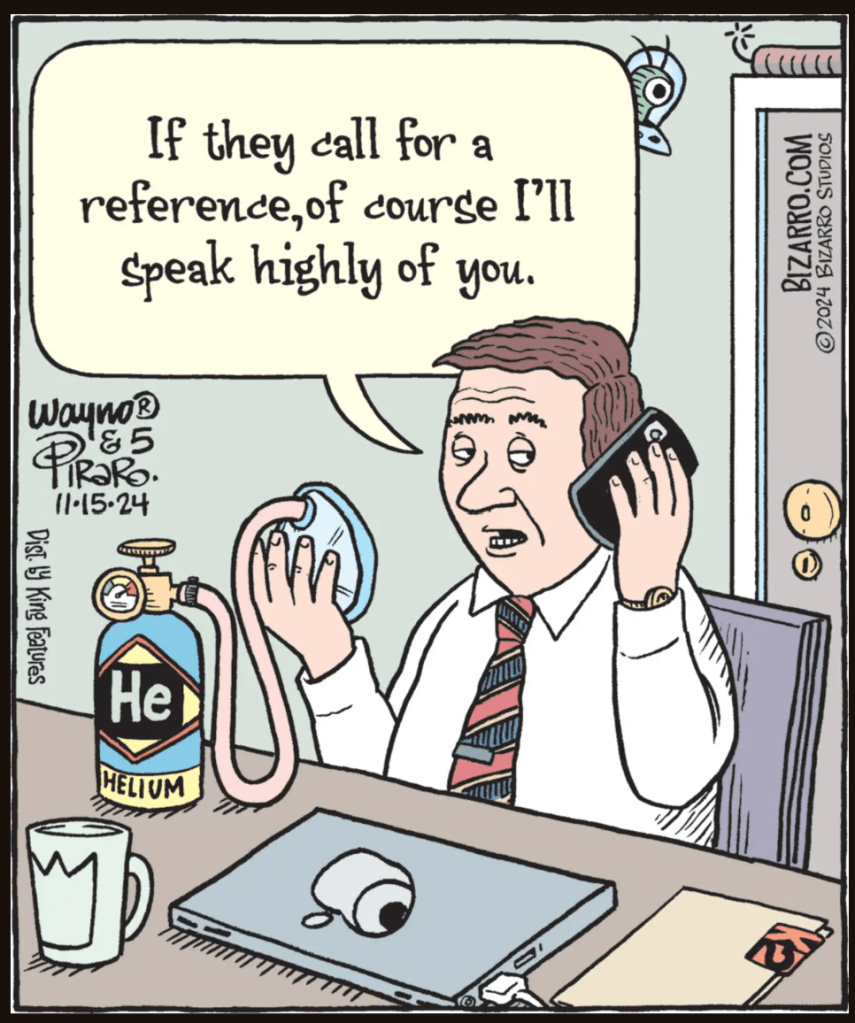
Danny Boy sends this in, and notes that the reason helium does this is not as settled as you might think. But your editor is tired of thinking right now, so feel free to put this controversy into the comments.
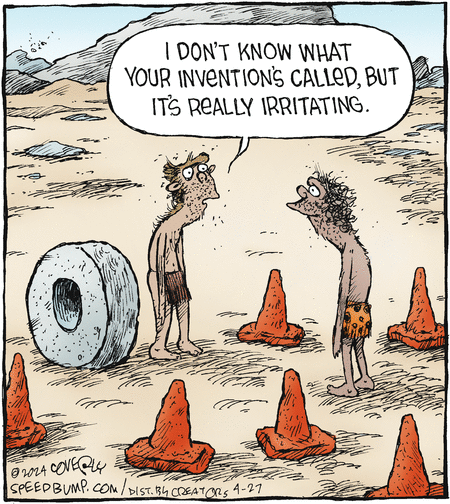
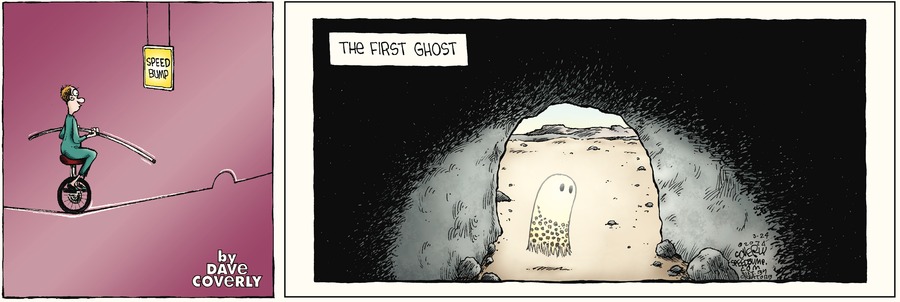
Boise Ed submitted this Speed Bump as a CIDU back in April, commenting: “I don’t get why the cones would be so irritating. I’m assuming the wheel is meant to be for transportation, although it lacks the axle/footrests of the wheels in B.C. If it’s not for transportation, then I have even less of a clue what he’s on about.“
… P.S. Last Saturday (Nov. 2nd) was the 81st anniversary of Charles Scanlon’s patent (US2333273A) for a “Safety Marker“.
Finally, one bastion of sanity in a lunatic world:
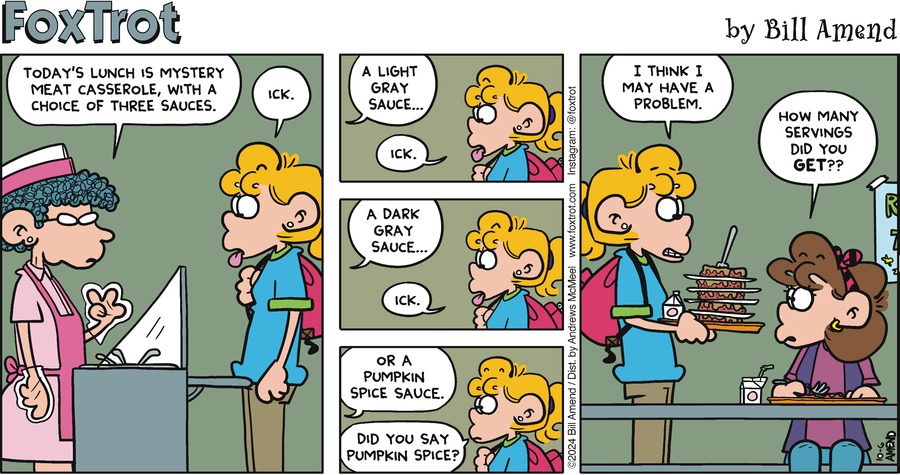
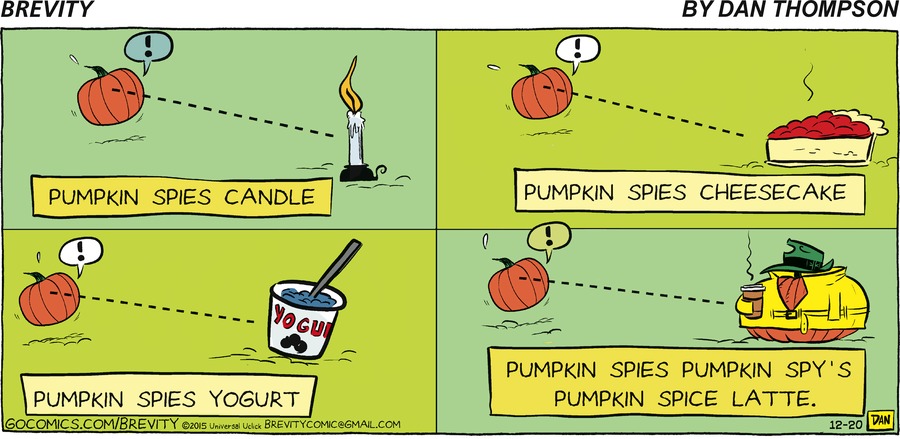
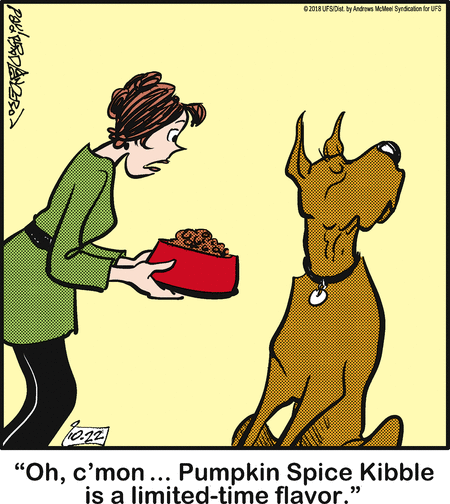
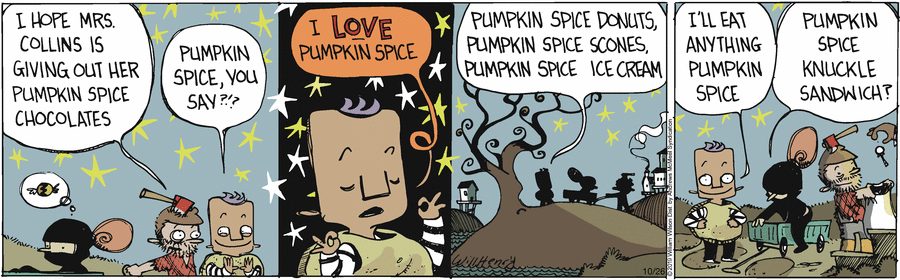
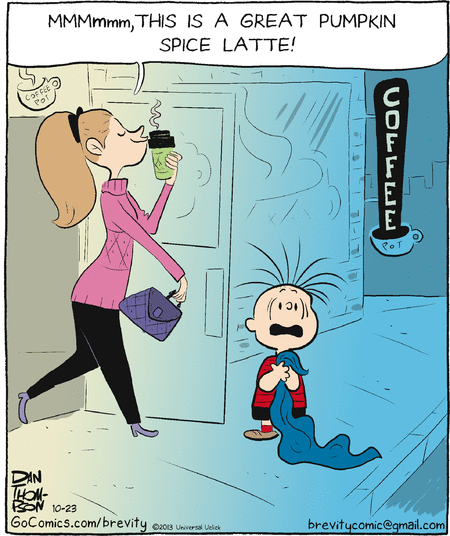
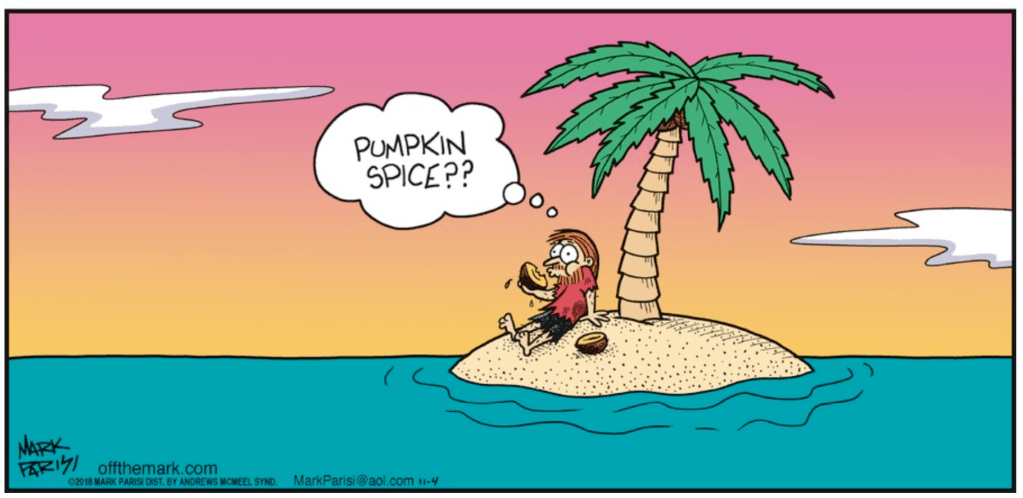
P.S. All of the previous appearances of Pumpkin Spice at CIDU were posted by Bill in the Fall of 2019; three of these presented some fairly hideous pumpkin spice flavored products (some real, some fictitious); click on the link if you are interested in seeing them. (Please note that the whole “pumpkin spice” collection will be presented in reverse chronological order, so you will have to scroll down past this one to get to Bill’s “spicy” material.)
P.P.S. – Edit: both links have been corrected, thanks to deety!
CIDU frequently presents holiday-based material, but virtually all of the holidays we have ever celebrated so far have been American, even if a few of them (such as New Year’s Eve and Halloween) are also celebrated outside of North America. The following collection is presented in recognition of German Unification Day, which just happened to land on October 3rd (in 1990), and has been celebrated on that day ever since.
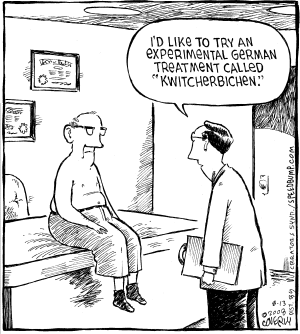
… Coverly put a “T” in front of the first “CH”, but neglected to do the same for the second, which would have made the pronunciation clearer, but it might have annoyed the syndicate’s censors.
… During my first stay in Germany (over 35 years ago), once I had begun to understand and speak a little of the language, I was frequently astonished (and/or embarrassed) by the linguistic abilities of German toddlers, which were often better than my own.
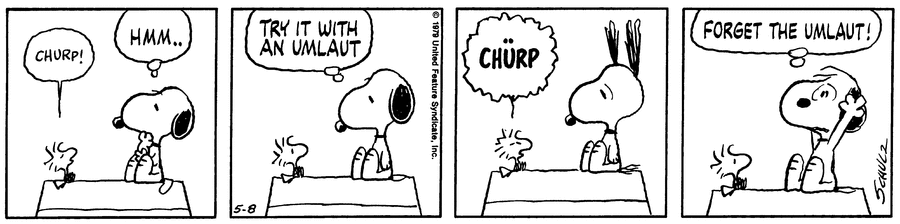
… Here’s a classic riddle for students beginning to learn the language: Q – “What does a German parakeet say?“ A – (in a deep voice): “Billig! Billig!” (meaning “cheap”, of course)
… As unlikely as it may seem, Hogan’s Heroes wasn’t just translated into German, they actually did it twice, because the first version didn’t get good enough ratings. The scriptwriters for the newer version invented details and even (unseen) characters not found in the original shows, and the dialog (of the “Germans”) was changed from standard (“Hochdeutsch“) pronunciation to more comical (Bavarian and Saxon) dialects.
The American characters speak normal German in the translation, except for “Newkirk” (Richard Dawson’s character), who was changed from British to being a stutterer, which was both unnecessary and is absolutely unwatchable (at least for anyone who is familiar with the original show). I don’t remember whether LeBeau was synchronized into German with a French accent.
P.S. Keith Knight has drawn at least a dozen strips based on interactions with his (German) wife; there are simply too many of them to include them all here. Perhaps later, in a separate “linguistic” post.

























 Comics I Don't Understand