I got this on second or third read, but I don’t think it gets points for execution:

Mitch asked, “What is the soccer ball doing in there?” but once I got the overall point (such as it was), I see why it’s there.
Am I being overly critical here?
I got this on second or third read, but I don’t think it gets points for execution:
Mitch asked, “What is the soccer ball doing in there?” but once I got the overall point (such as it was), I see why it’s there.
Am I being overly critical here?
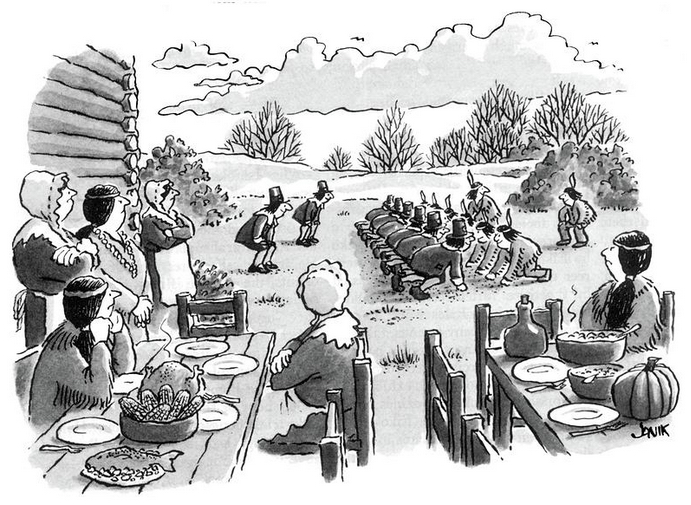
This cartoon by John Jonik was first published in the New Yorker exactly 41 years ago today, but I discovered it too late to add it to the Thanksgiving collection for 2023.
…
The headline above is modeled after a quote by Sepp Herberger, coach of the German national football soccer team: “After the game is always before the [next] game.” Of course, discussing football (of either variety) can sometimes be even more explosive than discussing politics.
Mark H. submitted this XKCD (#2858) last year; although it did get embedded in comments (such as in the No-Politics Zone), it’s still worth a repeat in a post:

…
P.S. The “mouseover” or “title” text reads: “An occasional source of mild Thanksgiving tension in my family is that my mother is a die-hard fan of The Core (2003), and various family members sometimes have differing levels of enthusiasm for her annual tradition of watching it.“
P.P.S. The link to the HuffPost article in the second panel still works (I already typed it in, so that you don’t have to).
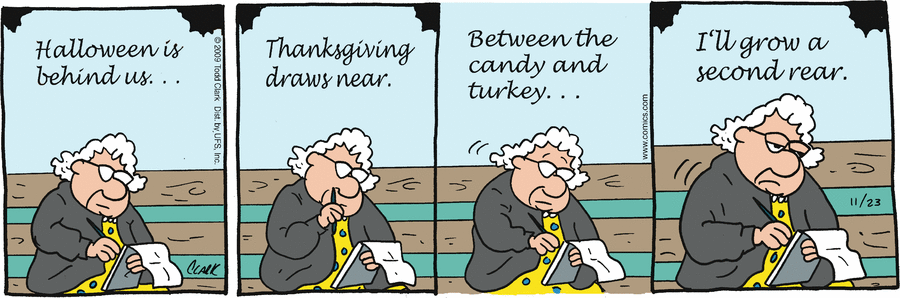
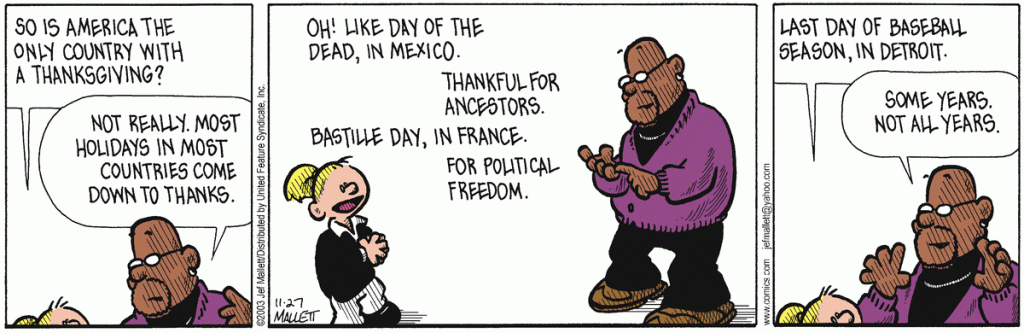
…
In Germany, it’s called “Erntedankfest” (literally: “harvest thanks festival”), and is celebrated on the first Sunday in October, but it is primarily an event for the liturgical calendar (both Catholic and Protestant), and is not (generally) celebrated by families at home.
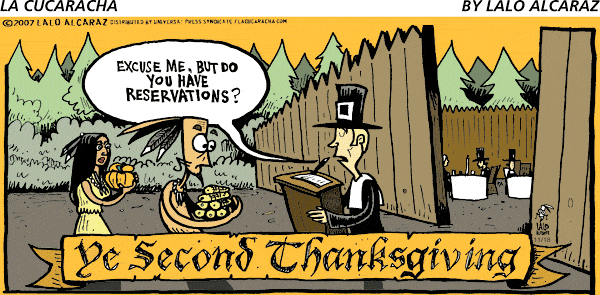
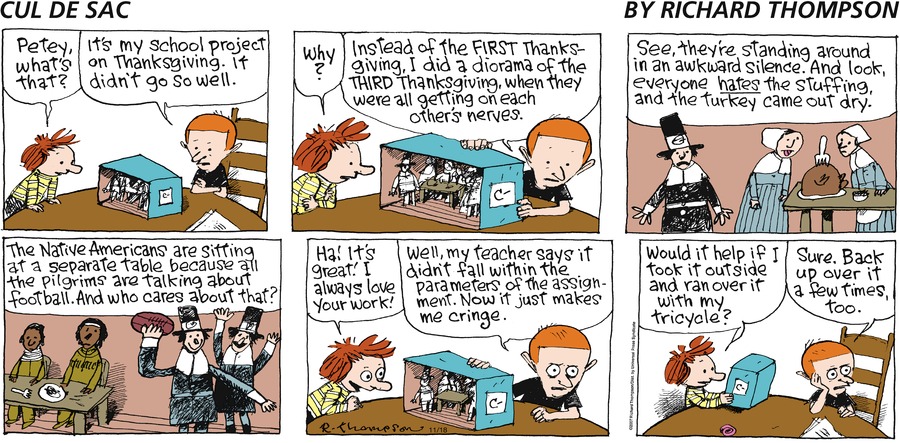

…
Several decades ago, my grandmother just happened to include a leftover bowl of (homemade) mac&cheese on the Thanksgiving dinner table, which resulted in some amused needling from my dad and uncle. However, both my sister and my aunt vigorously defended it, so that for many years thereafter, (fresh) mac&cheese became a standard component of my grandmother’s Thanksgiving menu.
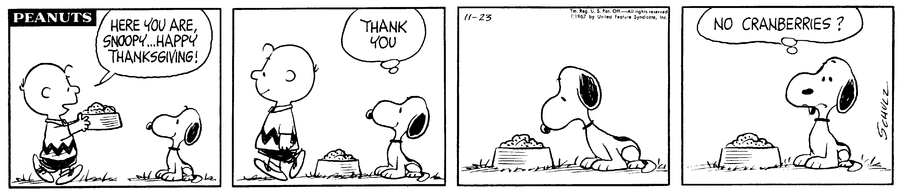
…
The final panel reminded me of the last scene in the song “Christmas Wrapping” by the Waitresses.
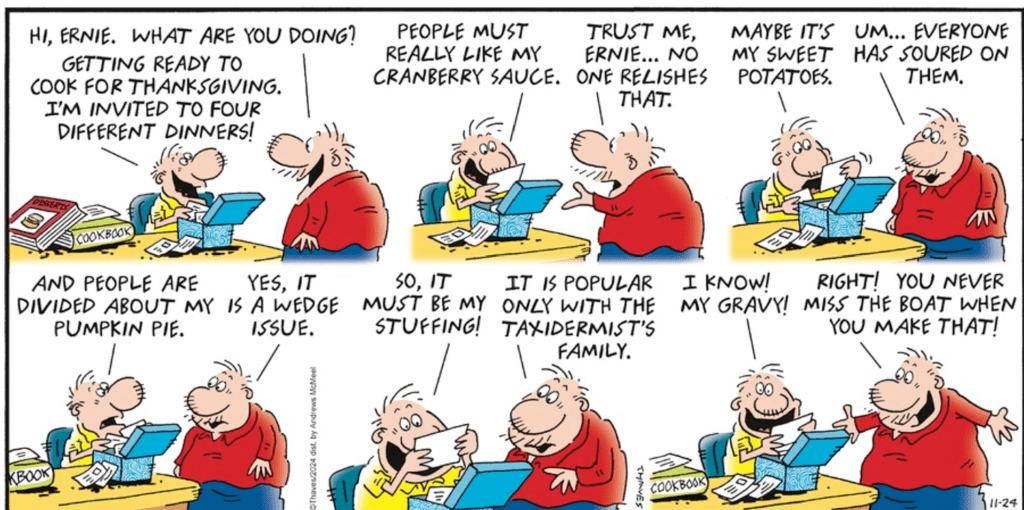
No cranberries? Frank and Ernest have suggestions:

Besides the popular candy collection event, today is “Reformation Day” (in honor of Luther’s 95 theses), and here at CIDU it just happens to be Meryl A.’s birthday. Since she hasn’t been able to reschedule her day of honor, we will just have to wish her a very “Happy Birthday!” today.

Halloween is supposed to be a nice, innocent holiday, but some folks misinterpret it:

Then there are others who go really overboard:

Some kids are more scary than others:

Although very dated, this costume is still scary, too:


[2024-07-04 note: This post was originally from last year, 2023, but now bumped up as a republish. One or two strips added to the post proper as of the 2024 republish. Previous comments are retained, and current readers are encouraged to continue the comments thread!]

July 4th is zbicyclist’s wife’s birthday. She had to age a few years before she realized the fireworks weren’t for her.
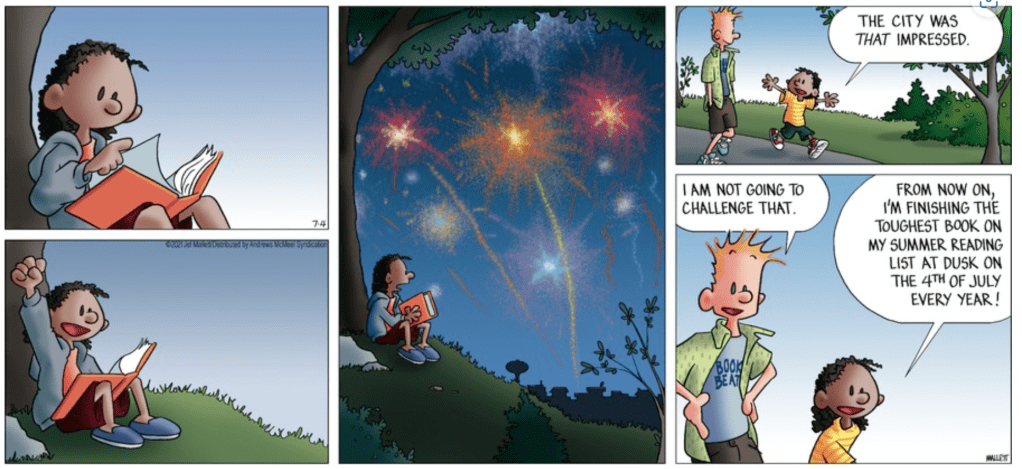

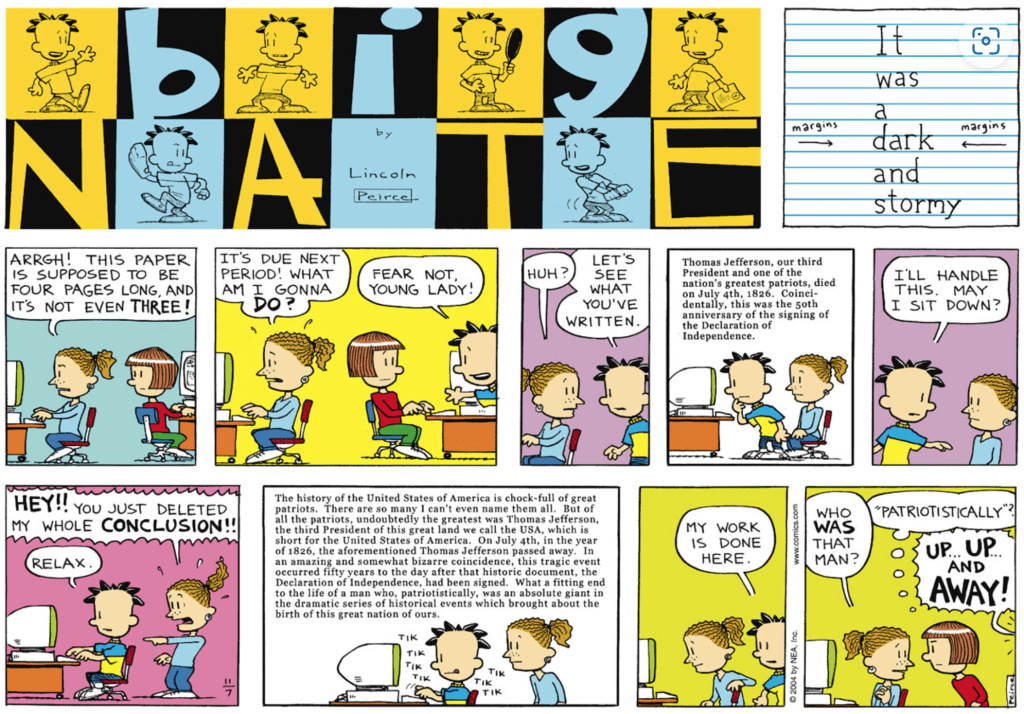
But that’s not all of the story: On July 4, 1826, the 50th anniversary of the adoption of the Declaration of Independence, John Adams also died. His last words included an acknowledgement of his longtime friend and rival: “Thomas Jefferson survives.” Adams was unaware that Jefferson had died several hours before. At 90, Adams was the longest-lived U.S. president until Ronald Reagan surpassed him in 2001. (and now Jimmy Carter, born October 1, 1924) Source: Wikipedia.
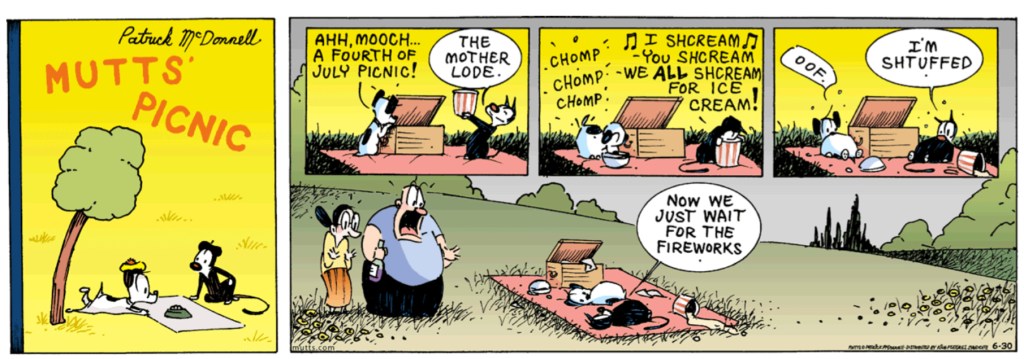
[This Mutts strip added for 2024. It was just too sweet to resist.]
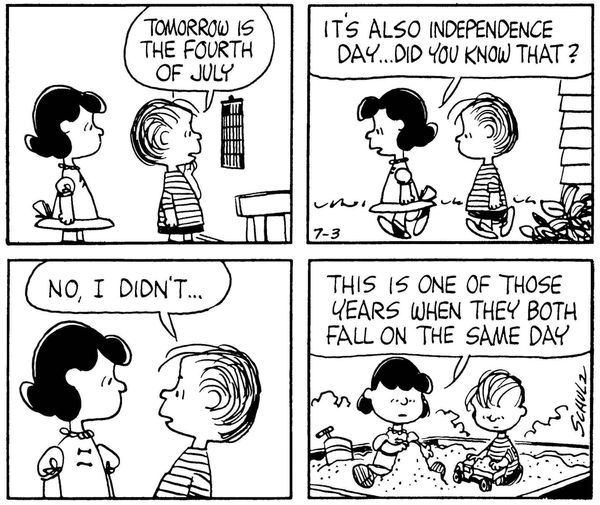
[This Peanuts is from 1964]
These are just whatever was at least pretty good, was dated today, and was in some way about the Labor Day holiday or tradition. … A quick survey of which cartoons were willing to be about the holiday and which preferred to go on their own way.


Thanks to Philip, who sent this in and suggested a better wording for the punch line. … Which we’ll print below the cartoon image, so you have a moment to comment with your own suggestion first, if you like.

As Philip asks, Wouldn’t this be better as “Making a cool car is hot work.”?
I think we have established pretty confidently that Baldo is done in English first then translated for the Spanish edition; so missing the pun-portunity in the English is not likely explained as translation problem from the Spanish original . Nonetheless, for whatever light it may shed, here is the Spanish version:

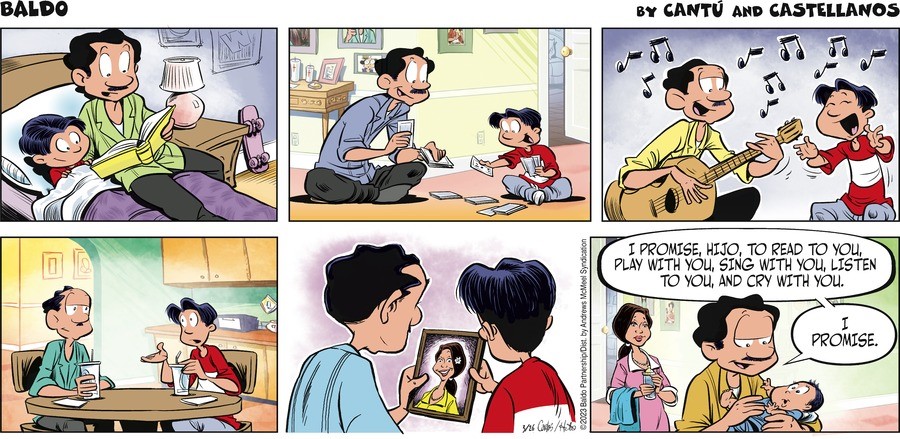
…I just don’t get the point. There’s a Baldo backstory about his mother, yeah, but what’s really going on here?

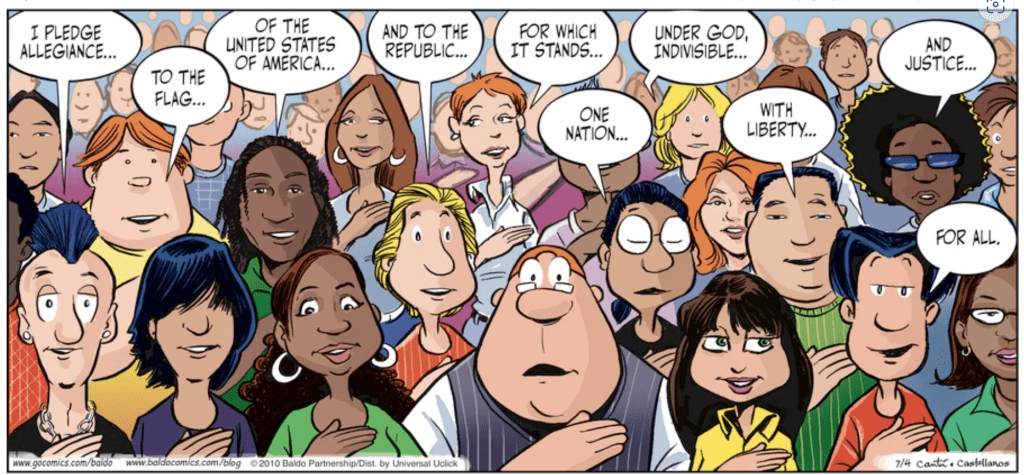
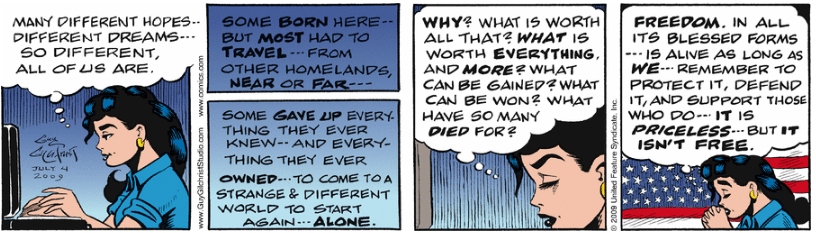
Let’s appropriately start with the Pledge of Allegiance.


A serious moment from Nancy. The Gilchrists could do this type of thing well.
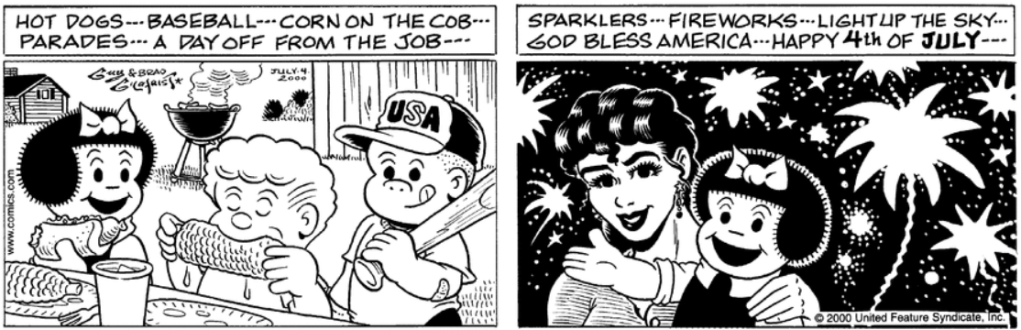
Now it’s time for a picnic and fireworks!

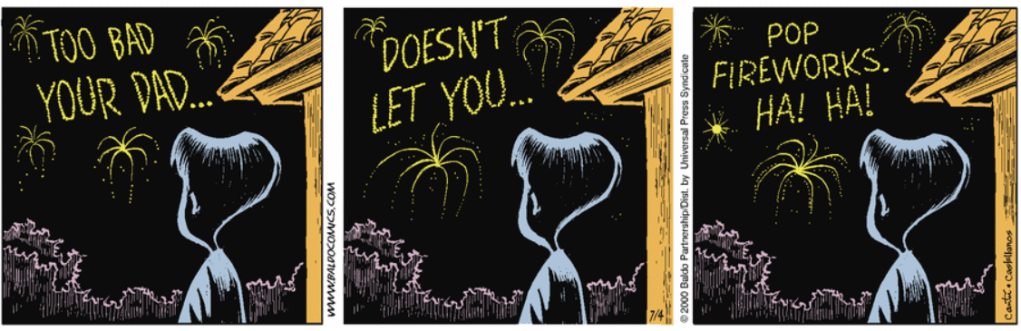

The Founding Fathers had to contend with a lot of logistic difficulties in declaring independence.


Let’s not forget, though, that the Founding Fathers were also quite interested in making a buck, and modern America continues that tradition!
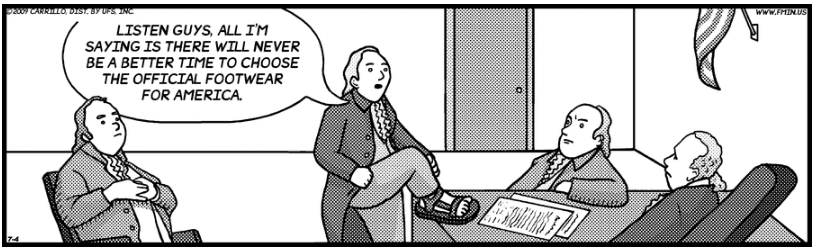


But eventually the Founding Fathers brought their interests into harmony with each other.


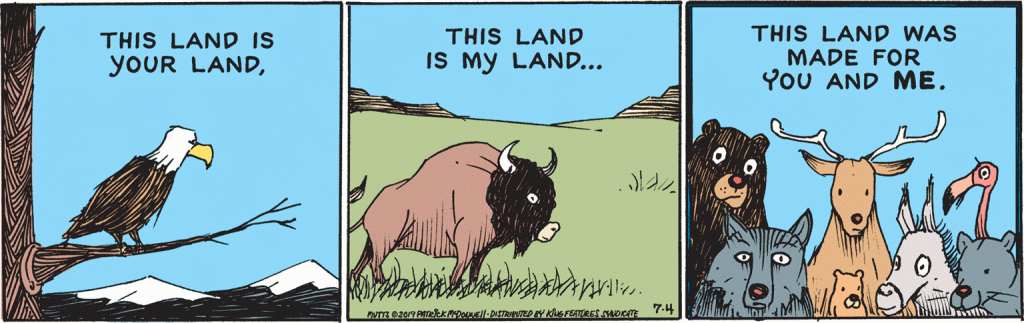
This land is your land and this land is my land
From the California to the New York island
From the redwood forest to the Gulf Stream waters
This land was made for you and me (Woody Guthrie)
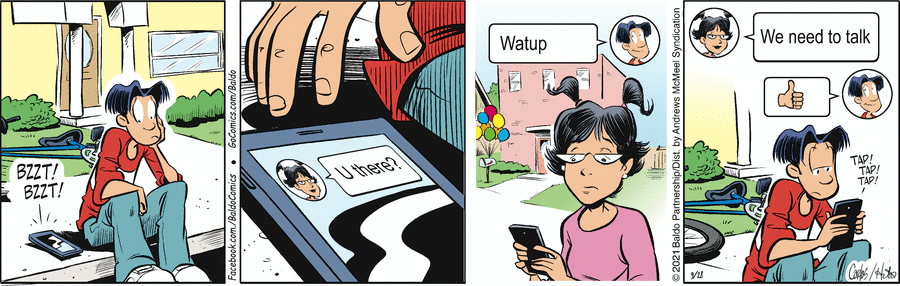
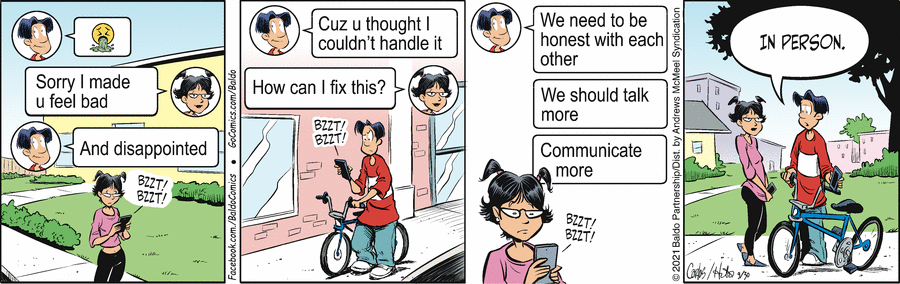
What is the joke in this one? ¿Cuál es el chiste en este?

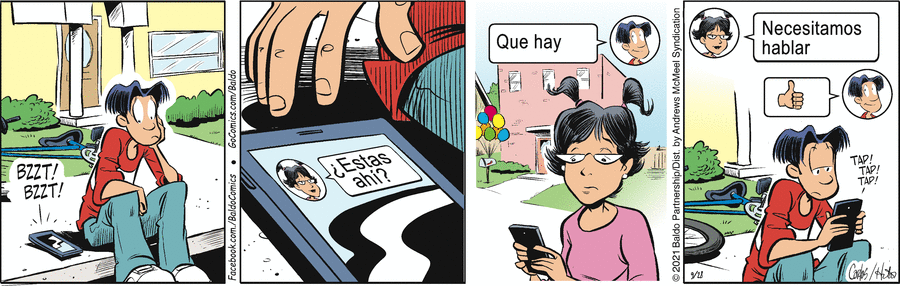
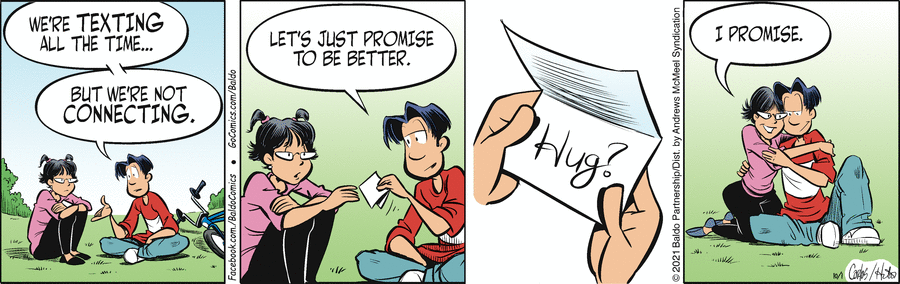
And what is the joke in this version? ¿Y cuál es el chiste en esta versión?
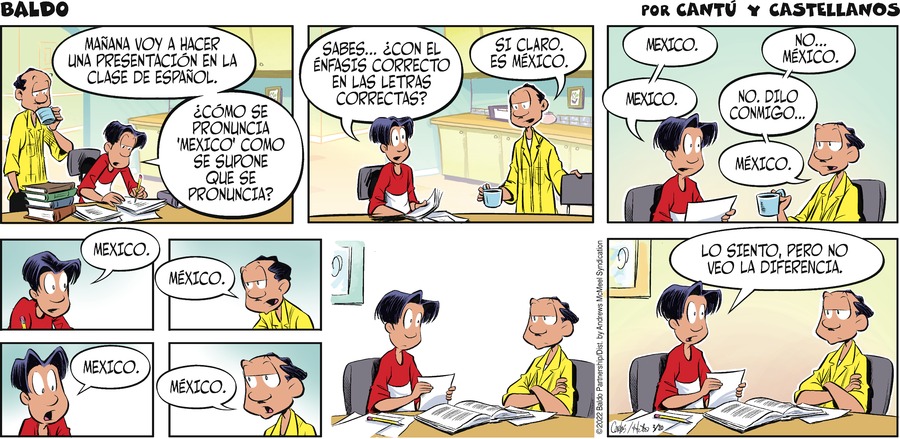
Are they the same joke? Why not ? :-) ¿Son el mismo chiste? Por qué no ? :-)
(Or as Google Translate would put it: Nosotros estamos enviando mensajes de texto todo el tiempo.)
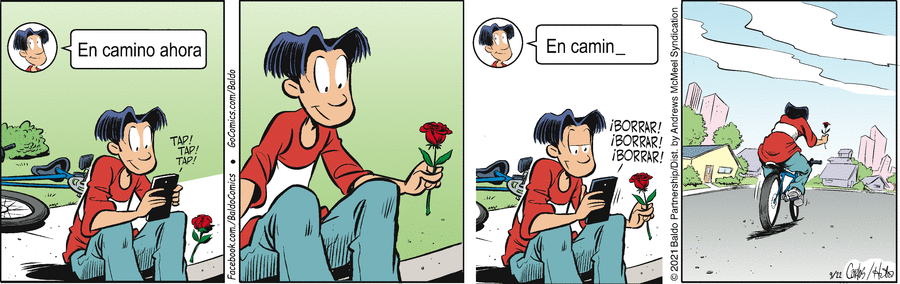
Our recent foray into the Baldo translation mysteries included an interesting subthread on whether the Spanish seemed to reflect any particular national-origin variety of the language (or since the setting is in the U.S. , there might be contemporary U.S.-regional varieties at play ) , or rather a textbook or generic Western Hemisphere compromise variety of the language. Also in question was “official, standard” language versus slang and colloquial.
Last week’s and this week’s strips provide a wealth of material bearing on those issues. The teen characters are doing a lot of texting, so we get to see the handling of such matters as: standard texting abbreviations; spontaneous abbreviations or “shorthand”; accidental typos, and bad autocorrect and autocomplete insertions; and intrusion of English terms instead of “official” Spanish. Thus for OMG they stick with OMG in the Spanish context, though I think elsewhere I’ve seen DM (for Dios mío not in this case Direct Message); and “texting” in both English and Spanish versions.

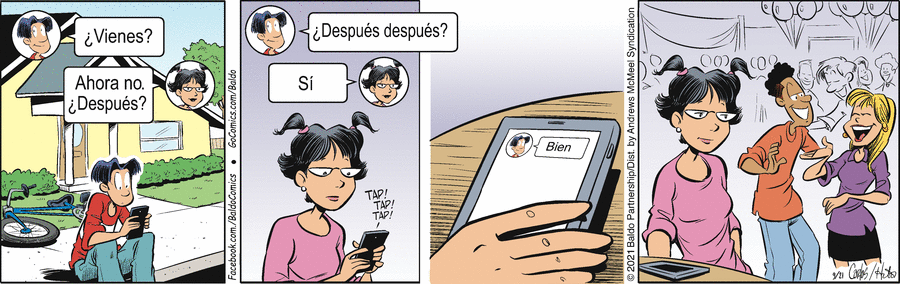

(Two wordless strips depict a deepening of the romantic jealousy crisis.)

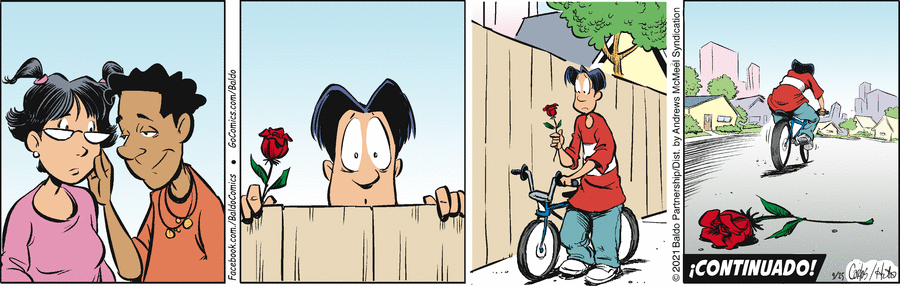
(For anyone paying close attention to the dates, there were strips over the weekend that were not part of this series.)






 Comics I Don't Understand