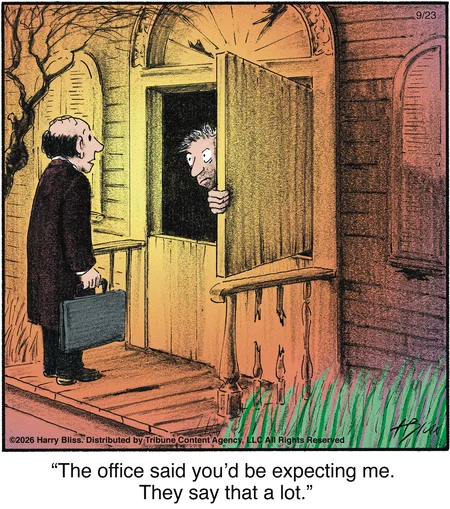
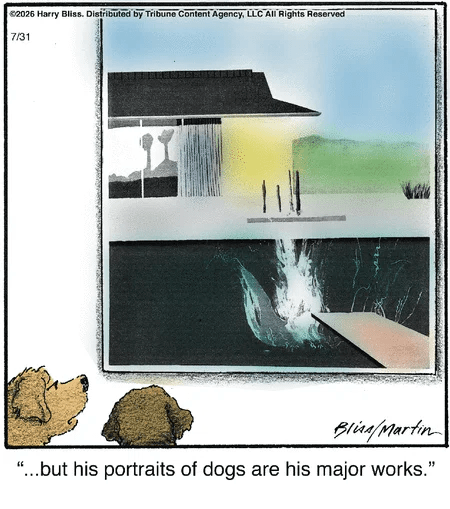
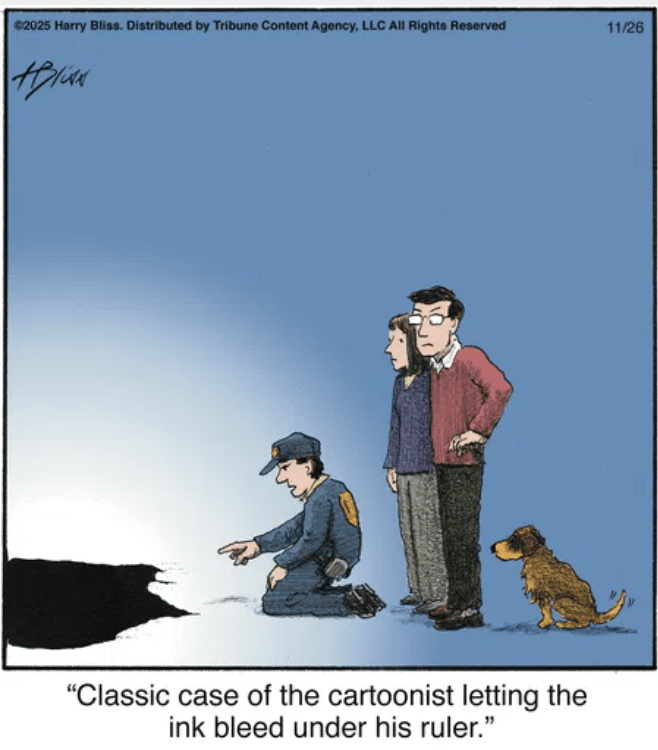
billr sends this in: “Second day in a row it’s not his usual dogs chasing squirrels, or marital ambiguities. No idea who these guys are or what this is about. Best I can come up with is the suit guy is an undertaker?”
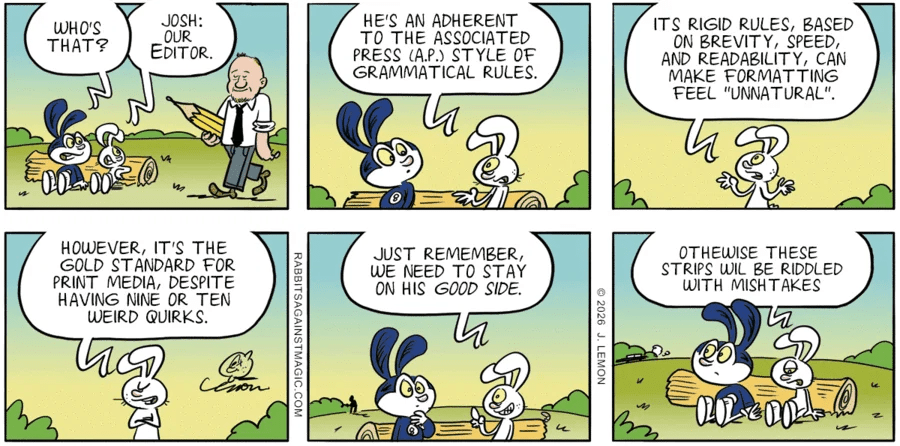
Your editor thinks this would be more straightforward without that second line in the caption.
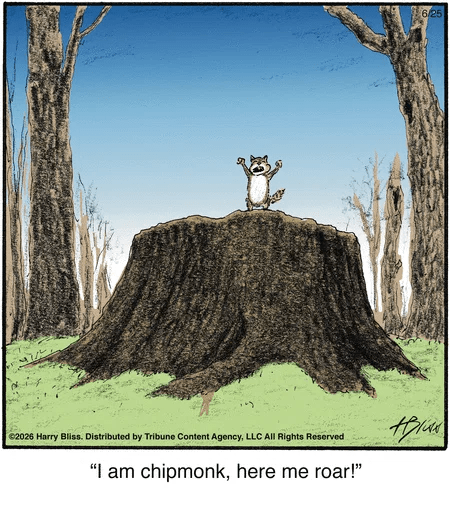
BVCC sends this in, suggesting: “How about a new category: Joke or Typo? Is “chipmonk” some pun that I don’t understand, or was the editor asleep at the switch?”
Thanks for the suggestion, BVCC. Category added.
There are a variety of chip monk jokes, such as this one:
A monastery in the English countryside has fallen on hard times, and the monks decide to open a fish-and-chips restaurant. The establishment soon became very popular, attracting people from all over.
One city fellow, thinking himself clever, asked one of the brothers standing nearby, “I suppose you’re the ‘fish friar?’”
“No,” answered the brother, straight-faced. “I’m the ‘chip monk.'”
Perhaps this comic is an allusion to a joke I’ve not heard. A cultural reference that comes to mind is to Helen Reddy’s “I am Woman, hear me roar”, but that would make this clearly a typo.
Darren sends this in, to continue of the day’s theme of typos:
This is a couple meeting with a financial advisor, and they’ve just described their expectations for their investments. But why the guy with the laptop on the right?
This is a divorcing couple meeting with a mediator, or the woman in pink is getting divorced, the guy in the suit is her lawyer, the woman in red is the opposing lawyer, and the man with the laptop is taking notes.
Commenters on GoComics seem to think this is an annual performance review. But the only performance reviews I ever gave or had that involved more than just supervisor and employee were when we needed HR in the room and security nearby because we were firing someone and they needed to leave immediately. And that wouldn’t involve expectations.
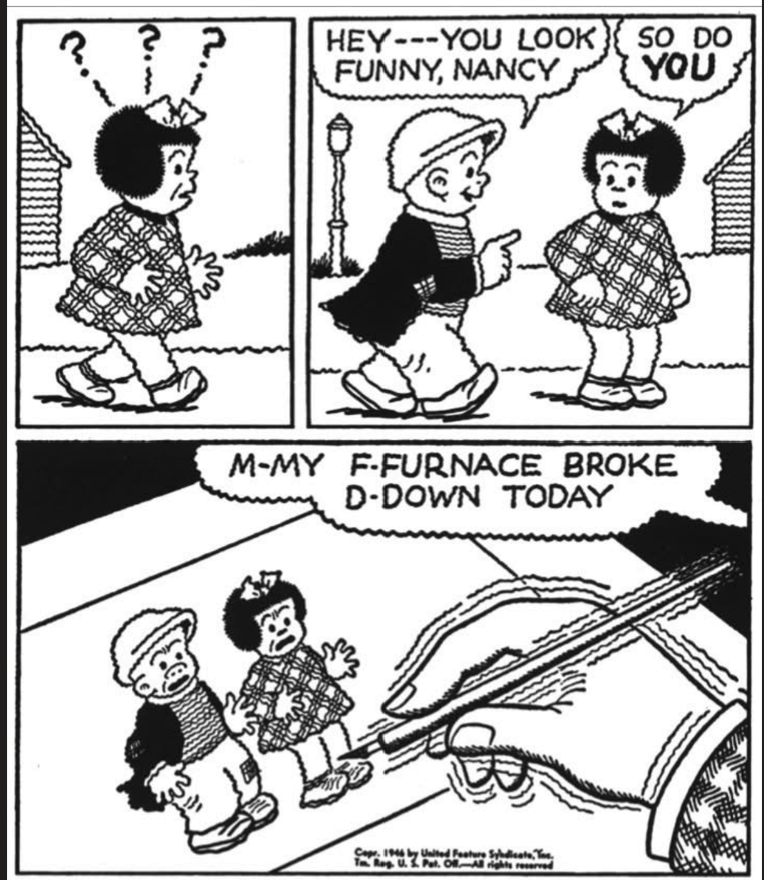
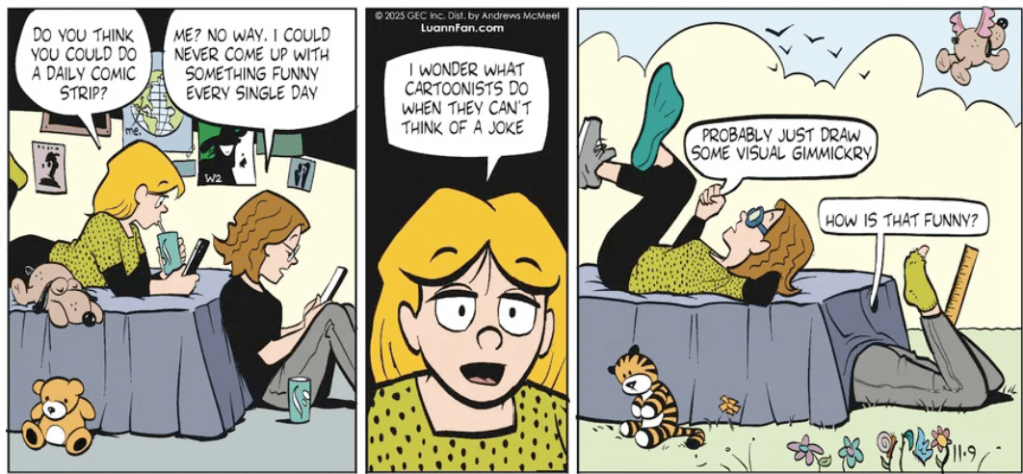
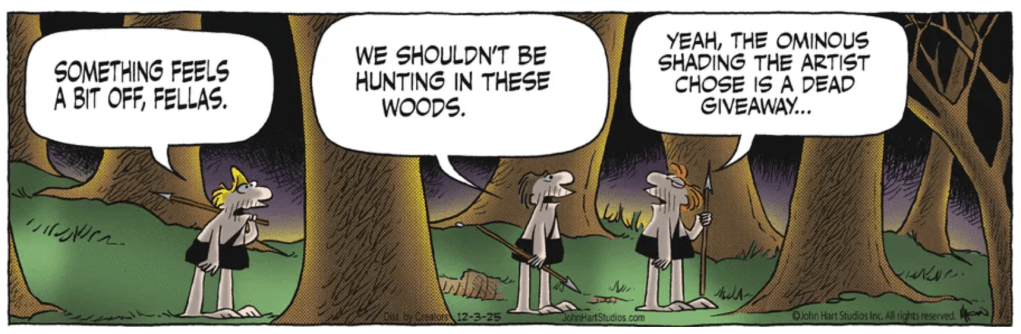
By one definition, “4th wall comic refers to a comic book where characters become aware of their own fictional existence and address the audience directly. This concept, known as the Fourth Wall, separates the characters from the readers, allowing them to comment on the narrative and its limitations.” By that definition, not all of these fit. In some of these, it’s that the cartoonist lets us acknowledge the cartoonist’s existence, while the characters remain unaware. Is there a separate term that should be used for that?
BVCC sends this in: “Yes, I can tell you that it’s not textbook imposter syndrome, because it’s not. From Wikipedia: “Impostor syndrome, also known as impostor phenomenon or impostorism, is a psychological experience in which a person suffers from feelings of intellectual and/or professional fraudulence.” This is not at all what Schroeder is exhibiting.”
He might be solving a crossword or, more likely, composing a letter or document. I prefer the latter, because then we can ask “What is the word he intends?”.
And then the CIDU points are: Are we supposed to know/guess it? If so, what is it? And finally, how does that become a joke?