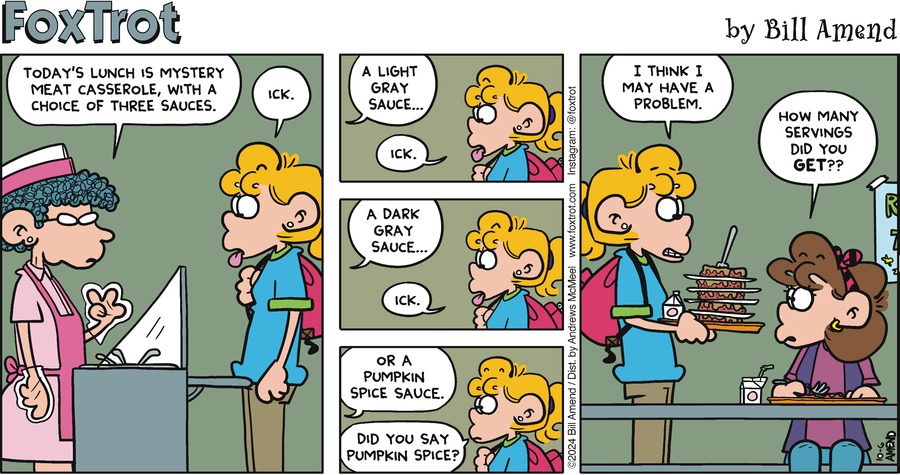
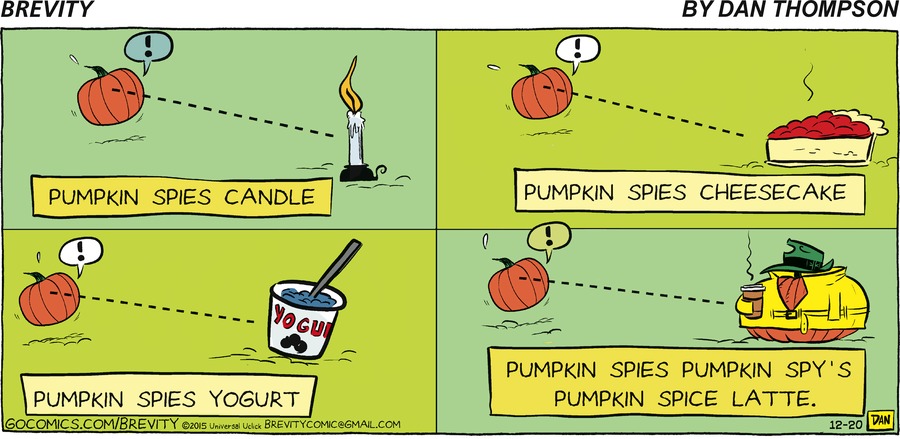
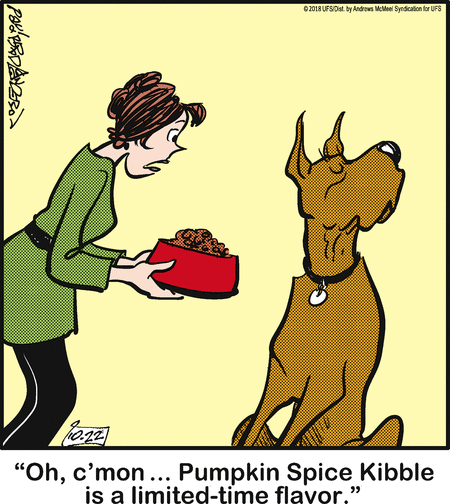
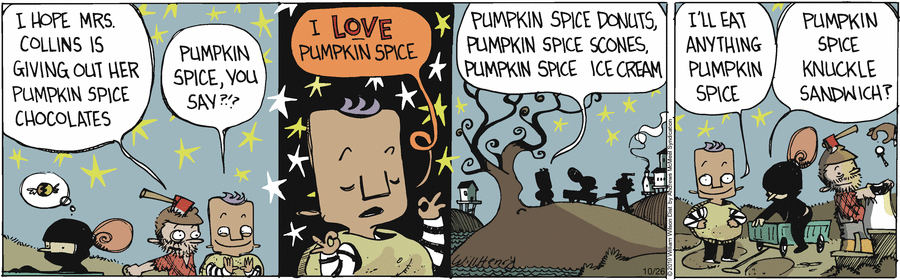
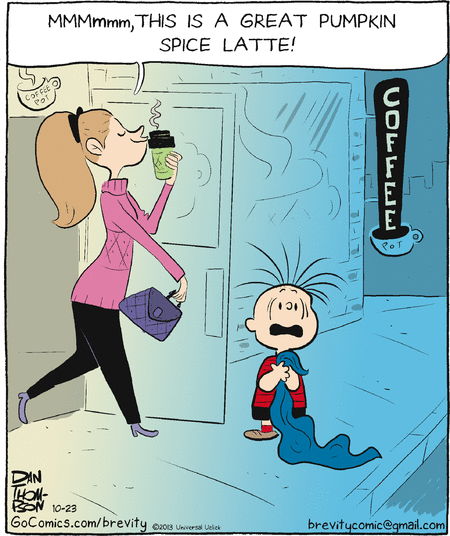
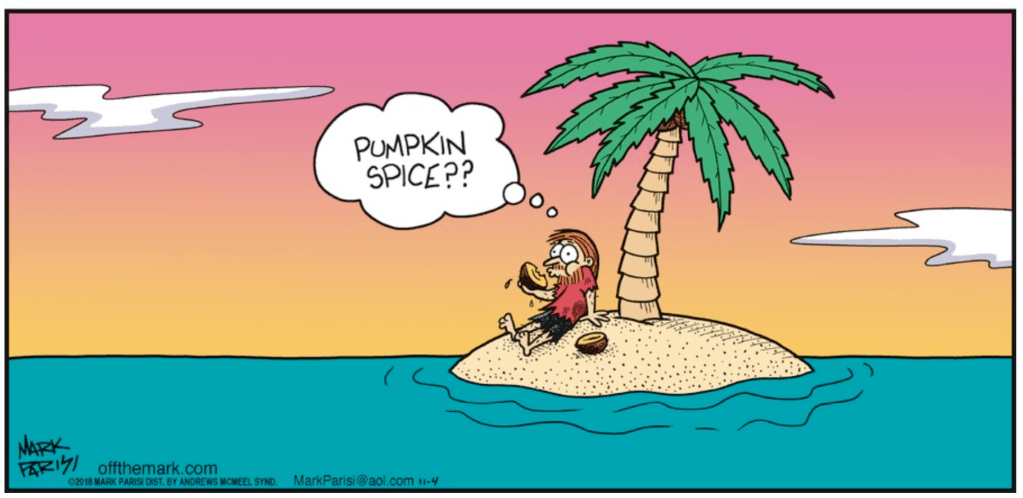
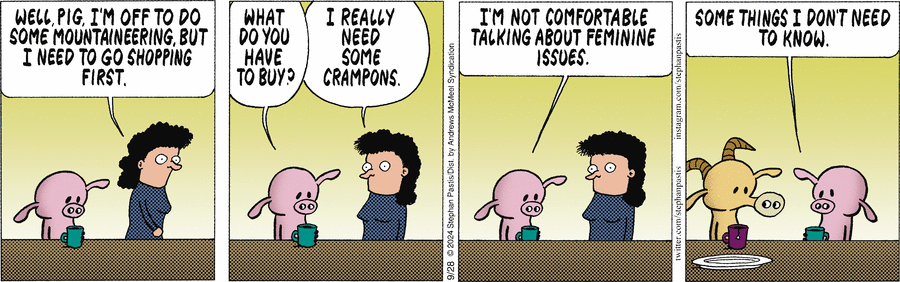
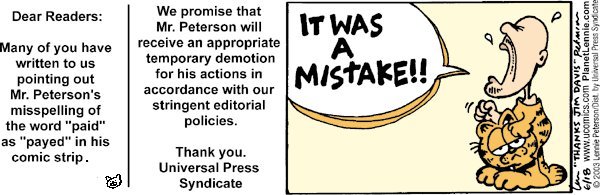
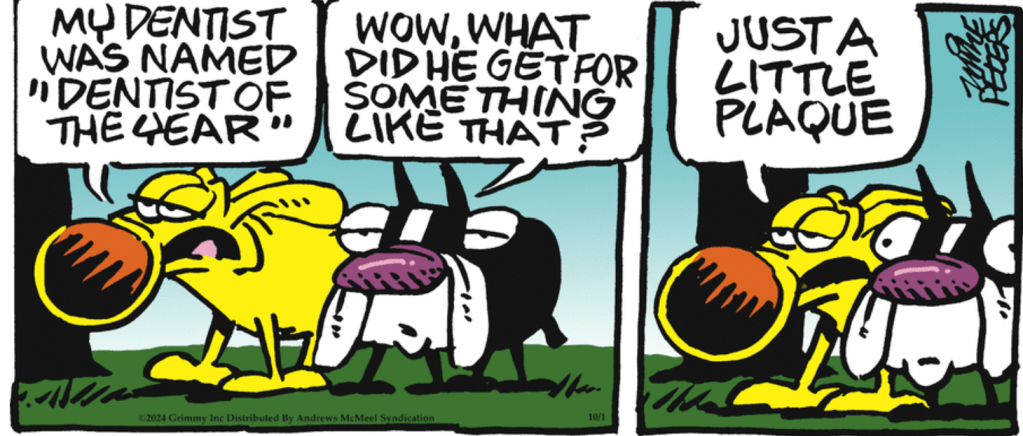
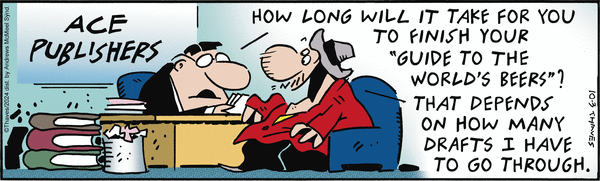
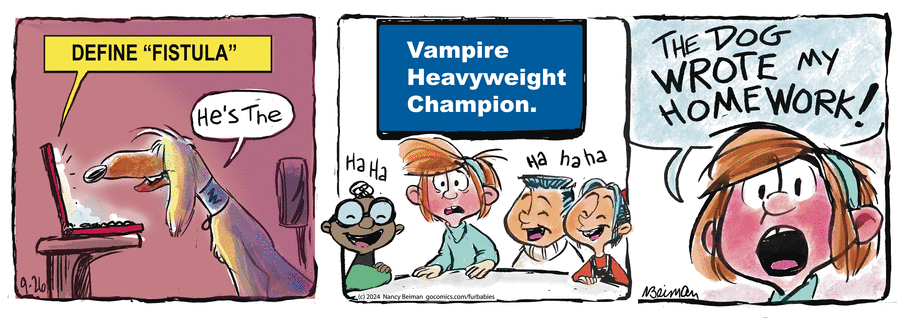
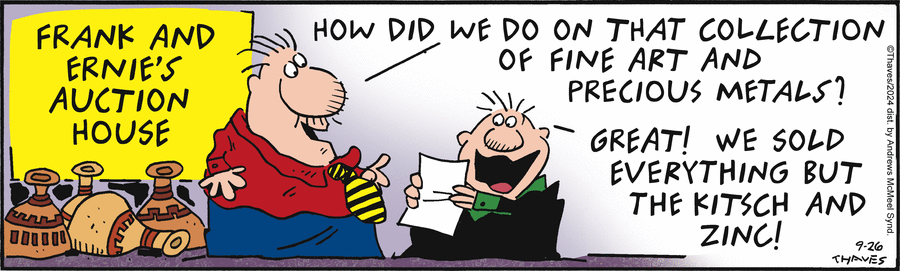
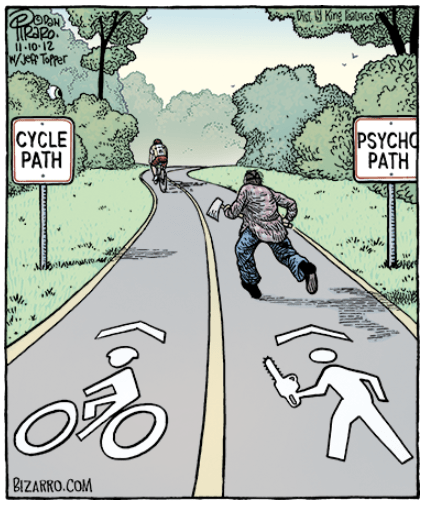
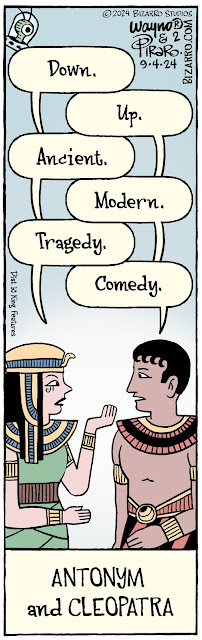
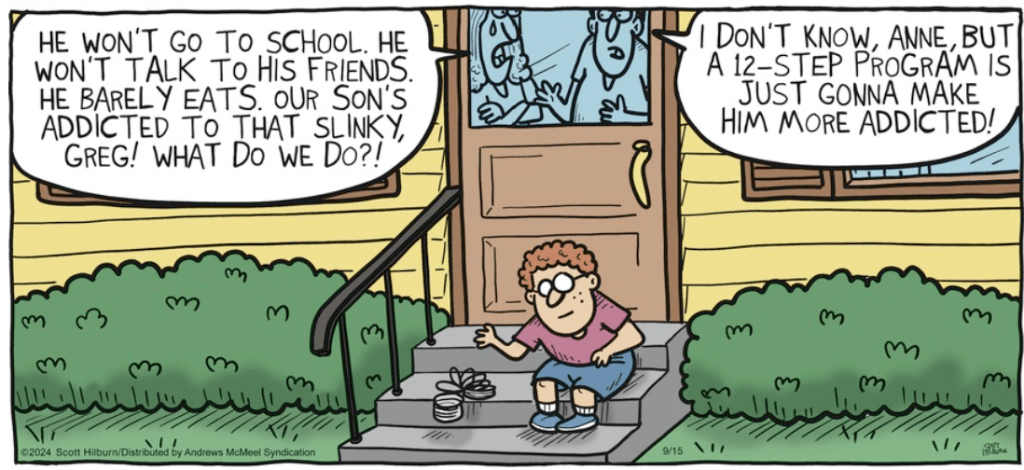
Finally, one bastion of sanity in a lunatic world:
P.S. All of the previous appearances of Pumpkin Spice at CIDU were posted by Bill in the Fall of 2019; three of these presented some fairly hideous pumpkin spice flavored products (some real, some fictitious); click on the link if you are interested in seeing them. (Please note that the whole “pumpkin spice” collection will be presented in reverse chronological order, so you will have to scroll down past this one to get to Bill’s “spicy” material.)
P.P.S. – Edit: both links have been corrected, thanks to deety!
I understood the primary gag in the final panels, but I do not understand the meteorological setup in the first panel:
… Perhaps it’s just the awkward expression: how can a hurricane “drop a millibar“? Did anything like this actually happen during either of the recent hurricanes?
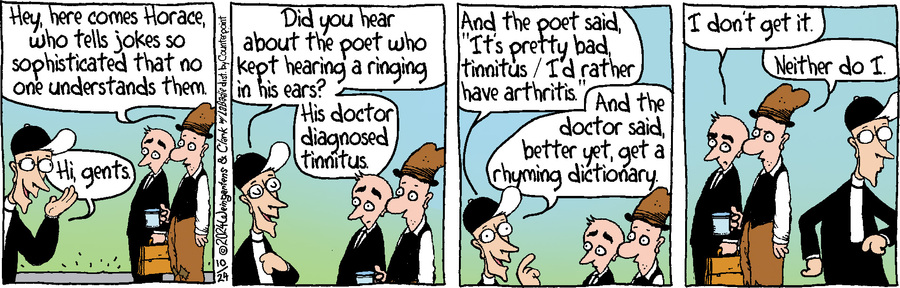
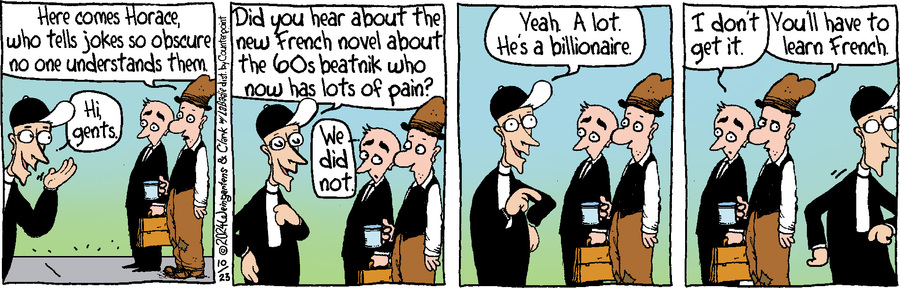
I might as well include the previous two B&C strips, which feature Horace’s “intentional CIDUs. The solution to the first one was explained in Week 94 of the Invitational, in which Gene Weingarten solicited even more obscure “Horace” material. (The results will appear in the Invitational on Halloween, and the better ones will probably be immortalized in future Barney & Clyde strips.)
The second one I had to look up myself, but Barney’s tip in the last panel was a big help:
P.S. Given the solution, this one might also need a “geezer” tag.
Here’s a third “Horace” strip from last year, which was also included (with its solution) in the Invitational article:
Mark H. submitted this Frazz as an OY, admitting that it “Took me a minute…” (to get the joke). However, since at least one Editor still doesn’t understand it, a CIDU has been added to the tags. Perhaps Mark would be so kind…?
This Carpe Diem panel was submitted back in July by James Riendeau, who wrote, “Carpe Diem tends to be one I frequently do not get, but today’s was a real head-scratcher. It must be a cultural reference I’m not familiar with.”
Niklas Eriksson is Swedish; those “P”-Jackets might actually be worn there, but I sort of doubt it.
… Solution: The “P” stands for “parking”; the guy is a meter reader, and he’s writing a ticket for the “parked” whale.
… P.S.Claes Oldenberg was the only real mystery, the rest of them were fairly clear.
Early voting has started. The US election will soon be over … maybe.
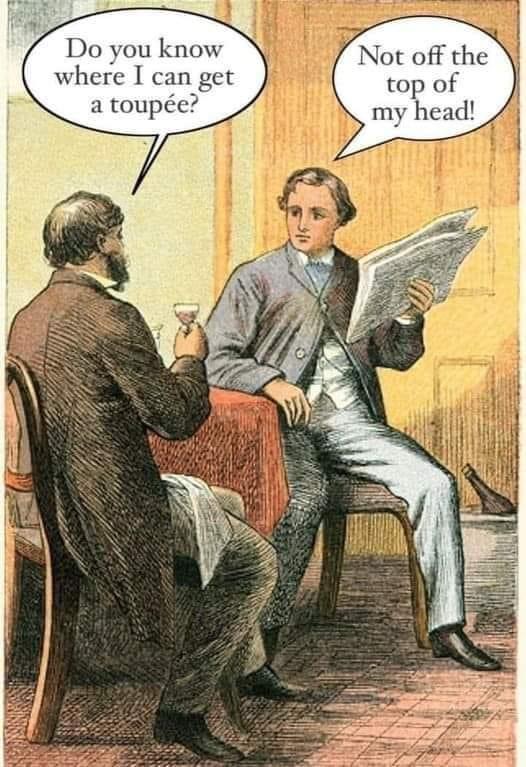
Some of you likely came across this a few days ago, when Danny Boy in the comments, but it’s worth another chuckle.
This cartoon circulating around the internet probably qualifies as a CIDU, but the joke depends on a wordplay, so I’m posting it here.
I searched for the original source, but couldn’t find it in the many, many times it has been posted on the internet before I saw it this week.
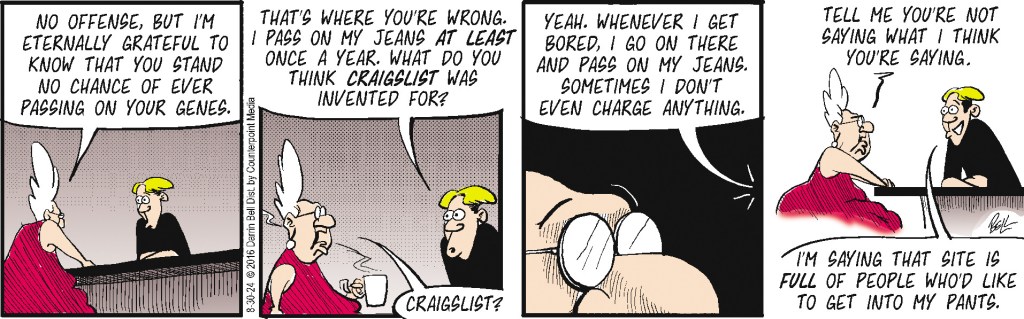
Boise Ed submitted this Cornered panel, commenting: “What a great put-down!“
… P.S. A German flasher would hope she says: “That’s gross!“ P.P.S. To which he would then reply: “Dankeschön!“
F.Y.I.: Is everyone is already prepared for the upcoming holiday(s)?
How to tell a fruit from a vegetable:
… Your attitude towards caramelizing may depend on whether you’re the one who does the dishes. Similarly with dishes such as tahdig, “a beautiful, pan-fried Persian rice that is fluffy and buttery on the inside with a perfectly golden crust, which is the layer at the bottom of the pot.” — if you make it right. The first few times might not produce “a perfectly golden crust”.
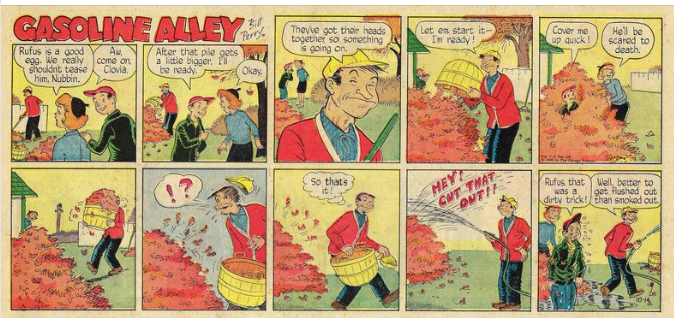
And we couldn’t leave without a couple of nods to autumn.
The character in the leaf pile is Wallace’s mom:
This one’s from 1962, when leaf burning was still a tradition:
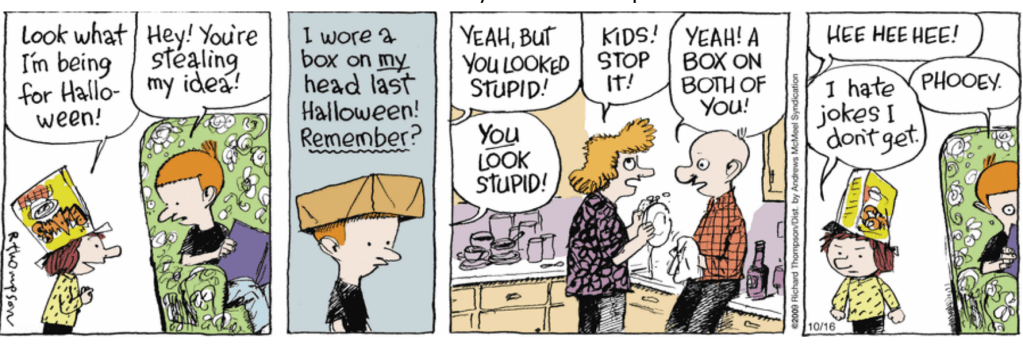
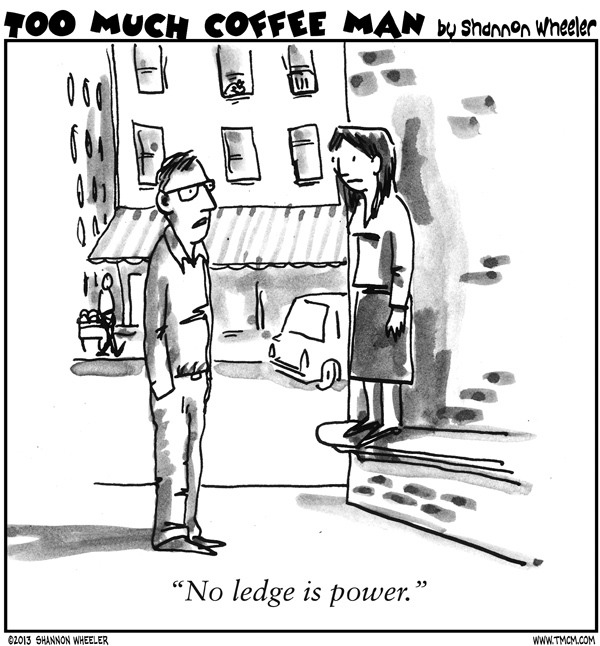
I think that these comics are closer to EWWWs, but DollarBill submitted them as synchronous OYs, commenting “same day, same theme, juxtaposition next to each other in my GoComics daily feed“. The latter is not surprising, given that the titles are alphabetically adjacent to each other:
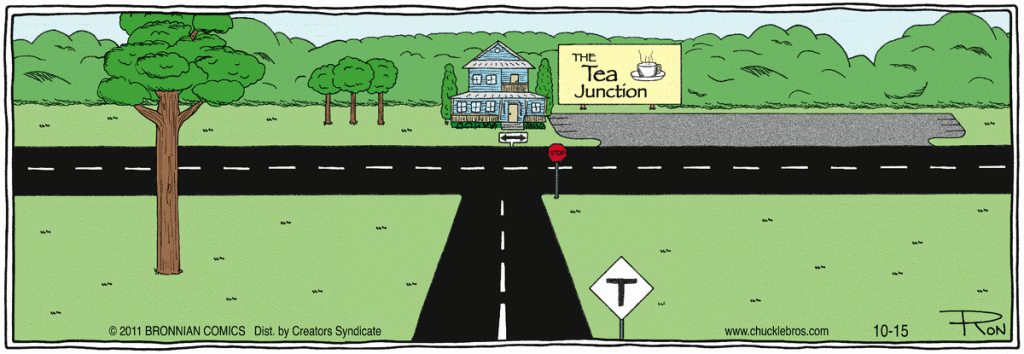
Blazek’s comic was a brief CIDU for me, but it wasn’t that hard to figure out. If there ever was a feature that GoComics should have renamed for just one day, this was it:
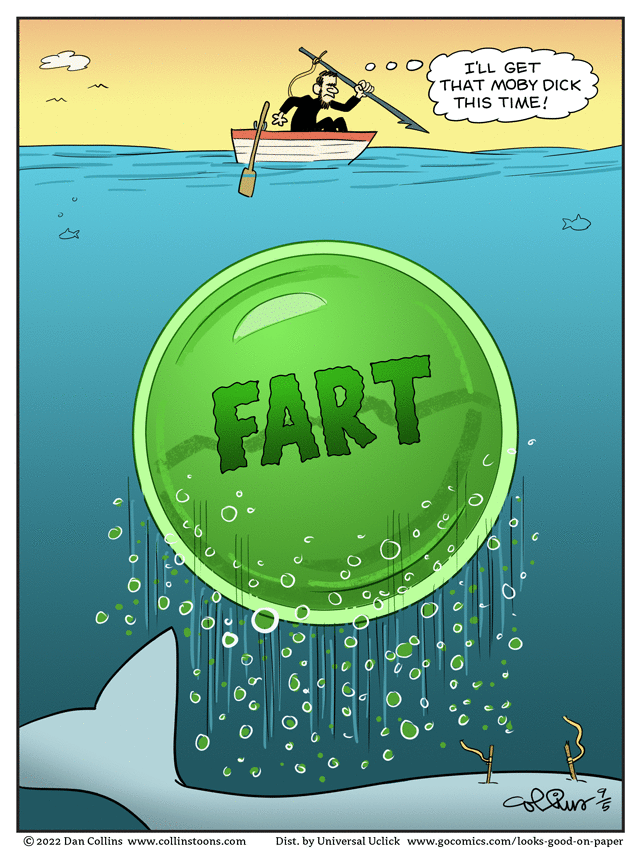
Dan Collins wasn’t taking any chances with misunderstandings: the label on the bubble seems gratuitous and unnecessarily crude, but without it, the color might not have been enough to identify the contents, since he did not indicate the precise location of the source.
… P.S. No matter how it was generated, a bubble that large would have a good chance of capsizing that boat. Aerated water has a much lower density, and cannot support the same weight as normal water, so the vessel sinks. This is a factor with depth charges used against submarines. Even if the explosion itself does not cause a leak, the reduced buoyancy may cause the submarine to fall to a depth where the water pressure is too high, fatally damaging the hull (as happened in the Ocean Gate disaster last year).
Recently surfaced by Dan Piraro for use in his Naked Cartoonist premium essay series.
And his Bizarro partner Wayno on his weekly blog posts sometimes chooses a panel and shows the changes he made to turn it into the strip version. In this case, the strip had to become a column.
…
For both versions, I had a mental-block kind of a problem, as the order of names in the caption does not agree with the placement of the characters in the drawing if taken left-to-right. No, there’s no reason they need to agree, so this is not a criticism, just a note on the mental twitch that left me studying them in puzzlement for a good minute. Anyone else?