Sunday Funnies – LOLs, January 28th, 2024


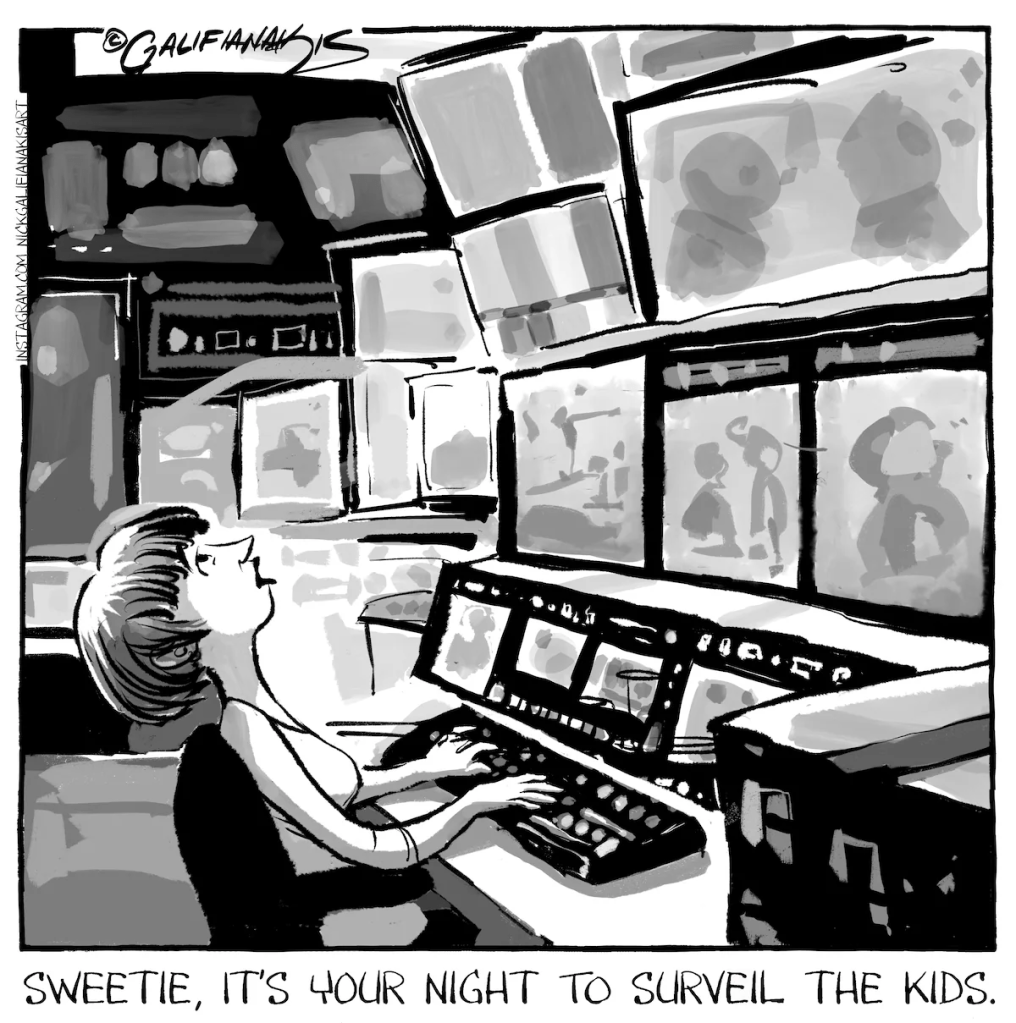
This sub-feature of the SFPC repertoire rarely does much for me. But this instance worked well — maybe because it isn’t really “for the epically/brutally challenged” as much as “for the nightly news evaluation challenged”. 


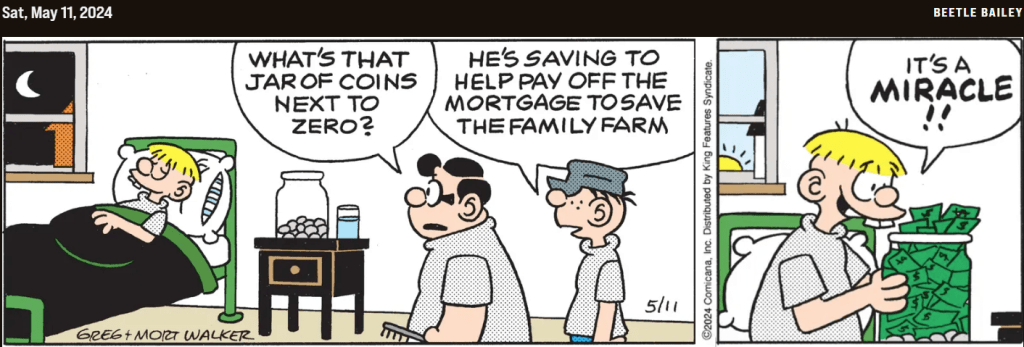
This was a momentary CIDU — I was puzzling out which side of the deal was losing, and why — until the GoComics comments cleared it all up. If you still need a clue, look at those pages in his right hand.


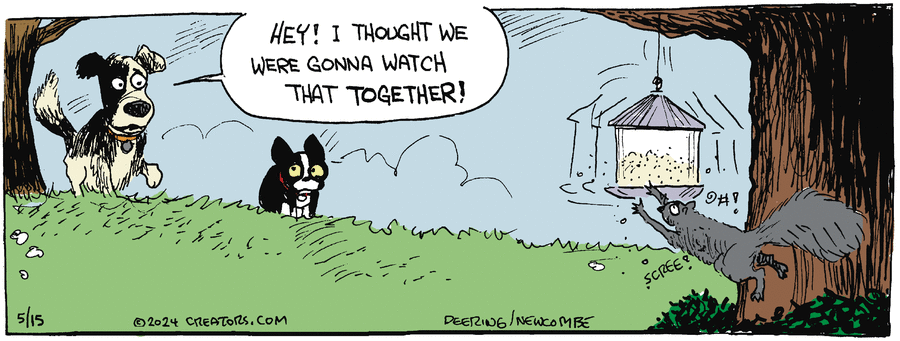
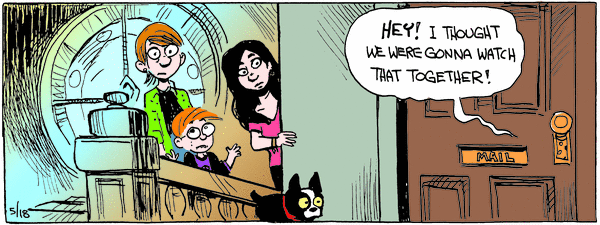
Yes, we don’t publish synchronicities any more. But two comics on the obscure theme of squirrel pushing showing up not just on the same day, but right next to each other in my GoComics feed, was too much to resist.


Saturday OYs — Some math for e day

Pi Day (March 14, or 3/14) gets a lot of play in the U.S., but doesn’t work in other countries that write dates as DD/MM/YYYY, so it becomes 14/3. An alternative in those areas is e day, after the base of natural logarithms, e, (2.71) on 27 January. So, we’re going to avoid the Pi Day rush and post some math cartoons today.

Like pi, e shows up in a variety of places in mathematics, and is associated with some of the greats in mathematical development. From Wikipedia:

“The number e is sometimes called Euler’s number …—after the Swiss mathematician Leonhard Euler —or Napier’s constant—after John Napier. The constant was discovered by the Swiss mathematician Jacob Bernoulli while studying compound interest.”


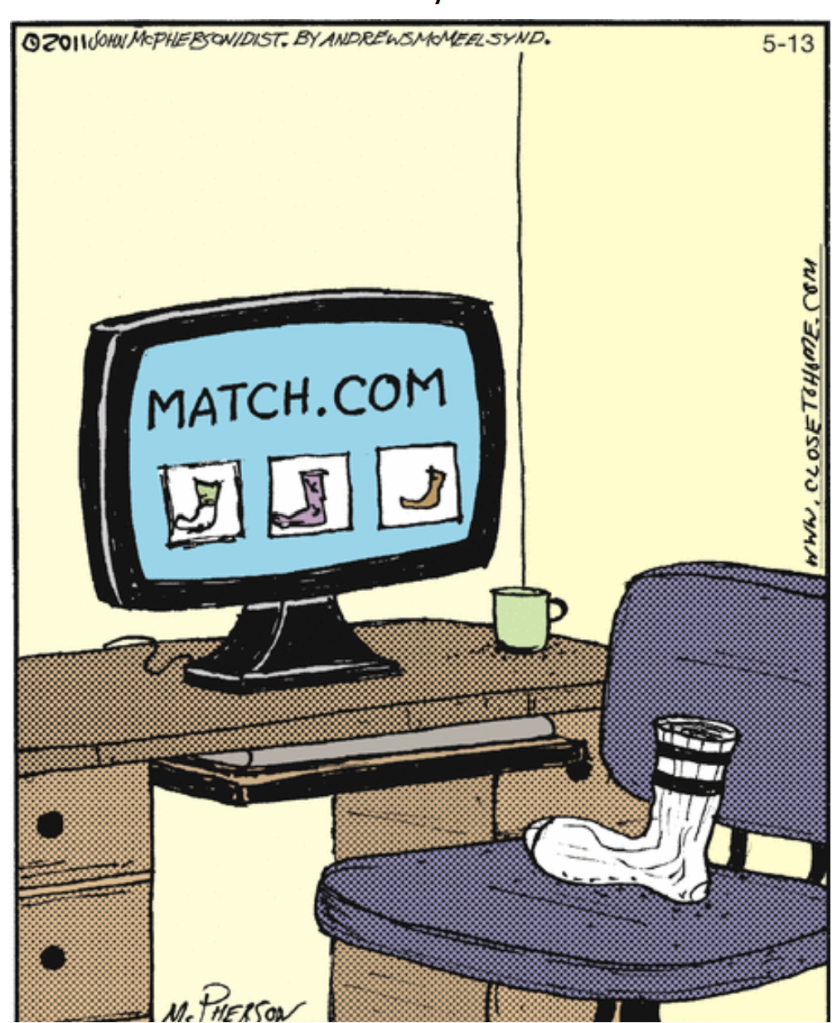
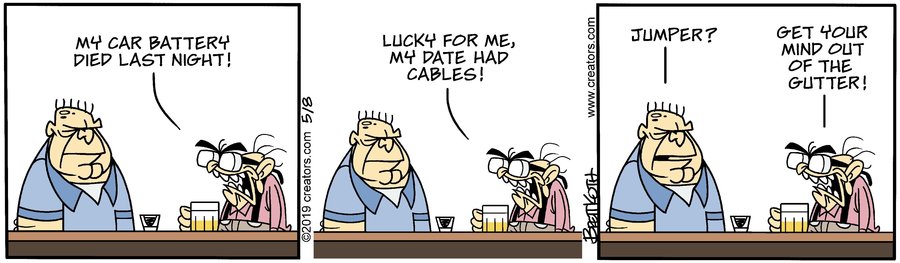
Some fuzzy math from websites. The first is from Kiva.org.

This one is from MyVirtualMission.com, a site where you can virtually pretend to climb Everest or complete the Camino de Santiago as you run/walk/bike around your neighborhood. Somehow, their counter of missions (trips) has gone awry. Or maybe I did one backwards?


That’s not what the author meant!

I recently ran into not just one, but a pair of (independent) comics that I just happened to completely misinterpret when I first read them. Both readings were humorous, just, well, “different”.

At first glance I thought the woman was trying to trick innocent candidates into volunteering (only first-timers would be so silly as to actually raise a hand; anyone with jury experience would know that maintaining a low profile is the best strategy to escape selection). Then I re-examined the artwork and realized that the gag was just a simple pun. Ooops.


The author wasn’t making any unusual wordplay with “a star is born“, but I mistakenly identified a joke that was not there. The German term for “cataract” is “grauer Star“, and I forgot that it’s not called that in English, and was expecting the “googly eye” to go blind in the next day’s strip. Ooops again.


Feel free to chime in with similar experiences, if you like.

Saturday Morning OYs – January 20th, 2024 

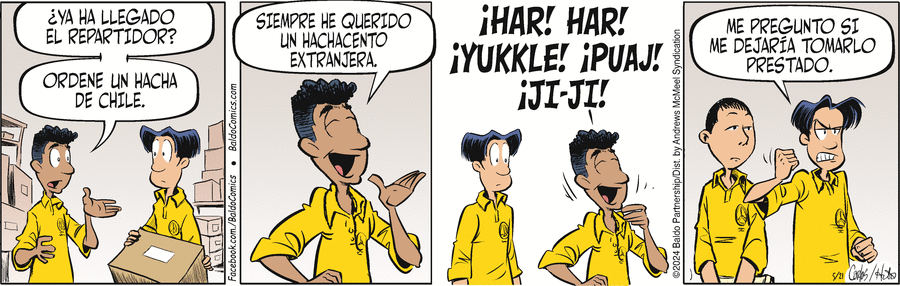
This “dogged effort to learn a foreign language” has paid off! 


And as my brother recently messaged me: Yo no soy marinara! Yo no soy marinara! Soy carbonara, soy carbonara, soy carbonara — por ti seré, por ti seré, por ti seré. 


Some celebrity-name pun memes

Bonus etymological dispute

I thought I *knew*, as an evidence-based origins account and “official” answer, that the term flack for a public relations officer was closely tied to flak “anti-aircraft fire” — via the intermediate occupational descriptive term flak-catcher for their role in deflecting or absorbing abuse and accusation. And that this was popularized in Tom Wolfe’s essay title “Maumauing the Flack Catchers”. (His flak-catchers were local bureaucrats rather than p.r. agents but the idea was closely related.)

But I wanted to check with something besides my own memory, in scholarly sources or some easily-accessible online approximation thereto.

And so, how disappointing that Dictionary.com gives us a story about some guy named Flack, and no mention of flak except a link in a “words sometimes confused with flack” section.

 ORIGIN OF FLACK

  1935–40; said to be after Gene Flack, a movie publicity agent

Well! At least some support from Etymonline, though they also give precedence to Gene Flack, but give some skeptical considerations against him. 

  flack (n.)

“publicity or press agent,” in Variety headlines by September 1933; sometimes said to be from name of Gene Flack, a movie agent, but influenced later by flak. There was a Gene Flack who was an advertising executive in the U.S. during the 1940s, but he seems to have sold principally biscuits, not movies, and seems not to have been in Variety in the ’30s.