
It gets oddly complicated because moot on its own is already something of a self-antonym.


From Andréa.

And another from that Andréa!
It gets oddly complicated because moot on its own is already something of a self-antonym.
From Andréa.
And another from that Andréa!

Sent in by Andréa, BillR, and Dan Sachs; this is somewhat of a CIDU-OY. You may need to brush up on your triggernometry!



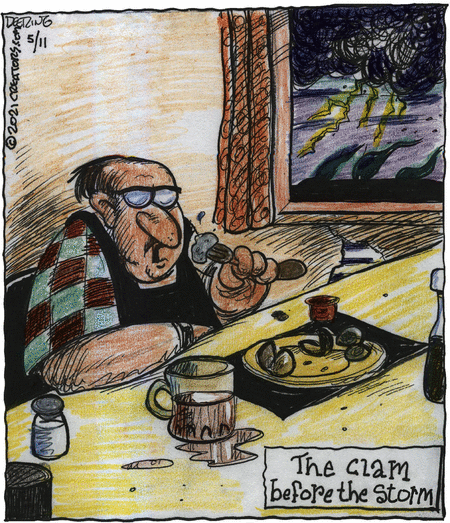
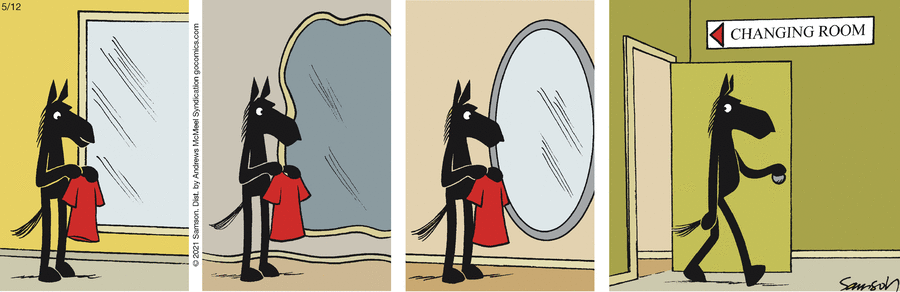




And after that, he drew a bath.

From Andréa.


And I swear I remember when their State Tourism Office had this as their motto! (Probably around the time the University of Illinois used “Four colors suffice” on their postmarks.)



A semi-CIDU Oy from larK, who reminds us that Ziggy usually doesn’t seem to wear pants anyway!
(Euripides? Eumenides!)



Thanks to Andréa for suggestion!


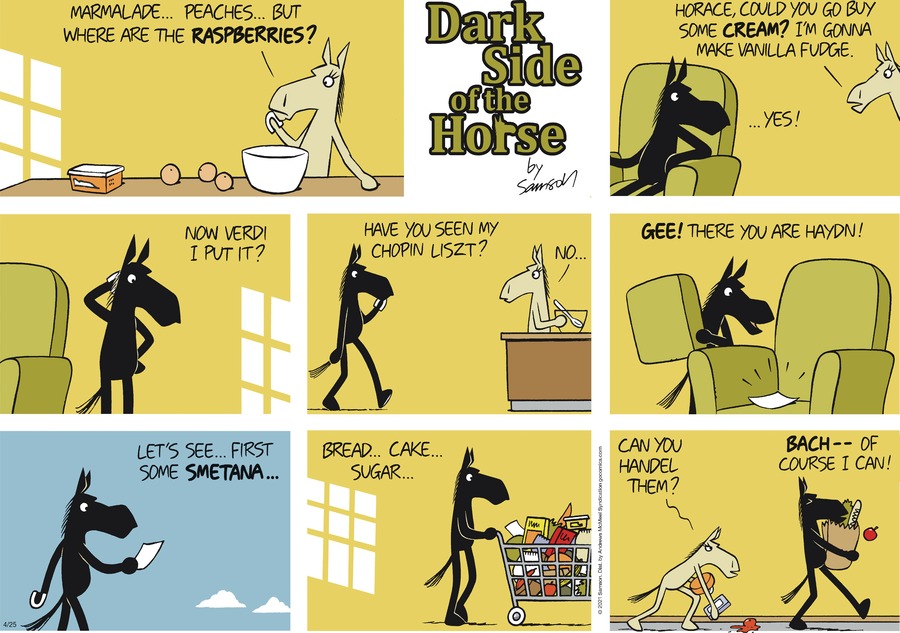
We did not know this, but it turns out smetana as a common noun means cream!


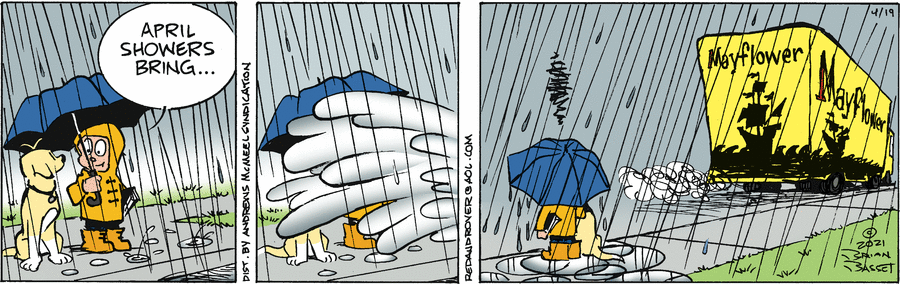
It’s a pun-joke we’ve heard before, but nicely executed, don’t you agree? Though not perfect — there’s no plotted reason for the appearance of the van.
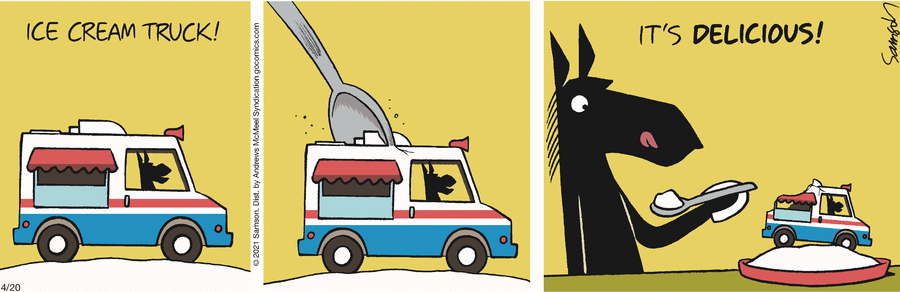


Brevity is one of those strips that seems to try a pun every time. But if we get too used to it, we may not notice when a pretty good one slips by.



We were about to cavil that the “k” was the same thing in both cases … but it really isn’t.
Therapeutic notes from Andréa!

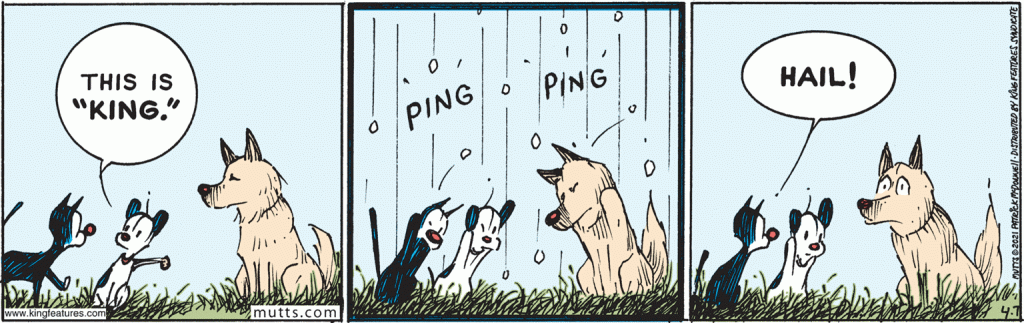
This Mutts is from a series introducing “King”. Not the deepest of puns, but has its little charms.


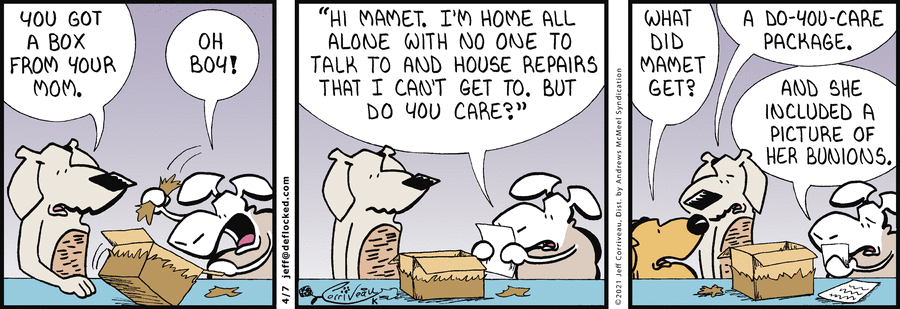
Another not-so-deep Oy, but considering how much grousing and joking has attached to the Zoom software, there has been surprisingly little using this older generic sense.
From Andréa, who asks “How many even know what a CARE package was?”.


Back in last November, in this “OY collection” post, we discussed a Baldo strip and the matching Baldo en Español where an element of the joke doesn’t come thru in the Spanish version, and combined this observation with other instances, as well as “About” tab type info and external sources, to agree that the strip seems usually to have been first written in English, then translated for the Spanish version.
(In that November post, if you feel like scrolling back, there was also a fun digression stemming from a different comic, on a style of word-play puzzle called by some “Dingbats”, a sort of text-layout rebus.)
In March, Arnold Zwicky’s Blog discussed a related example, with the same conclusion, where the English Baldo was about English language spelling and pronunciation (just pointing out that tough, cough, and dough give different sounds to the -ough sequence of letters) and the Baldo en Español just used the Spanish translations of those words, which really don’t resemble each other in any special way, certainly not rhyming. Zwicky also brought up some possibilities on how the Spanish version could have been handled. (And yes, that’s me popping into the comments.)
.
Now lookit what just showed up on GoComics!

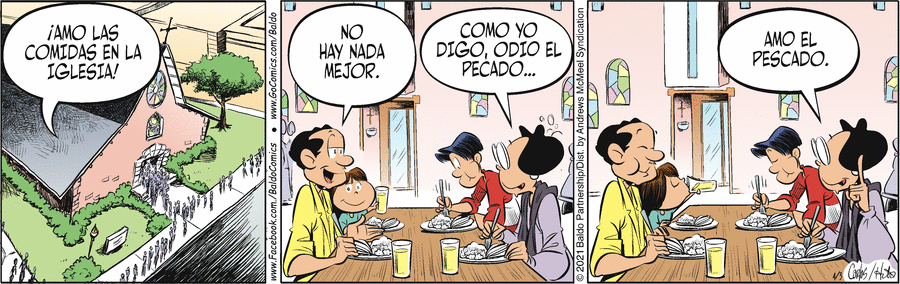
All the Spanish that you really need to know here is that pecado indeed means sin, and pescado means fish (as food).
In the English version, Tía Carmen’s jest is to turn the saying “Hate the sin but love the sinner” into “… love the dinner”. In Spanish she says “… love the fish [we are eating]” which is basically the same idea, but manages to preserve the word-play element because of the resemblance of pecado and pescado.
From Andréa:


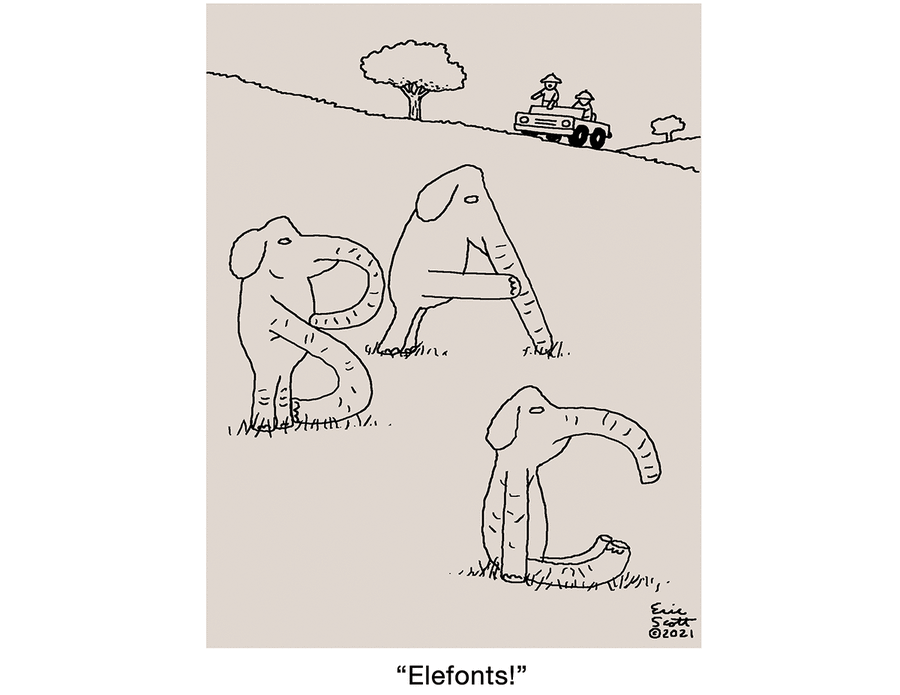
Not a CIDU, but the pun is left visual here so recovering the words may serve as a little puzzle for those who don’t see it right off:


 Comics I Don't Understand