Saturday Morning OYs – July 27th, 2024

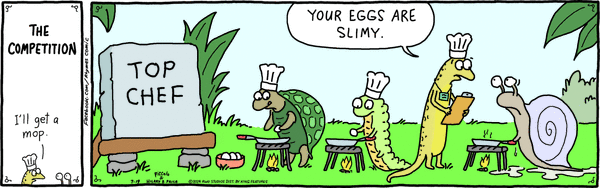
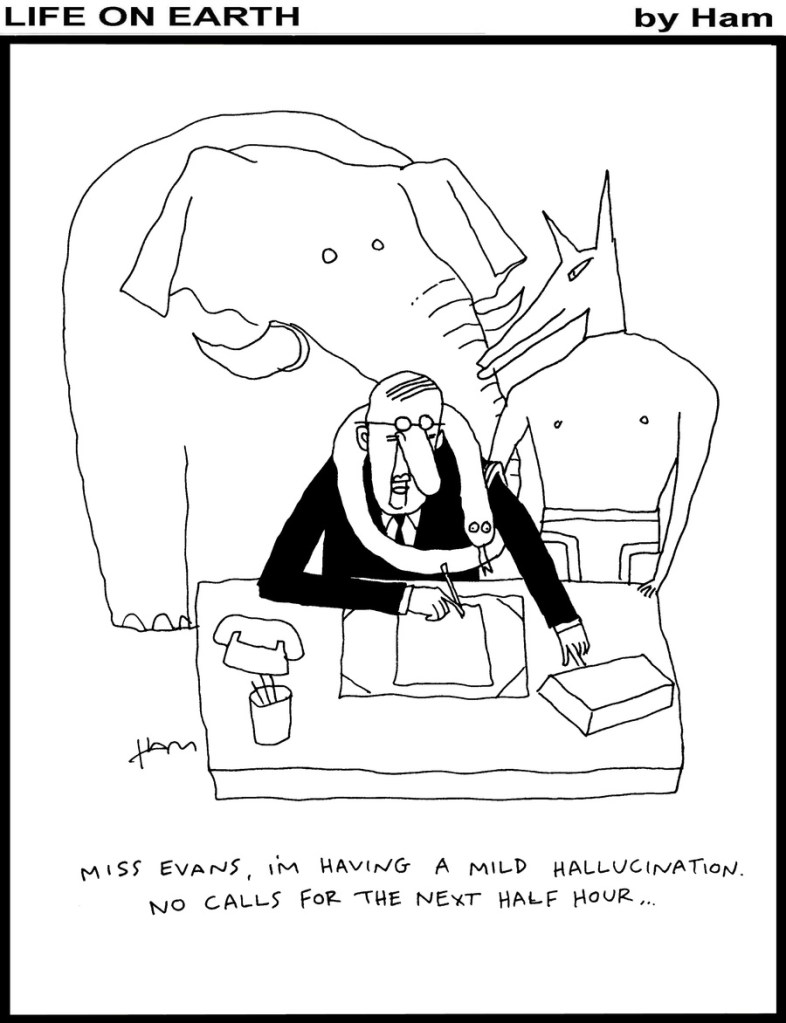
This first one is more of an Ewww than an OY:

P.S. The weather this summer has been exceptional for snails and slugs; every few days I can go into the back yard and collect a dozen (or even a score) of the gross things.


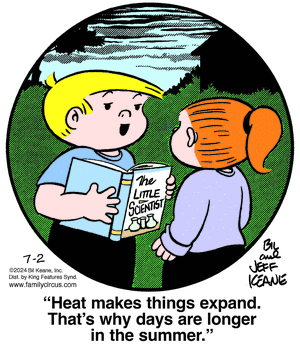
This is only the third time that the Keane’s “Family Circus” has appeared at CIDU (not counting a few mashups and tangential references).


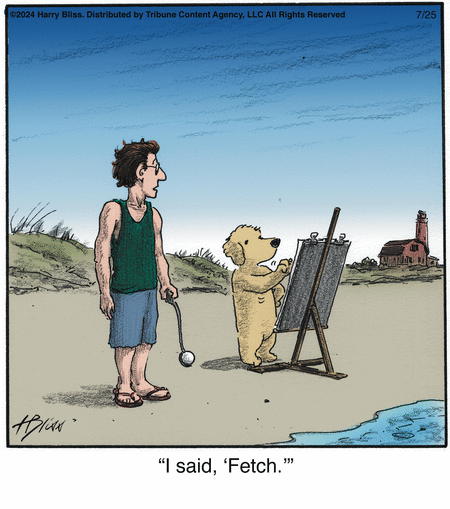
A Comic I didn’t understand the first three times I saw it. I wasn’t puzzled, just mistaken.

I thought the point was just in the dog choosing to ignore the request (command) and pursue different interests.


This atrocious B.C. pun appeared just in time for the opening ceremonies:

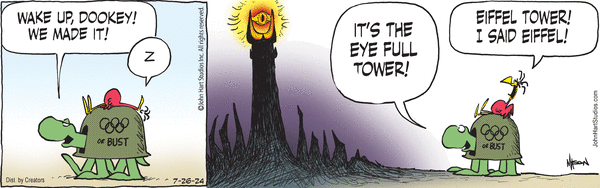
Tolkien wrote that the Elves made three rings, the Dwarves were given seven rings, and Sauron made nine rings to entrap the Nazgul, but where do the five rings fit into the story?


Cross-Cultural Calendars

This Macanudo strip might appear to be misdated to American readers:

… because the school year ended over a month ago. It turns out that the Argentinian school year begins in March, and doesn’t end until December. Nevertheless, the strip is still (slightly) misplaced, because Argentinian students go on their Winter break in July. Henrietta may not be at the beach, but she isn’t in school right now, either.

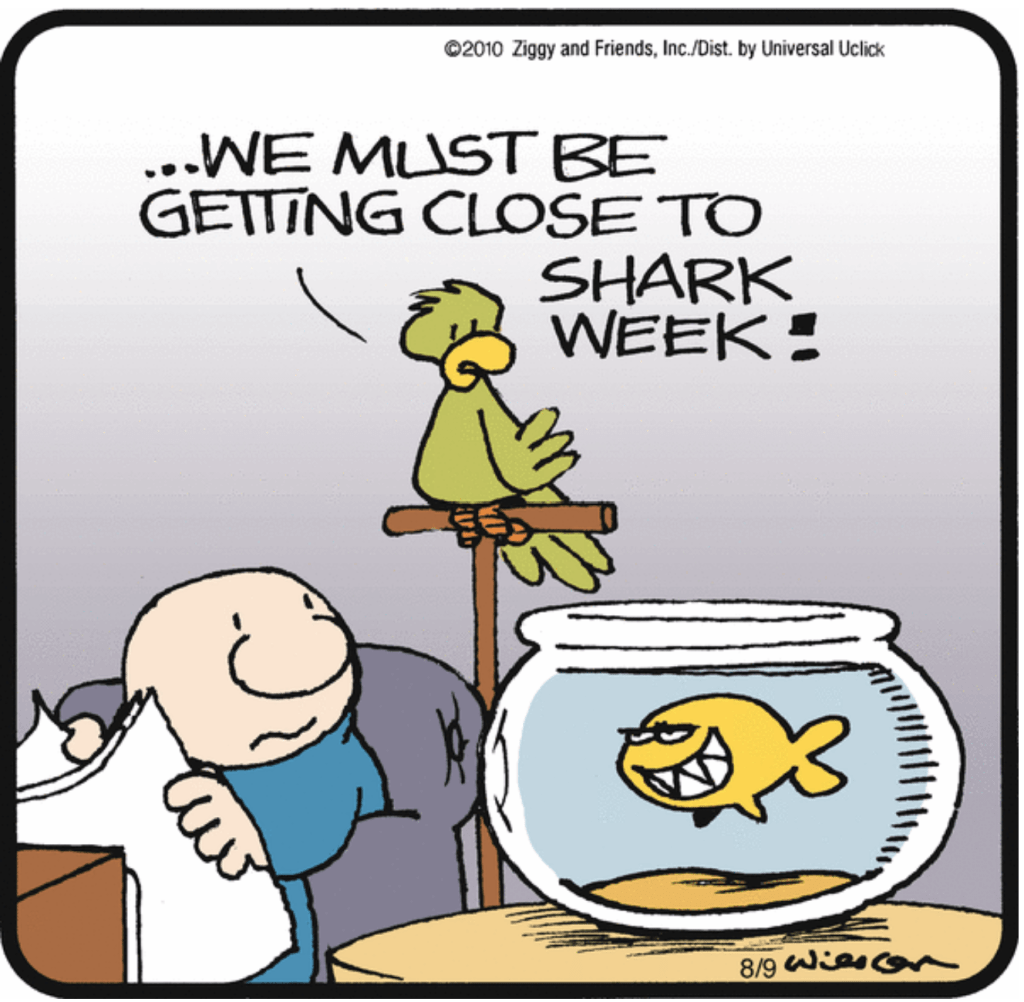
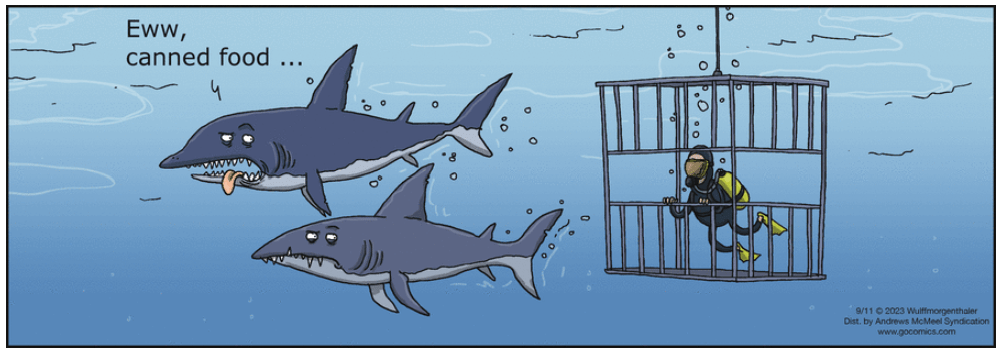
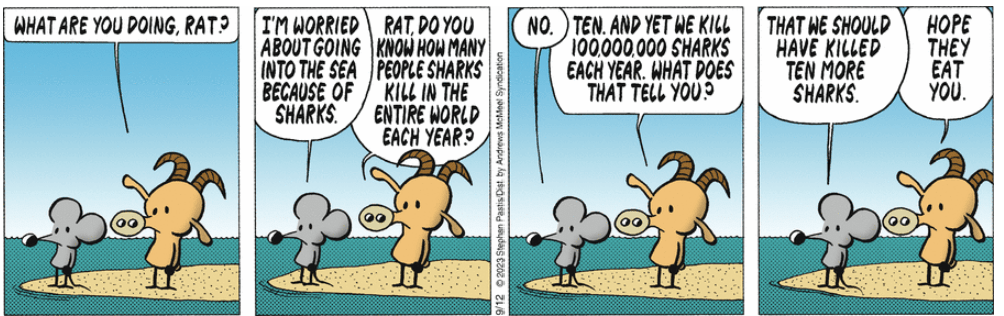
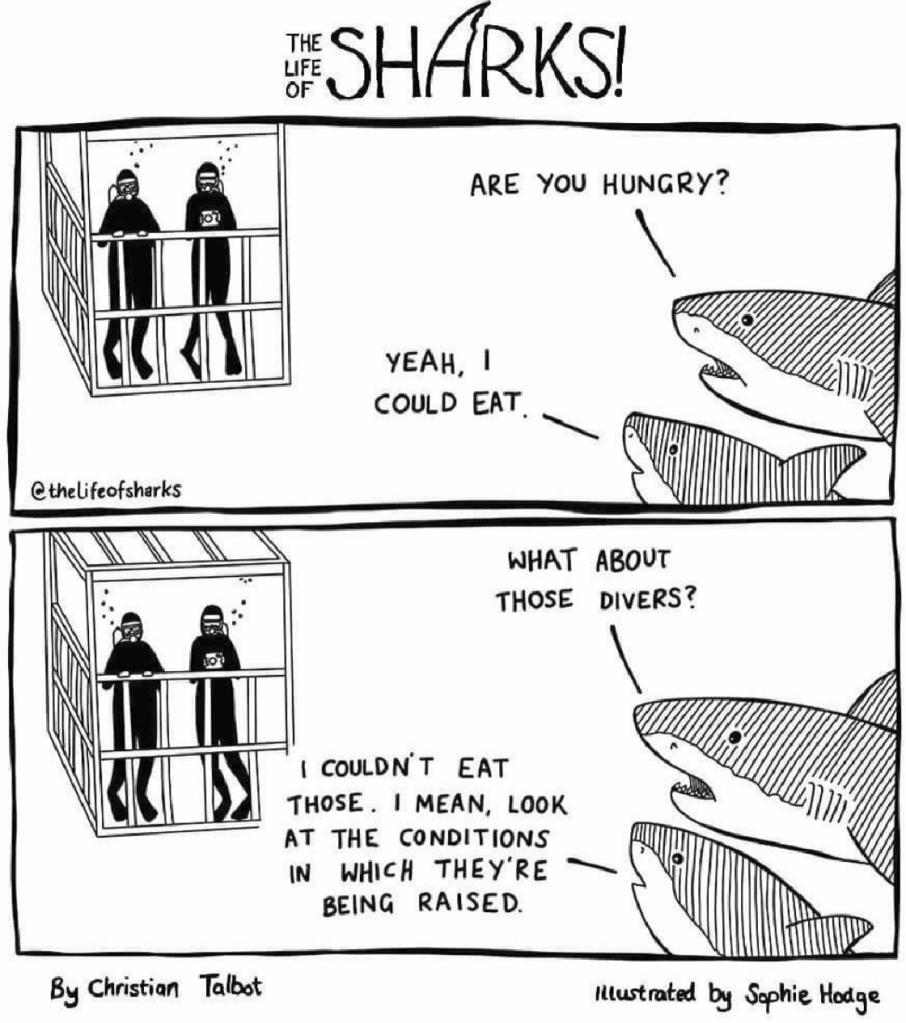
Shark week!

Shark week 2023 began July 23, so when I started this accumulation some months ago I assumed it would be the same week in 2024, and scheduled it for then. But I guess the chaos around the Discovery / HBO / Warner merger confused even the sharks, and shark week was last week.


Testing, please ignore

Testing whether some drop-in CSS (many thanks, larK!) will improve the appearance of blockquotes.

The comparison will not be two different places in this post , but comparison in time, viewing before and after adding the CSS snippet and refreshing the browser. (Gee , somebody had a blockquote in a comment yesterday or today — maybe I can find that to also look at.)

Regular paragraph. Lorem ipsum dolor sit amet, consectetur adipiscing elit. Donec consequat sem quam, posuere sodales eros accumsan quis. Aenean a elit eget libero bibendum elementum. Sed molestie placerat purus, ut hendrerit turpis vestibulum sit amet. Aliquam vulputate justo vel est venenatis egestas sed eget lacus. Ut maximus dictum mollis. Suspendisse id hendrerit ex. Nulla eu tincidunt tortor. Etiam a malesuada erat. Mauris dignissim aliquet iaculis. Maecenas hendrerit scelerisque odio vel venenatis. Pellentesque finibus leo in ullamcorper varius.

long quote with lorem ipsum uspendisse sed risus mi. Suspendisse auctor id mi non imperdiet. Integer nec vehicula lorem. Fusce eget turpis eleifend, consectetur mi in, pellentesque eros. Sed consequat tortor vel dui tempus feugiat vitae quis leo. Ut fringilla libero metus, a gravida dolor molestie eu. Suspendisse porttitor ipsum at ante convallis, ut mollis ante facilisis. Maecenas quis pretium felis. Donec gravida urna nec purus pretium dignissim. Phasellus ac aliquam lorem. Proin leo turpis, suscipit non ornare vel, vehicula id lacus.

Try explicit html

<blockquote> Duis eu nulla nec mi sollicitudin consequat. Maecenas eu interdum odio. Integer quis maximus augue. Donec egestas magna massa, sed rhoncus tortor placerat ultrices. </blockquote>

More plain paragraph

And a short quote

They both work!

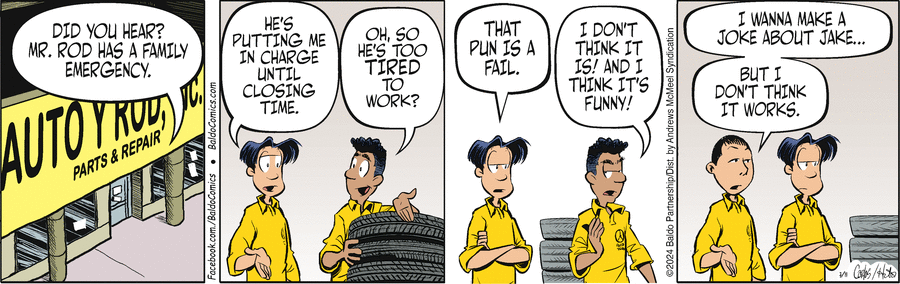
As we have asked before with Baldo, does the joke depend on language, and does it work in both the Spanish and the English versions of the strip?

Here there are two loci for our standard questions: In panel 2, the dialog from the second character (who I think must be Jake); and in panel 4, the second part of the dialog from the speaking character.

My take on those two, in short summary: The panel 2 pun works fine in English, and the Spanish also has something of a pun, by substituting a different statement instead of a translation. In panel 4, in the Spanish there seems to be an amusing equivocation, by virtue of a grammatical ambiguity; which does not carry over into English.

In some detail:

In the English, notice the emphasis given in the lettering to the word TIRED. And while Jake says that, he is all over a stack of TIRES; even seemingly pointing to them as though in a sort of illustration.

In the Spanish, Jake’s line translates according to Google as “Oh, so you roll out of here early?” (and I think the “you” is not the only choice — it’s more of an impersonal, and might amount to “we”). So it no longer mentions tires or tiredness, but with the mention of rolling still manages to indirectly bring in the tires and roughly complete a pun. (And as a noun instead of verb, rueda is rendered first off as wheel.)

OK, a bit of background. English (like, say, French) in simple sentences, in at least semi-formal speech or writing, requires an overt subject, even if a person and number could be inferred. Spanish (like many other European languages) allows skipping a subject pronoun if the verb form is enough to determine person and number. You can see this in both of Jake’s sentences in panel 3 — creo is 1st-person singular, but the sentence does not need to say yo creo; same for pienso not needing yo pienso.

Then in panel 4, the third character’s line Pero no creo que trabaje could be But I don’t think it works [it = the potential joke], or But I don’t think he works [he = Jake]. Which is a fairly good joke, or anyway language-amusement. [My point about not requiring overt subject pronoun turns out not crucial here, since if this sentence did use a subject pronoun, él for he or it would still be indeterminate.] But in English we get But I don’t think it works, and no secondary dig at lazy Jake.