My guesses are that the Sporkula and Foon are made up, and that the Foodle was intended that way but in fact exists, under some other name. I think I’ve seen it used for lifting and serving spaghetti.
So clever! (But we may have to watch out for the pronunciation-guide people.)
We’ve previously complained about how they use Horace and his characterization to get away with not managing to find the right level to pitch to. But that objection aside, this is a pretty nice pun!
My friend Alice used to … oh never mind!
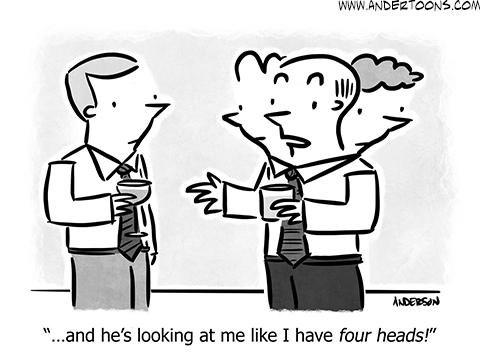
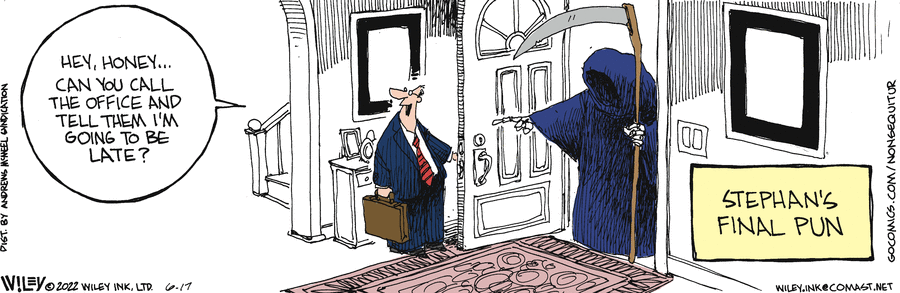
Dilbert Classics has been running a storyline about a new employee without a head (Microsoft hired his head, which is in a jar at their headquarters). But he has a name.
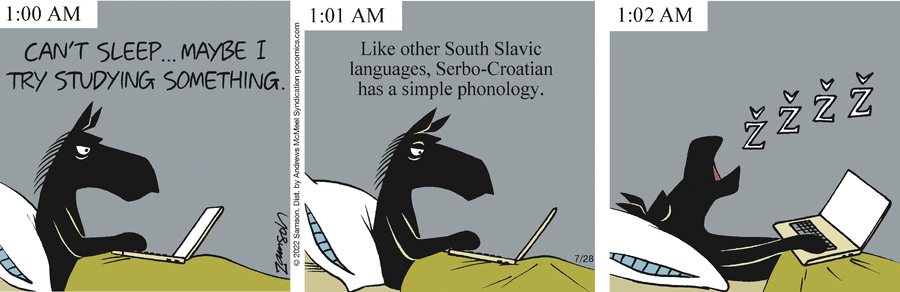
I remember running into a well-meaning person who heard the linguistics lecturer use the term “natural language” and tried to object that no language or dialect is actually more natural — that is, “better” in some way, or more suited to learning — than any other. Which is something that audience would not disagree with, in general, among the set of languages they were discussing. (Which of course, were just those natural languages.)
But of course there are several ways some communication system or notation system can be called a language but is not a natural language. Roy’s list includes two major types, and misses a couple other categories. (But we don’t get to hear if he has command of other natural languages.)
Here’s an amusing talk I ran across recently, which may be fun for those with either practical programming experience in a few different computer languages or anyhow a reading/browsing acquaintance with them.
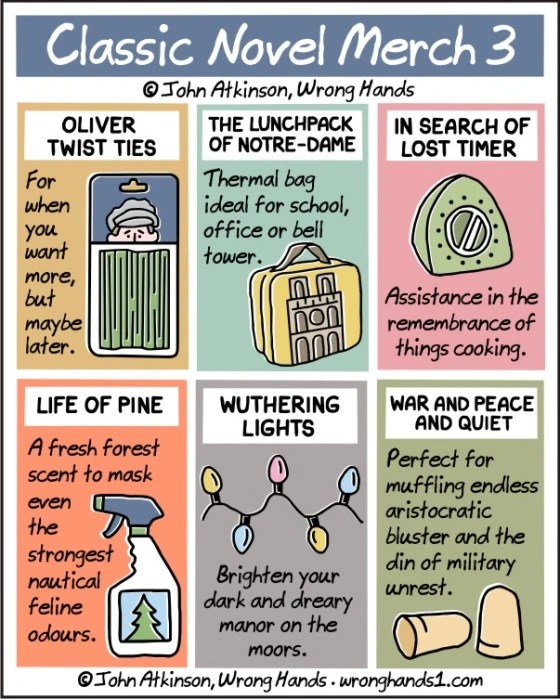
This is mostly a non-CIDU , a sort of six-part “What did you think of this one?”. But if anybody else is having hesitation in identifying one or more of these, we should deal with that! My drawing-a-blank is “Life of Pine”. And I’m so glad people aren’t saying “Remembrance of Things Past” nowadays!
Thanks to Bill R, who says “It’s like they’re daring us to figure it out”. Which is why there is a CIDU category (“tag”) on this, along with the “(Not a CIDU)” for the OYs list in general. Look, don’t question it too hard. Oh, and it’s not a pun really, but gets an OY as a language-related item. Also this list was sitting bare too long …
The usage they’re disputing over was taught in my schooldays as one of “those common mistakes to be avoided”.
OK, I think (but am not positive) that I get the alternate meaning the joke depends on — from too many crime shows, the best deals a defendant’s lawyer might hope to extract from a prosecutor would involve setting no additional jail time, so the defendant gets to “walk away” or “take a walk”.
First I thought the outside guy was wearing an odd bathrobe; but throw in his laurel wreath and I guess he is at a toga party. But not the inside guy. Oh well, it doesn’t seem to affect the joke.
Possible cross-comic banter, based on spelling of the name?















 Comics I Don't Understand