Please WHAT?

Please WHAT?
CIDU from March, 1943


Enter nominees for sadder words in the comments (no politics or religion, please)


Since we have a Skink among our regulars, here’s a Far Side on that species subject:


Some content on this page was disabled on July 27, 2023 as a result of a DMCA takedown notice from FarWorks, Inc. You can learn more about the DMCA here: https://wordpress.com/support/copyright-and-the-dmca/
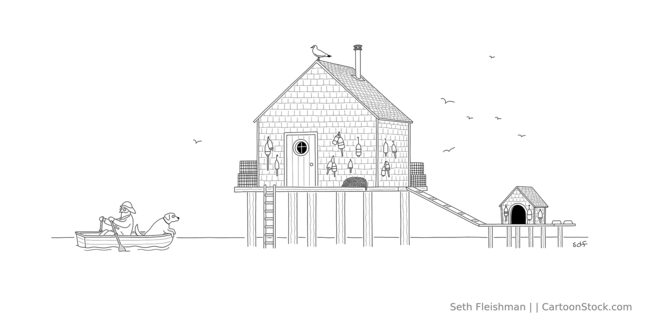
Okay, it is funny that even in this stilts-in-the-water circumstance there is a separate little doghouse in the back yard, complete with feeding bowls. But is that the joke? Does it explain the things hanging from the outer walls of the houses? Boat bumpers?? What are the things stacked on either side of the big house? Lobster traps?? Are they out for a row instead of a walk?
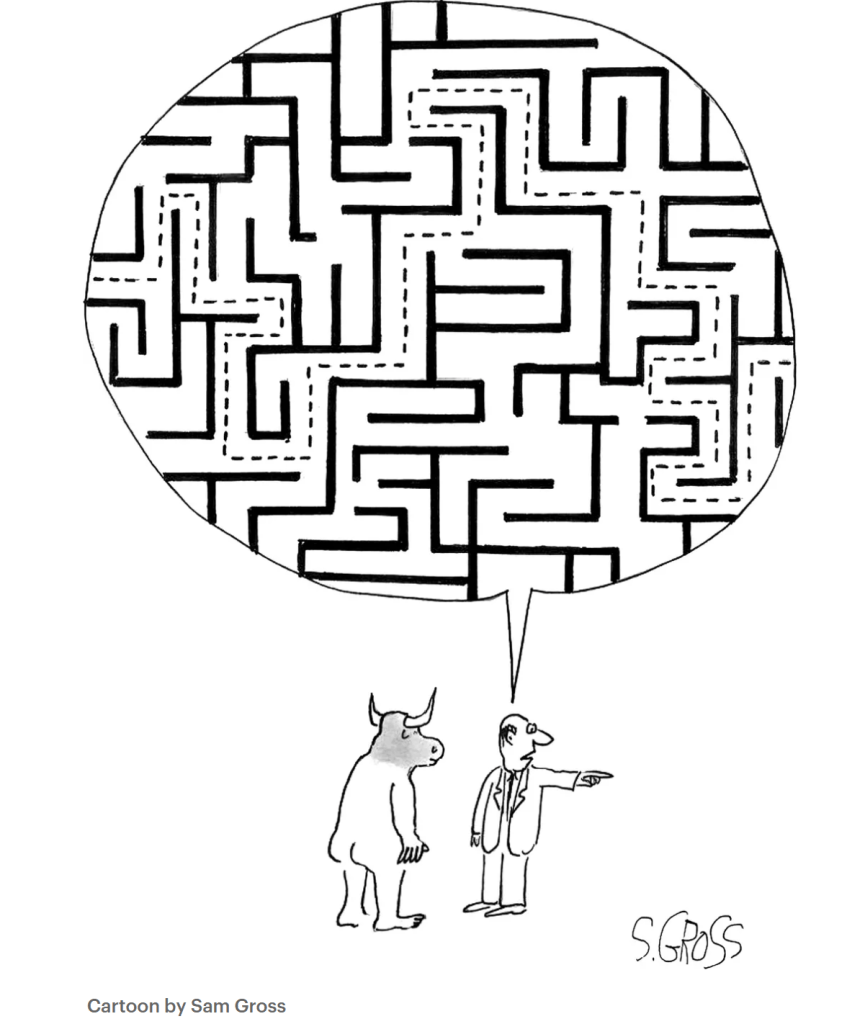
Navigating through 2023 might be problematic – no bull!
Are we post-pandemic? Still in the pandemic? In a tripledemic (covid, flu, RSV)?


From Ooten Aboot, with an illuminating commentary:
In 1874, a similar culture clash happened in real life when Montreal’s McGill University challenged Harvard to a two game “football” match. To McGill, “football” meant Rugby, while Harvard followed “Boston Rules”, a version of Soccer with limited catching and carrying of a spherical ball. The solution was to play one game under each set of rules. Harvard won the “Boston” game, while the Rugby result was a 0-0 tie. Nevertheless, Harvard apparently liked the McGill style and adopted similar rules, so that encounter with McGill may have been the origin of American Football as it known today.
A case of How to Respond to Critics?


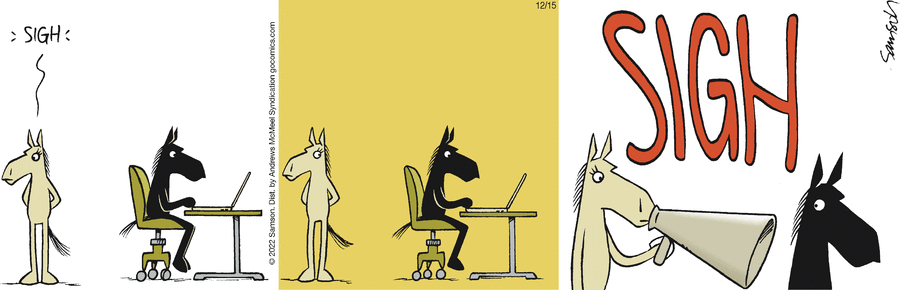


What fun? Is there some life event or historical event I’m missing here?


Sent in anonymously, with the suggestion that the last balloon coulda/shoulda been printed on a single line.
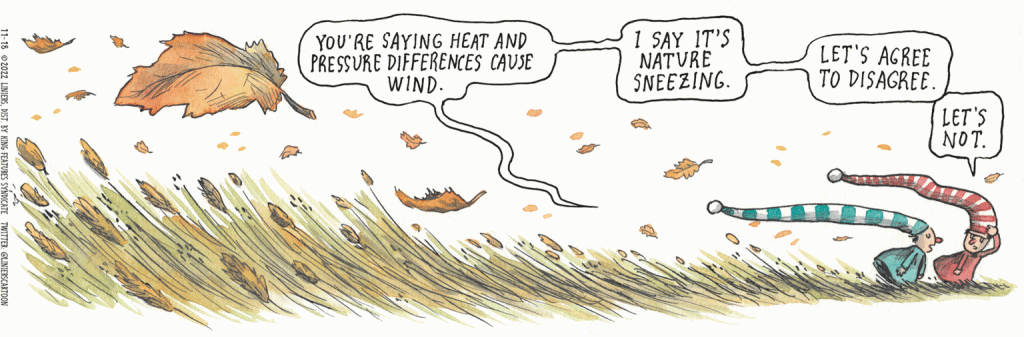
A blatant case of obnoxious literalism
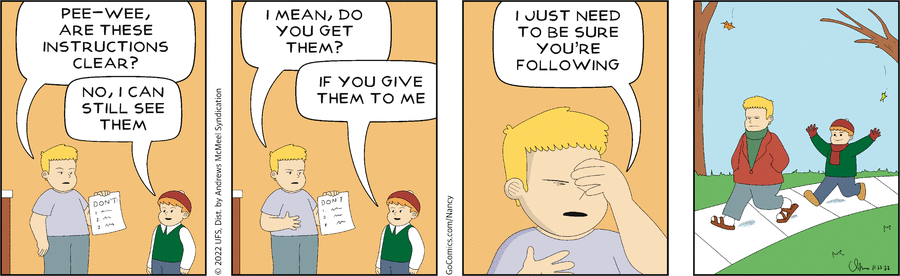
It looks like we only have part of a caption here. Can you finish it?


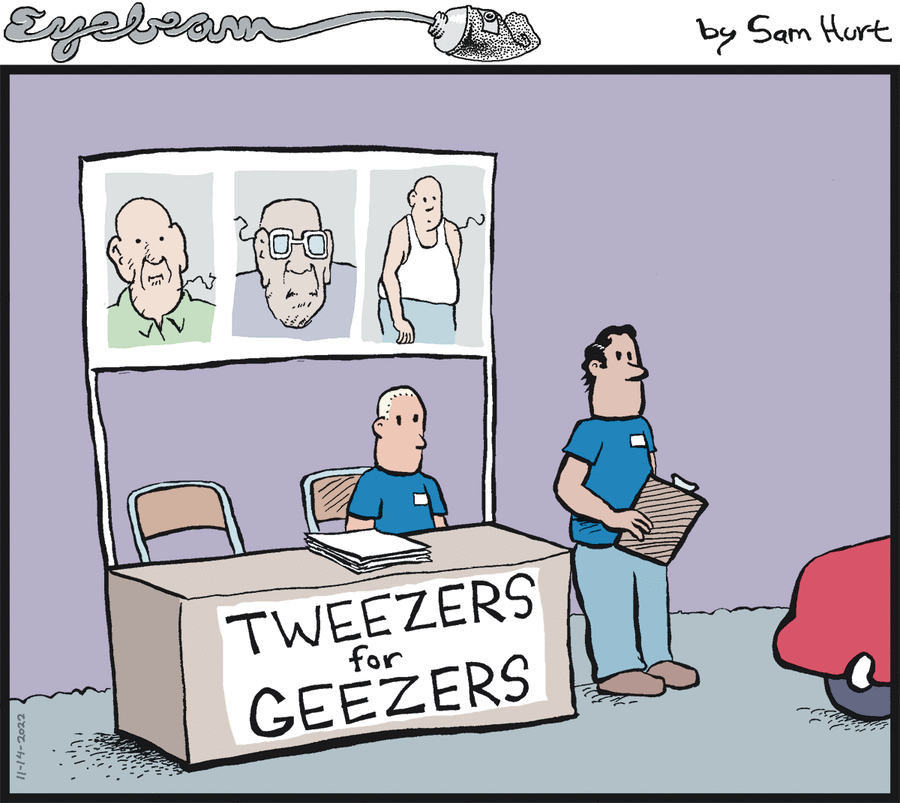
I was thinking of this as a CIDU until I saw a comment at GoComics suggesting they are collecting signatures on a petition — for a candidate or for a ballot measure, we can’t say. The car does put them outdoors. Certainly there are still questions, but can we ask all to refrain from objecting to the co-occurrence of the “(Not a CIDU)” category for the LOL listing post and a stray “CIDU” categorization for the lingering doubts of this cartoon?

So it’s still snail week at BOB MANKOFF PRESENTS: SHOW ME THE FUNNY (ANIMAL EDITION).

A Sad-LOL fer shure:


