After inserting this one here, I later found it discussed on Arnold Zwicky’s Blog, in his usual exemplary detail and scholarship.


Oh, he got us! It turned out not to be an oy about “Youth In Asia”!
Here’s an Ewww-Oy for sure:

After inserting this one here, I later found it discussed on Arnold Zwicky’s Blog, in his usual exemplary detail and scholarship.
Oh, he got us! It turned out not to be an oy about “Youth In Asia”!
Here’s an Ewww-Oy for sure:
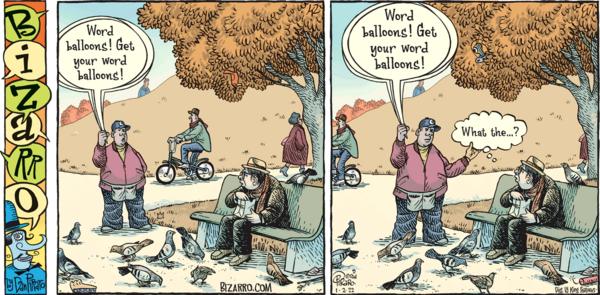
A CIDU-Quickie is like a Minor-Mystery — it seems like it will work out to a good joke, but there’s that just-one-thing we can’t understand. But it’s so close, obviously once someone makes a good suggestion there will be nothing to discuss; so it can’t be expected to be a standalone CIDU to satisfy a whole day’s spot.
Thanks to BillR for this CIDU-Quickie from Bizarro, about which he writes “No idea what the x-balls are.” Well I had an idea – but it wasn’t very good. Then BillR wrote back that his wife had a better idea – and yes it was better. But still not certain. So, what say you?

(Did this already get posted separately and discussed?? I thought so but can’t find it.)

This is a case of what some defined the “oopsie” for – a possibly good joke, but something about the drawing is wrong, or as in this case, tiny, scribbled, and indecipherable, to the extent that the joke is quite lost.


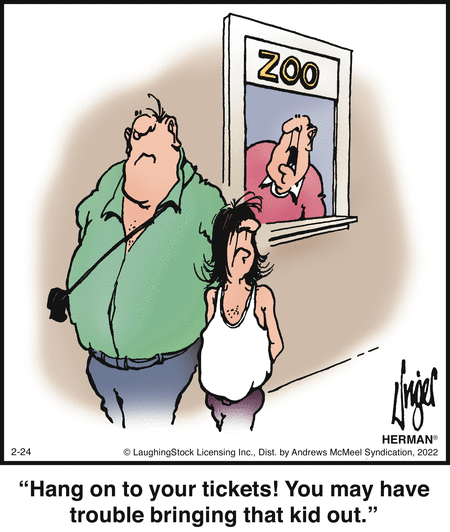
So the anticipated encounter is …. “Hold on! Where are you going with that ape” … “No, this is my kid! Look, here’s our tickets, that proves it.”

I trust even the non-geezers will recognize “feghoot” as a term for a story that ends with an Oy as the punch. Is it a dig at PBS to point out it often uses feghoots?

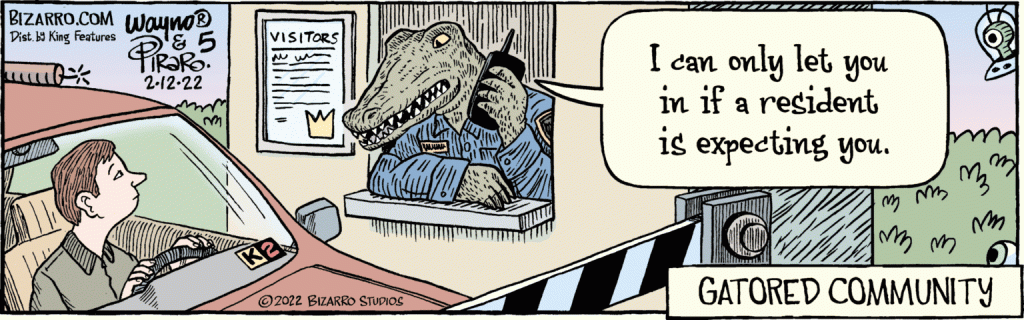
Double dose of Loose Parts.
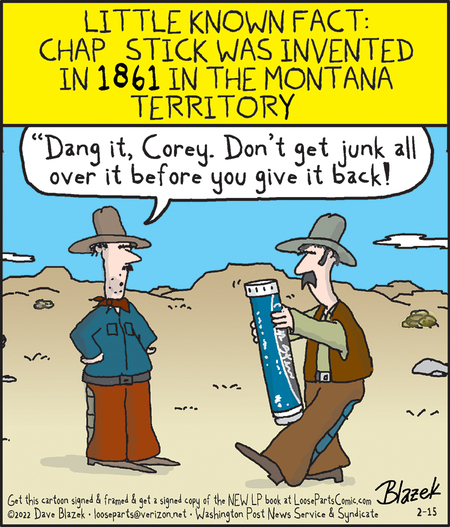
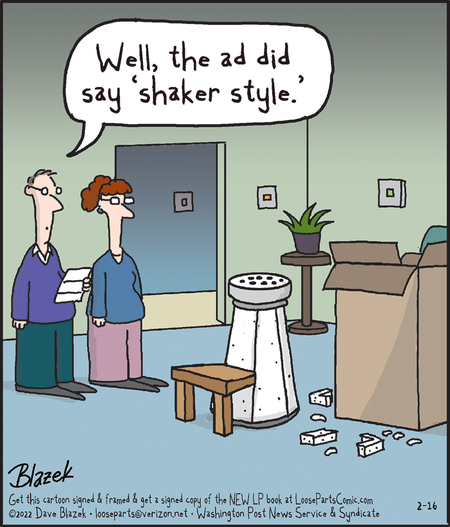
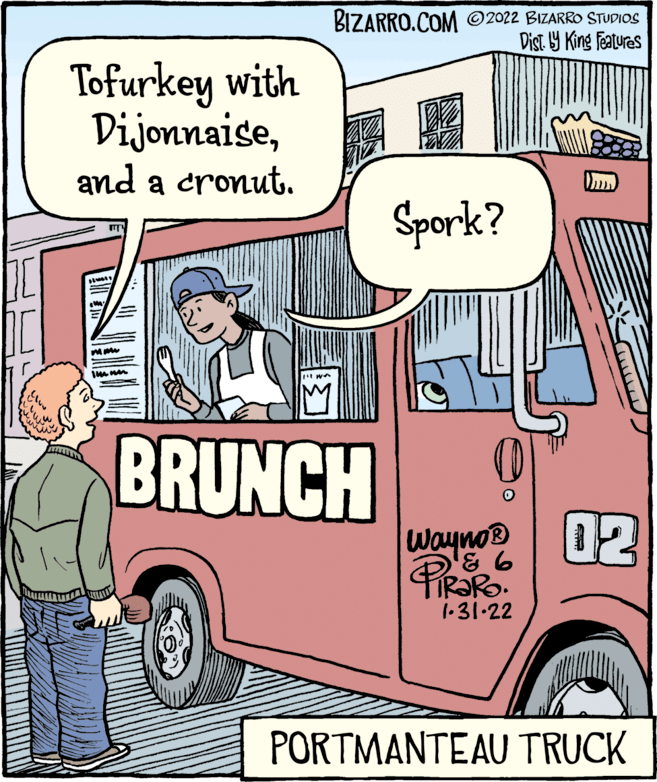


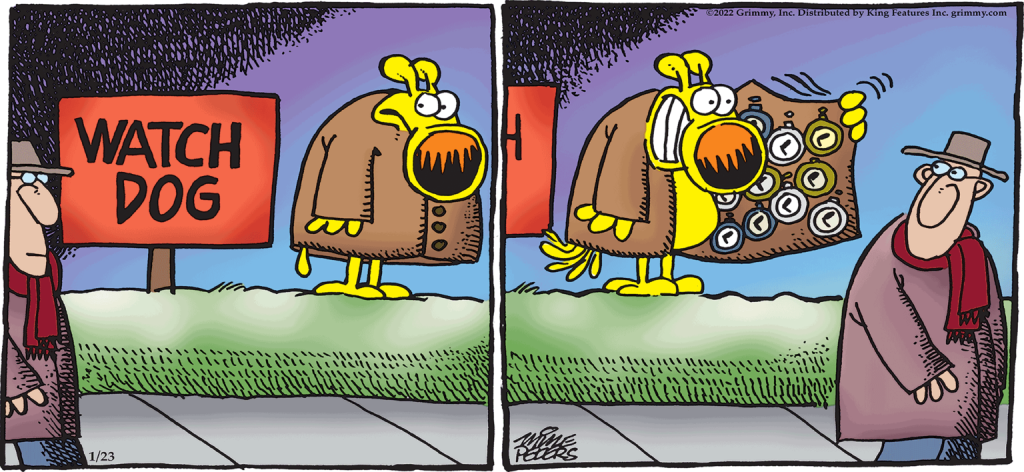

I only recently started sometimes reading One Big Happy, and evidently don’t yet have a good handle on the age and attitude of the intended audience. But these are all clear OYs on familiar sayings.


Is this Horace himself, doing some kind of costumed performance? Or an ancestor or other predecessor, who looked like that in his heyday?

And a definite meta-OY:

Moon hits a double today:

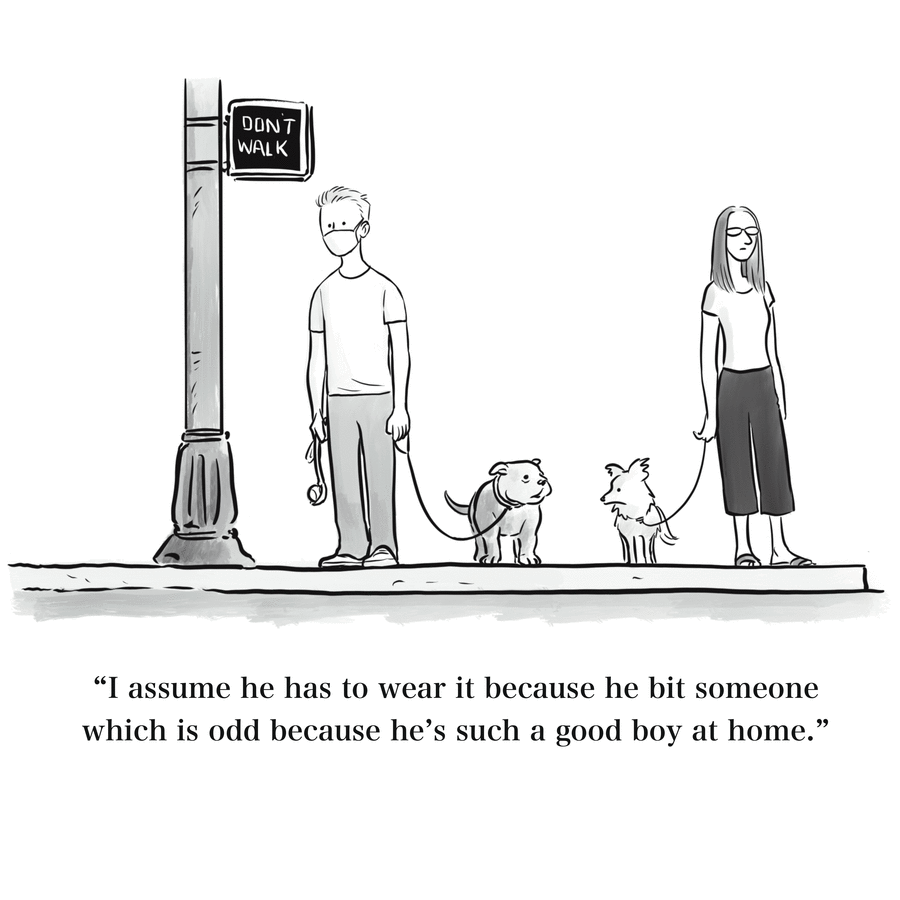


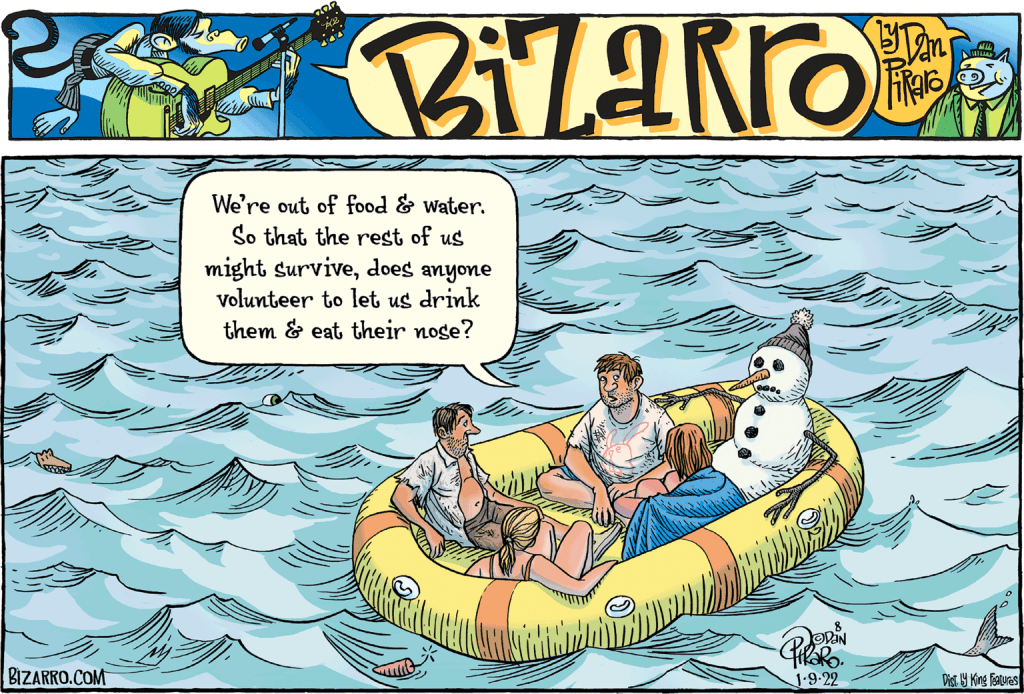


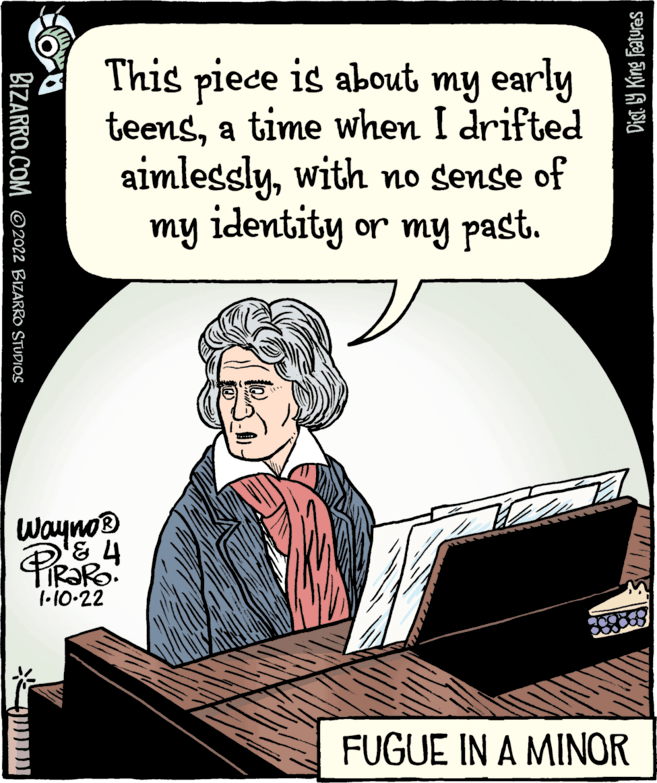
We can discuss how dictionaries work, but I think I’m seeing (at https://www.lexico.com/en/definition/fugue and https://www.merriam-webster.com/dictionary/fugue ) that the musical and the psychiatric meanings of fugue are senses listed in one word entry, with just one etymology section for the joint entry — thus, that they are the same word historically. Etymonline is not helpful this time.
Not only is this playing between the musical and psychiatric senses of 𝘧𝘶𝘨𝘶𝘦, the caption depends on 𝐴 as both a musical key and the indefinite article, and 𝘮𝘪𝘯𝘰𝘳 as both musical mode and an age classification.
P.S. This cartoon along with an earlier Bizarro and other aspects of fugue, minor, a-minor, and somehow emo, are all fodder for Arnold Zwicky’s blog.


When I saw the first panel I knew what the second one would be! Ókay, it’s corny and obvious — but that’s what’s fun about it.
Here’s your chance to duplicate that experience.
First:
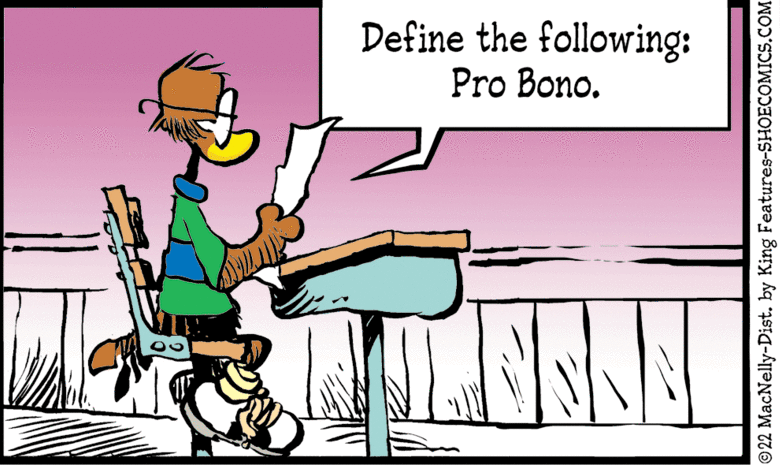
And here the answer (slide up to uncover):


Is it just that the house was built by the dwarfs and does not have upper storey?
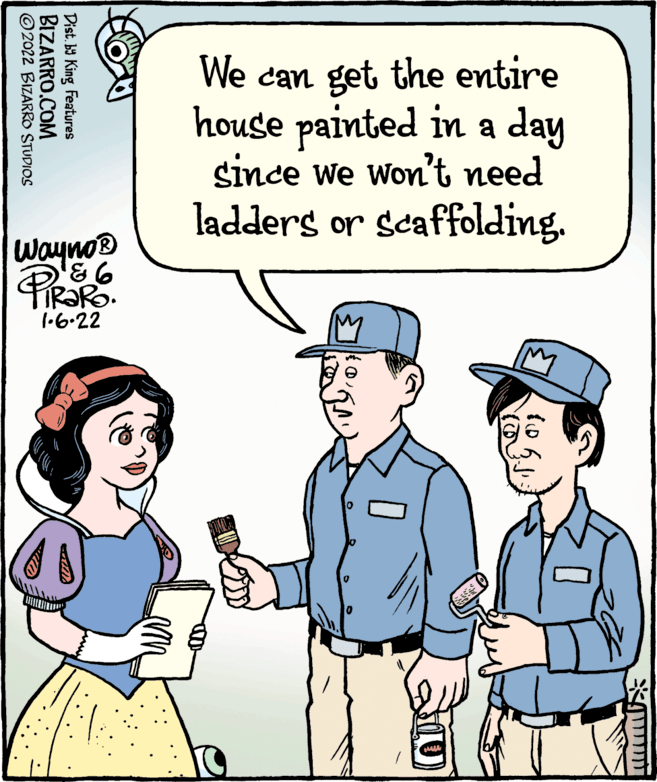
(And answer quick, before the Wayno Blog appears!)


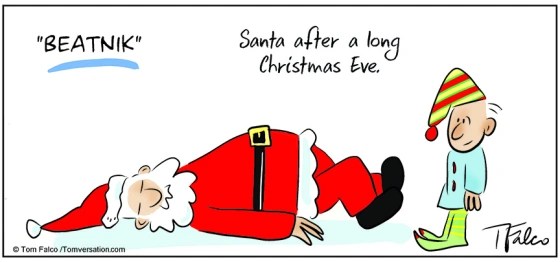
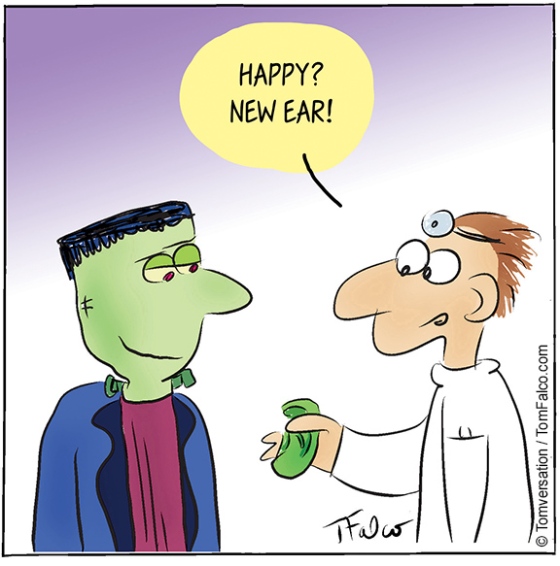
A double dose of holiday cheer from Falco:
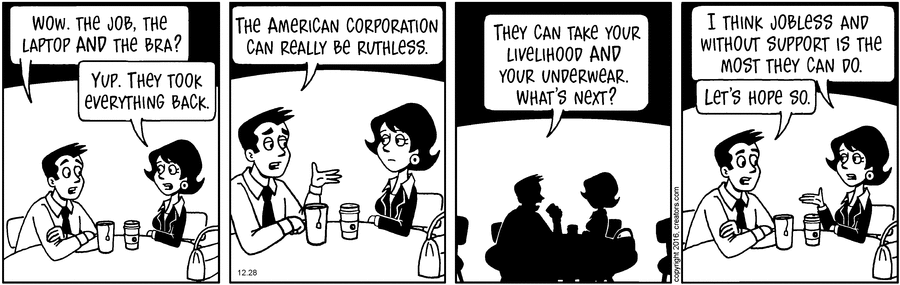
You don’t actually need more backstory than you can pick up from the context here.