Carnival

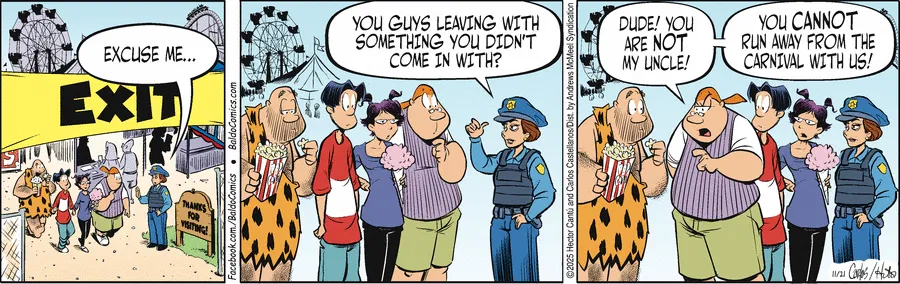
Jack Applin sends this in: “Baldo, Estella, and Cruz (orange cap) encounter “Man o’ the Cave” (in Flintstone garb) at a carnival. The caveman tries to walk out with Baldo & friends, and is stopped by the guard. WHY? Is he a prisoner? Does carnival security keep track of groups entering, and insist that they leave in eactly the same groups?”


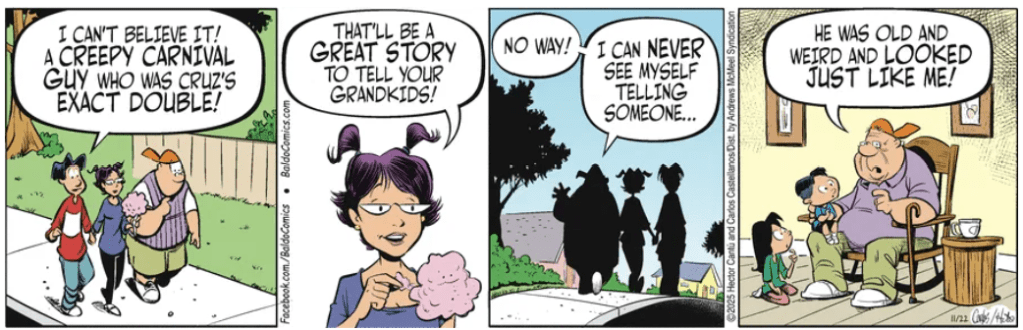
The next day’s Baldo clarifies the intended joke, but does the old guy really look like Cruz’s double?

Sunday Funnies – LOLs – October 19, 2025


Maybe we need a “Yeah, right!” tag.


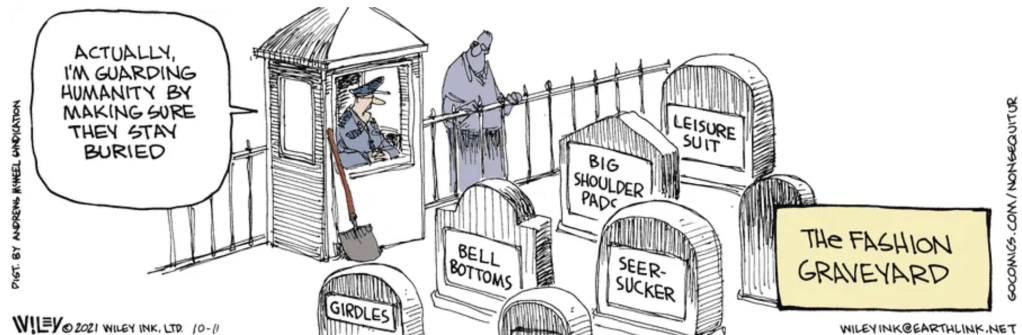
Other nominees: big hats, bustles and anything else from the Gone With The Wind era.


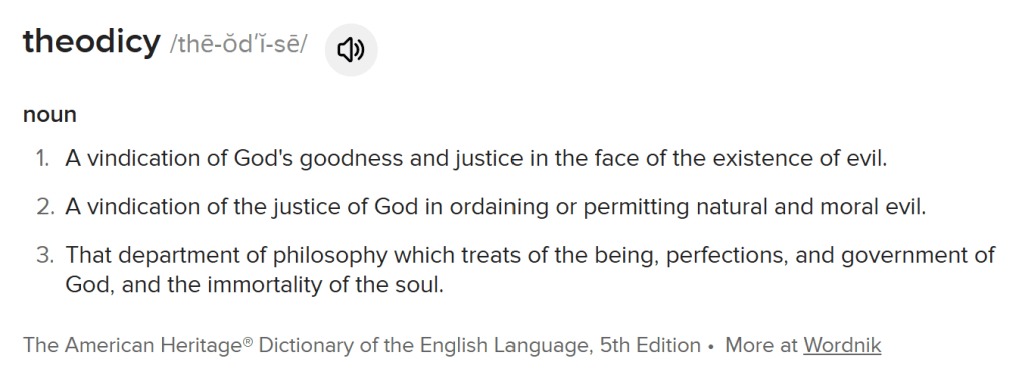
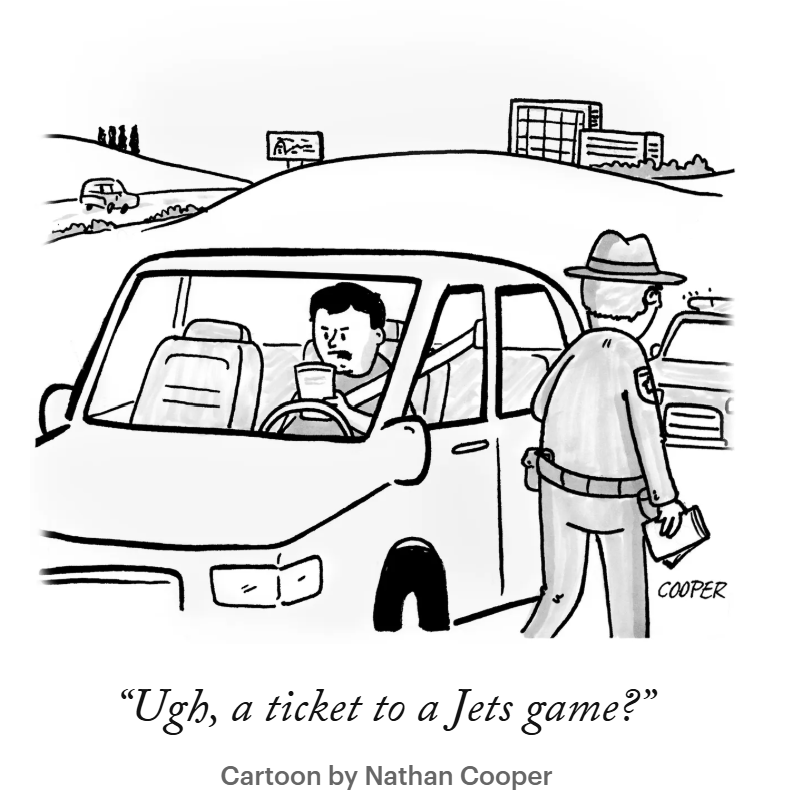
Mitch4 sends this in: “Finally! An answer to centuries of studying the question of theodicy!”

I’m probably not the only one who had to look this term up:


As I write this, the Jets are 0-6.


Sunday Funnies – LOLs – June 29, 2025

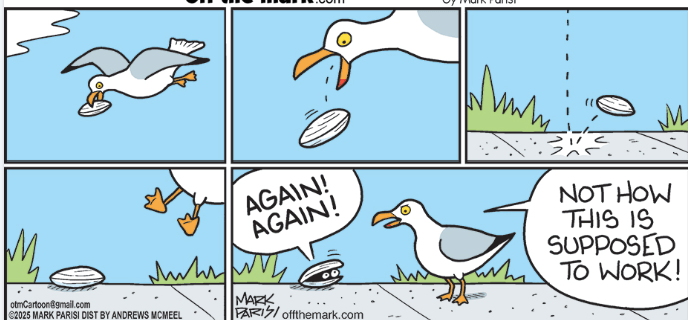
Again, Again!


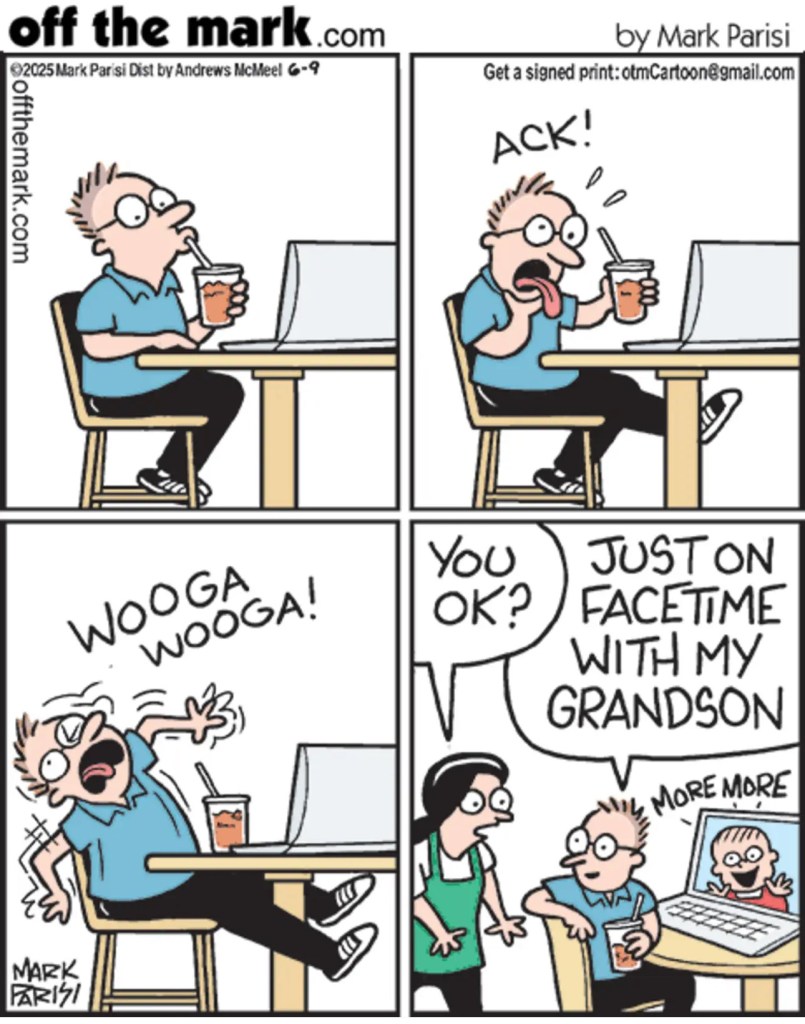
JMcAndrew notes: “He’s pretending to be having a medical emergency? A seizure? Allergic Reaction? As a way to entertain his grandchild on video chat? Why?”

Parisi is 64, about the age to have young grandchildren. I’ve done this with my grandchildren, who are always amused, and usually want me to do it again.


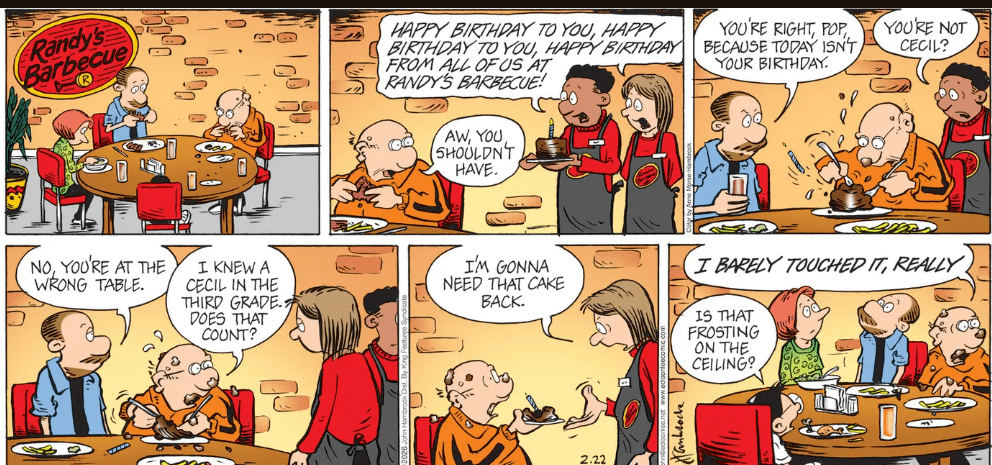
JMcAndrew sends this in: “I have to agree with Ditto. It’s ridiculous that they only have 3 birthday candles and her plan was to just hope her 6-year-old wasn’t perceptive enough to notice. Is the family in such financial hardship that they can’t afford some new birthday candles? This is sad more than funny but I like how mad Lois looks here as she cuts the candles in half.”


In honor of the past week’s heat dome:


Saturday Morning OYs – October 26th, 2024

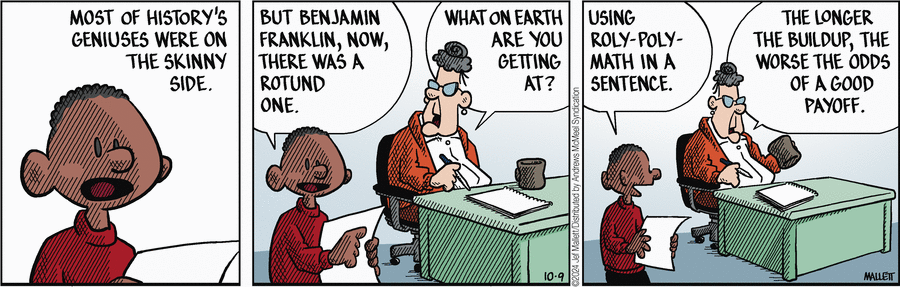
Mark H. submitted this Frazz as an OY, admitting that it “Took me a minute…” (to get the joke). However, since at least one Editor still doesn’t understand it, a CIDU has been added to the tags. Perhaps Mark would be so kind…?


This Carpe Diem panel was submitted back in July by James Riendeau, who wrote, “Carpe Diem tends to be one I frequently do not get, but today’s was a real head-scratcher. It must be a cultural reference I’m not familiar with.

Niklas Eriksson is Swedish; those “P”-Jackets might actually be worn there, but I sort of doubt it.


Solution: The “P” stands for “parking”; the guy is a meter reader, and he’s writing a ticket for the “parked” whale.


P.S. Claes Oldenberg was the only real mystery, the rest of them were fairly clear.


Early voting has started. The US election will soon be over … maybe.


Some of you likely came across this a few days ago, when Danny Boy in the comments, but it’s worth another chuckle.


This cartoon circulating around the internet probably qualifies as a CIDU, but the joke depends on a wordplay, so I’m posting it here.

I searched for the original source, but couldn’t find it in the many, many times it has been posted on the internet before I saw it this week.


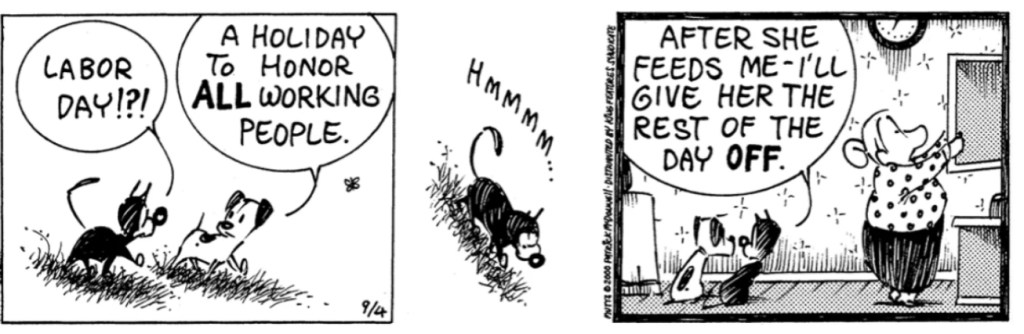
Labor Day 2024


A bit of nostalgia here, since we seem to have been in a continual U.S. political campaign since 2018, with little or no letup.


The day after Labor Day used to be the traditional day for school to start, but the start has crept backwards: the local schools start a full two weeks earlier. Are there schools that have the patience to wait until after Labor Day? (colleges don’t count).

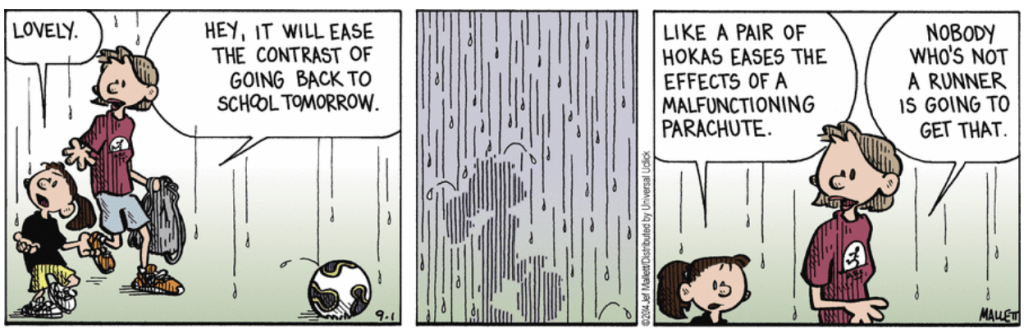
Since this is CIDU, we’re including this one, that’s not so much a CIDU as a search engine lookup for Hokas.


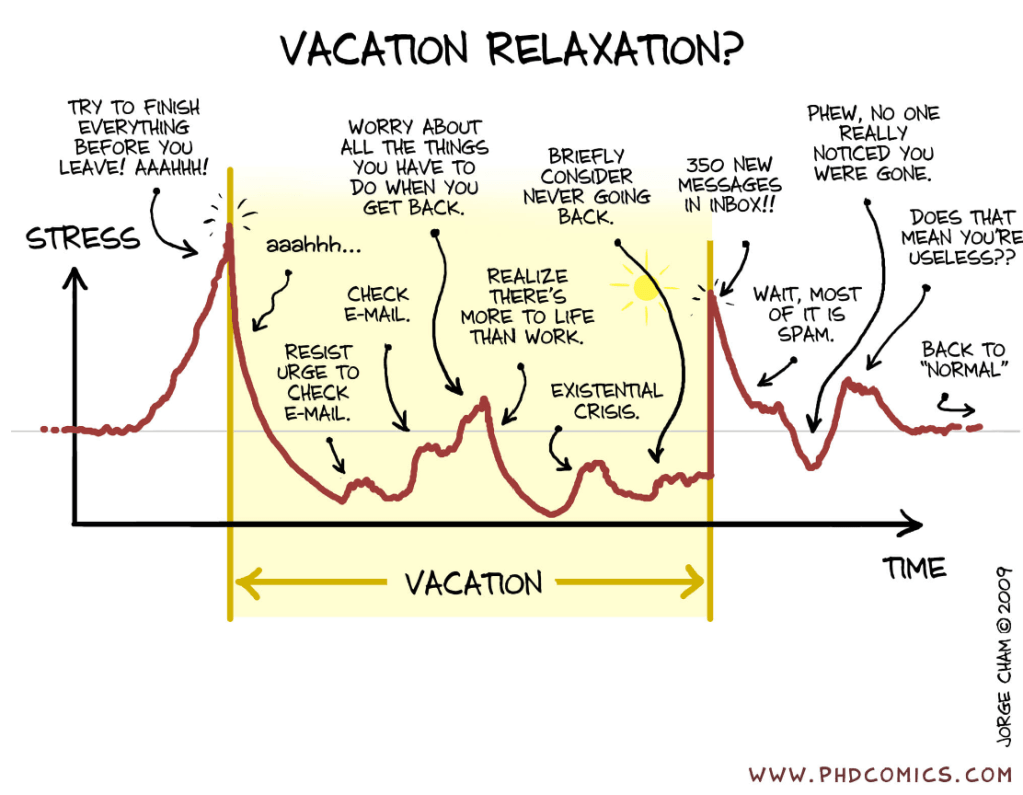
Labor Day is typically the end of the period when vacations are taken for adults as well, at least those who have children in school.


And to close out with a return to a pet view :

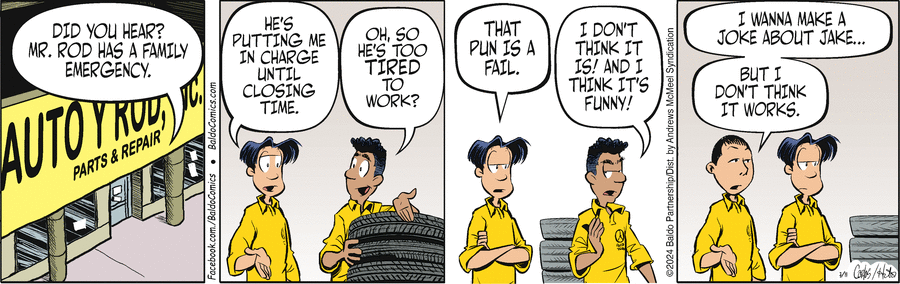
They both work!

As we have asked before with Baldo, does the joke depend on language, and does it work in both the Spanish and the English versions of the strip?

Here there are two loci for our standard questions: In panel 2, the dialog from the second character (who I think must be Jake); and in panel 4, the second part of the dialog from the speaking character.

My take on those two, in short summary: The panel 2 pun works fine in English, and the Spanish also has something of a pun, by substituting a different statement instead of a translation. In panel 4, in the Spanish there seems to be an amusing equivocation, by virtue of a grammatical ambiguity; which does not carry over into English.

In some detail:

In the English, notice the emphasis given in the lettering to the word TIRED. And while Jake says that, he is all over a stack of TIRES; even seemingly pointing to them as though in a sort of illustration.

In the Spanish, Jake’s line translates according to Google as “Oh, so you roll out of here early?” (and I think the “you” is not the only choice — it’s more of an impersonal, and might amount to “we”). So it no longer mentions tires or tiredness, but with the mention of rolling still manages to indirectly bring in the tires and roughly complete a pun. (And as a noun instead of verb, rueda is rendered first off as wheel.)

OK, a bit of background. English (like, say, French) in simple sentences, in at least semi-formal speech or writing, requires an overt subject, even if a person and number could be inferred. Spanish (like many other European languages) allows skipping a subject pronoun if the verb form is enough to determine person and number. You can see this in both of Jake’s sentences in panel 3 — creo is 1st-person singular, but the sentence does not need to say yo creo; same for pienso not needing yo pienso.

Then in panel 4, the third character’s line Pero no creo que trabaje could be But I don’t think it works [it = the potential joke], or But I don’t think he works [he = Jake]. Which is a fairly good joke, or anyway language-amusement. [My point about not requiring overt subject pronoun turns out not crucial here, since if this sentence did use a subject pronoun, él for he or it would still be indeterminate.] But in English we get But I don’t think it works, and no secondary dig at lazy Jake.
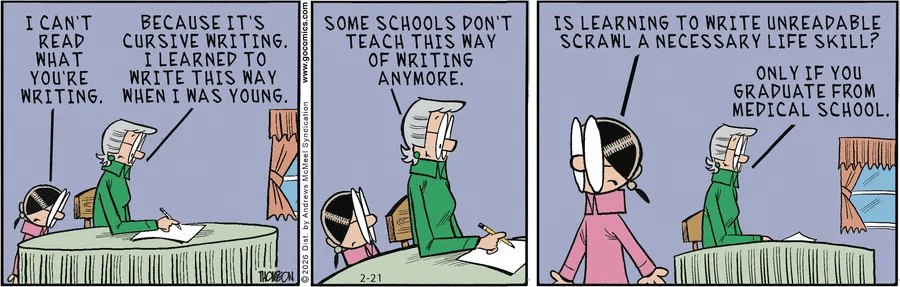
Bonus post: Back in the translation shop

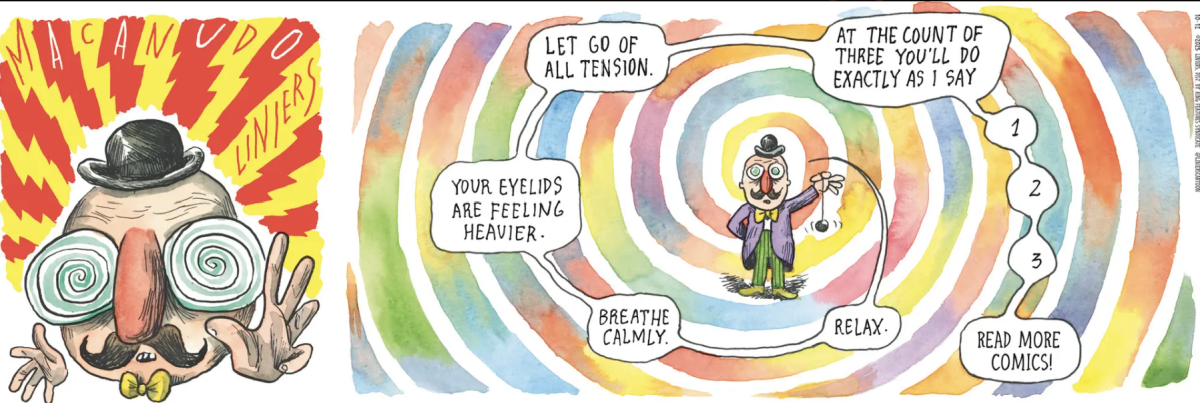
Today’s Macanudo, twice:

“It was nice while it lasted.” Okay, I’ll buy the pairing. Both are sweetly regretful but have just a tiny bit of a sting, don’t you think?

But now, today’s Baldo, also twice:

Now at first this looks like something we’ve seen a few times with Baldo: A pun or language-dependent joke in the English version, and then a reduction to a univocal expression in the Spanish version with no attempt to preserve the polysemy needed for the pun.

But not this time!

The key is in hachacento, which does not register as a recognized or translatable Spanish word, at least by Google Translate. But looking at parts:

hatchet ==> hacha
accent ==> acento

So we do get both axe and accent! (But not sent ==> enviad{o/a}. But who cares at this point!)

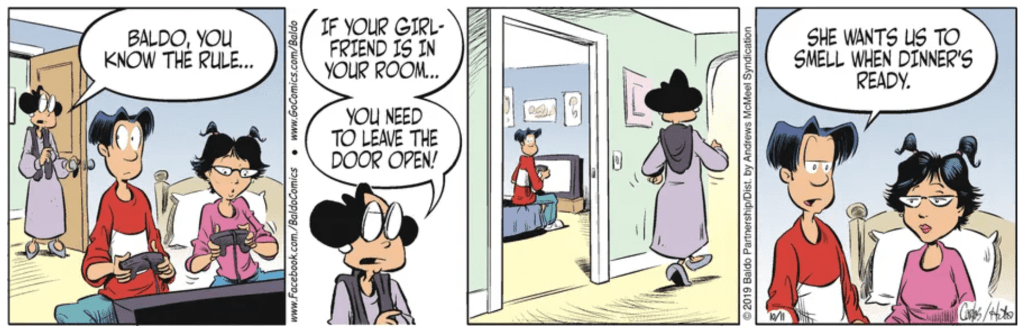
P.S. Don’t forget to stop and smell the noises in panel 3.