This is a Sunday comic, so it comes with added identification. I see steps. I see a chef. I see a chicken. I don’t see a joke I understand.
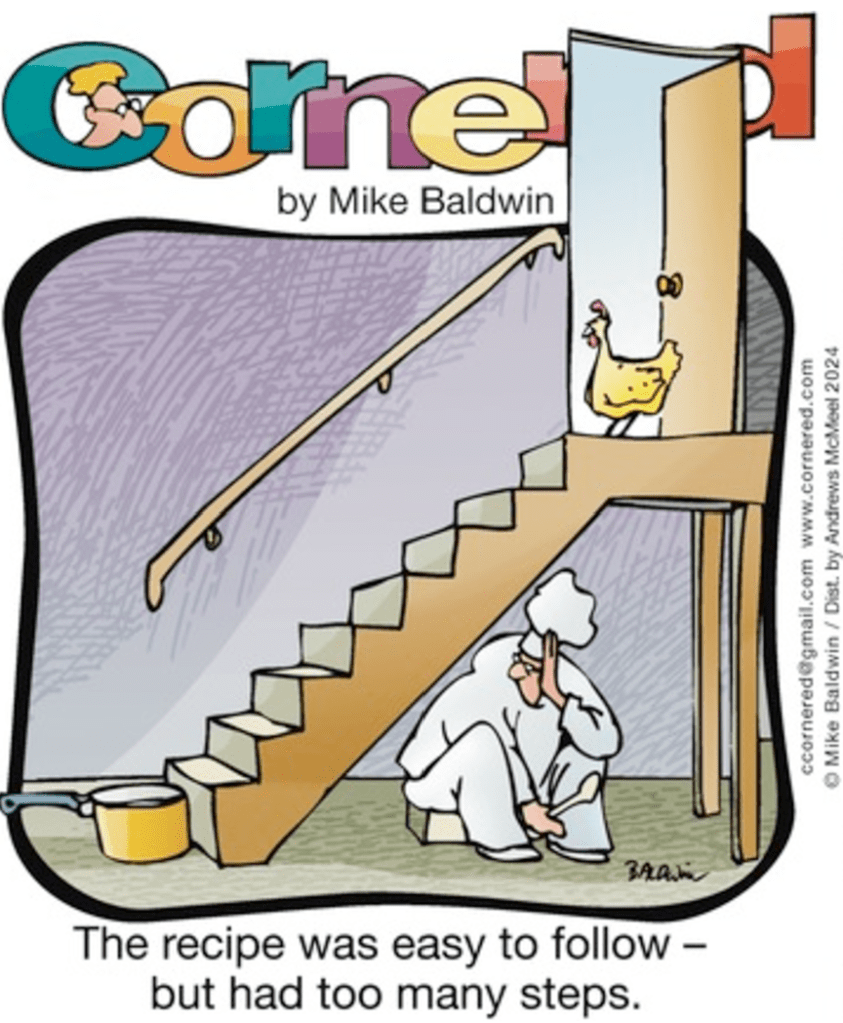
This is a Sunday comic, so it comes with added identification. I see steps. I see a chef. I see a chicken. I don’t see a joke I understand.

Boise Ed notes: “Maeve can’t give it to Emma because Emma would love it? That makes no sense at all to me, possibly because I’m male.”

This one’s not a CIDU, but a Christmas Eve Geezer Alert sent in by Dan Sachs.


Some comics feature both tea and coffee, usually preferring the latter, but this comic from a 1902 issue of “Punch” is notable for its impartiality:

…
The passenger’s statement (“Look here, Steward, if this is Coffee, I want Tea; but if this is Tea, then I wish for Coffee”) has been (incorrectly) attributed to a number of people (such as Abraham Lincoln), but it remains unclear who said it first, or whether it was merely composed as a fictional anecdote.
Herman is confronted with an alternative solution:
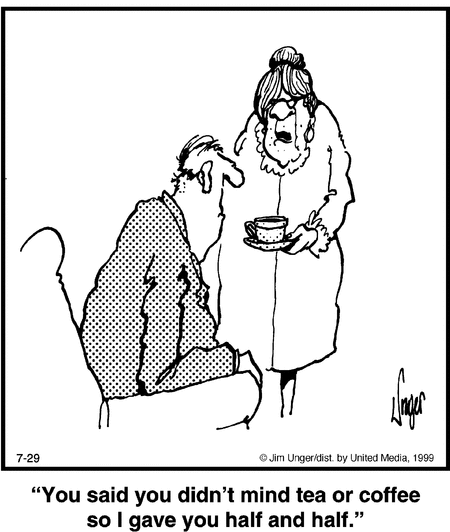
Buni seems to depict the usual attitude of coffee drinkers towards tea.

Ditto Adam@Home:

Horace has made it clear (multiple times) that he definitely prefers coffee:

…
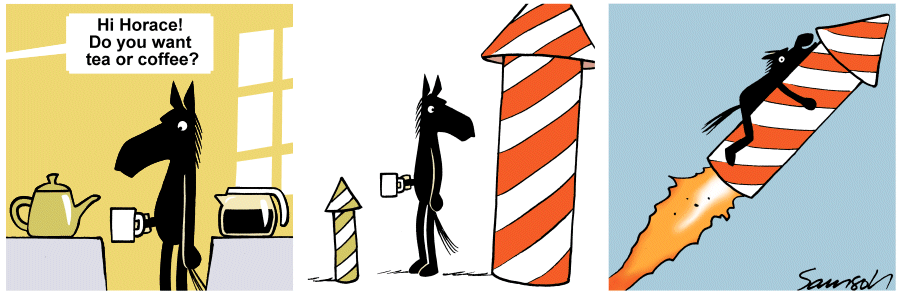
It’s hard to say which one it easier to prepare (if you care about doing it well):
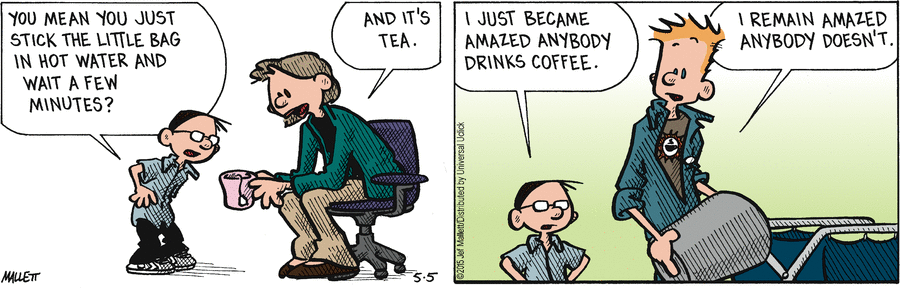
Sometimes it doesn’t matter, when it’s just for the caffeine:

Each drink has its own particular traditions.
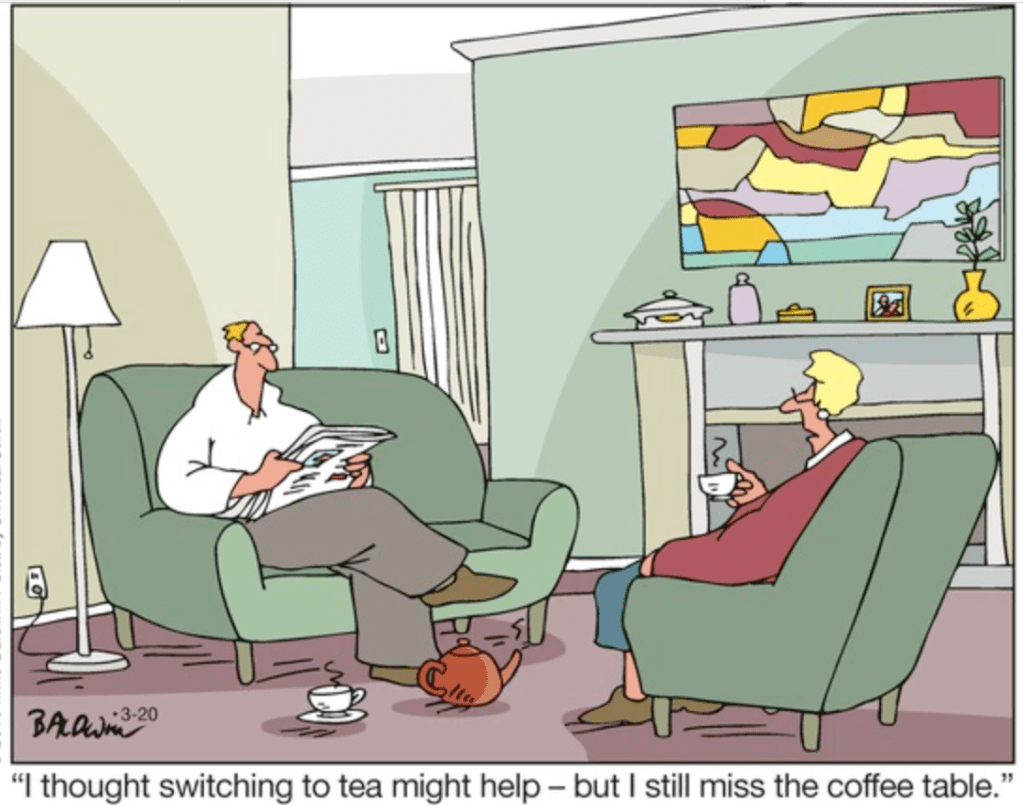
Jack Applin submitted this “Edison Lee” last year as a CIDU, but Comics Kingdom refused to produce it, until I remembered to change the URL from the old “.net” to the new “.com” address. Ooops.

…
Jack commented: “Sure, the Rankin/Bass special. But what’s this about a finger in a nose? It wouldn’t BE in the special, if he were edited out.”
The humor is mostly just slapstick, but “nose” is probably a reference to the line in “The Night Before Christmas” (and the elf just messed up while “…laying his finger aside of his nose“).
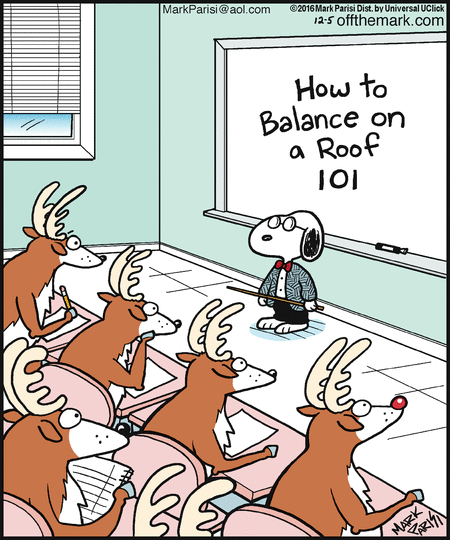
Speechless Santa. Fill in your own dialogue. (GoComics posting error on 12/15. It’s clearly a GoComics error, because Arcamax shows the dialogue. GoComics corrected the error a day later.) It’s oddly meta, because panel 3 in the actual dialogue accuses Santa of not keeping up with the latest technology.


Steve B. sends this in. “Thought this was clever. Not sure everyone will get this if they don’t pay attention to the news.”


Mark H. send this in, noting “It took me a while”.

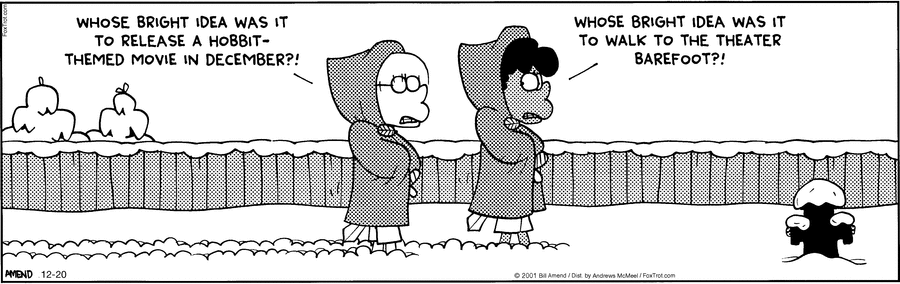
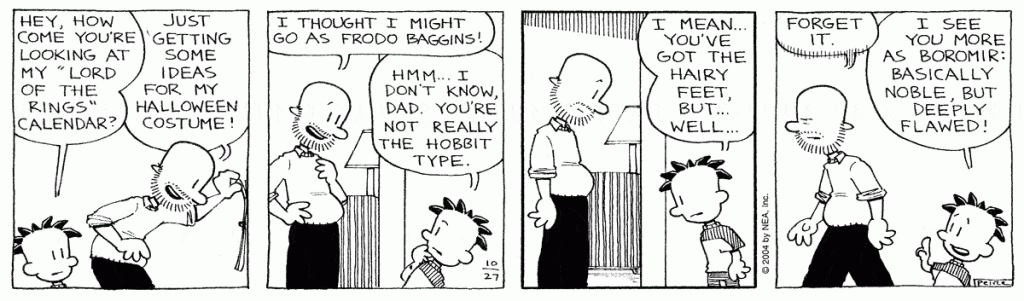
In honor of what would have been my grandfather’s eleventy-first birthday, here are some hobbit comics:


Mark H. sends in this triple OY
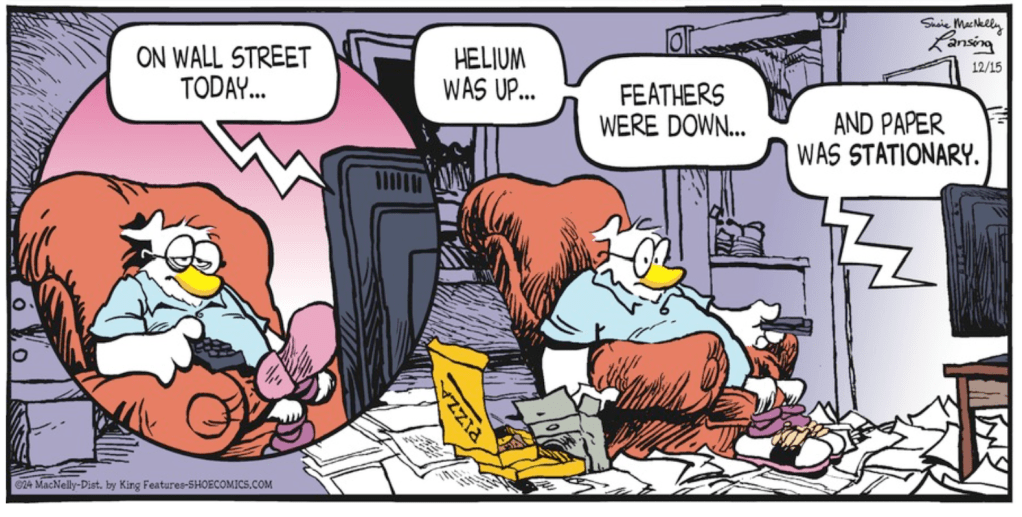

Chuck’s going to be one busy guy!

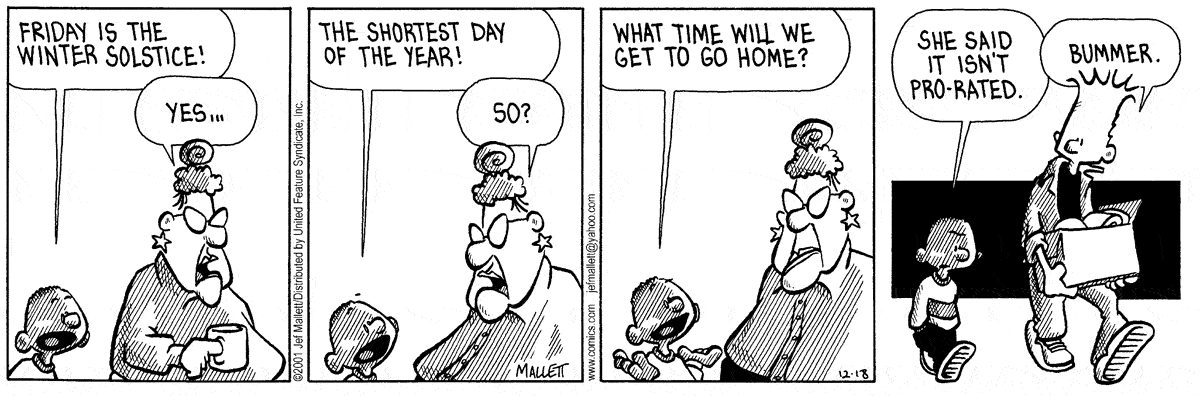
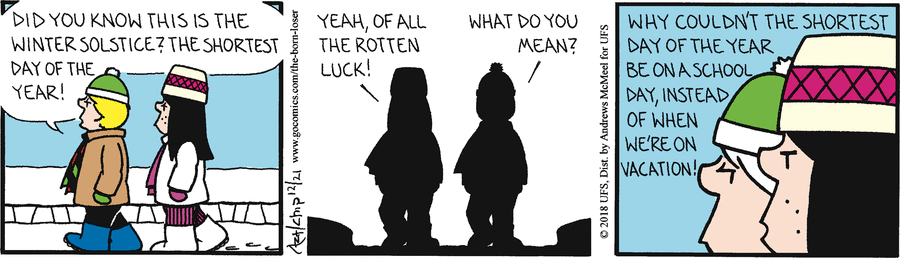
… will occur tomorrow (well, at least up here in the northern hemisphere):

…
Most countries in the temperate zones have one 23-hour day every year’s calendar, but it falls in Spring, not in Winter.

…
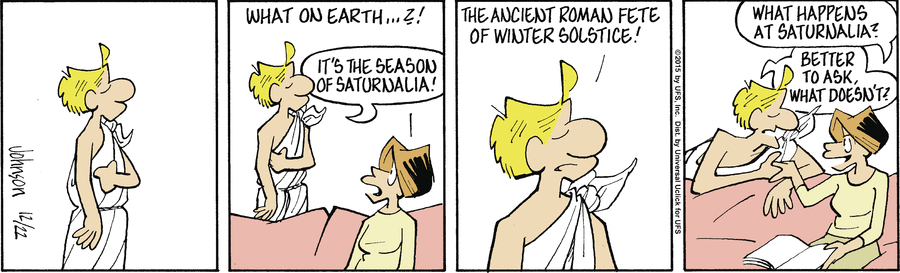
As opposed to both of the “Born Loser” strips, Frazz is referring here to net sunlight, rather than total duration.
P.S. Jef Mallett lives in Michigan, and must be very familiar with how short the days get in northern latitudes. On the other hand, Berlin is located ten degrees farther north than Detroit, so Mallett doesn’t have that much to complain about.
Of course, the shortest day of the year is followed immediately by the longest night:
RR sends this in, saying they are genuinely stumped.

The problem with an explanation that they are afraid of spiders is that spiders would naturally be all over ships of this era, along with various other vermin. So is there another joke we’re missing here?
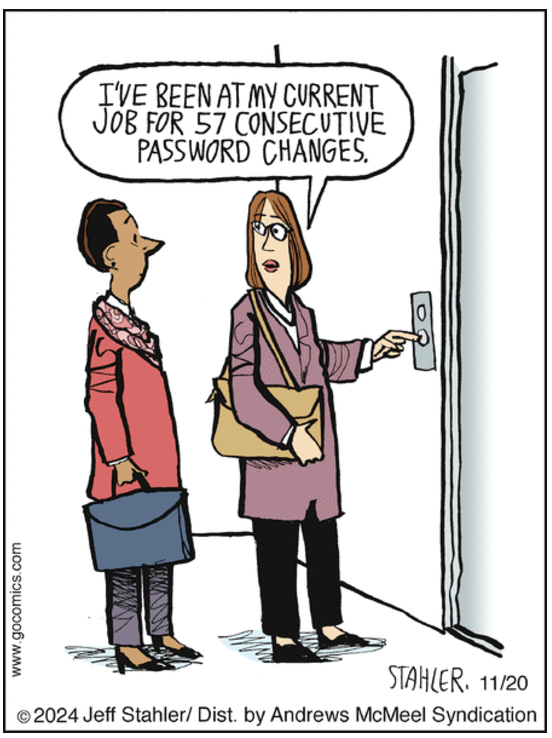
Mark H. sends this one in: “It’s clear that this protects passwords from others, since she neither writes them down nor remembers them. But it would seem like they are also protected from her, hence useless. Maybe she has to use the “forgot password” routine each time, and so the password is never the same?”

According to NordPass, the most common passwords are still the most useless ones:

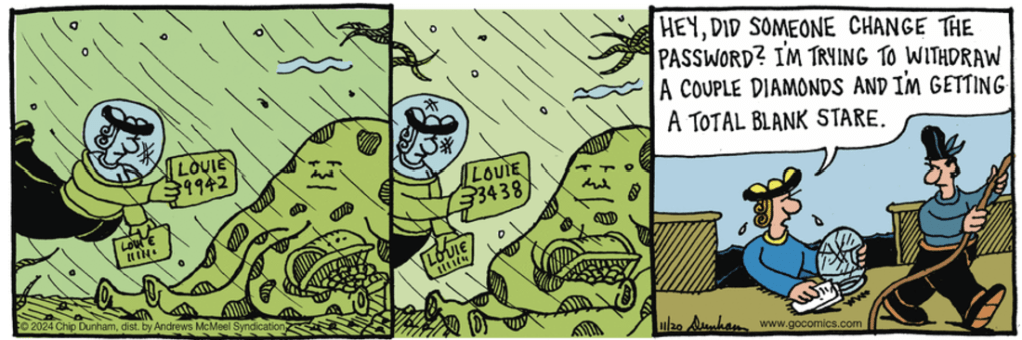
The same day Mark H. sent that in, there were two other password comics in my feed. These aren’t really synchronicities, because the jokes are all different, but why not pretend it’s National Password Day? (That’s actually the first Thursday in May.)
I worked at a company where every few weeks, a new 7 letter password would be automatically randomly generated for you. Well, maybe randomly. A colleague had gotten into a tiff with the head of IT, and his next password ended with 3 letters of his first name. The first 4 letters were an expression not allowed on vanity license plates. He was convinced there was nothing “random” about it. And, knowing the head of IT as I did, I’d bet he was right.