This year marks the 100th anniversary of The New Yorker. In honor of that considerable accomplishment, we’re presenting all the cartoons that appeared in that first issue, February 21, 1925. It’s a varied lot, including some CIDUs — were they CIDUs at the time? It’s remarkable to me that the general style of The New Yorker’s humor is recognizable in that first issue.
Pete commented: “The bread line: we are seeing one page of a two page centrefold. The full version compares poor people waiting for bread to rich young women waiting for their escorts to buy dinner.”
But we are seeing the entire two page centrefold, and the comparison is implicit. I’m posting the complete centrefold here because I’m not sure my link will work if you aren’t a New Yorker subscriber.
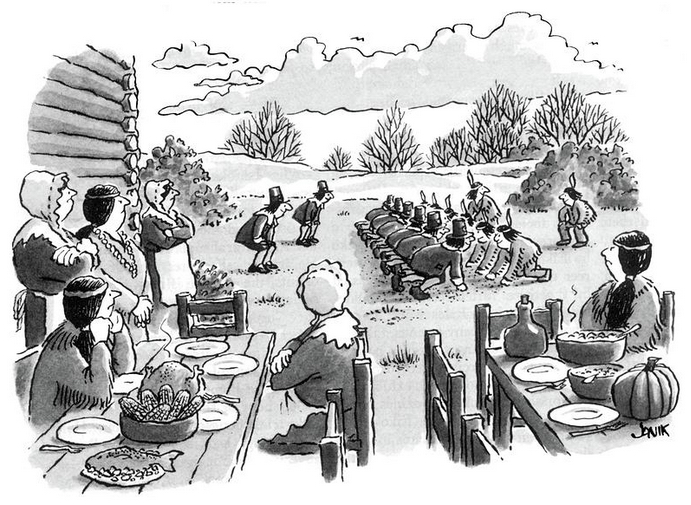
This cartoon by John Jonik was first published in the New Yorker exactly 41 years ago today, but I discovered it too late to add it to the Thanksgiving collection for 2023.
… The headline above is modeled after a quote by Sepp Herberger, coach of the German national football soccer team: “After the game is always before the [next] game.” Of course, discussing football (of either variety) can sometimes be even more explosive than discussing politics.
Mark H. submitted this XKCD (#2858) last year; although it did get embedded in comments (such as in the No-Politics Zone), it’s still worth a repeat in a post:
… P.S. The “mouseover” or “title” text reads: “An occasional source of mild Thanksgiving tension in my family is that my mother is a die-hard fan of The Core (2003), and various family members sometimes have differing levels of enthusiasm for her annual tradition of watching it.“
P.P.S. The link to the HuffPost article in the second panel still works (I already typed it in, so that you don’t have to).
… In Germany, it’s called “Erntedankfest” (literally: “harvest thanks festival”), and is celebrated on the first Sunday in October, but it is primarily an event for the liturgical calendar (both Catholic and Protestant), and is not (generally) celebrated by families at home.
… Several decades ago, my grandmother just happened to include a leftover bowl of (homemade) mac&cheese on the Thanksgiving dinner table, which resulted in some amused needling from my dad and uncle. However, both my sister and my aunt vigorously defended it, so that for many years thereafter, (fresh) mac&cheese became a standard component of my grandmother’s Thanksgiving menu.
… The final panel reminded me of the last scene in the song “Christmas Wrapping” by the Waitresses.
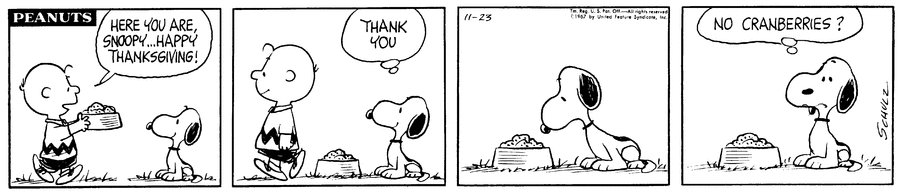
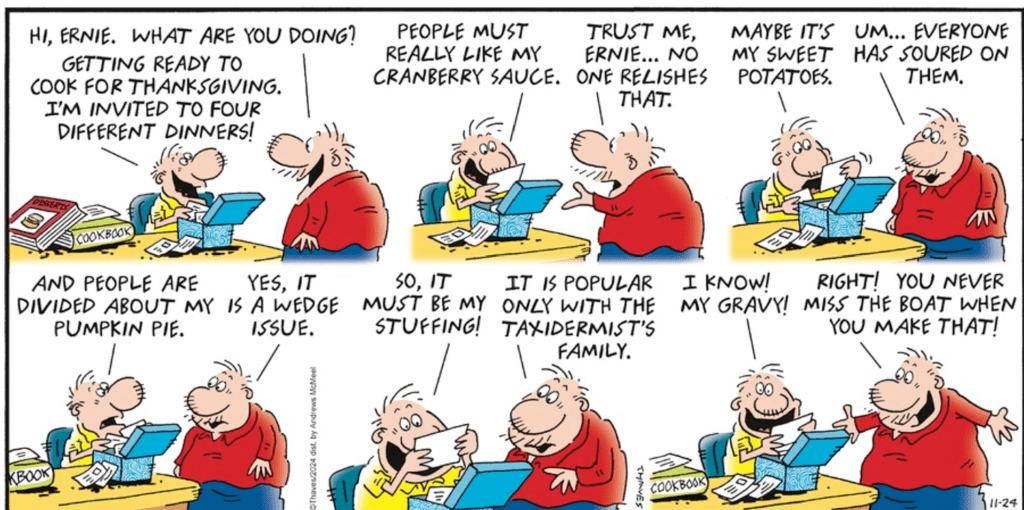
No cranberries? Frank and Ernest have suggestions:
All we’ve come up with is some sort of Uber/Lyft reference, but?? Of course it IS The New Yorker [Magazine] (there’s a whole thing about whether it gets that last word or not).
Frequent CIDU contributor Ooten Aboot (aka “Canadian Raising Is Real”) sent for our enjoyment news of The New Yorker working to out-do themselves with a variant on their widely-beloved Caption Contest. It’s a series of drawings, mostly by their cartoon artists, and mostly lacking captions, presented online as a “Daily Shouts” humor feature.
The intro write-up, by Dahlia Gallin Ramirez, goes like this:
Once a year, a team of demons at The New Yorker provides “cartoons” in need of captions. You, the readers—so full of hope, so charmingly mortal—upset yourselves trying to think of jokes. There are no submissions, no finalists, and no votes, but there are winners: the evil beings who created these uncaptionable images. Good luck!
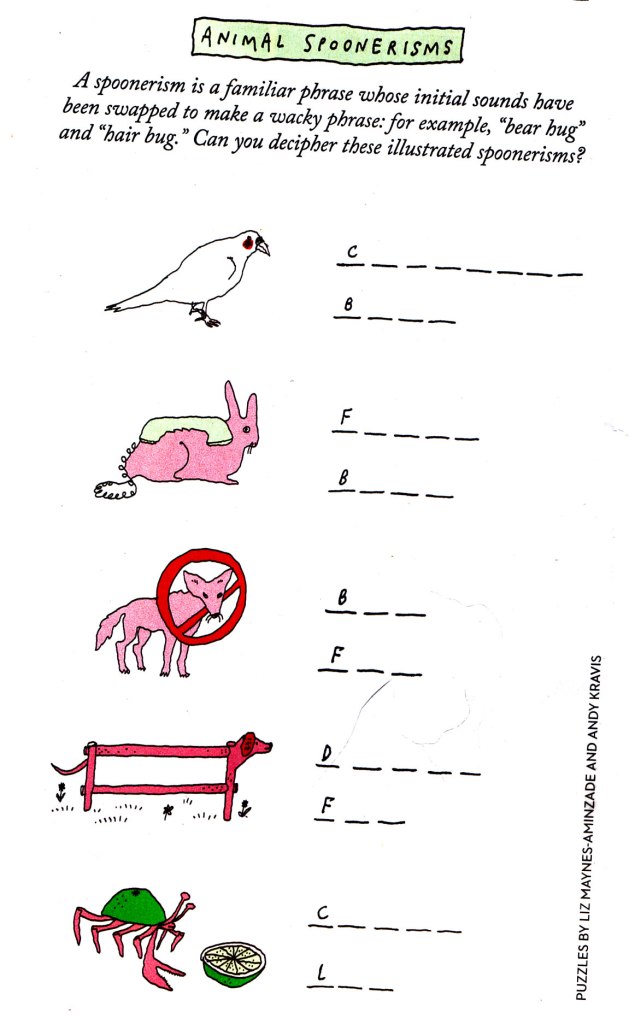
From the New Yorker end-of-year Cartoons Issue. A two-page spread of five cartoons by Liana Finck titled “Stay-at-home Fun”, embodying puzzles or quizzes — credited, as this scan has captured, as “Puzzles by Liz Maynes-Aminzade and Andy Kravis”.
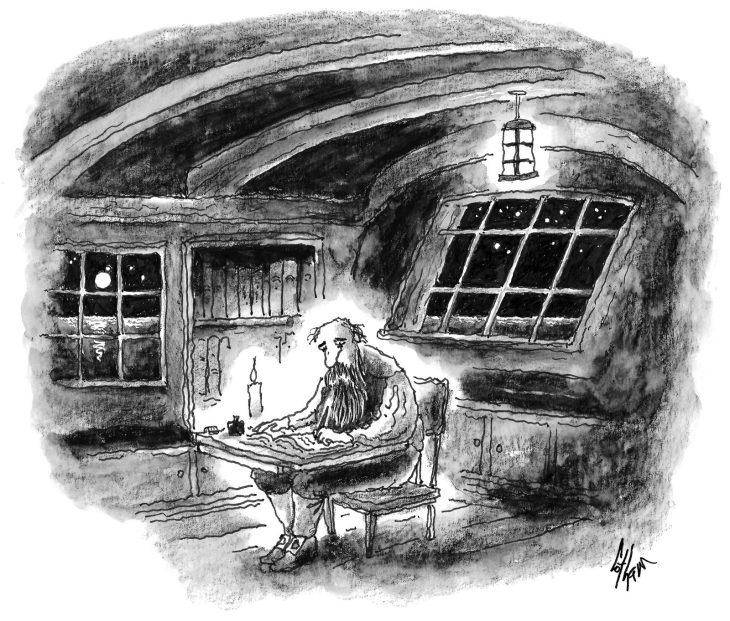
Yes, we’ve heard about the recent popularity of sea shanties on Tik-Tok and other youth social media. Also the idea of musically combining sea shanties with modern rap or pop music. All of that still leaves most of this Bliss cartoon unexplained!
“I am wearying of the crew’s constant repetition of the same old sea shanties.”
















 Comics I Don't Understand