Boise Ed notes: “Maeve can’t give it to Emma because Emma would love it? That makes no sense at all to me, possibly because I’m male.”

This one’s not a CIDU, but a Christmas Eve Geezer Alert sent in by Dan Sachs.

Boise Ed notes: “Maeve can’t give it to Emma because Emma would love it? That makes no sense at all to me, possibly because I’m male.”
This one’s not a CIDU, but a Christmas Eve Geezer Alert sent in by Dan Sachs.
Mark H. submitted this 9CWL strip last year as a “Geezer Alert” (and partial CIDU), asking: “Does anyone younger than 60 know about Jimmy Hoffa?” (The CIDU and/or puzzle component is to figure out what she might have said to him underwater.)
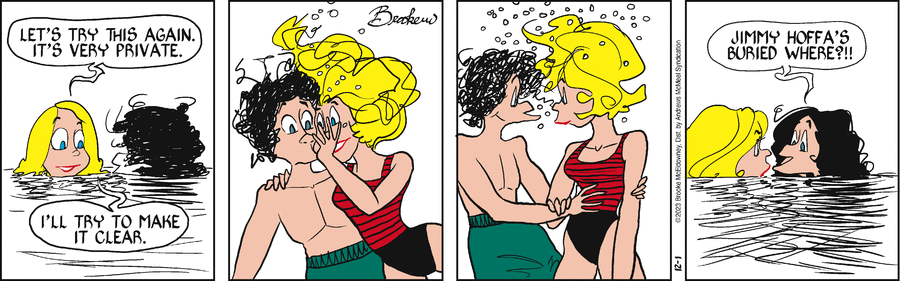
…
P.S. It is so refreshing to post a Chickweed Lane strip that is not (automatically) “Arlo” material.
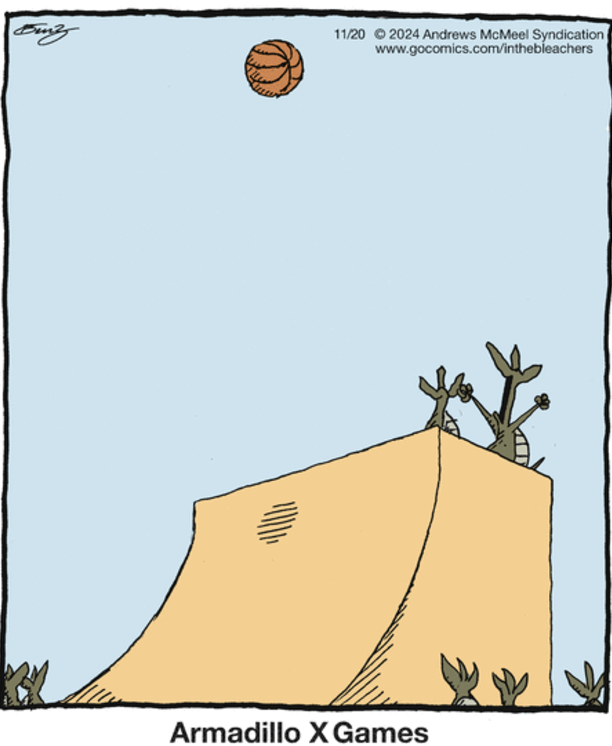
This was going to be a CIDU, but it seems to be a colorist error. That’s not a basketball, but a curled up armadillo. But they don’t change color when they curl up, so far as I know.
From Wikipedia: “When threatened by a predator, Tolypeutes species frequently roll up into a ball. Other armadillo species cannot roll up because they have too many plates. When surprised, the North American nine-banded armadillo tends to jump straight in the air, which can lead to a fatal collision with the undercarriage or fenders of passing vehicles.”
Usual John sends this one in. This gets a bit of s “Eww”

The previous one in this series is pretty good, too.
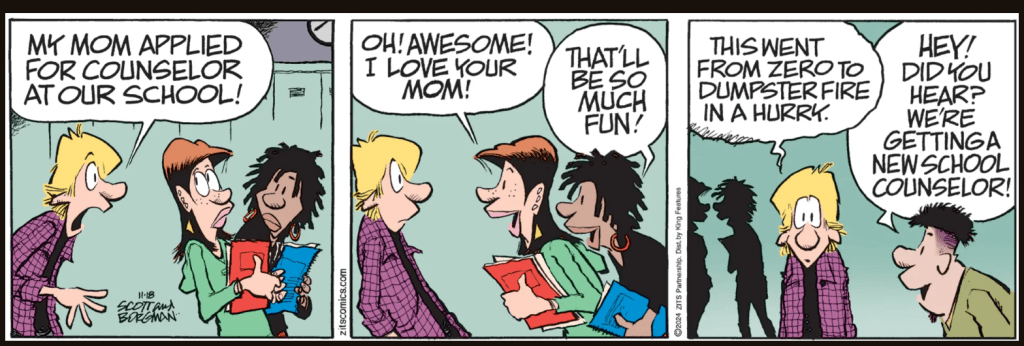
Mark H. submitted these three Arlo & Janis strips, commenting: “I don’t know what comic lead times are now (I seem to remember 2-3 weeks), but these comics appeared only eight days [!] after Kris Kristofferson‘s passing. It would be best if the three comics so far this week (Mon – Wed) were posted together.“

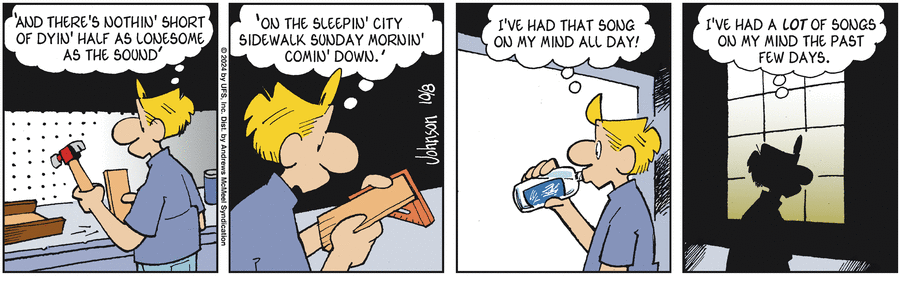

P.S. I checked “ArloAndJanis.com“, but all of Jimmy Johnson’s recent posts are just about the relaunch, he hasn’t said anything about lead times or accelerating these strips.
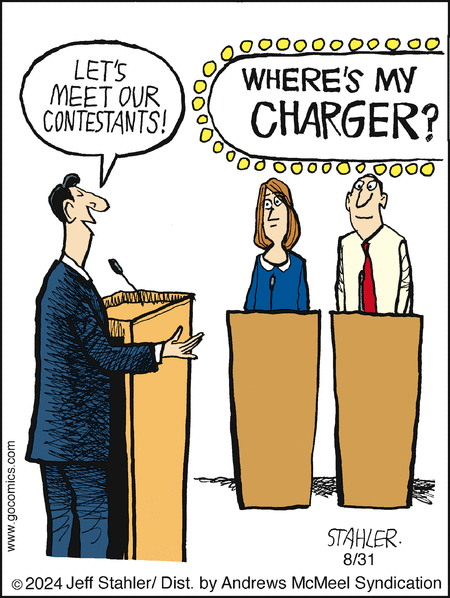
This comic made me more than moderately confused:
…
I haven’t watched an American television game show in over three decades. I assume that they still exist, but I have no idea whether this comic might be playing on some current development in the genre.
And you may find yourself … wondering about this comic.


Now *that* was a surprise!

How many of us have a pile of unread books? How long as the oldest unread one been in that pile? When was the last time you thinned out the pile, by saying “Nah, not going to ever read that?” Did you regift the book, and later found it sitting in THEIR unread books pile?
How to you label it? “Books I’ll read when I retire”? or “Books to read when I can’t sleep”?
Geezer alert?

Or that scene has been replayed / imitated / parodied so much that it could be well known even among those who have never seen any more of the movie it comes from.
This is a (very) long post, and I hope that it will generate an equally large amount of discussion. Everyone here is of course free to express their own opinions, and while I do not expect that everyone will agree with everything that I have written, I hope that you all will continue to observe the customary standards of decorum that have become a hallmark of CIDU.
Over the past few months the Daily Cartoonist has reported extensively about the way that Gannett has “restructured” the comics for all of their newspapers. A more recent TDC report theorized that one motivation for Gannett’s microscopic menu was misogynistic chauvinism, and Georgia Dunn adapted this hypothesis into Breaking Cat News:

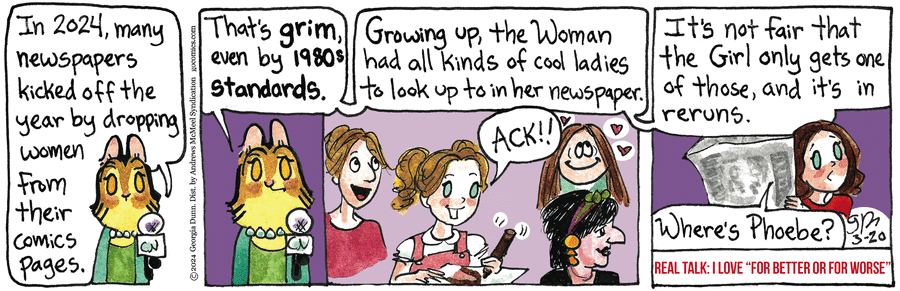
It is undeniably true that newspaper comics have been a male-dominated business for over a century, but I think it both misses the point (and weakens the argument) to ascribe Gannett’s motivation exclusively to chauvinism. Gannett has simply selected old, reliable, and non-controversial mainstays. The average age of the strips on their “approved” list is approximately half a century, and back then virtually every single comic author was male. Gannett is not discriminating directly against “women”, the company is discriminating against all new authors, no matter whether they are women, men, or transgender.
As I already commented at TDC, “Gannett has selected a tired collection of dull, ancient (mostly zombie) strips, and has presumably negotiated a massive volume discount from the syndicate, because they are in a position to impose this lame collection onto dozens of defenseless editorial offices, in complete disregard of what readers would actually prefer. This is just window dressing for the sake of being able to claim that the Gannett papers still offer a comic section; the corporate leadership doesn’t care one iota whether anyone would bother to keep a subscription to read any of those features, and Gannett would probably prefer if all of their papers dropped the comics entirely.“
In addition, I also do not think that it is fair to assume that only a woman can create a convincing female character. Although female authors have always been in short supply, there are nevertheless a number of strong, positive girls in the comics, each of which goes a long way to dismantle the antiquated stereotypes set by “Blondie“, “Momma“, and “Nancy“, or (even worse) in “Andy Capp” and “The Lockhorns“.
Here’s a selection of some of my favorites. Most are written by men, but there is one woman and one trans author in this collection:
First and foremost, there are both Amelia and Rose in Will Henry’s “Wallace the Brave“:

Then we have Henrietta (Enriqueta) in “Macanudo” (by Liniers, not to mention whoever does those brilliant English translations; his only translator’s name that I was able to discover was – not surprisingly – a woman: Mara Faye Lethem):

Cynthia in “Barney & Clyde“:

Danae (and her sister) in Wiley’s “Non-Sequitur“:
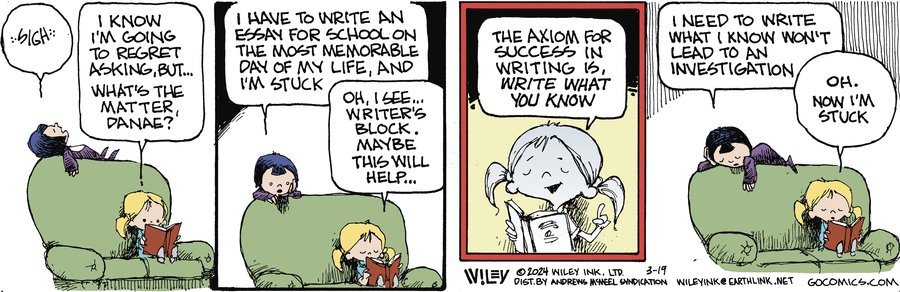
The last BCN panel shown above refers to “Phoebe (and her Unicorn)”. Personally, I preferred Dana Simpson’s original title (“Heavenly Nostrils“), but I guess it just wasn’t marketable:

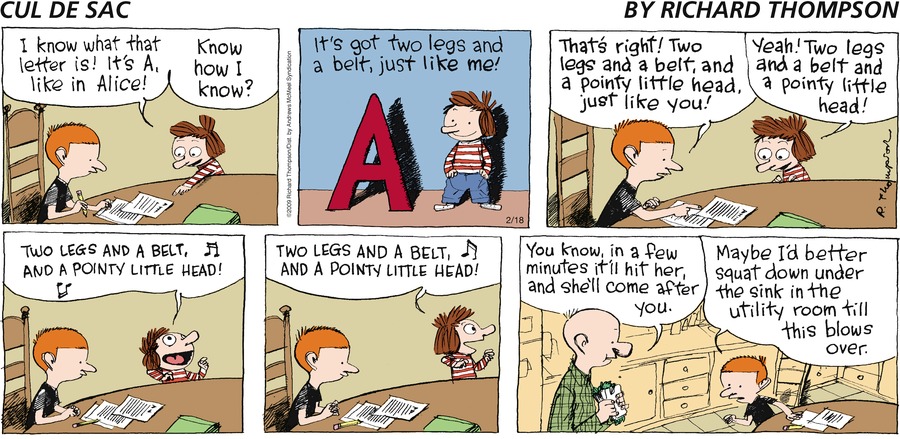
Making an exception for a re-run, there’s Alice in Richard Thompson’s “Cul de Sac“:
Making another exception for a zombie, especially because it was inherited by a woman, there’s “Heart (of the City)“:

P.S. The bottom line is that the only thing that publishing companies care about are their own bottom lines. If we are ever going to get an inclusive (multi-gendered) set of new authors in newspaper comics, it will be necessary for the readership to change their fossilized habits and to start petitioning for papers to drop all the reruns that are currently cluttering (even choking) those comic sections. That doesn’t just mean “Cul de Sac“, it also means letting “Peanuts“, “Calvin & Hobbes“, and a number of other popular “zombie” strips go. I regret to say that for obvious reasons, I don’t think this is going to happen any time in the near future.

Keep doing variations on a theme, and sooner or later you’ll hit on one the fans don’t remember!

Have you seen the meme about the Welsh translation service?
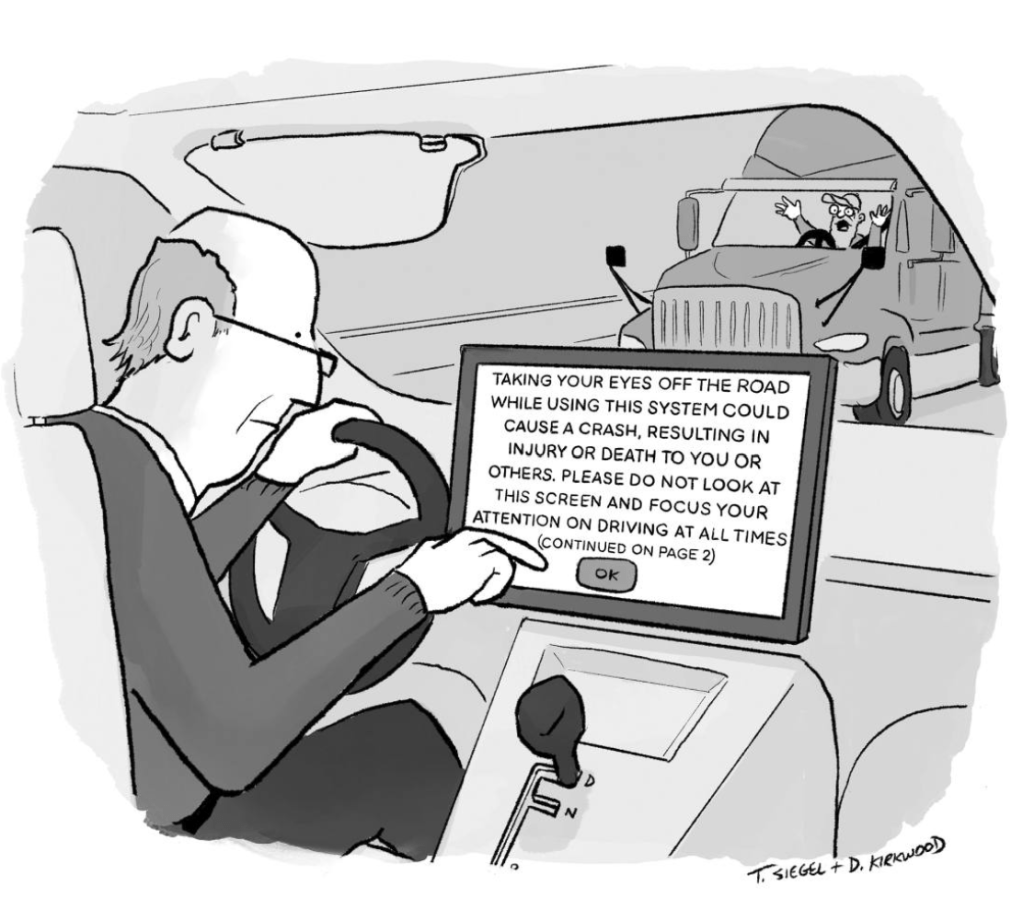

Is the shell the choice spot for petting a tortoise?
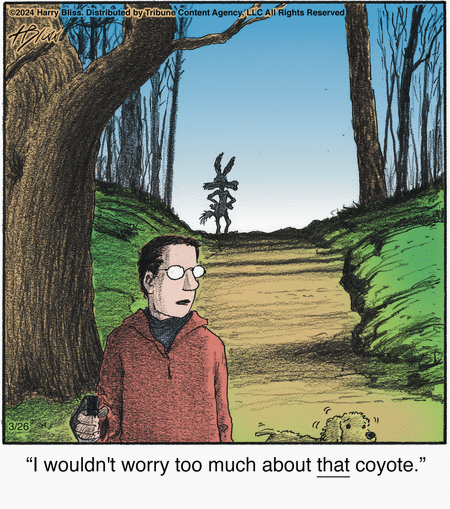
Quite the wily allusion.
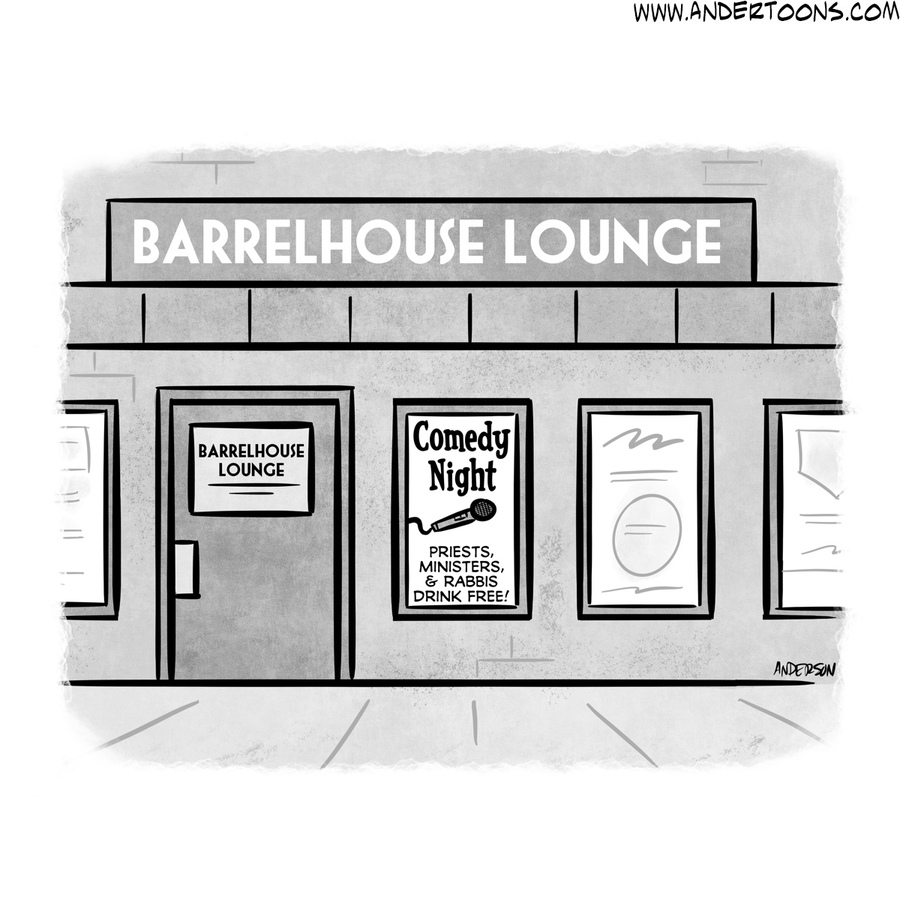
But only on condition they walk in together.
Geezer Alert!


This is the LOL-Weird entry for the week. Bizarro in more than name alone!
Thanks to Grawlix and Chemgal for suggesting this artist:
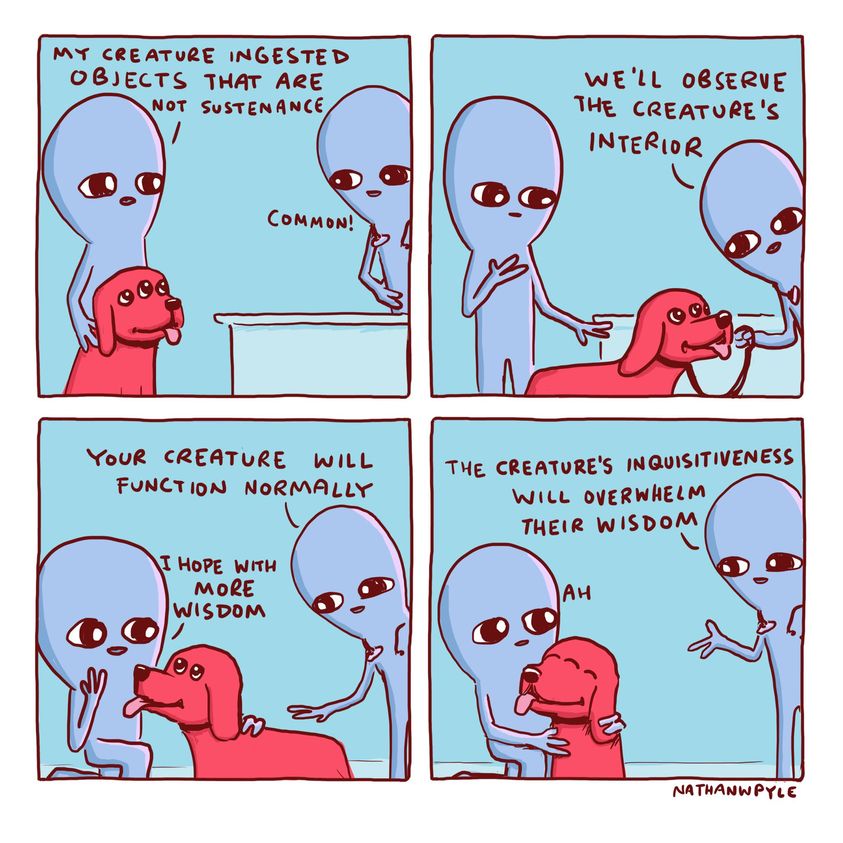
Here’s the LOL-Aww promised in the tags.
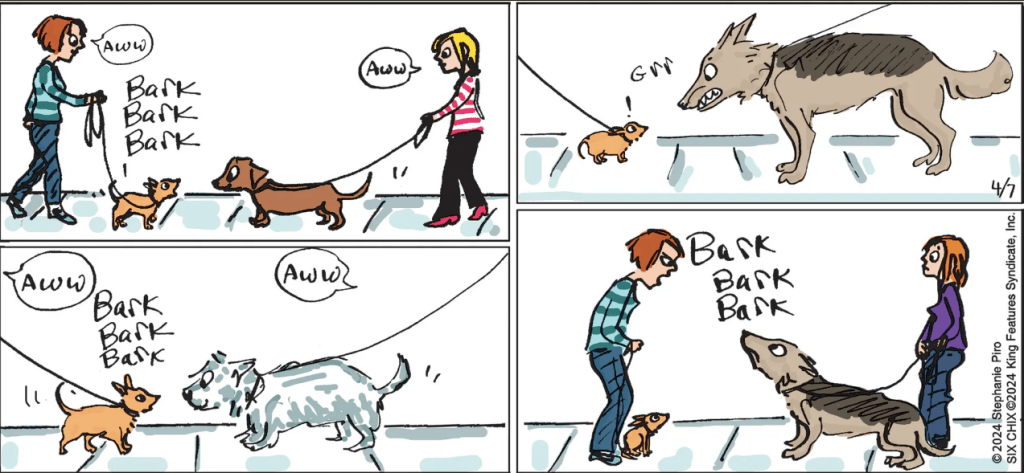

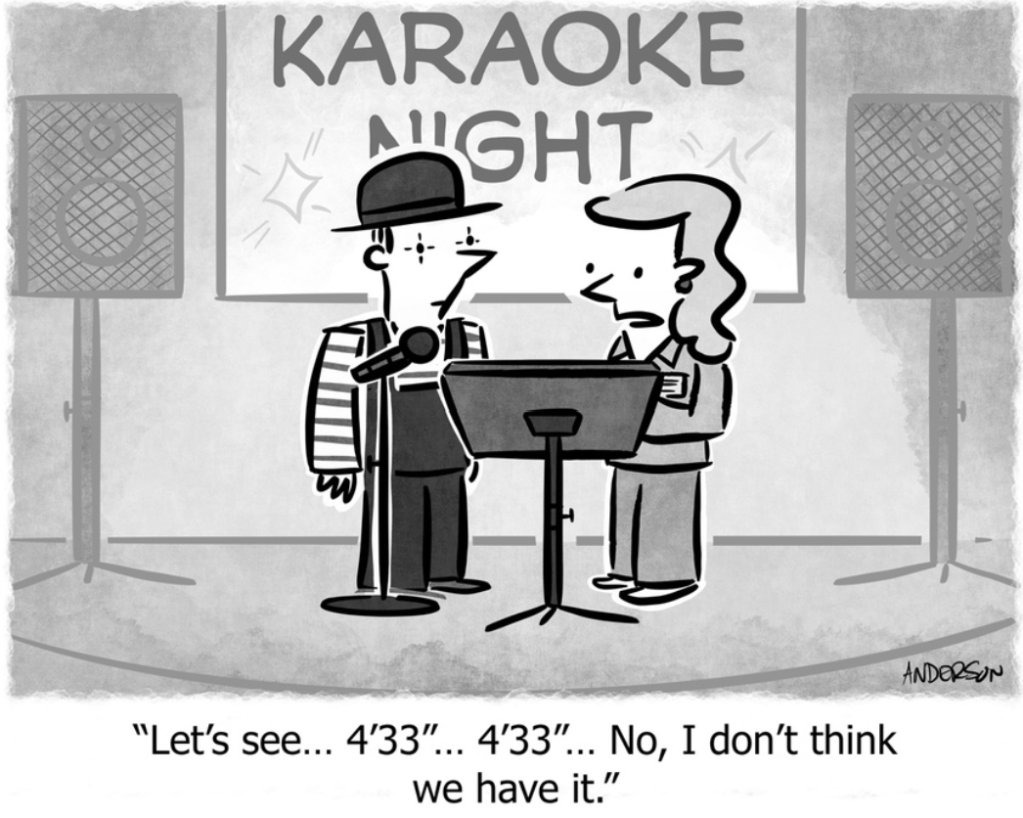
It’s a CIDU if you don’t understand a somewhat obscure reference.
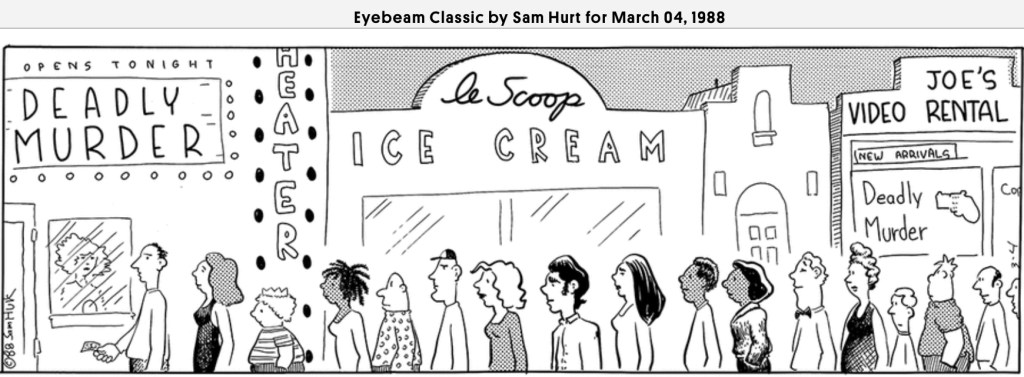
I didn’t realize how far back Eyebeam goes! But while puzzling over this comic in its November 2023 recycle appearance, it seemed that finding the date of original publication might help. In 1988 simultaneous streaming release was not yet a standard practice ; heck, they didn’t have streaming at all. Distribution for private home viewing was, as shown, mostly tape rentals ; and yes, tape, as DVDs weren’t around until the mid 90s!
And is that what the joke is? That somehow Joe’s Rentals has this title as tape even though it’s just now opening at the theater? Or is it funny-surprising that all these people prefer to see it at the theater rather than in the comforts of home? Or even — but now we’re working too hard — or even that the ice cream shop is a clue that they’re having hot weather, and that gives an answer to “why is everybody going to the movie theater?” : that they are seeking air conditioning?
 Comics I Don't Understand