Thanks to reader Alan for suggesting this CIDU from Carpe Diem.
(The inaccessibility of comments from Comics Kingdom makes it a bit harder to check if everybody else is finding a comic puzzling. Or OTOH it maybe relieves the burden of feeling one should check.)
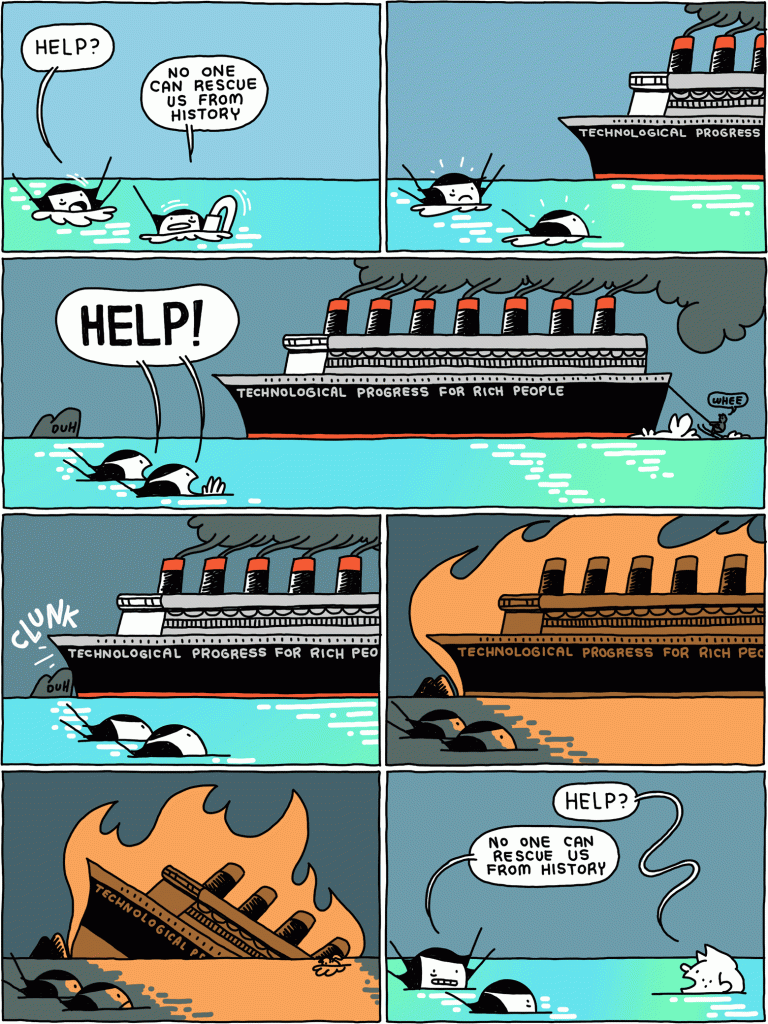
the lower one of this pair arrived in the mail and made me say, first, “Huh? What? IDU!” — but then “Maybe this is from an arc and the context will help”. The immediately previous comic did seem to go with today’s, and is printed below, as the upper of the pair. (The Girls are drowning in “history”, so maybe the recent mini-thread on time-travel — discussed here — would also fit as relevant, but it didn’t seem a strong case.)
Well, these do seem linked but different. What can provide a rescue from history? Technology maybe? No, says the top entry. Then maybe philosophy? Dopes the lower entry also say No to that suggestion? Or does it offer some hope? And how the heck can intoning Derrida’s name as parts of other words invoke any magic?
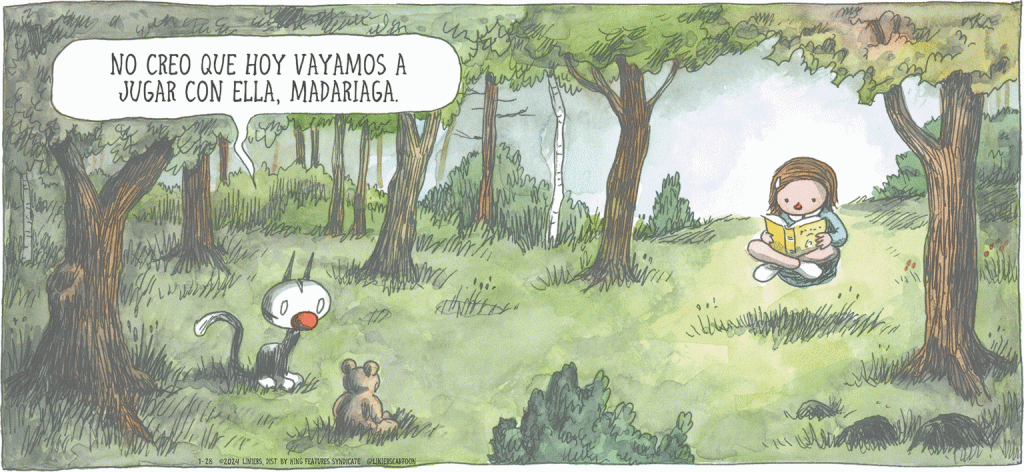
P.S. Those with behind-the-scenes interest can take a look at this excerpt from the tree of categories:
Basque: habitational name from any of various places in Gipuzkoa province named Madariaga from Basque madari ‘pear tree’ + the locative suffix -aga ‘place or group of’. Compare Madriaga and Maradiaga .
Source: Dictionary of American Family Names 2nd edition, 2022
This sub-feature of the SFPC repertoire rarely does much for me. But this instance worked well — maybe because it isn’t really “for the epically/brutally challenged” as much as “for the nightly news evaluation challenged”.
This was a momentary CIDU — I was puzzling out which side of the deal was losing, and why — until the GoComics comments cleared it all up. If you still need a clue, look at those pages in his right hand.
Yes, we don’t publish synchronicities any more. But two comics on the obscure theme of squirrel pushing showing up not just on the same day, but right next to each other in my GoComics feed, was too much to resist.
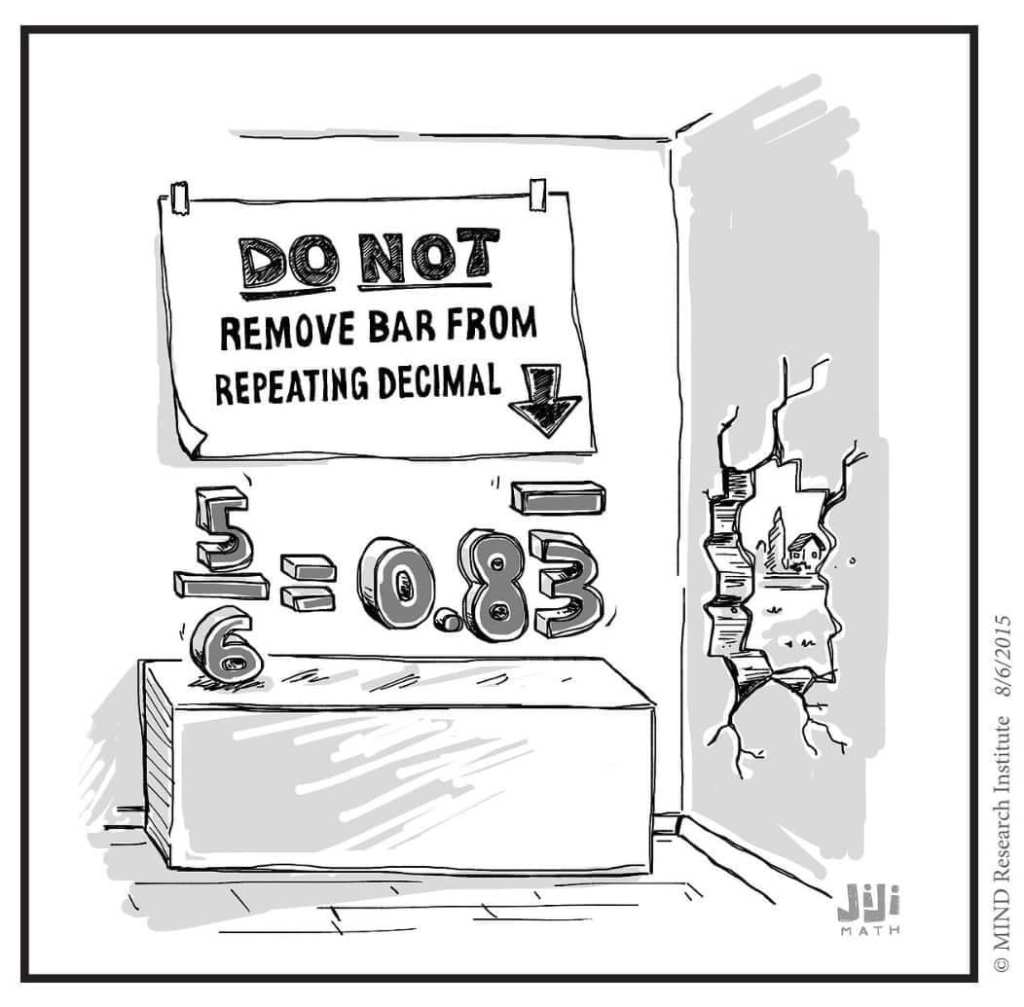
Pi Day (March 14, or 3/14) gets a lot of play in the U.S., but doesn’t work in other countries that write dates as DD/MM/YYYY, so it becomes 14/3. An alternative in those areas is e day, after the base of natural logarithms, e, (2.71) on 27 January. So, we’re going to avoid the Pi Day rush and post some math cartoons today.
Like pi,e shows up in a variety of places in mathematics, and is associated with some of the greats in mathematical development. From Wikipedia:
“The number e is sometimes called Euler’s number …—after the Swiss mathematician Leonhard Euler —or Napier’s constant—after John Napier. The constant was discovered by the Swiss mathematician Jacob Bernoulli while studying compound interest.”
Some fuzzy math from websites. The first is from Kiva.org.
This one is from MyVirtualMission.com, a site where you can virtually pretend to climb Everest or complete the Camino de Santiago as you run/walk/bike around your neighborhood. Somehow, their counter of missions (trips) has gone awry. Or maybe I did one backwards?
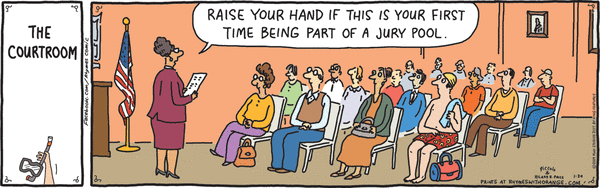
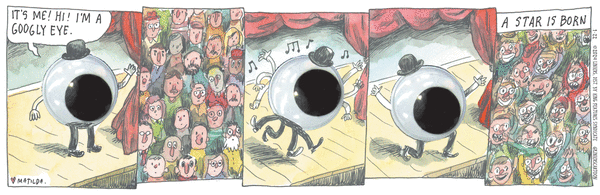
I recently ran into not just one, but a pair of (independent) comics that I just happened to completely misinterpret when I first read them. Both readings were humorous, just, well, “different”.
At first glance I thought the woman was trying to trick innocent candidates into volunteering (only first-timers would be so silly as to actually raise a hand; anyone with jury experience would know that maintaining a low profile is the best strategy to escape selection). Then I re-examined the artwork and realized that the gag was just a simple pun. Ooops.
The author wasn’t making any unusual wordplay with “a star is born“, but I mistakenly identified a joke that was not there. The German term for “cataract” is “grauer Star“, and I forgot that it’s not called that in English, and was expecting the “googly eye” to go blind in the next day’s strip. Ooops again.
Feel free to chime in with similar experiences, if you like.
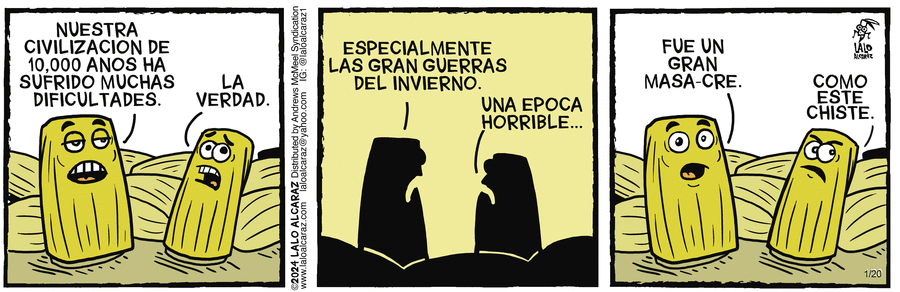
Very considerate of the English captioning to inform us these are tamales, which is not mentioned in the Spanish, and may not have been that obvious. In panel 2, invierno means winter, but I’m glad to learn that it might be a way Spanish speakers refer to what Anglophone North America calls “the holidays” or “the holiday period”.
But the crux of the puzzlement is in the final panel. We have the material for a pun, in partial split meanings: masa by itself can mean dough, and masacre written solid would be the obvious massacre, or as Google Translate for some reason prefers, slaughter. But we have to ask, if there are fluent or native Spanish speakers here, does this work for you as a joke?
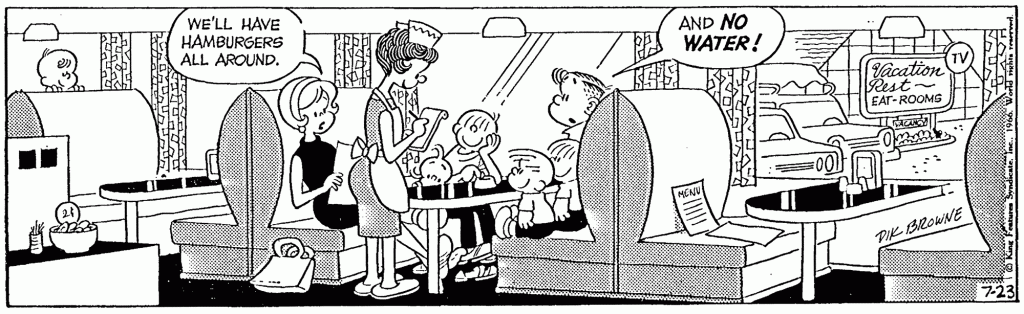
Uh, why? Are the Flagston kids prone to troublemaking by squirting water at each other thru straws? Or does Hi have the belief that the rate of urine production depends on amounts of liquid drunk, and he doesn’t want to have to stop again too soon? Or is there some folk theory under which hamburgers and water just don’t mix well?










 Comics I Don't Understand