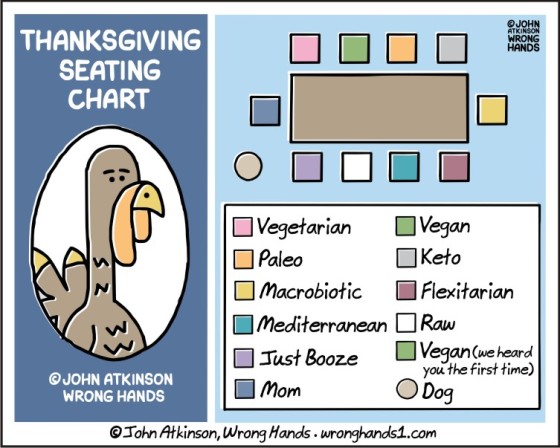
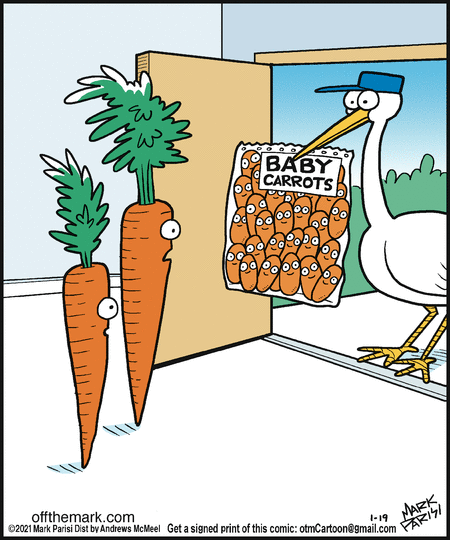
An acknowledgement of using the same joke, about four years later, when the similarity was pointed out. From “Monster Picnic” in June 2021 (hat tip to Why Evolution Is True blog in 2022 where I saw it):
And by David Borchard in The New Yorker in 2016:
Monster Picnic acknowledged Borchart’s priority in this Twitter thread (see replies too):
It has been pointed out to us that this joke has been done, by David Borchart in 2016 – this comic is now a tribute, please go and support him!
No, we’re not going to call this a synchronicity — there’s nothing surprising about seeing two Thanksgiving cartoons on Thanksgiving. But seeing both taking on the idea of special diets and restrictions is a nice pairing.
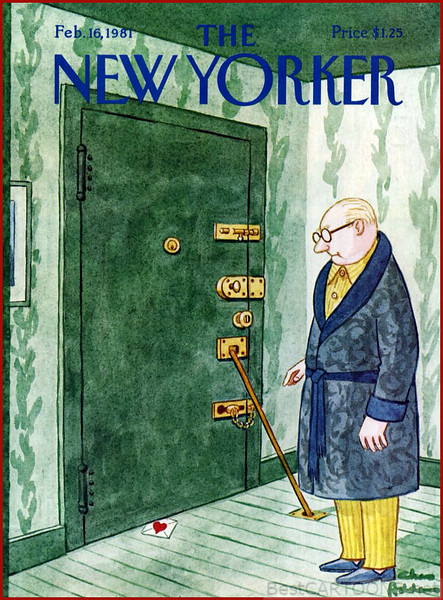
(I’m tagging The New Yorker though not sure that’s where the Roz Chast appeared.)
My first time reading the word “defenestration” was in the title of a story by Arthur C. Clarke, “The Defenestration of Ermintrude Inch”, appearing in the collection Tales from the White Hart. Subsequently, I learned the general uses of this funny word, and in particular in the nickname for some historical events, “The defenestration of Prague”.
My first encounter with the word “quantum” in other than a physics sense was in the title of a story by Ian Fleming, “Quantum of Solace”, appearing in the collection For Your Eyes Only. Subsequently, I rarely encounter any use other than something scientific.
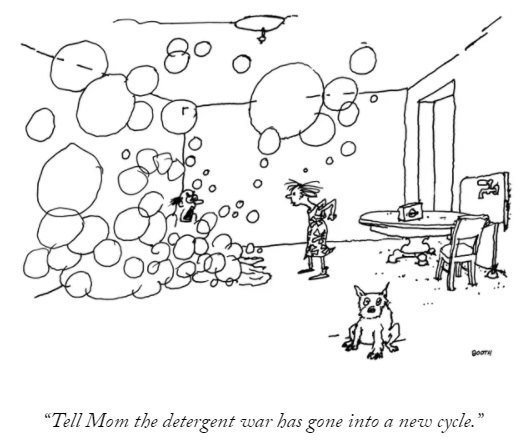
My first exposure to the word “squalor” was in the title of a story by J D Salinger, “For Esmé—with Love and Squalor”, appearing in the collection Nine Stories. Subsequently, my foremost exemplar for the concept of “living in squalor” are the cartoons of George Booth.
This one was sent in by Stan, who says “Here’s one I didn’t get…or maybe it’s an, ‘Is that all there is? But what’s the joke?’ kind of thing. Anyway, I’m guessing she made scrambled eggs for dinner. What’s the joke exactly? Also, what is the cat doing? Is that part of it?”
Thanks to larK who sent this in from the 30 August issue of The New Yorker, and can’t see the sense in the sorting of blames and reasonings in the caption.
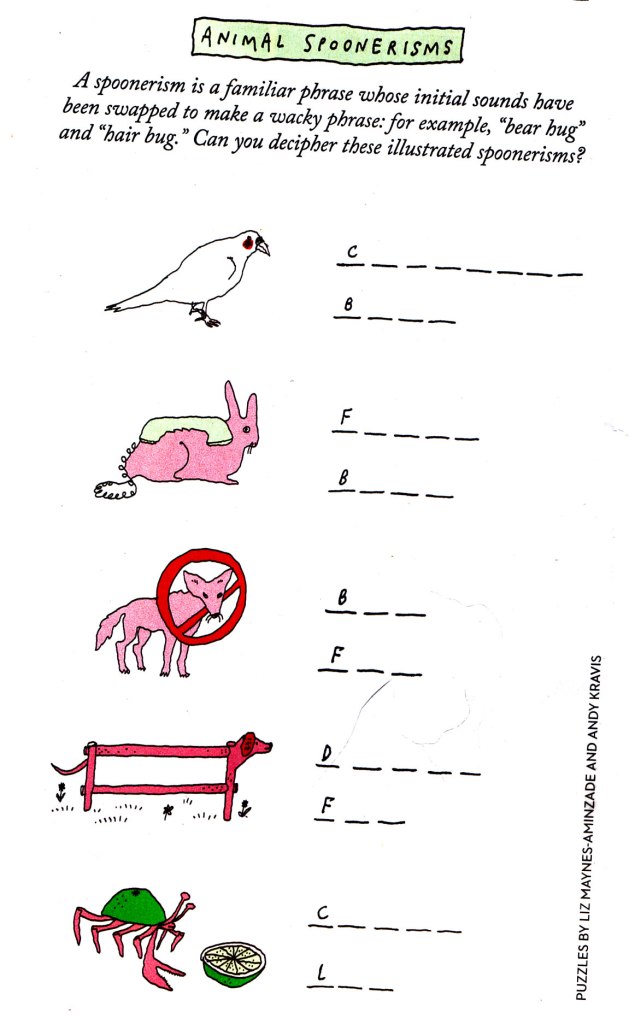
From the New Yorker end-of-year Cartoons Issue. A two-page spread of five cartoons by Liana Finck titled “Stay-at-home Fun”, embodying puzzles or quizzes — credited, as this scan has captured, as “Puzzles by Liz Maynes-Aminzade and Andy Kravis”.
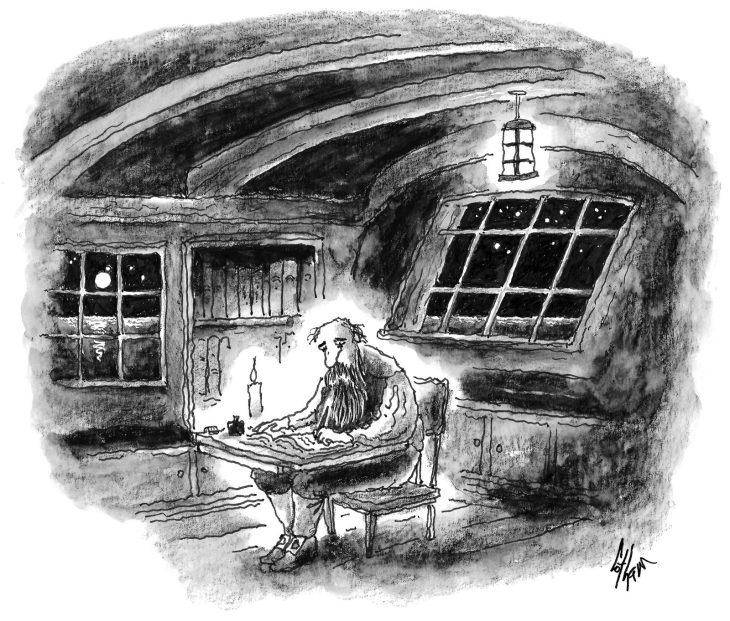
Yes, we’ve heard about the recent popularity of sea shanties on Tik-Tok and other youth social media. Also the idea of musically combining sea shanties with modern rap or pop music. All of that still leaves most of this Bliss cartoon unexplained!
“I am wearying of the crew’s constant repetition of the same old sea shanties.”










 Comics I Don't Understand