

Mitch4 provides a translation: “The bit of dialogue would mean ‘I was an IBM 700 in a past life’.”
Dirk the Daring sends in this one, appropriate for CIDU:


Mitch4 provides a translation: “The bit of dialogue would mean ‘I was an IBM 700 in a past life’.”
Dirk the Daring sends in this one, appropriate for CIDU:
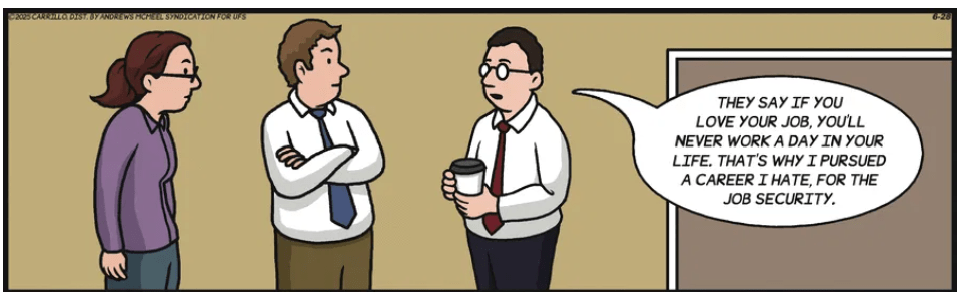


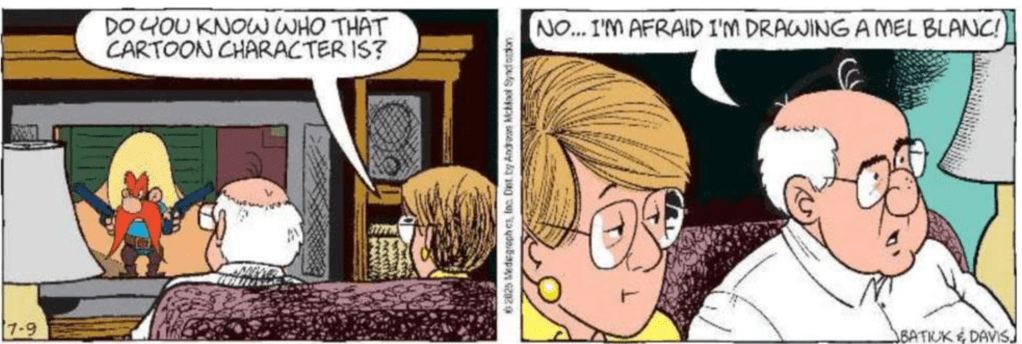
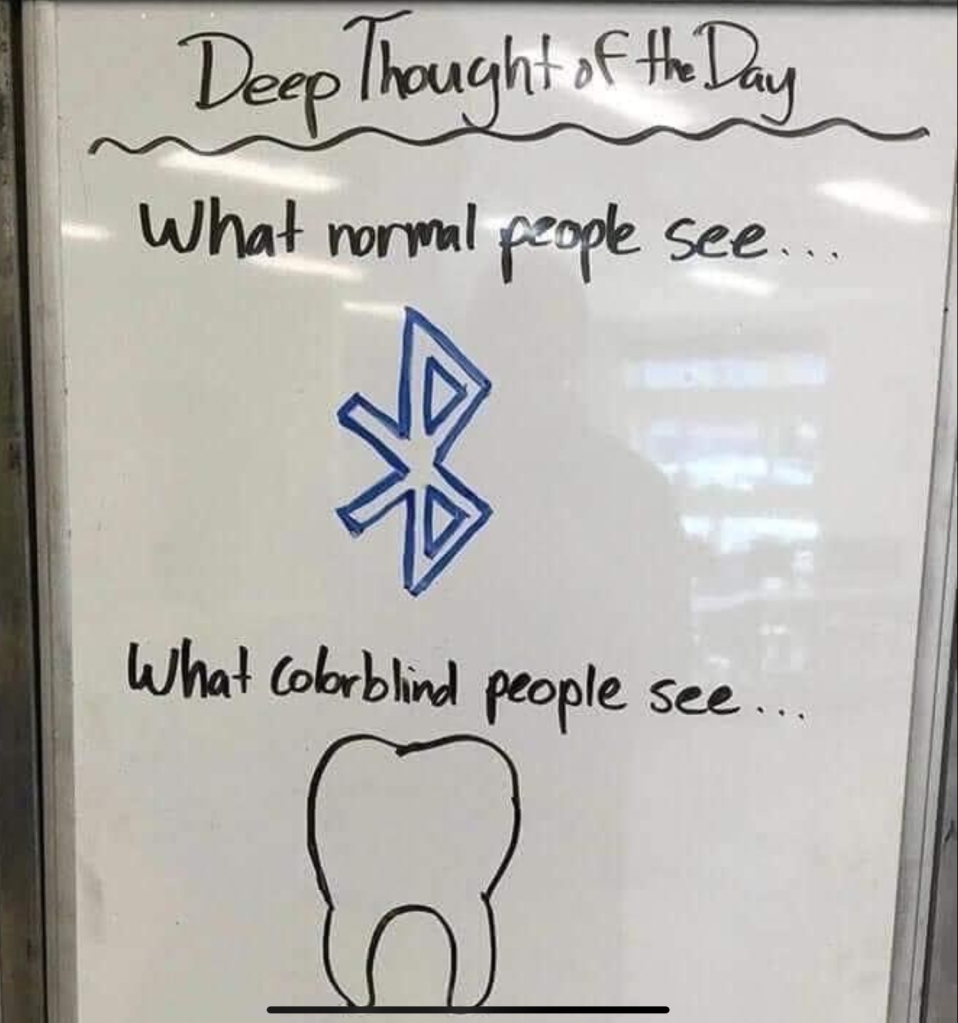


Rather dumb word-argument. But it prompts memory of an assortment of senior-targeted advertising campaigns which for a while used the phrasing “age 50 or better” or “age seventy-and-a-half or better” etcetera. It was supposed to be obvious, yet a sort of joke, that better would mean older. At least one that I heard regularly for a while did change to older; but then later reverted to better ; so I guess there was some complaint but it got resolved, or just overruled.


Come to think of it, probably the word-level associations of squashing things must have played a role in my lifelong aversion to the vegetable of that name.

Chak notes “I’ve read En attendant Godot several times, and I still don’t have a clue.”
Could one expect Godot to comment? Waiting for your comments below.
This Crankshaft is from Usual John:
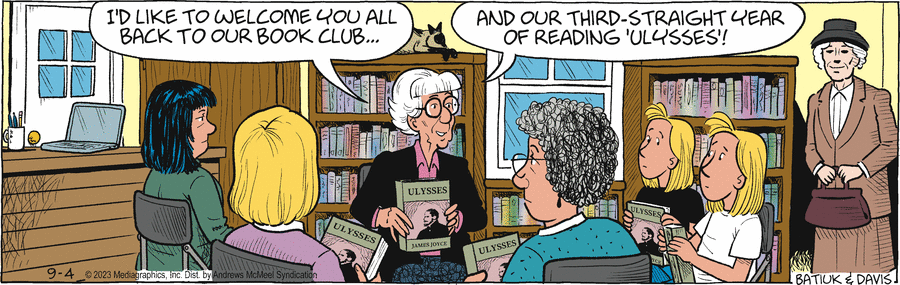
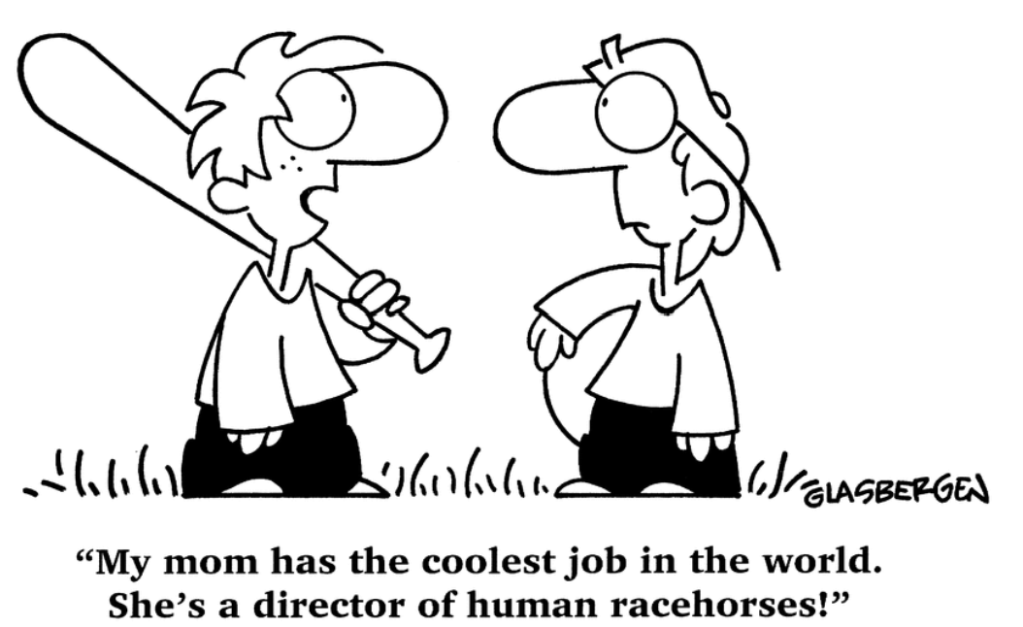
And he asks “Who is the creepy-looking old lady to the right? She just continues to stand wordlessly in the background over the next few days, as the book club fails to read Ulysses.”
As an incidental artistic problem, I wonder what the artist had in mind (or had as a model) in drawing the book and its cover. I can’t match it to any edition of Ulysses I can find discussed online. And that man pictured can’t plausibly be identified as Joyce, nor as either of the leading male characters, Bloom and Stephen.



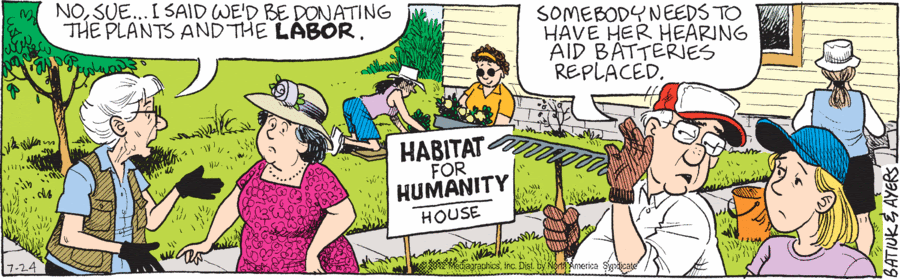
What could she have heard in place of labor? That would be like a, y’know, joke or punch line?


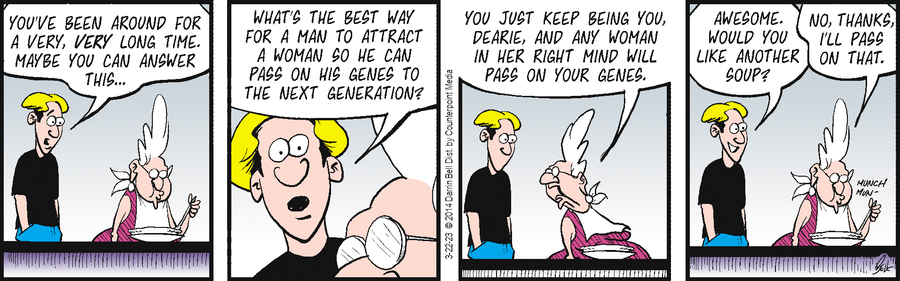
Almost a pun failure, as it is arguable the joke of her equivocation is already well-cemented in panel 3 and then the clues in panel 4 are just a waste. But probably it is also arguable that many a reader would miss the gag in panel 3 and there is a definite need for panel 4 …

And this dampens my hope of someday understanding what “fugue state” is or is not related to.


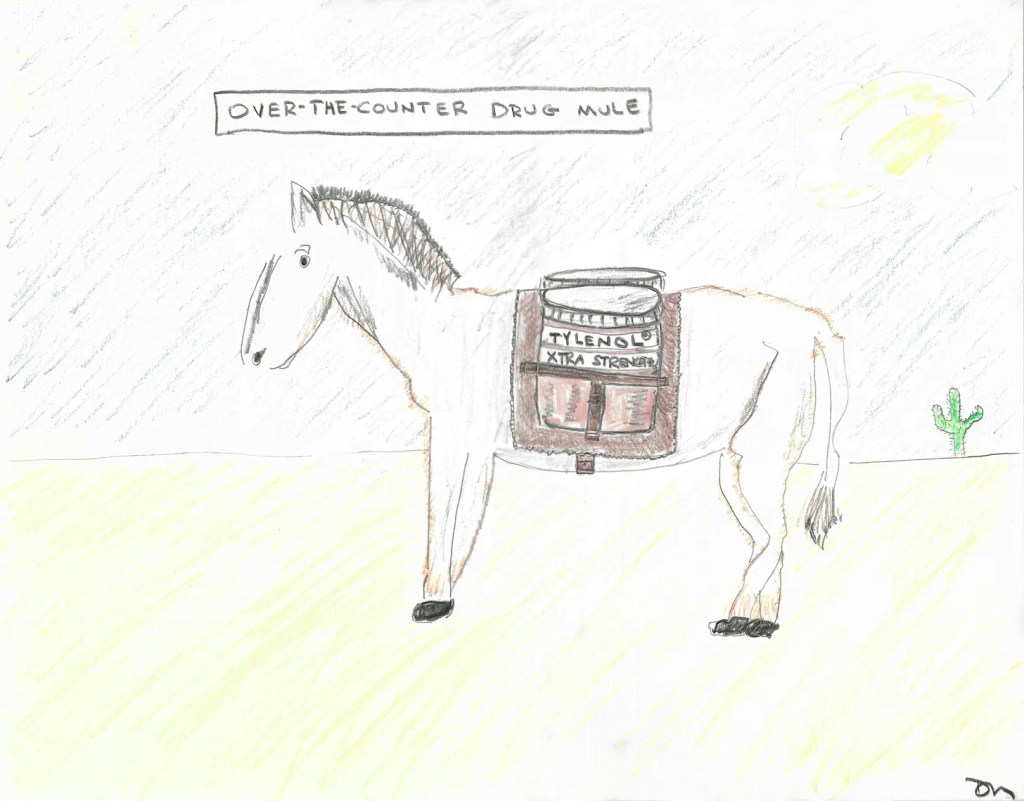
Yes, it’s the same David Mamet better known as a playwright.


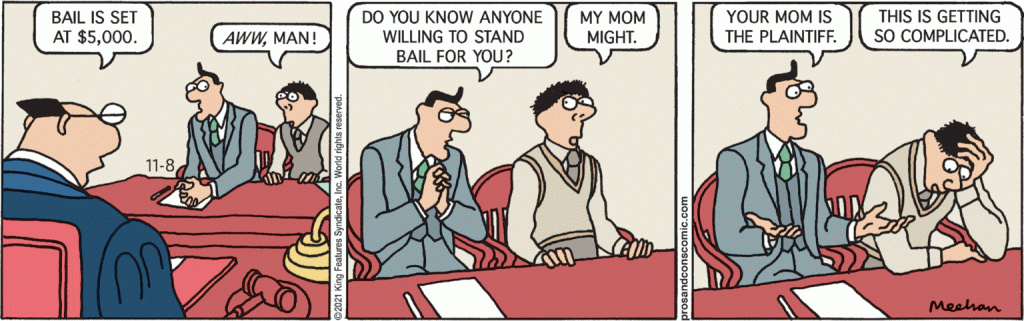
Did they slip up here on legal knowledge? Is this a criminal or a civil proceeding?


Why do I want to call this an Oy that almost works? The fact that there really is something called a hiatus hernia (or apparently more officially a hiatal hernia) does not, for me, make this a success — it’s too much “on the nose” and not a typical Crankshaft malapropism. And I don’t know if it helps or hurts that, as a little medical googling seems to reveal, bad lifting is more likely to result in an inguinal hernia than a hiatus hernia.
But the main issue is casual acceptance of hiatus as a general synonym for time during the covid lockdown. I don’t doubt some people use it that way, but mostly it seems restricted to an organization or project where some ongoing process had to be suspended.
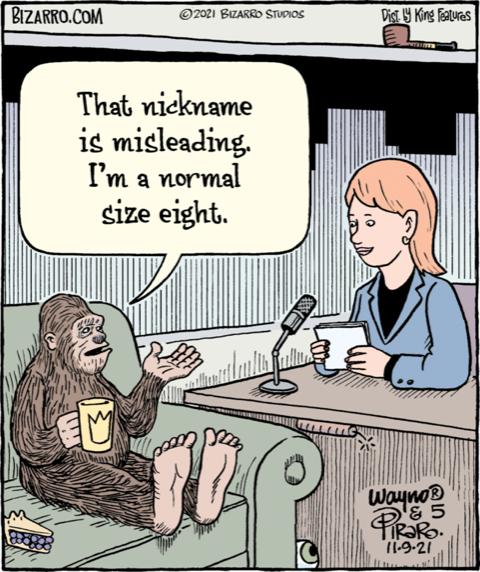
This Bizarro from Boise Ed is a semi-CIDU. We agree the nickname mentioned must be “BigFoot”. But then how have normal size eight footprints been called Big for these many years? Or is he just among the first of his species to accept socialization with humans, and is younger or simply smaller than most of them? Does he always go on TV in the nude, or is that just to display his b̸i̸g̸ ̸f̸e̸e̸t̸ normal sized feet for discussion?
P.S. Later (how time flies), Wayno’s blog for that week has appeared, and this is what he had to say: “If Sasquatch were being completely honest, he’d admit that he’s an eight extra wide.”
And more: Dan Piraro, on his blog, comments “This one left some readers scratching their heads and asking what it meant, which made it all the more satisfying for those who got it by themselves. If you’re having trouble with it, it’s probably because you think it’s a monkey. It’s actually Bigfoot, who is not as tall as we’d assumed.” Hmmm, not entirely explained; or is it?
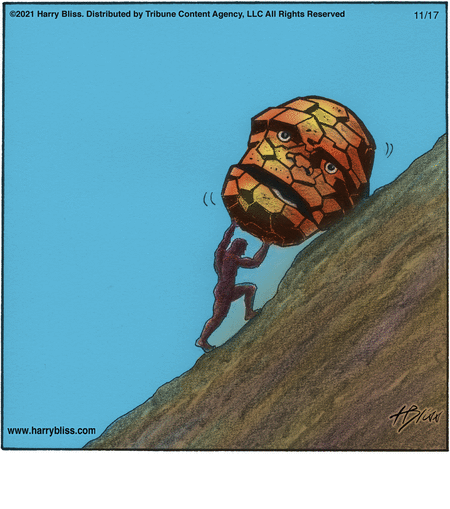
For me it was a mystery who/what that Thing is, but getting an answer turned out too easy to let this be a standalone CIDU. But after answering that, there wasn’t much of a joke, and asking for explanations didn’t promise a long or interesting discussion thread. (But I did toss it into an old Sisyphus thread.)

So the cave painters recorded the story of a hunt; and also one of the cave dwellers being felled by a falling stalactite. Oh look, there it is, the base still hanging from the ceiling and the fallen point still lying on the ground. And undisturbed after all this time – while the probable skeletal remains have been scattered or swept up. So the joke is what?
And here’s one from Le Vieux Lapin, who asks “Adam? What am I missing here?”. Did the writer just get Noah’s name wrong? Nobody could do that. And Todd is no better a name for a scene like this. Just sayin’, It’s not canon!

And finally, let’s circle back to Pros & Cons:
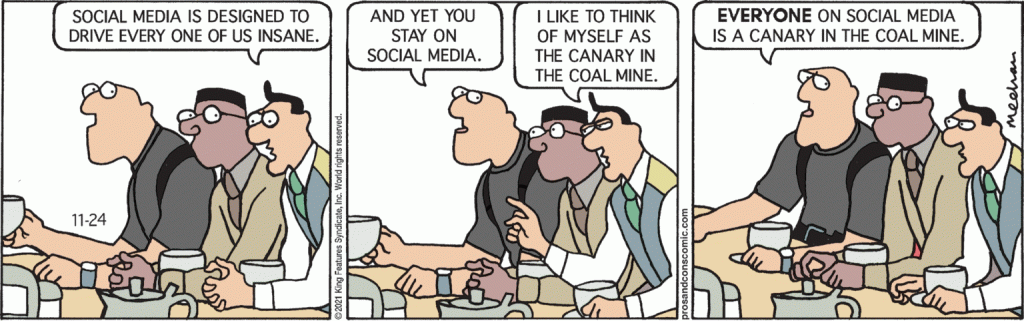
(All right, I didn’t know their names but looked them up.) In the 2nd panel, when Samuel the lawyer calls himself a canary in the coal mine, is he using the image / metaphor correctly? I think basically yes, even if not entirely. (Does he expect to succumb to the dangerous outgassing sooner than others, and thereby provide a warning to all? Not exactly.)
And in the final panel, when detective Stan tries a twist comeback, does it work? Well, we get what is probably his point — *everybody* exposed to social media is already suffering from the dangerous atmosphere. But does that mean they/we are all canaries? Or that it’s too late for a canary-warning and it’s already hurting the miners, which is all participants. In the story of the traditional practice, even if you are a bird lover, the canaries are the sacrificial population and the miners are the protected population; if the gas is getting to the miners, the warning system has already failed, which I take it is most of Stan’s point.







 Comics I Don't Understand