Cartoons in The New Yorker are famously obscure. Time passing may further obscure them, but also provide a patina of remembrance. With this in mind, I present a selection from October, 1972.
How is this different from what I did for decades — stand on a train platform, waiting for the morning train to the city?
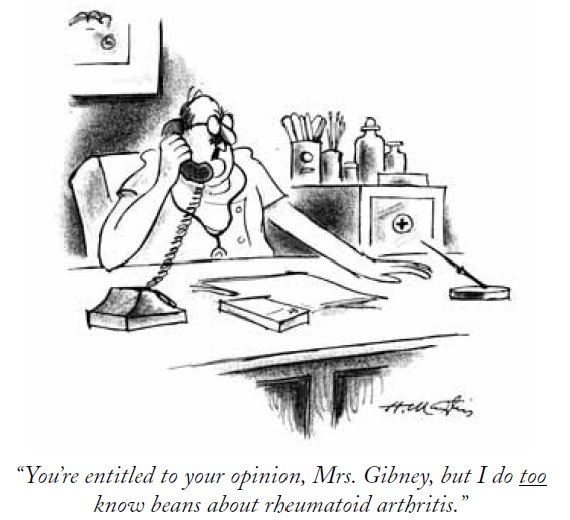
Now that we can use Google to investigate our symptoms, is this worse?
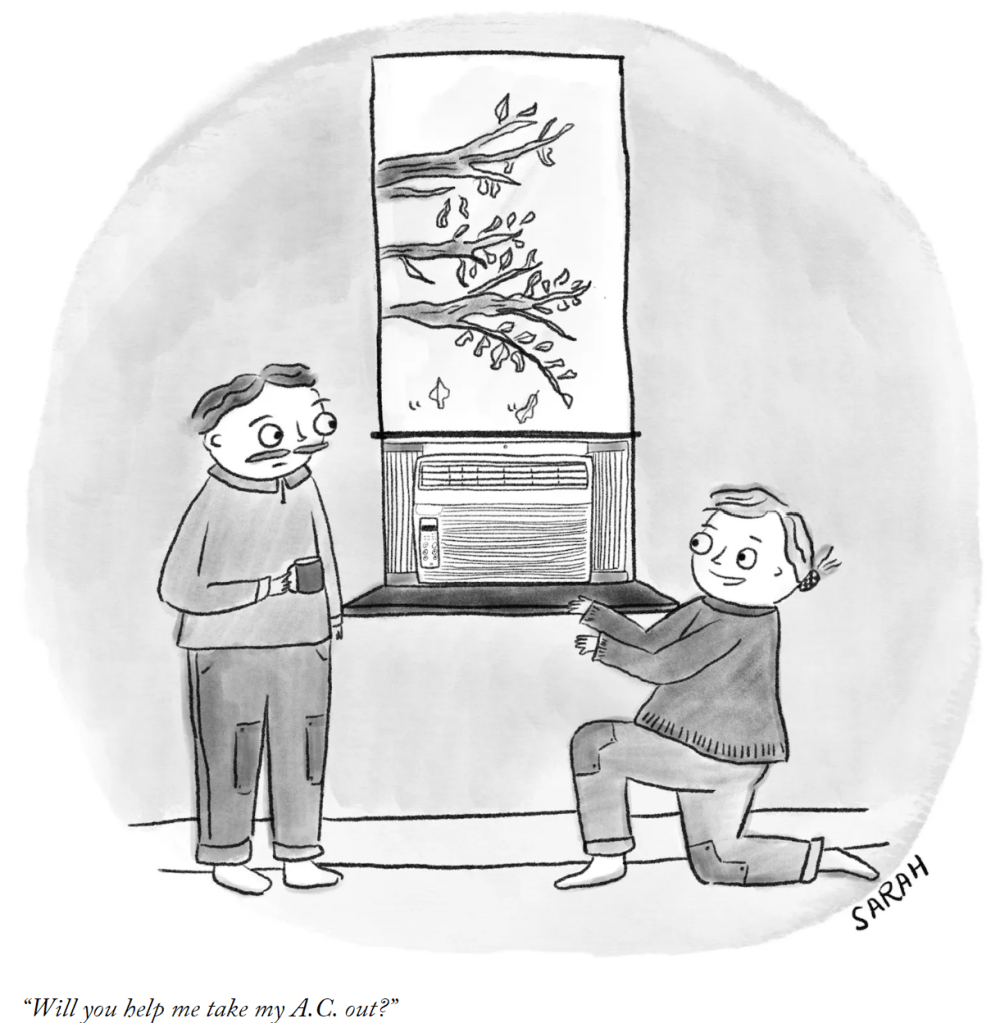
I remember my many years with window A.C. units, and remember the fall struggles to get them out (easier, though, than the spring struggles to get them in). But is there a joke here? None of the family members ever found my request for help with this task funny.
Could this also be a geezer alert? I think current units are better conditioned for winter, so they are commonly left in all year. But maybe I’m wrong about that.
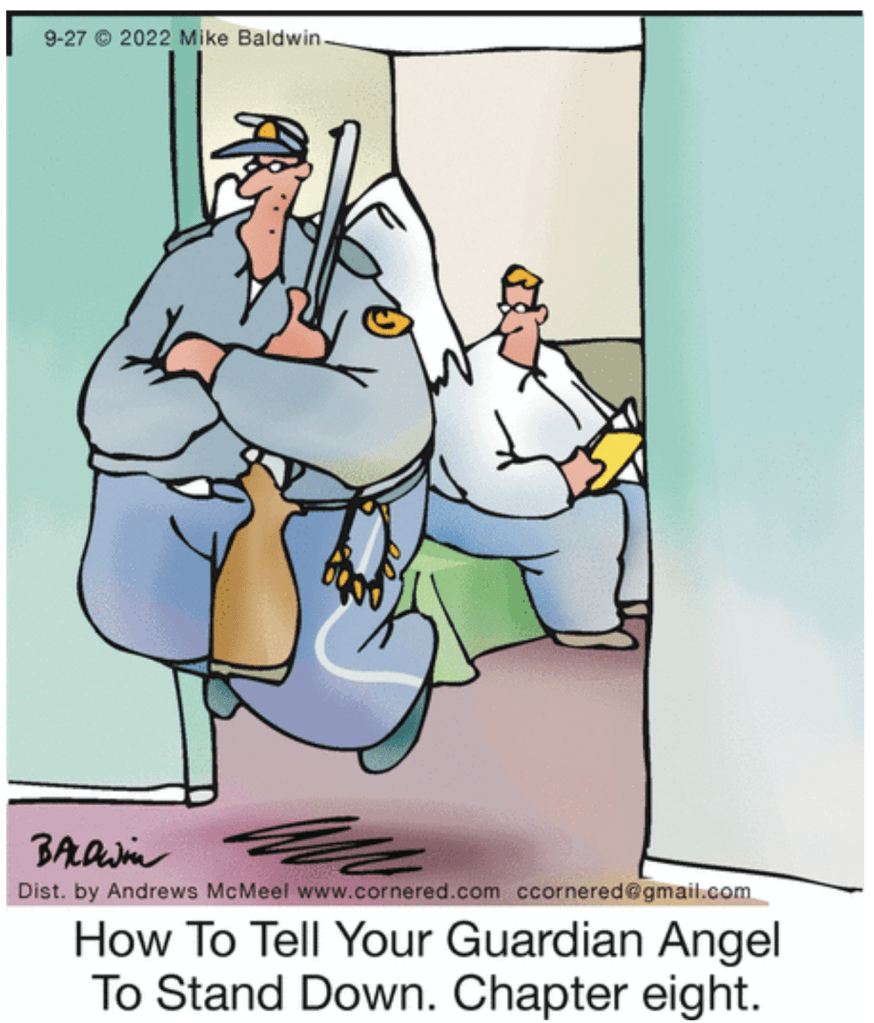
The angel isn’t standing down. The angel doesn’t match the characterization of angels I’m familiar with. Are there no uniform designers who made it to heaven, for a more professional look?
Kenneth Berkun sends in this puzzler from the New Yorker.
The joke would be simpler to understand if we had the inbox with yarn and the outbox with garments with a knitting grandmother in the middle. Then the joke would be that the knitter was treating her hobby as if she was (still) in an office.
So, the CIDU question would be why put it in a business office context? Why does the businessman have that deer-in-the-headlights look? Why, if he has the status to get a window office with such a nice view of the skyline, does he have so many pens, and why are they in his suitcoat? Or, are these details just because Roz Chast probably hasn’t spent much time in a business office (lucky her)?
And should the presence of the inbox and outbox pair be a geezer alert? I don’t think I had an outbox since the mid-1990s, and my physical inbox didn’t have much in it.
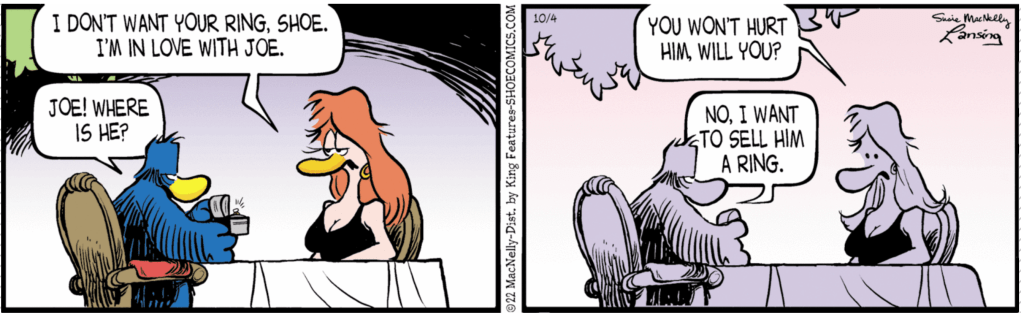
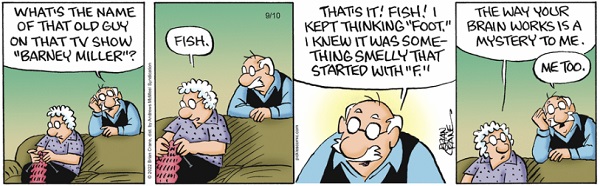
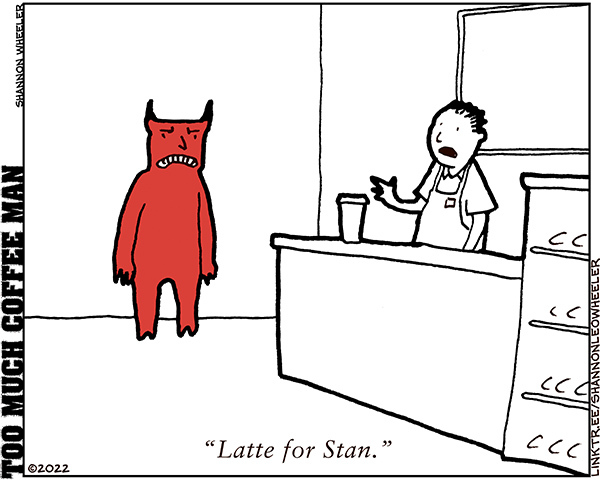
Stan sends in this pair, with Bob Ball joining in on the Mother Goose. The first is a CIDU. The second perhaps explains the first, but definitely deserves a Geezer tag. Barney Miller‘s last episode was over 40 years ago.
After the Dog Days of August, shouldn’t we have the Cat Days of September? Yes, this is an entirely made-up term, but it’s an excuse to post a few cat-related cartoons and see some of the various ways cats are portrayed in comics. Here’s a couple of Business Cats from LarK:
Garfield is possibly the most popular cartoon cat, so here’s one that may be a bit more timely than most, since ketchup’s been in the news lately.
This Get Fuzzy almost deserves a geezer tag, since soccer is now much more popular in the U.S. than it was a few decades ago and most of us can appreciate the action (or, at least, the theatrics of players barely touched pretending they are severely wounded).
A+? Who cares!
And what long-time cat owner hasn’t had one or two who preferred to stay hidden?
But at the other extreme we have the lively and intrusive cuties of Breaking Cat News:
No tour of various ways cats make their way into comics would be complete without one from B. Kliban.
That’s 8; we’ll leave our cartoon cats with one of their 9 lives left.
Chemgal sends in this reminder that there might be a few syndromes not in DSM-5.
Thanks to John Reubens, who says “Thought this was clever. Made me LOL. 1880s version of unfriending? :) “
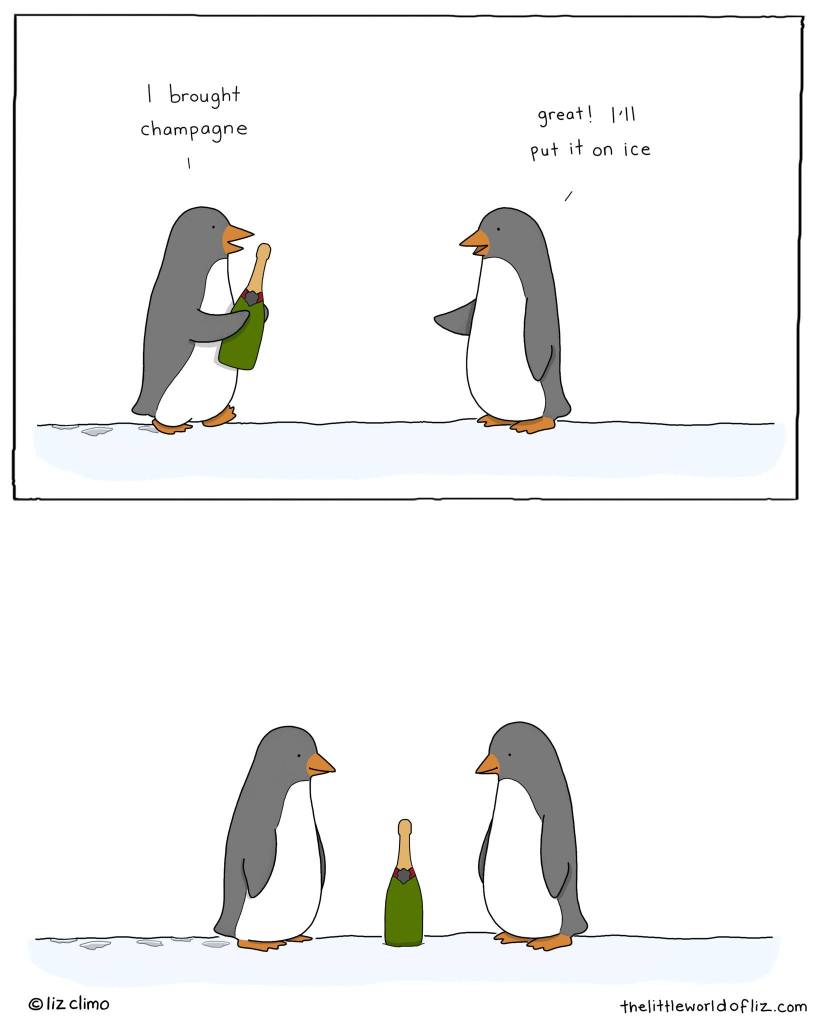
Ran into this Liz Climo on Facebook; it doesn’t seem to be on GoComics, nor on her own site.
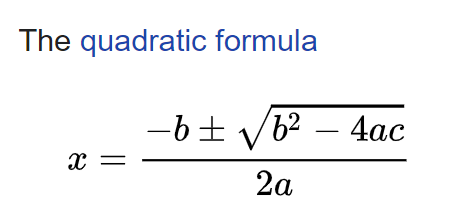
This is the funniest comic I’ve ever seen that seems reminiscent of the quadratic formula, although it doesn’t get the coefficients and exponents quite right.











 Comics I Don't Understand