Came across this guy, Cameron Spires, who calls his strip Goat to Self. Most of his are borderline NSFW, or over the line, somewhat surrealistic, or just vague. Can’t figure this one out at all.
This editor posits that the key is that the dolphin (porpoise? beluga?) in the last panel is the defense lawyer, and the objection is to forcing self-incrimination. Mind you, I’m not sure that’s up to the defense lawyer — I think the witness has to invoke that themselves.
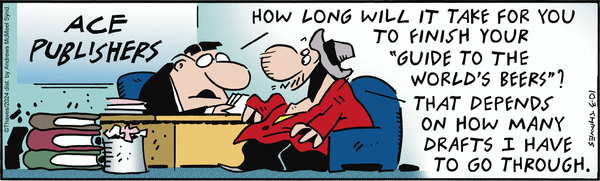
CIDU frequently presents holiday-based material, but virtually all of the holidays we have ever celebrated so far have been American, even if a few of them (such as New Year’s Eve and Halloween) are also celebrated outside of North America. The following collection is presented in recognition of German Unification Day, which just happened to land on October 3rd (in 1990), and has been celebrated on that day ever since.
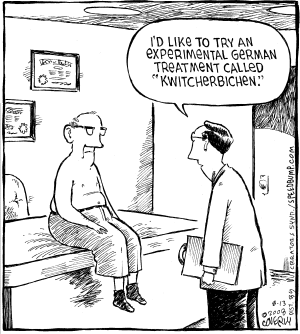
… Coverly put a “T” in front of the first “CH”, but neglected to do the same for the second, which would have made the pronunciation clearer, but it might have annoyed the syndicate’s censors.
… During my first stay in Germany (over 35 years ago), once I had begun to understand and speak a little of the language, I was frequently astonished (and/or embarrassed) by the linguistic abilities of German toddlers, which were often better than my own.
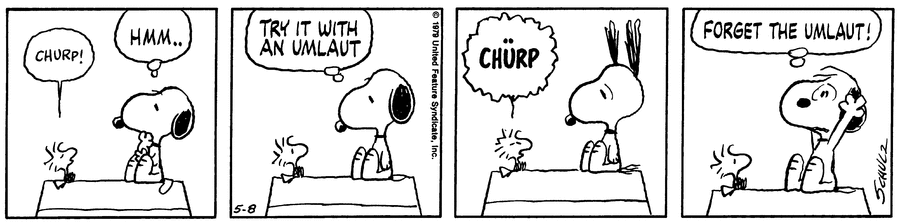
… Here’s a classic riddle for students beginning to learn the language: Q – “What does a German parakeet say?“ A – (in a deep voice): “Billig! Billig!” (meaning “cheap”, of course)
… As unlikely as it may seem, Hogan’s Heroes wasn’t just translated into German, they actually did it twice, because the first version didn’t get good enough ratings. The scriptwriters for the newer version invented details and even (unseen) characters not found in the original shows, and the dialog (of the “Germans”) was changed from standard (“Hochdeutsch“) pronunciation to more comical (Bavarian and Saxon) dialects.
The American characters speak normal German in the translation, except for “Newkirk” (Richard Dawson’s character), who was changed from British to being a stutterer, which was both unnecessary and is absolutely unwatchable (at least for anyone who is familiar with the original show). I don’t remember whether LeBeau was synchronized into German with a French accent.
P.S. Keith Knight has drawn at least a dozen strips based on interactions with his (German) wife; there are simply too many of them to include them all here. Perhaps later, in a separate “linguistic” post.
When this first scrolled up for me, I had just glanced at it when I was called away to do something else, and my inner ear was repeating the final panel but misremembered with the terms reversed. I thought it was making an excellent if subtle point. Can a dog do a trick without *knowing* it? (Can a human?) Does a dog really know anything, or is that just what we say as a courtesy, while meaning the dog has a habit or pattern? But then, how does lack of knowledge not prevent successful performance? We say a person knows how to ride a bicycle when we see they are able to, but chances are they could not articulate what to do — so is it the same courtesy designation?
And I think we could raise some of the same questions from the way the comic actually presents the line!
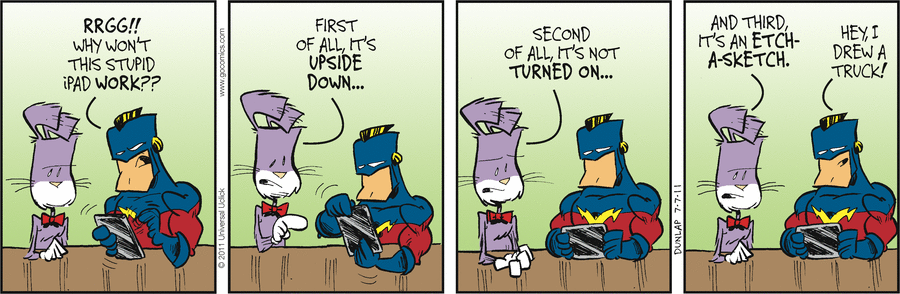
Scott Adams was certainly not the first author to draw a comic featuring an Etch-A-Sketch, but this classic Dilbert strip (correction: from 1995) remains the standard against which all other attempts must be measured:
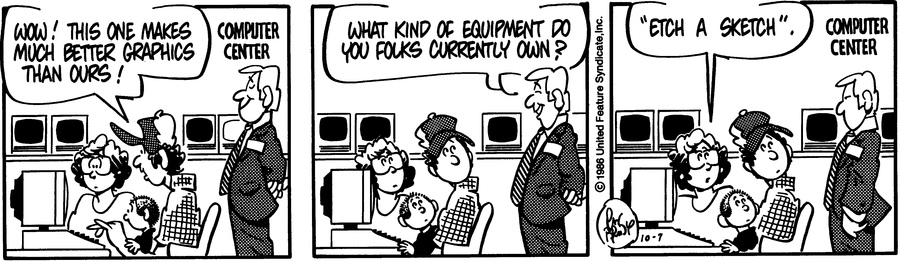
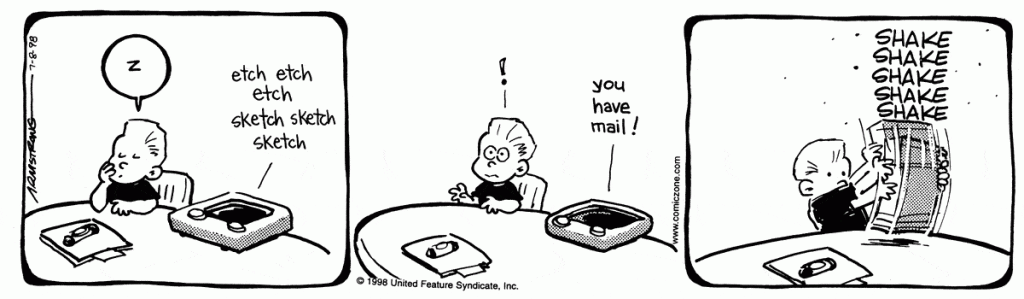
This Rose is Rose strip was published nine years earlier (in 1986), but to her credit, at least Rose can tell the difference between the devices:
As computer technology progressed, more recent comics were able to use tablets (instead of laptops), which made the misidentification more believable:
Here’s a handy guide to distinguish between the two:
Of all the strips showing kids using an Etch-A-Sketch as a “real” computer, this Jump Start is my favorite:
Not everyone is so pleased by the idea of image impermanence:
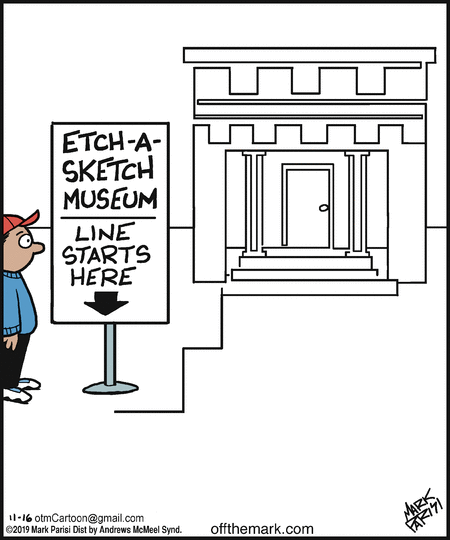
The Off the Mark at the top already appeared at CIDU (on May Day 2023) but Parisi also drew two other comics that are notable for incorporating pseudo-authentic Etch-A-Sketch artwork into the drawing. The first one is truly superb, especially for including the masterful meta-pun on “line”:
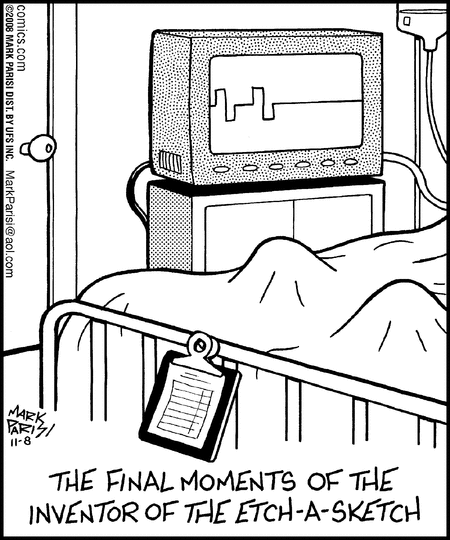
This final Off the Mark comic has a fatal flaw (morbid pun intended). The “sketchy” artwork is actually its best feature, but it would have been even better with a pair of round knobs on the monitor. The tragic defect is that the author did not bother to properly credit (or apologize to) André Cassagnes, who was still alive when this comic was published in 2008 (he died just five years later).
… P.S. Today (23-Sep-2024) would have been the inventor’s 98th birthday.
Yes, yes! One of these guys sold me a “This is not a shirt” tee shirt.
…
Unless it was one of these guys! Number five looks very sus!
Boise Ed sent this one in, noting “The robotic lawn mower is just doing what it is supposed to do, right?”
Your editor, drawing from unfortunate personal experiences, sees allusions to the problems caused when one dog is on leash, but another dog is not, or maybe just barking dogs in general. So we’re marking this CIAU (Comic I almost understand)