
Kedamono sends this in: “Just a funny thought, though the title implies that the writer owned those Hobbits. Merry and Pippin would like a word with them behind the shed about that.”
Primary season coming up.
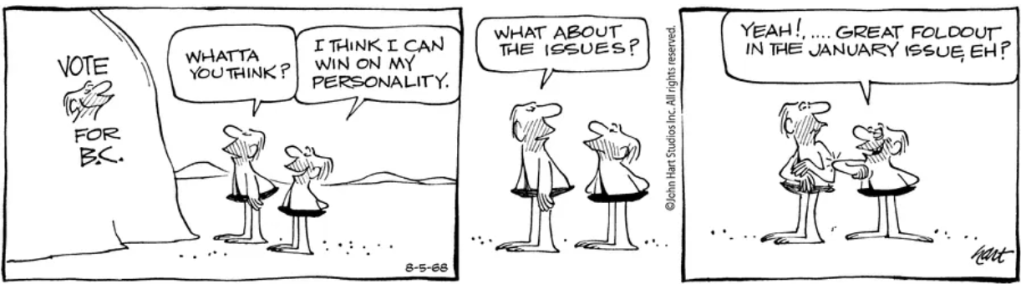
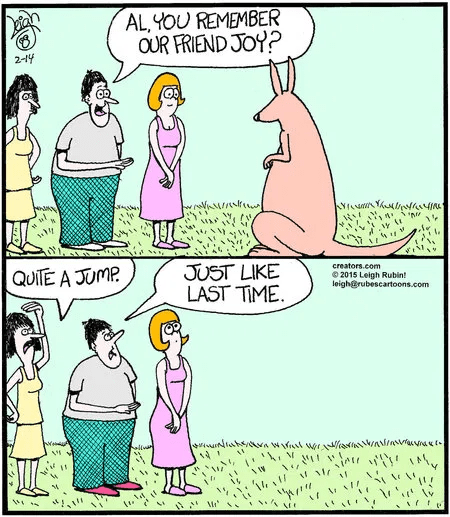
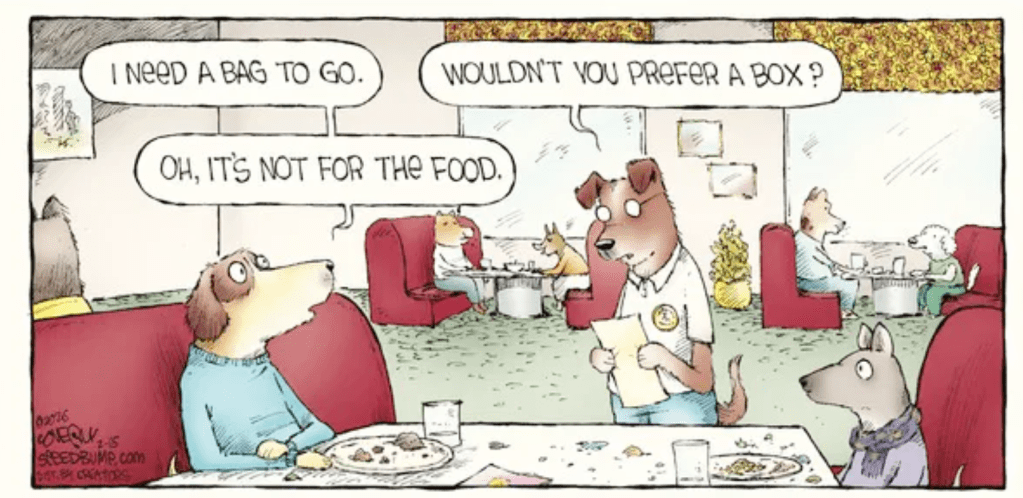
Kedamono sends in this OY / Ewww
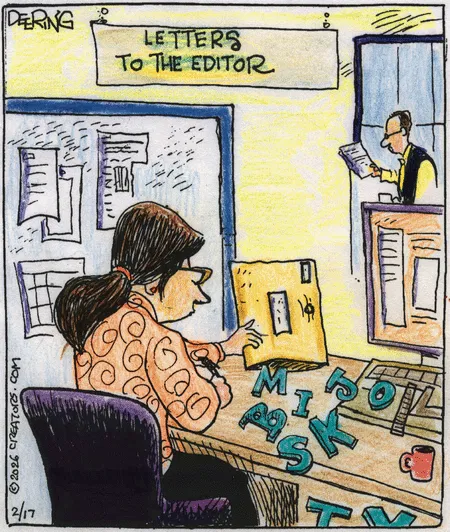
Kedamono sends this in: “Just a funny thought, though the title implies that the writer owned those Hobbits. Merry and Pippin would like a word with them behind the shed about that.”
Primary season coming up.
Kedamono sends in this OY / Ewww
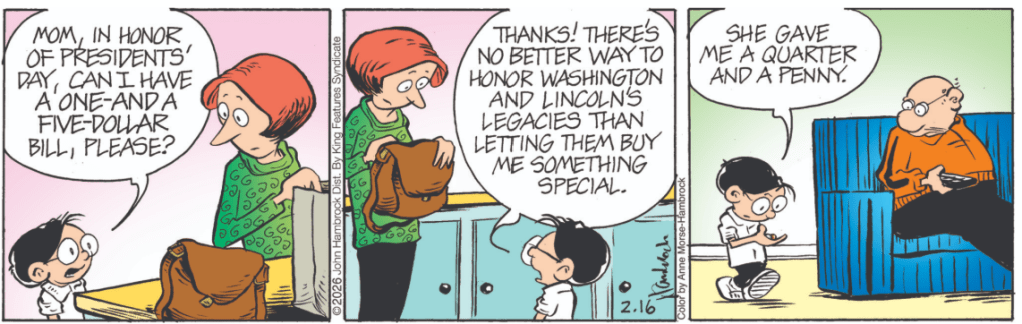
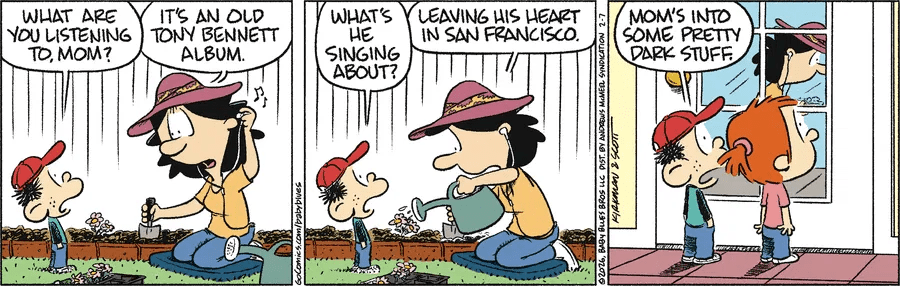
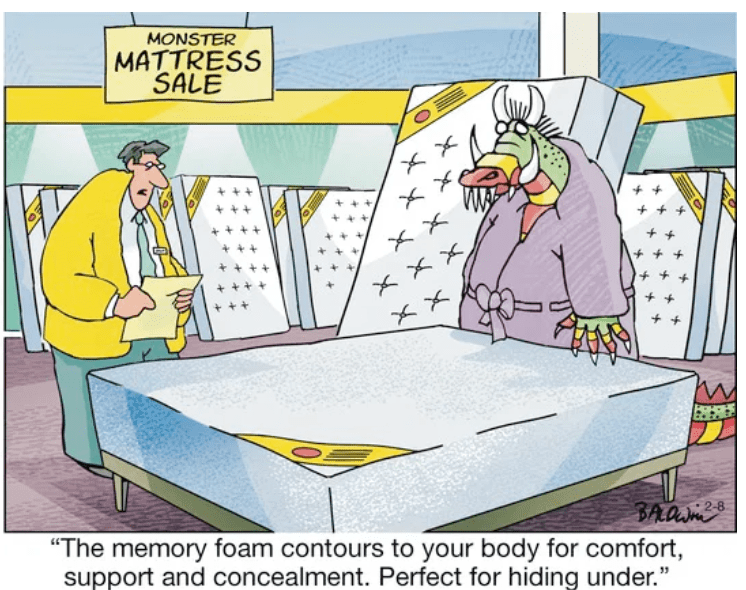
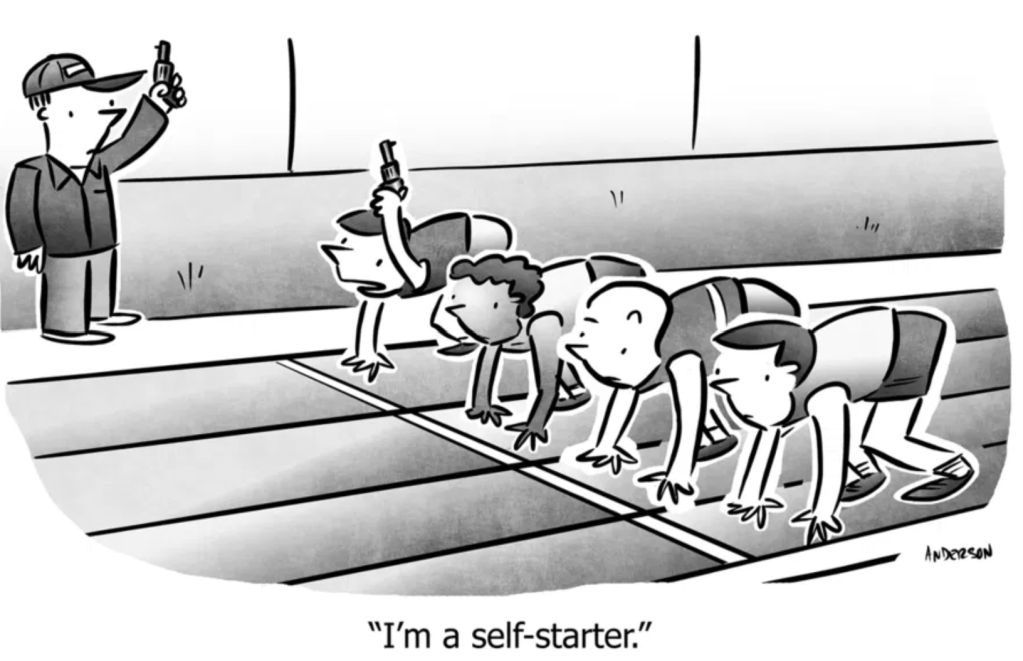
In honor of the Olympics (yes, I know track and field is in the summer Olympics)
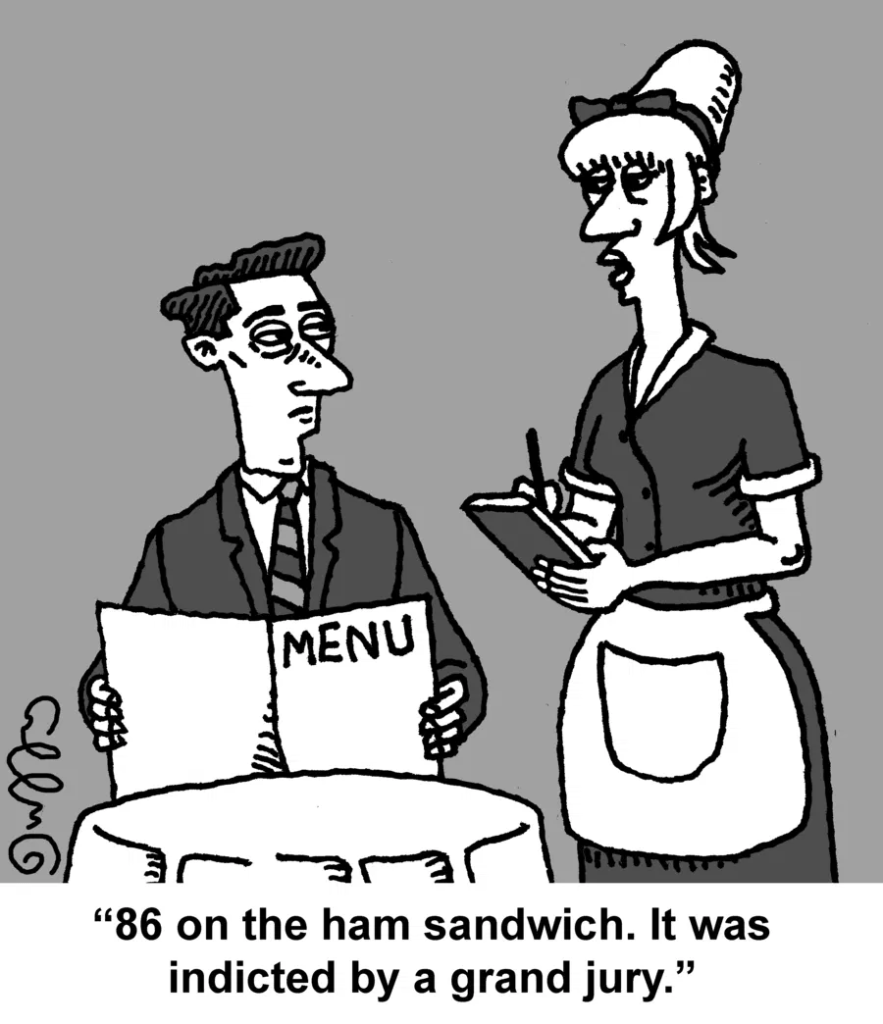
Mitch4 sends this in: “Probably no longer an in-joke of lawyers, but it used to be said of a good prosecutor that they “could get a grand jury to indict a ham sandwich”.”
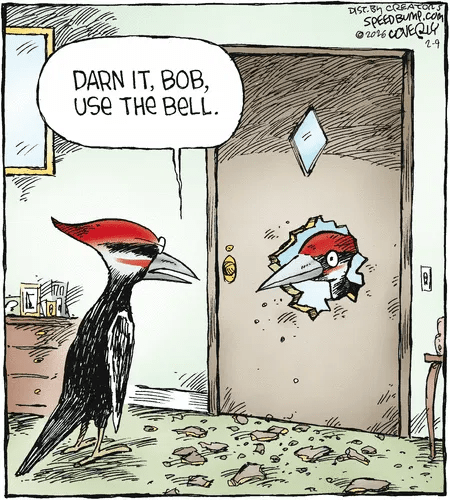
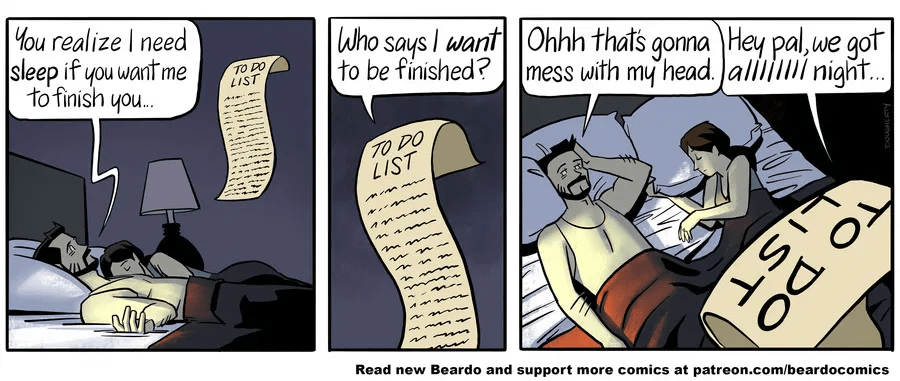
Dirk the Daring sends this in as a possible Arlo: “Perhaps the first panel deserves an Arlo award. It stopped me for a moment before I got to the second panel. I would have trouble believing this is accidental.”
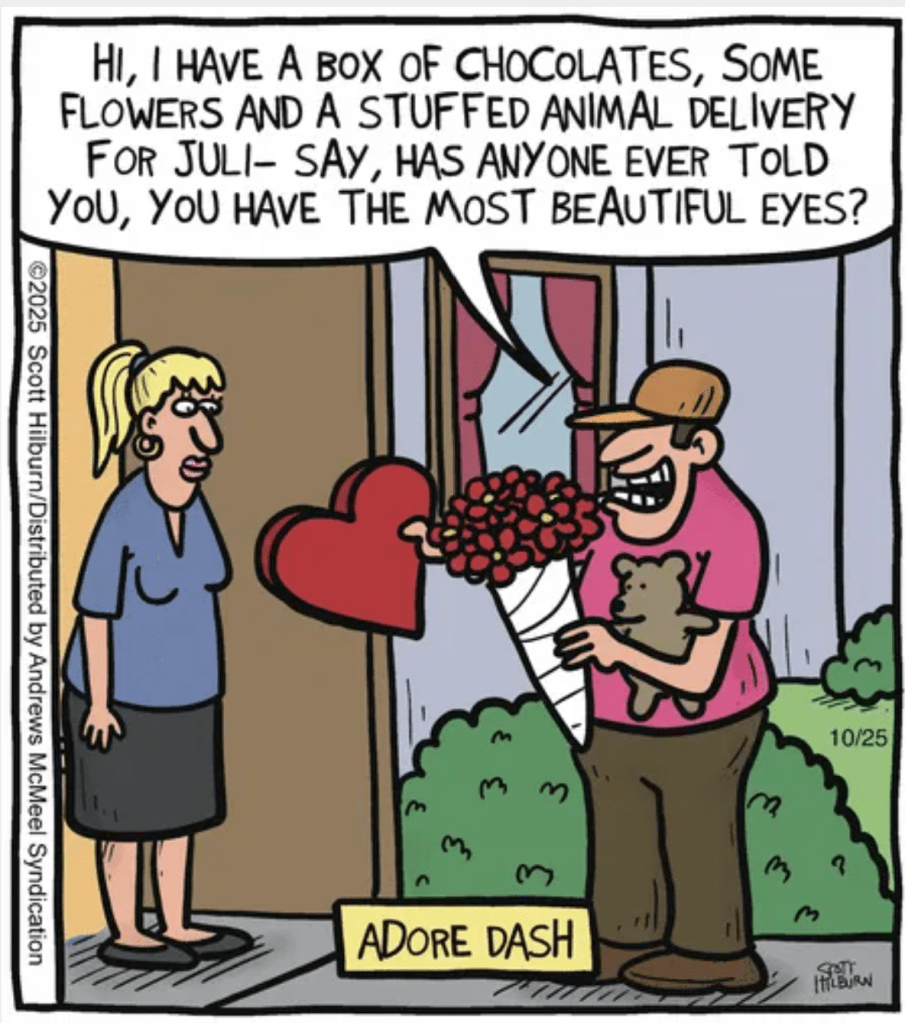

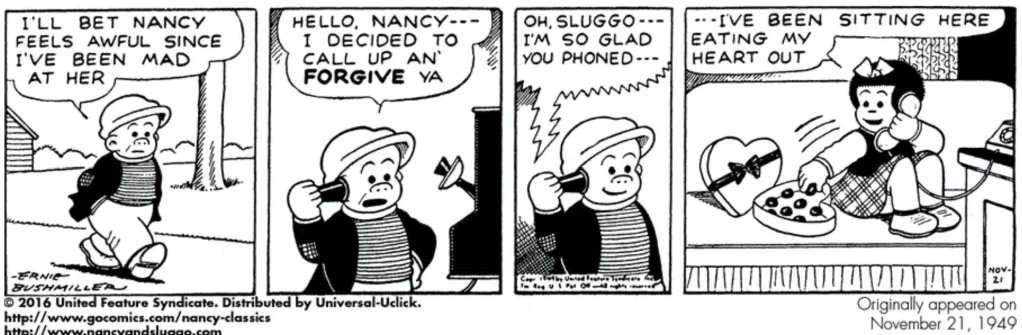
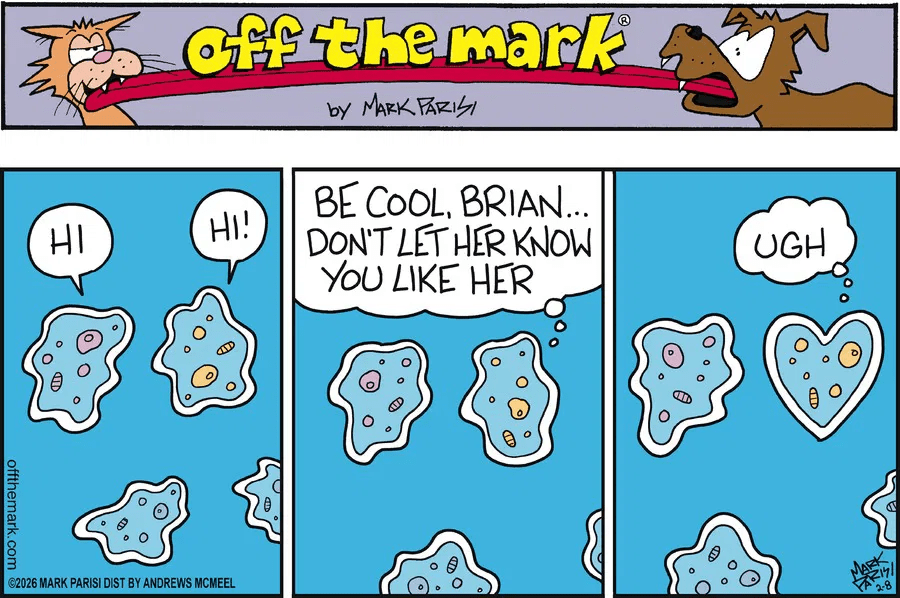
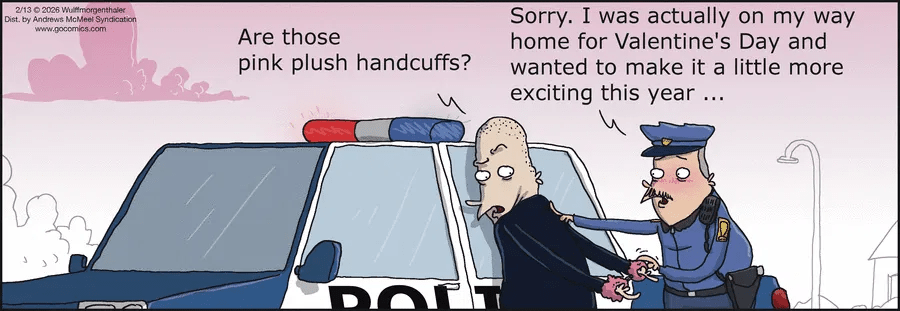
Janice Rey sends this in:
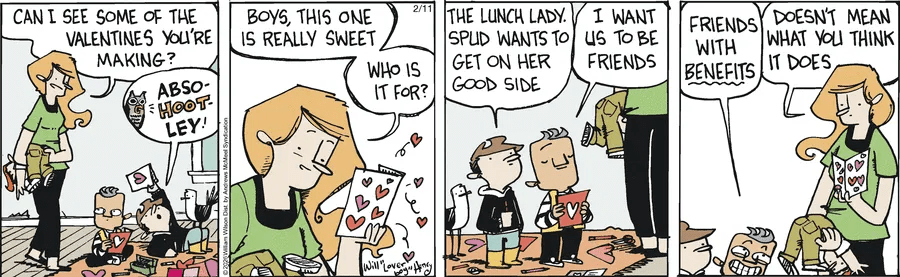
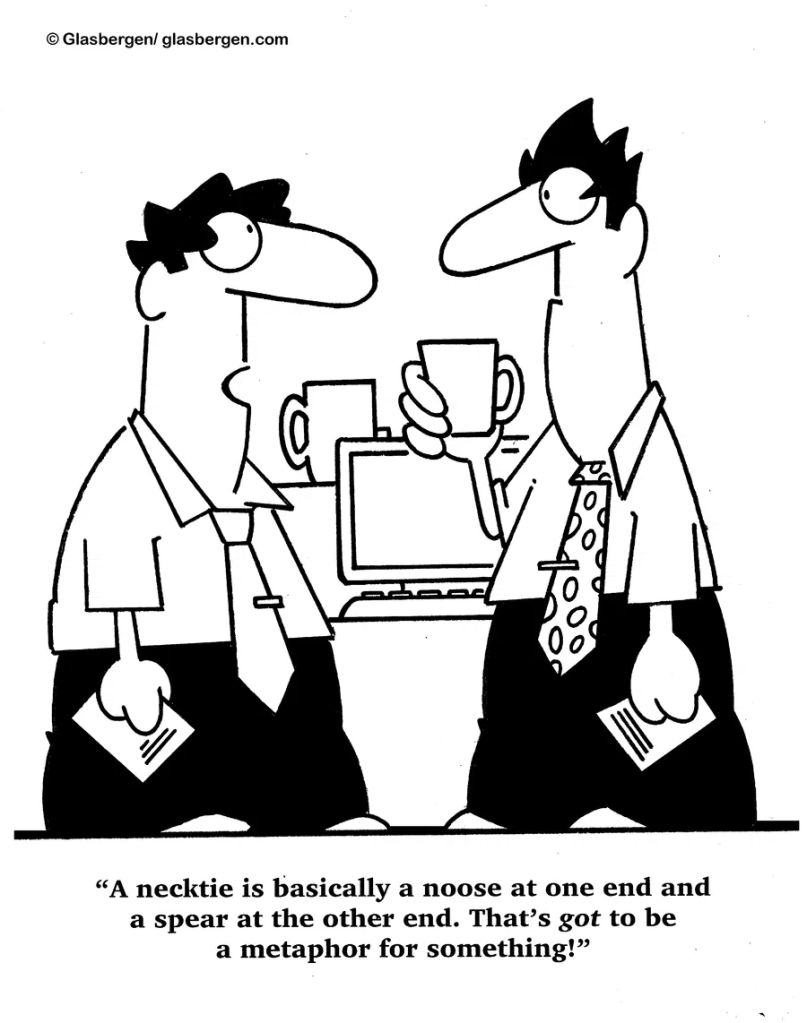
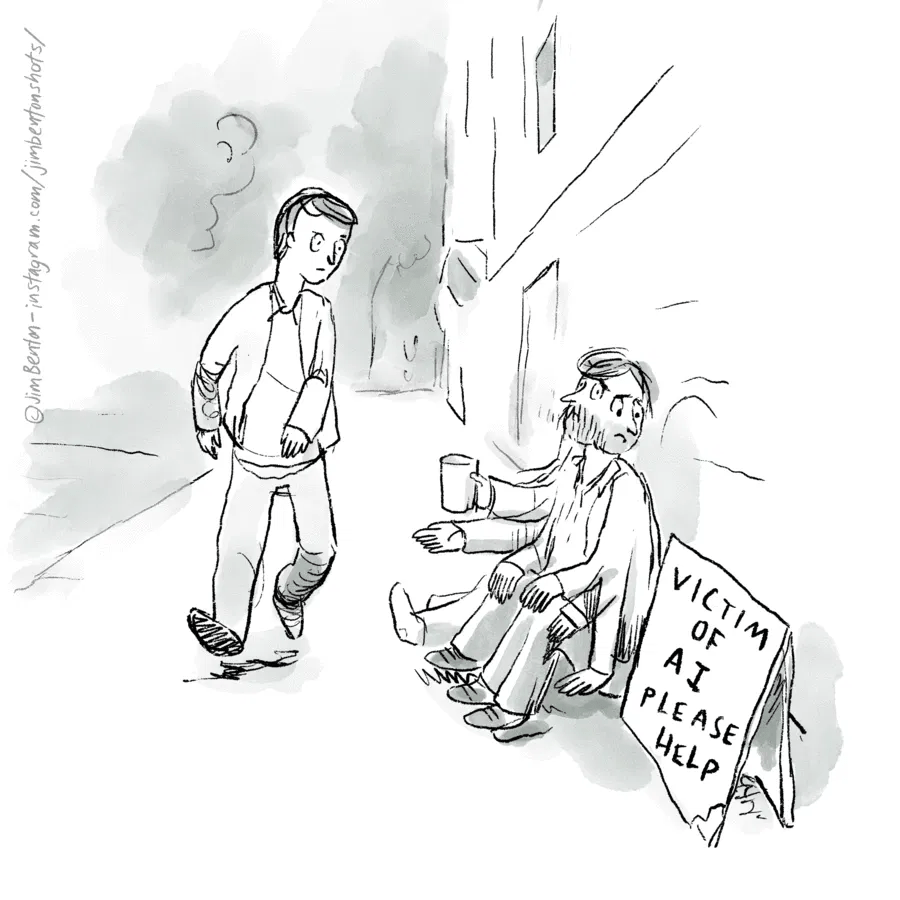
Not so much an LOL, as food for thought.
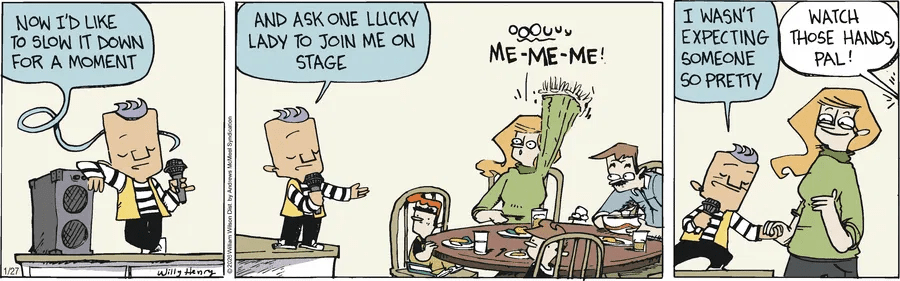
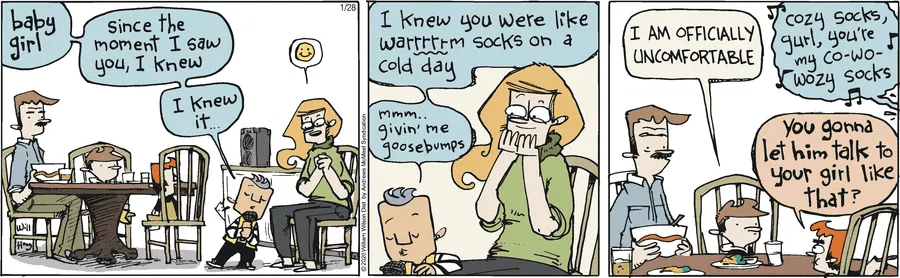
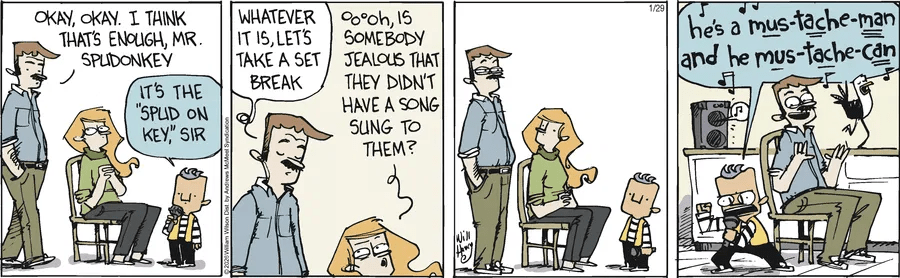
Usual John sends part of this series: “In this series, Spud is performing for the Maclellans at breakfast.”
Spud, a neighborhood friend of Wallace, is breaking out of his usual shyness.
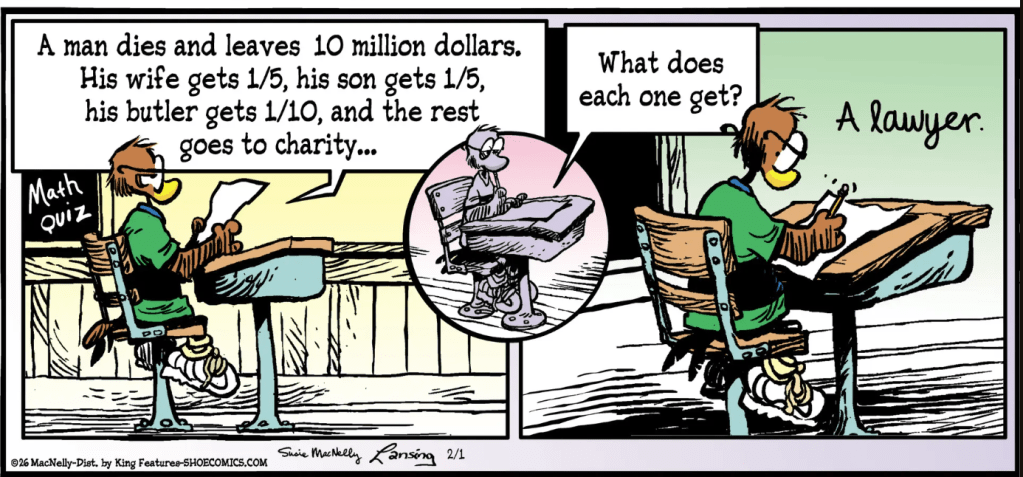

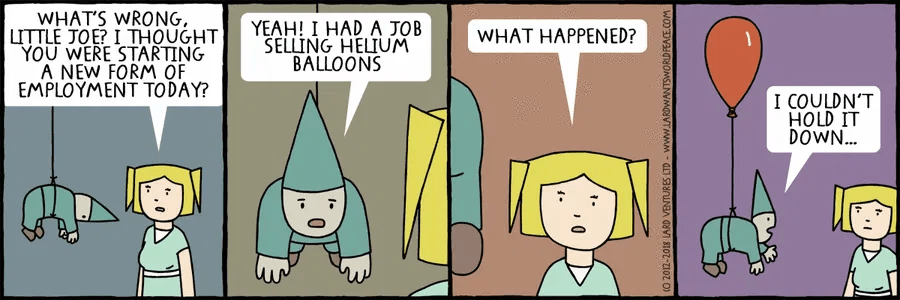
Boise Ed sends this in: “I couldn’t pass up submitting this as an “oy.” It’s right there in the punch line.”

An OY by definition.
(Would Apple TV be an OY by high definition?)
Mitch4 sends this in: “Yes, this pun also tickled my funny bone! (And is even a trifle topical, for the “returning to the office” news theme.)”
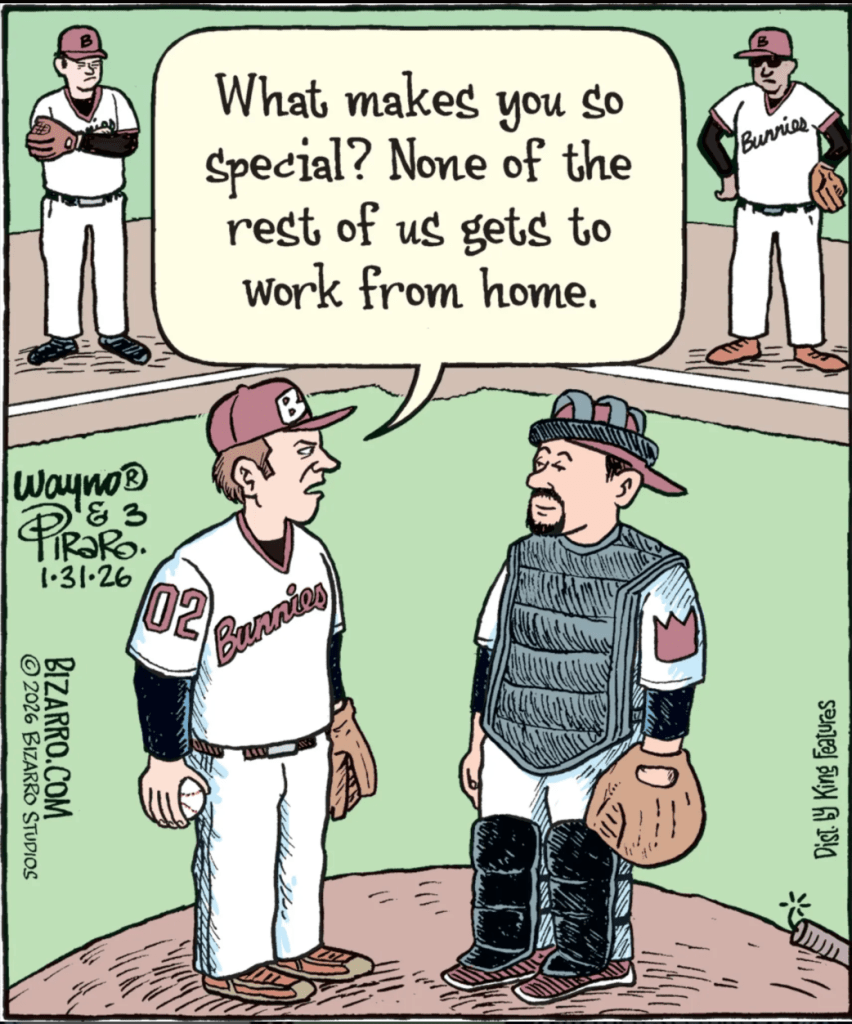
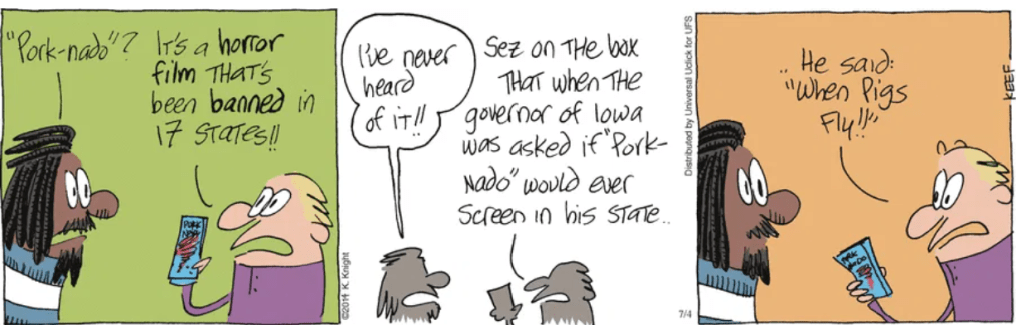
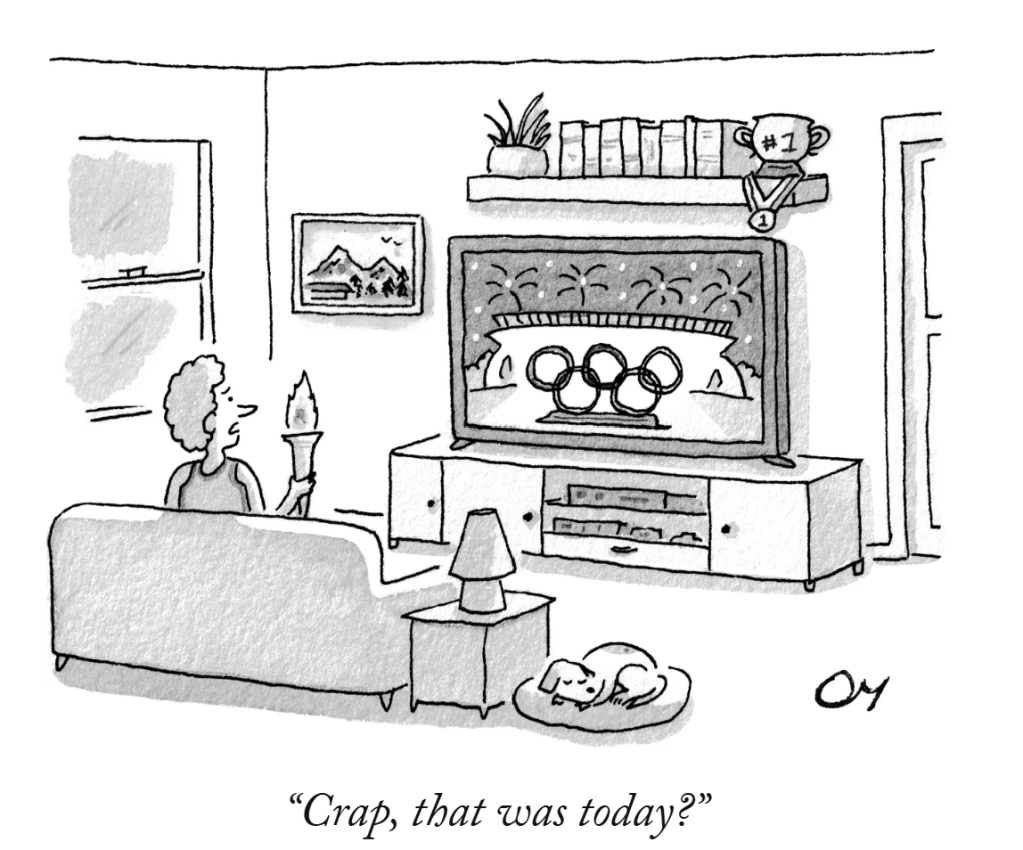
A nod to the Winter Olympics:
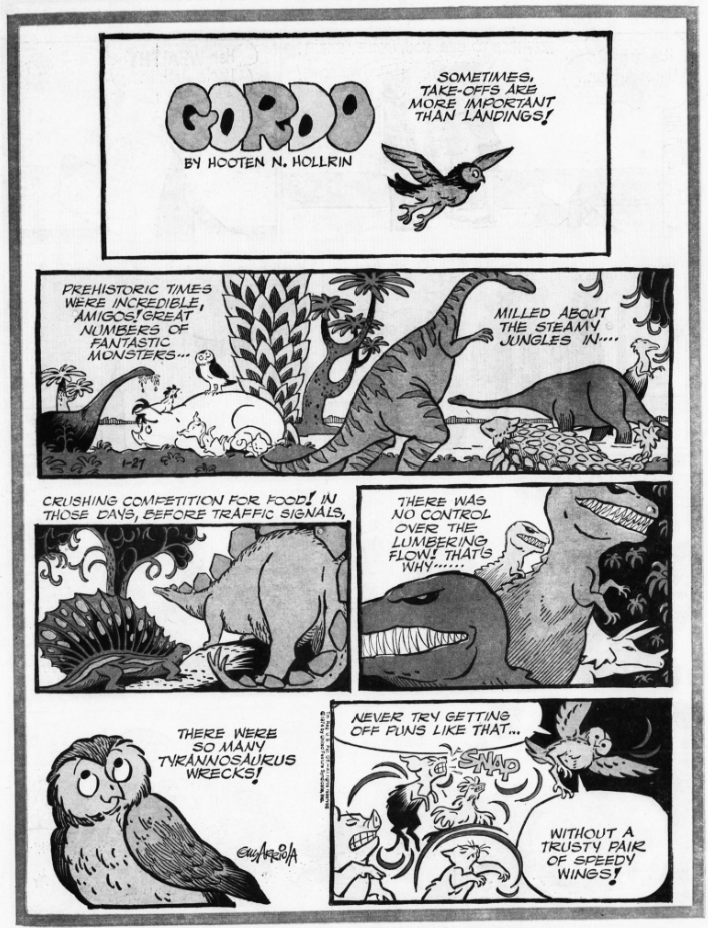
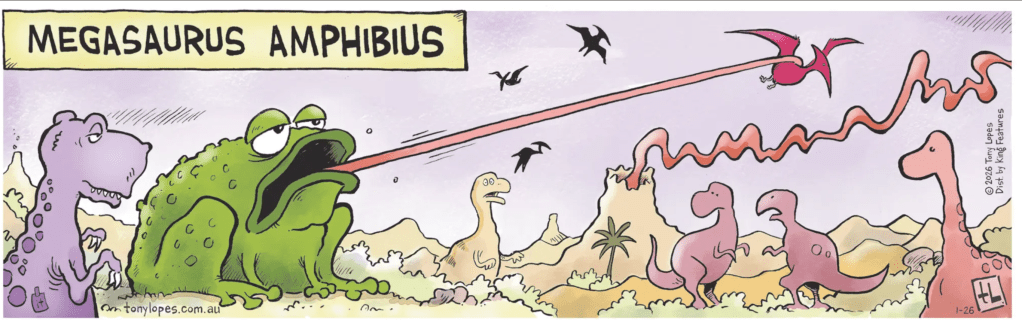
These must have been the frogs used to fill out that Jurassic Park DNA.
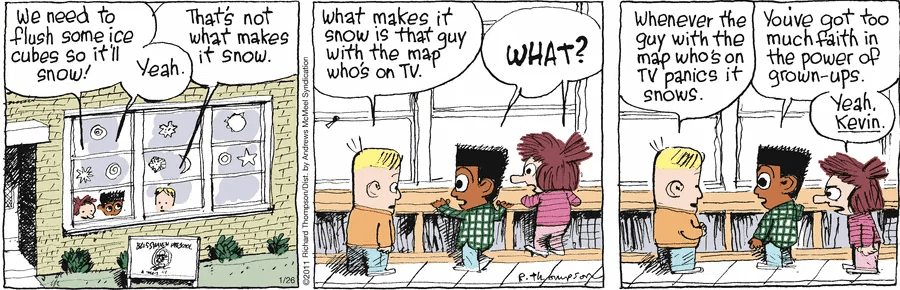
Post hoc, ergo propter hoc.
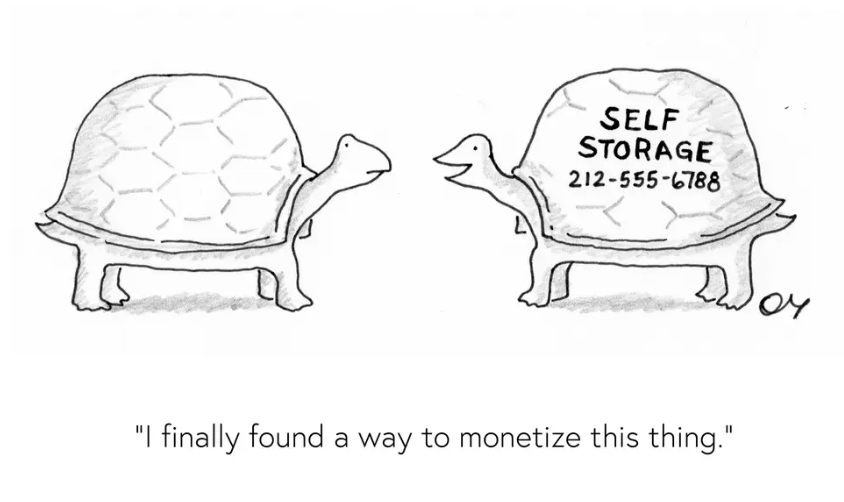
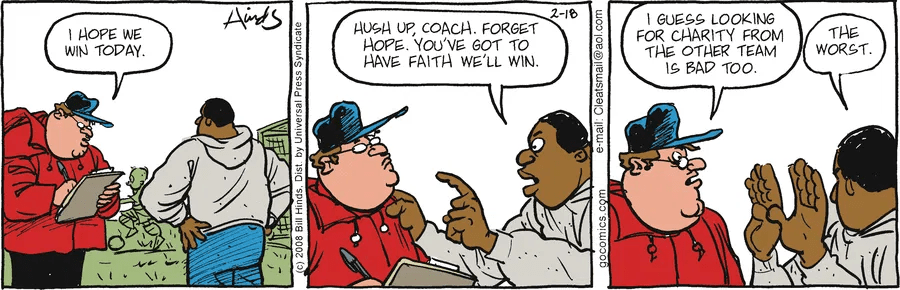
The three theological virtues.
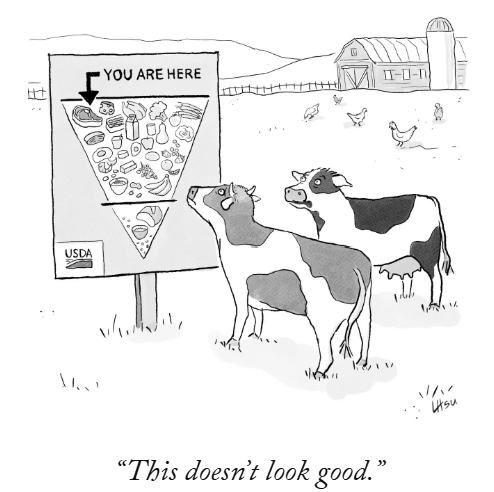
It’s February 1st, whether we like it or not.
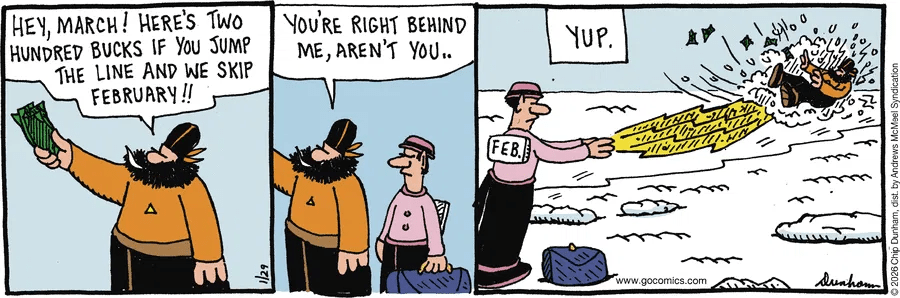
Lady Poste sends this winner for a Saturday OY!
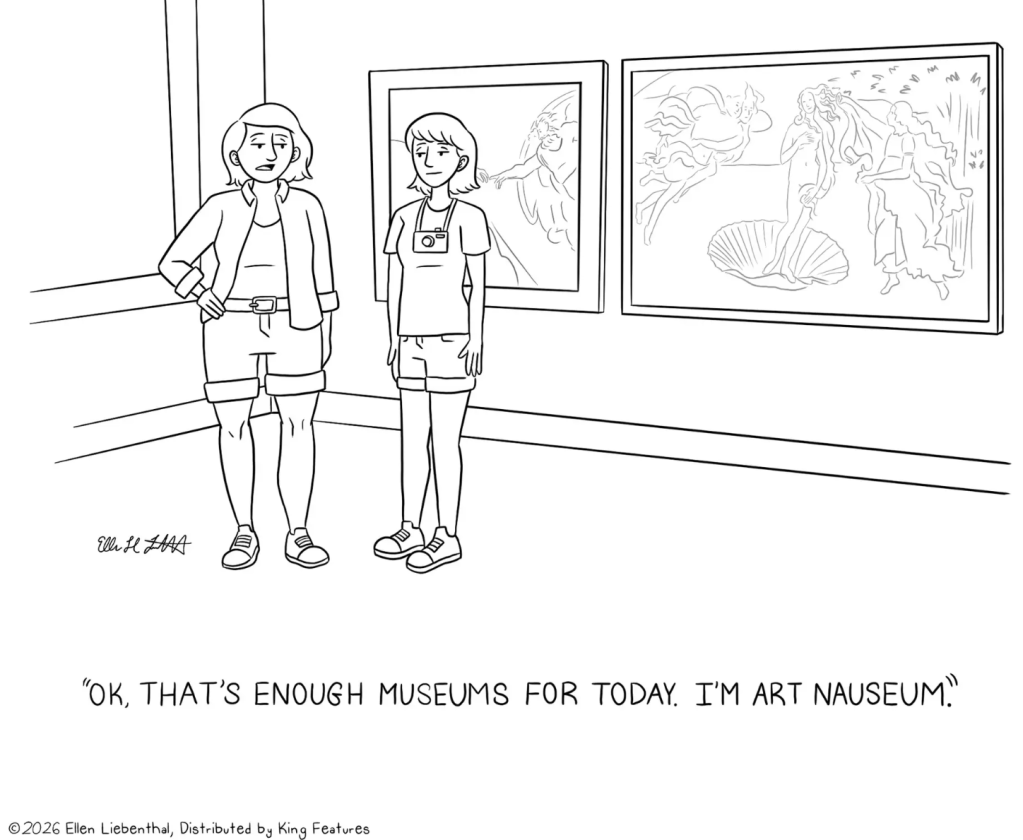
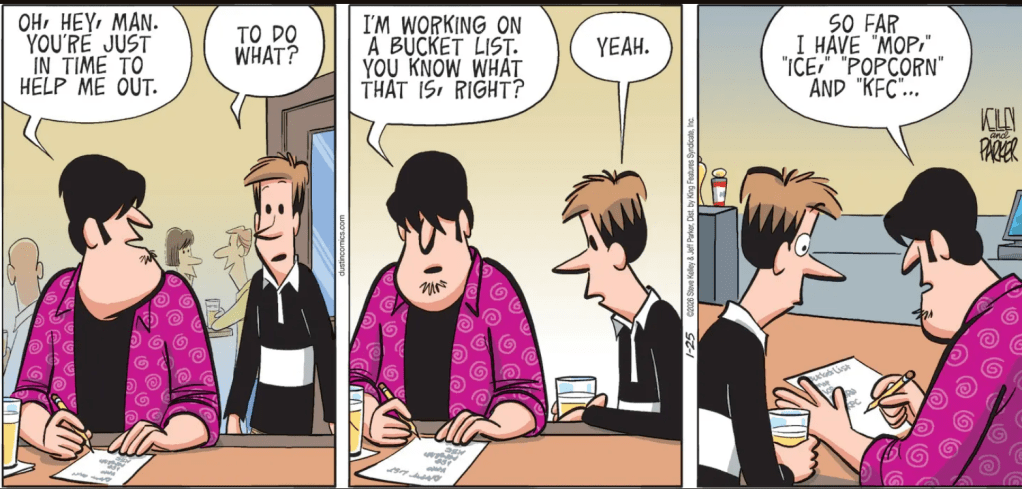
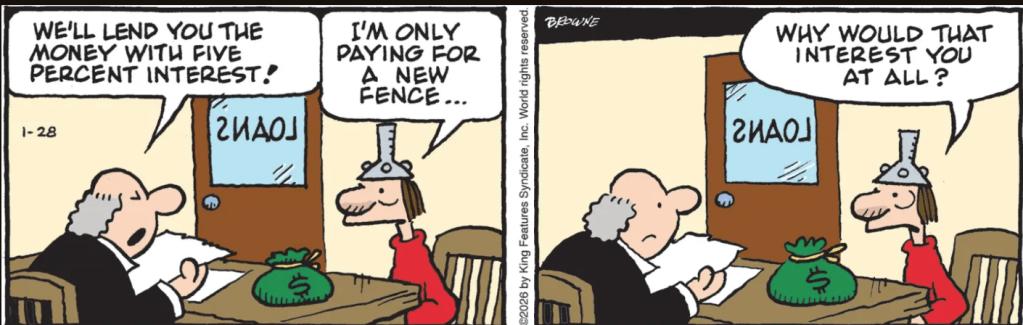
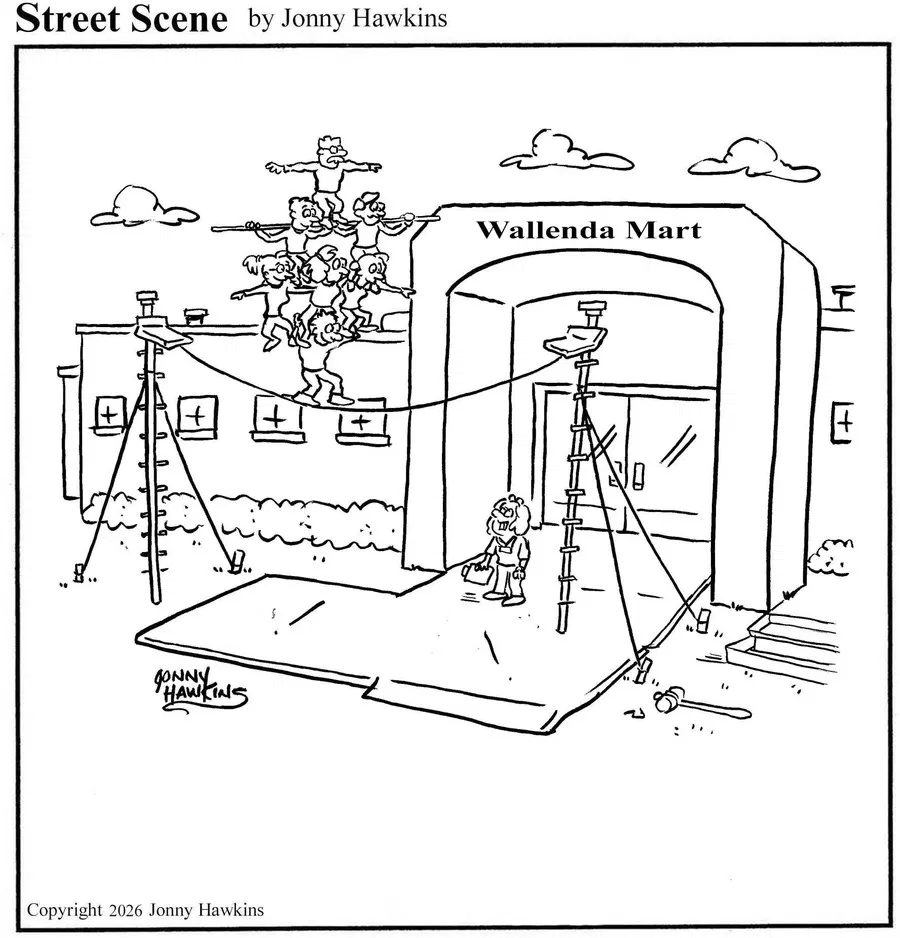
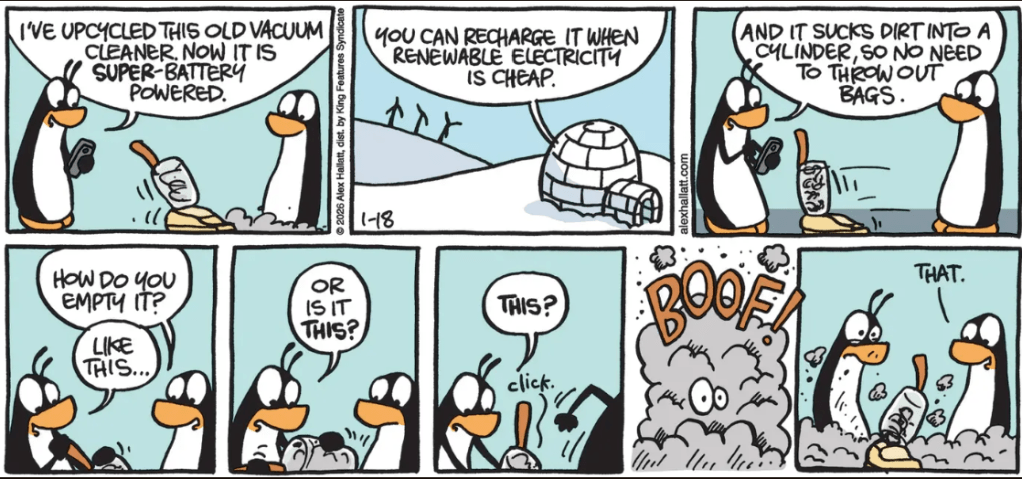
Mitch4 sends this in: “Not genuinely funny enough for LOL, but it was an “oh yeah, exactly that has happened to me!”. Mine was not a refurb but a brand new vacuum. After a few weeks I thought the cylinder looked full, and while trying to find the “detach to empty” latch I pressed the “open the bottom lid in place” button instead, and had the pile of refuse on my floor.”
Mitch4 sends this in:

And on a similar theme:
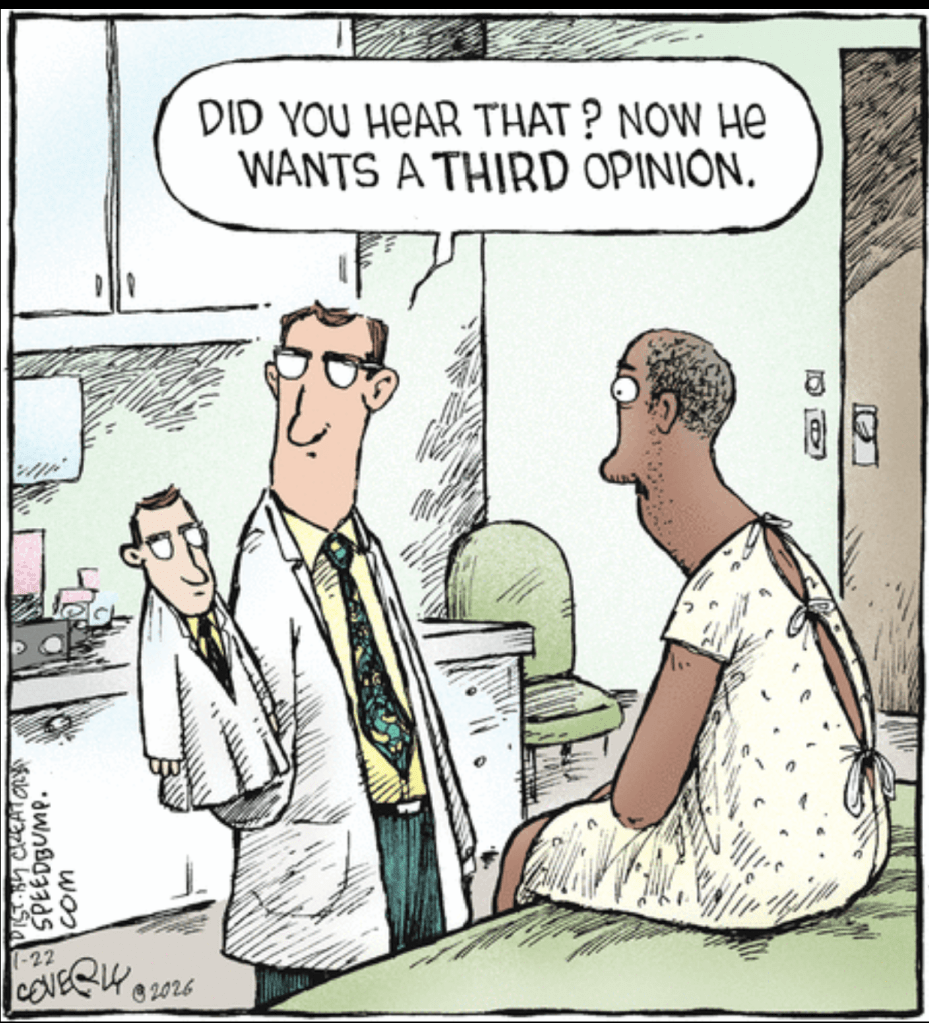

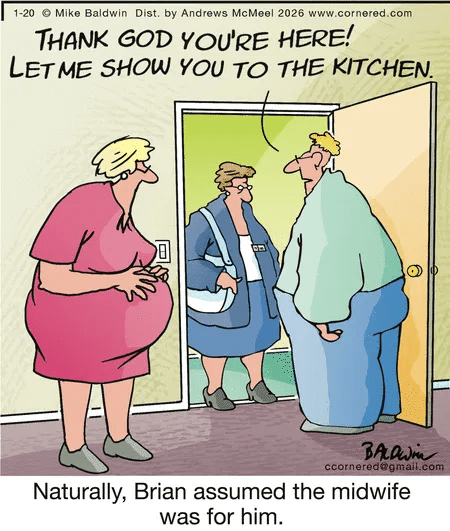

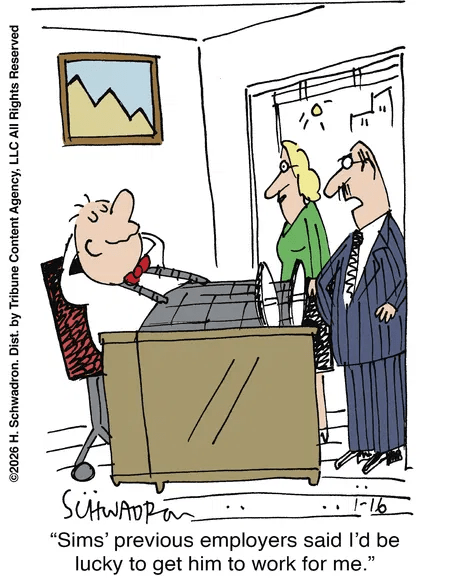
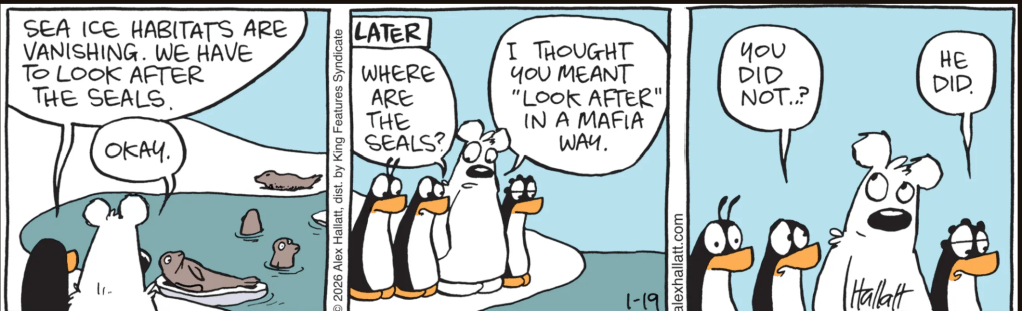
Mitch4 sends this in as an “attempted OY – I’m not sure “look after” supports both meanings well. Perhaps “take care of” would be more what the capo would say.”.
 Comics I Don't Understand