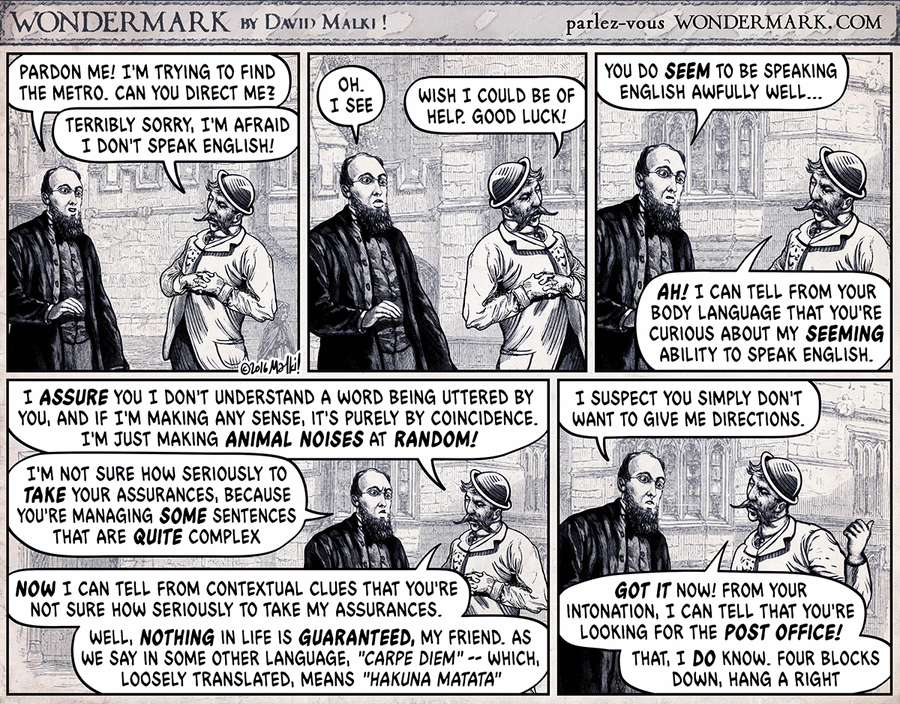
Think of this as a followup to our thread from last December about Searle’s Chinese Room problem. However, the cartoon there came from the Daily Nous site, where everything is supposed to be philosophy (or usually institutional news); this one graced the pages of GoComics.
How lucky that the randomly-generated sounds coming from Man2 actually constituted correct directions to the Post Office!
But how unlucky, as Man1 actually wanted to go to the metro!
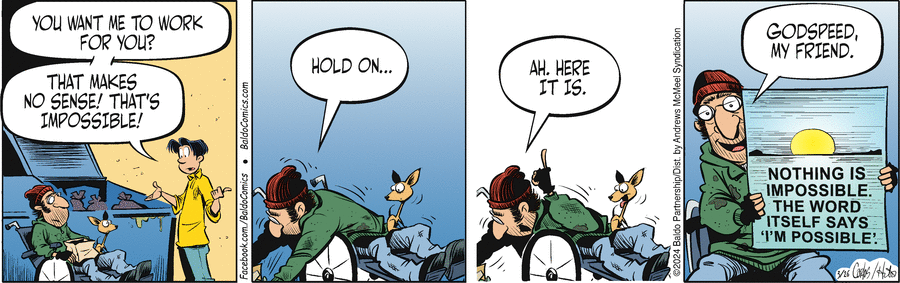
Let’s revisit a topic we’ve seen in different lights at different times: How the English and Spanish versions of Baldo may differ in how a joke works.
Here the joke comes off okay in English, as based in written language (or anyhow spelling). The specifics won’t work in Spanish, so they settle for a less striking point.
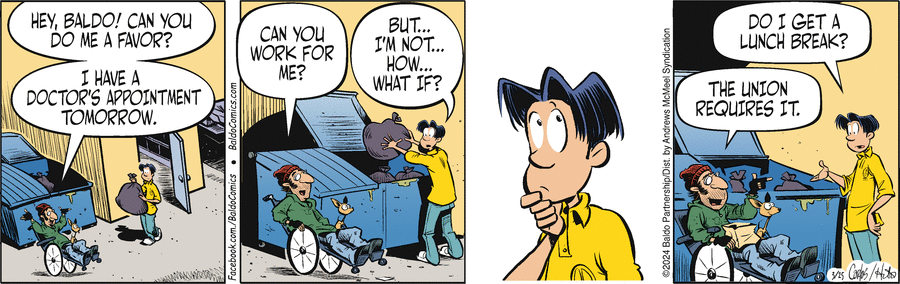
P.S. The previous day’s comic clarifies that “work for me” probably means more like “as a substitute” than like “as an employee”.
I recall a memoirish article by someone who had been a simultaneous-translation officer at the UN. They recounted most proudly the occasion when they were doing the key Russian-to-English translation for a top Soviet official, who made a point using a very familiar (to Russians) quoted phrase from Pushkin [I’m guessing at this memory], and our protagonist came up with a Shakespeare phrase covering much the same idea, which they substituted! On the fly! [Or maybe they saw a written text just before going on?] Gosh, I hope it wasn’t That one may smile, and smile, and be a villain.
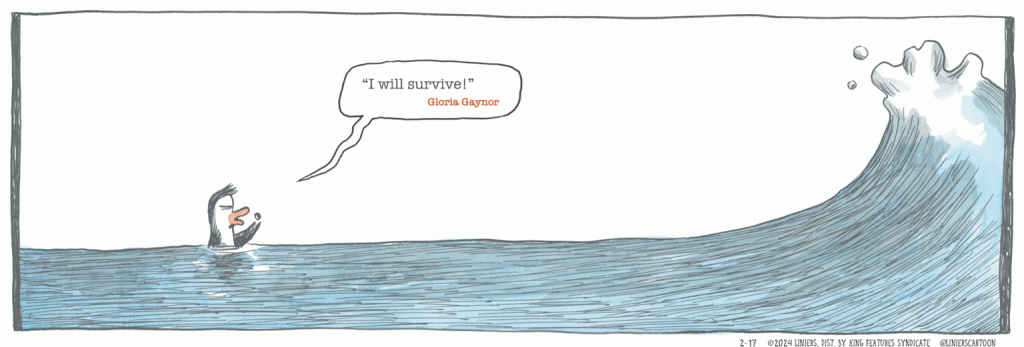
Well, whatever issues that sort of thing may present for literalist fans, there is no problem if an artist or writer is doing their own translation; or, indeed, preparing versions in different languages without picking out an “original” and a “translation”. And since these paired Macanudo strips give the sources for the quotations, this is a fine thing.
Oh, and with some help from Google Translate, the Charly García line put in English could be “This is endurance”, and the Gloria Gaynor line put in Spanish could be “[Yo] Sobreviviré”.
CIDU QUEUE REMINDER
As always — but it needs saying explicitly again now and then — we like to think of this as a reader-participation site, and not just for your invaluable (or anyhow amusing) comments, but for suggestions of comics to run and discuss.
Please share your specific suggestions of panels or strips, in CIDU, LOL, and OY categories, either by direct email to
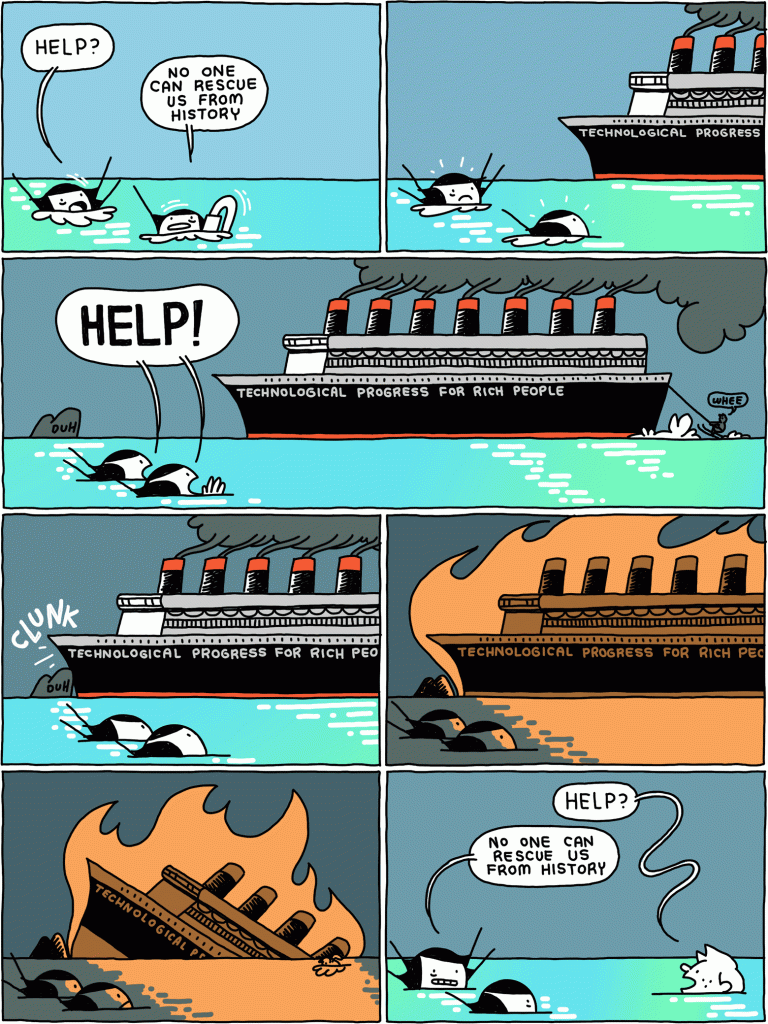
the lower one of this pair arrived in the mail and made me say, first, “Huh? What? IDU!” — but then “Maybe this is from an arc and the context will help”. The immediately previous comic did seem to go with today’s, and is printed below, as the upper of the pair. (The Girls are drowning in “history”, so maybe the recent mini-thread on time-travel — discussed here — would also fit as relevant, but it didn’t seem a strong case.)
Well, these do seem linked but different. What can provide a rescue from history? Technology maybe? No, says the top entry. Then maybe philosophy? Dopes the lower entry also say No to that suggestion? Or does it offer some hope? And how the heck can intoning Derrida’s name as parts of other words invoke any magic?
P.S. Those with behind-the-scenes interest can take a look at this excerpt from the tree of categories:
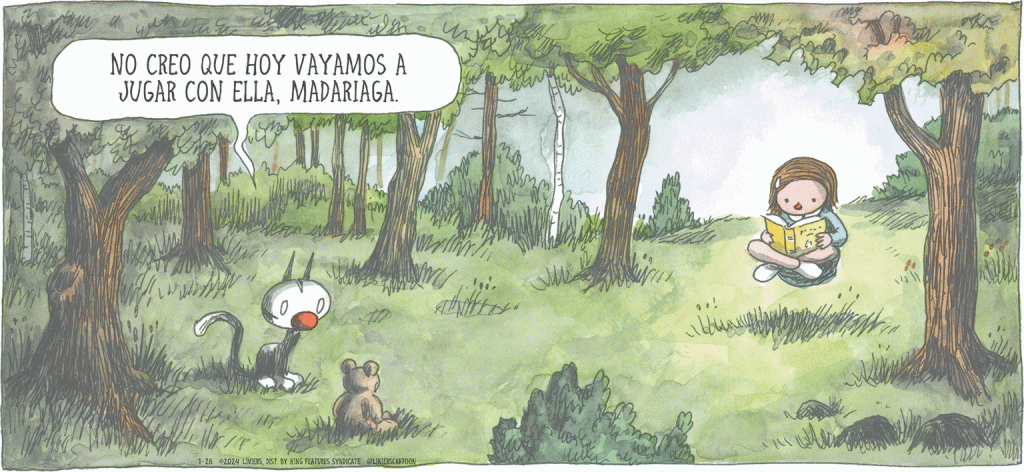
Basque: habitational name from any of various places in Gipuzkoa province named Madariaga from Basque madari ‘pear tree’ + the locative suffix -aga ‘place or group of’. Compare Madriaga and Maradiaga .
Source: Dictionary of American Family Names 2nd edition, 2022
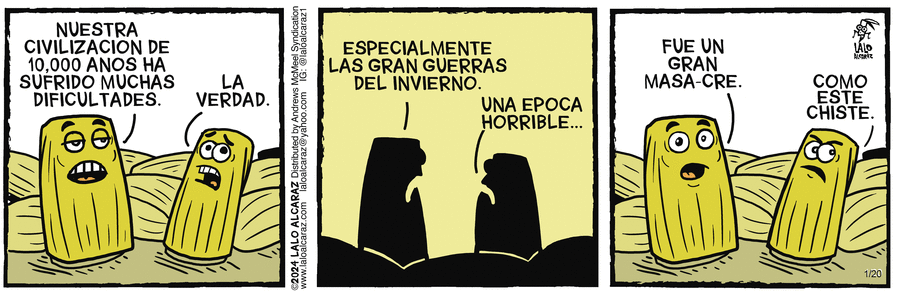
Very considerate of the English captioning to inform us these are tamales, which is not mentioned in the Spanish, and may not have been that obvious. In panel 2, invierno means winter, but I’m glad to learn that it might be a way Spanish speakers refer to what Anglophone North America calls “the holidays” or “the holiday period”.
But the crux of the puzzlement is in the final panel. We have the material for a pun, in partial split meanings: masa by itself can mean dough, and masacre written solid would be the obvious massacre, or as Google Translate for some reason prefers, slaughter. But we have to ask, if there are fluent or native Spanish speakers here, does this work for you as a joke?
I thought I *knew*, as an evidence-based origins account and “official” answer, that the term flack for a public relations officer was closely tied to flak “anti-aircraft fire” — via the intermediate occupational descriptive term flak-catcher for their role in deflecting or absorbing abuse and accusation. And that this was popularized in Tom Wolfe’s essay title “Maumauing the Flack Catchers”. (His flak-catchers were local bureaucrats rather than p.r. agents but the idea was closely related.)
But I wanted to check with something besides my own memory, in scholarly sources or some easily-accessible online approximation thereto.
And so, how disappointing that Dictionary.com gives us a story about some guy named Flack, and no mention of flak except a link in a “words sometimes confused with flack” section.
ORIGIN OF FLACK
1935–40; said to be after Gene Flack, a movie publicity agent
Well! At least some support from Etymonline, though they also give precedence to Gene Flack, but give some skeptical considerations against him.
flack (n.)
“publicity or press agent,” in Variety headlines by September 1933; sometimes said to be from name of Gene Flack, a movie agent, but influenced later by flak. There was a Gene Flack who was an advertising executive in the U.S. during the 1940s, but he seems to have sold principally biscuits, not movies, and seems not to have been in Variety in the ’30s.
There is an excellent pun behind this, which requires just a bit of Disney to recognize. But then there is the sub-question of whether Liniers (the Macanudo creator) is coming up with it spontaneously on their own, or is making an allusion to 1960s U.S. avant-garde theater where a famous campus-set domestic melodrama of psychological cruelty used the pun as its title — as would be familiar to theater and movie fans of a certain age [geecoughzers!].
(BTW, de paso, here for completeness is the version in Spanish, which does not attempt to re-create the pun. Leaving the question, is there then any joke left at all?)











 Comics I Don't Understand