Thanks to Rob for this CIDU + Geezer panel from The Daily Drawing:
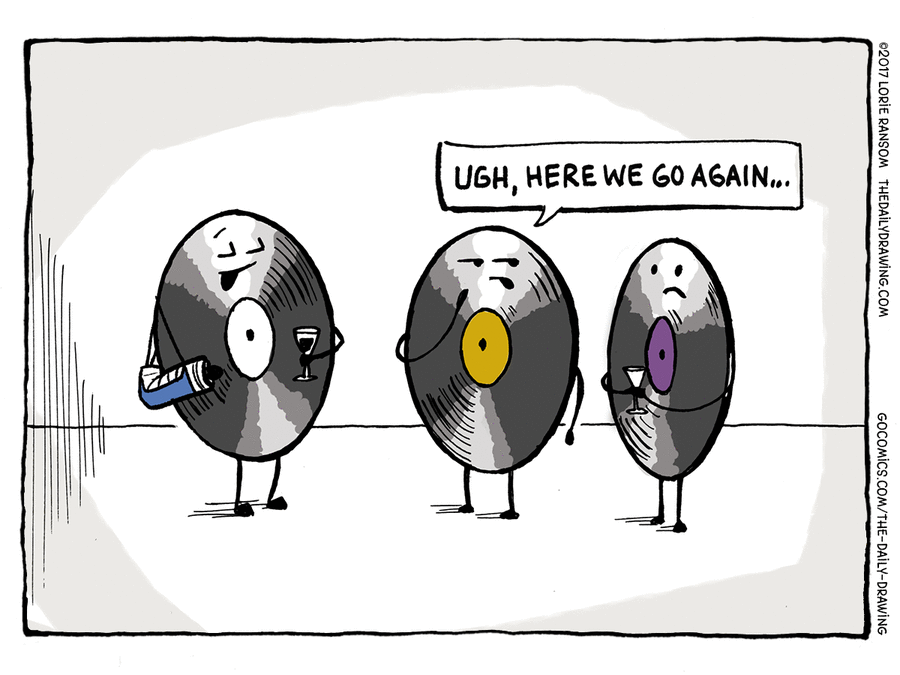
Thanks to Rob for this CIDU + Geezer panel from The Daily Drawing:
My memory was that the farm dogs were excluded from the rebellion because they were considered too close to the humans. But I just looked up a plot summary and it talks about “Napoleon’s dogs” repeatedly as enforcers.
Anyway, what had the pig just told the dog that needed this interruption?

Andréa says “We’ve had a pool for five years now, and other than kids peeing in it (which is why only dogs and adults are allowed in ours), I don’t understand this. Chlorine is MORE necessary when it’s warm and sunny . . . and yes, I remember we had some kind of discussion about kids in pools quite a while ago.”
What I even more don’t get is what the four descending inset panels are doing here at all. When are they taking place? In what way do they relate to the dialogue?

Andréa says “Unless he’s just interested in identifying bugs, I don’t get the point . . .”
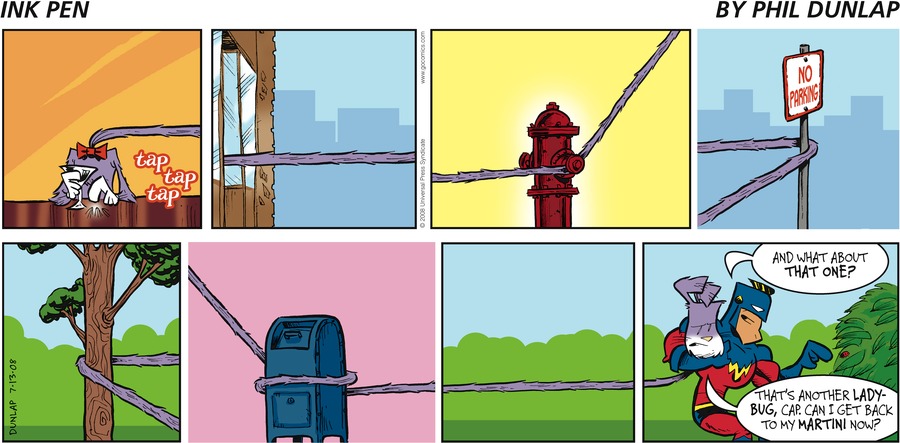
A CIDU from Ken Berkun, who saw this at The New Yorker. Can we identify the ways Harry Bliss cartoons for the magazine differently from how he cartoons for his newsletter and GoComics and associated outlets?


(The artist seems not to publicize their personal names, and work is just identified as by “Worry Lines”.)


Here’s another LOL that borders on CIDU.

And are Muppets a separate subspecies of genus “puppet”?


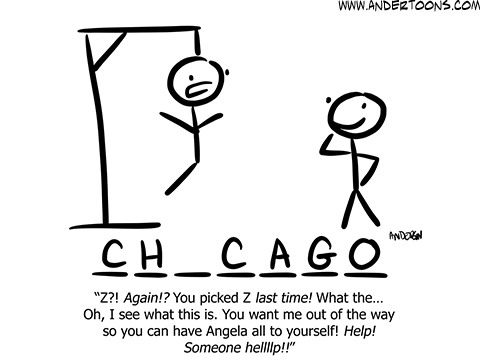
I thought local knowledge might help with this, but no joy. And what rules are they using, anyhow?
Thanks to Dana K for this Today’s Szep. The main joke is easy enough: the mere unlikely existence of this rack and these categories of card message. But what is all that ancillary action supposed to be about? Do these two know each other? Or is the woman just a judgemental bystander? Is she saying something, or just standing there with her jaw dropping?


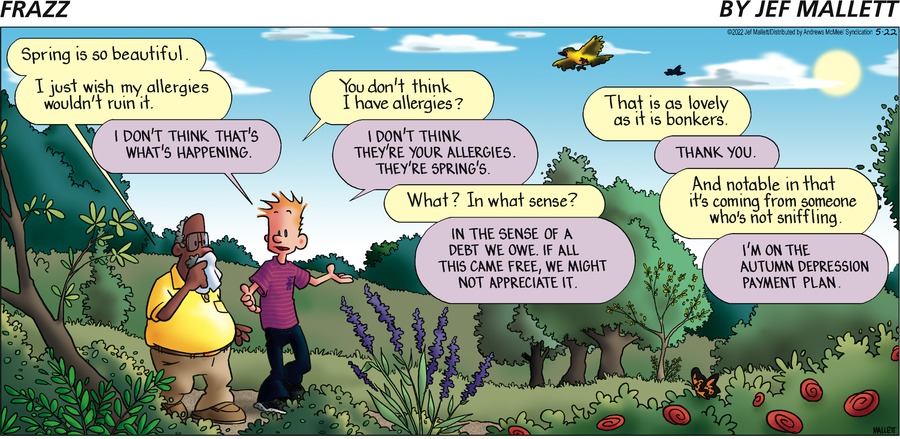
On the first hand, this seems to me an excellent job of working out a technical experiment in the art of cartooning. Color-coding the speech bubbles could represent an improvement on trying to aim the pointers with precision, or stretching them around, or finding a basis for making the comic multi-panel so the dialogue can be rearranged.
But OTOH, the content of the dialogue is miles away from being at all funny. And is not even folk-wise, in that pseudo-deep way Frazz is so fond of trying.

Kilby also presents a judgement dilemma. “When a cartoonist recycles an ancient joke (albeit with ‘improvements’), is it better (A) To admit the crime, or (B) Just pretend that nobody will notice how ancient the gag really is?”
(A)

(B)
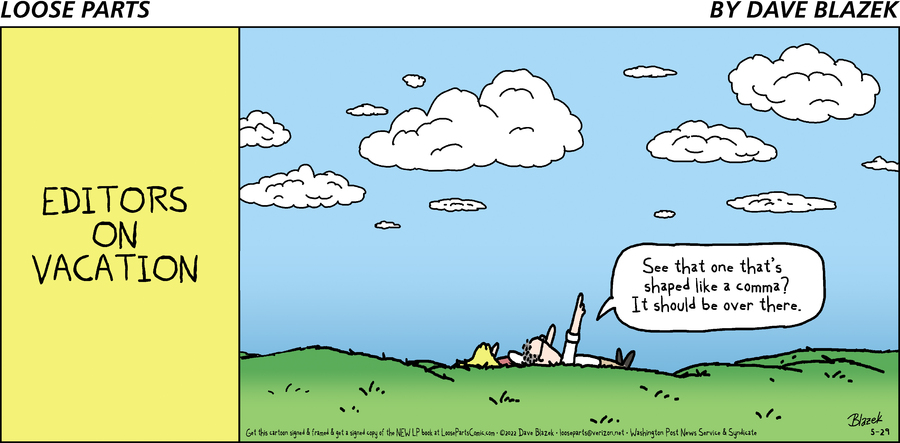
A classic case of “Oops!” from Le Vieux Lapin. Oops, I forgot to draw a cloud that looks like a comma.
 Comics I Don't Understand