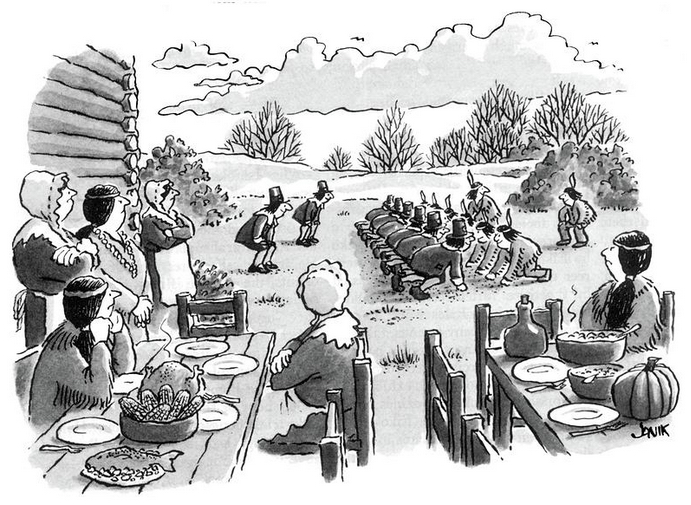
This cartoon by John Jonik was first published in the New Yorker exactly 41 years ago today, but I discovered it too late to add it to the Thanksgiving collection for 2023.
…
The headline above is modeled after a quote by Sepp Herberger, coach of the German national football soccer team: “After the game is always before the [next] game.” Of course, discussing football (of either variety) can sometimes be even more explosive than discussing politics.
Mark H. submitted this XKCD (#2858) last year; although it did get embedded in comments (such as in the No-Politics Zone), it’s still worth a repeat in a post:

…
P.S. The “mouseover” or “title” text reads: “An occasional source of mild Thanksgiving tension in my family is that my mother is a die-hard fan of The Core (2003), and various family members sometimes have differing levels of enthusiasm for her annual tradition of watching it.“
P.P.S. The link to the HuffPost article in the second panel still works (I already typed it in, so that you don’t have to).
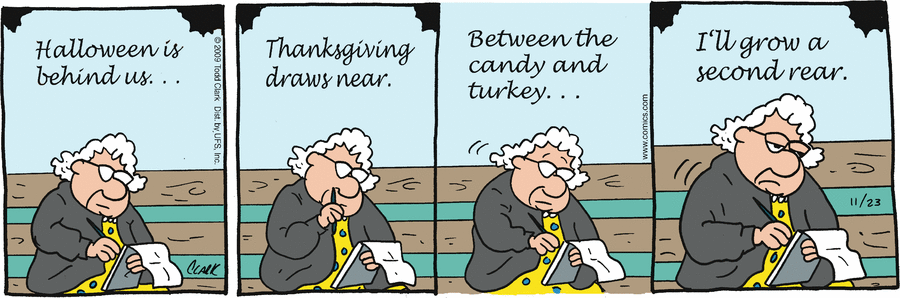
…
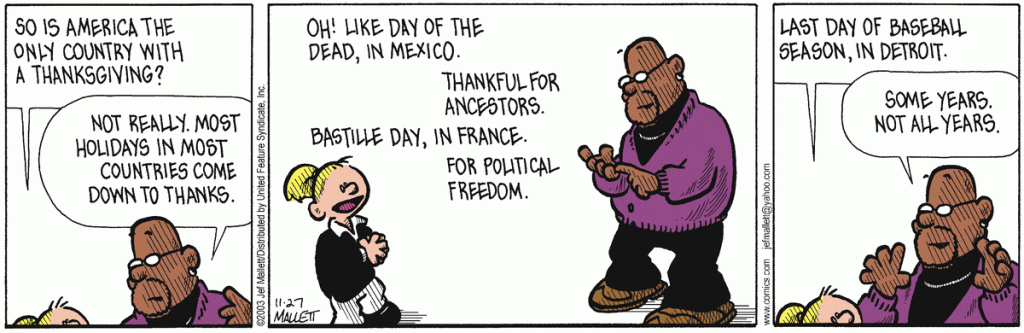
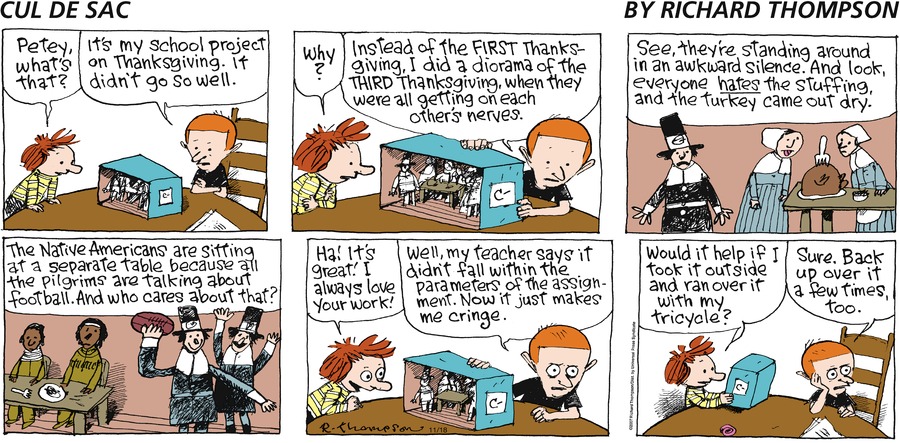
In Germany, it’s called “Erntedankfest” (literally: “harvest thanks festival”), and is celebrated on the first Sunday in October, but it is primarily an event for the liturgical calendar (both Catholic and Protestant), and is not (generally) celebrated by families at home.

…
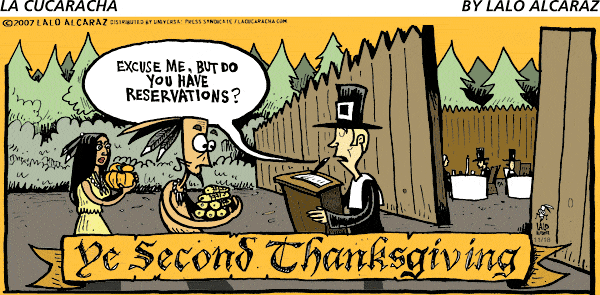
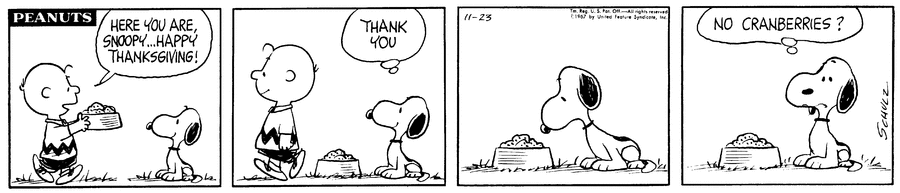
Several decades ago, my grandmother just happened to include a leftover bowl of (homemade) mac&cheese on the Thanksgiving dinner table, which resulted in some amused needling from my dad and uncle. However, both my sister and my aunt vigorously defended it, so that for many years thereafter, (fresh) mac&cheese became a standard component of my grandmother’s Thanksgiving menu.
…
The final panel reminded me of the last scene in the song “Christmas Wrapping” by the Waitresses.
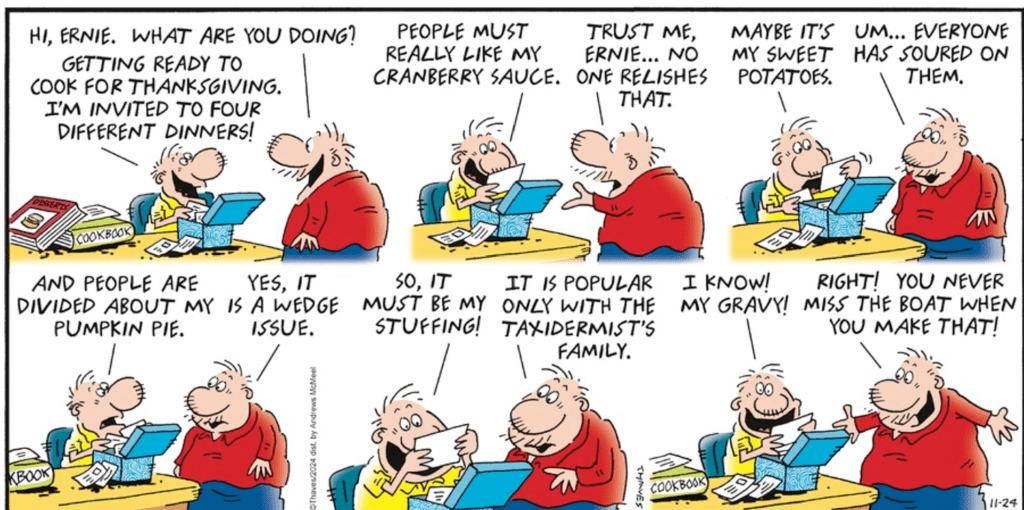
No cranberries? Frank and Ernest have suggestions:





 Comics I Don't Understand