I’m just not making some connections.
(Wednesday)

(Thursday)
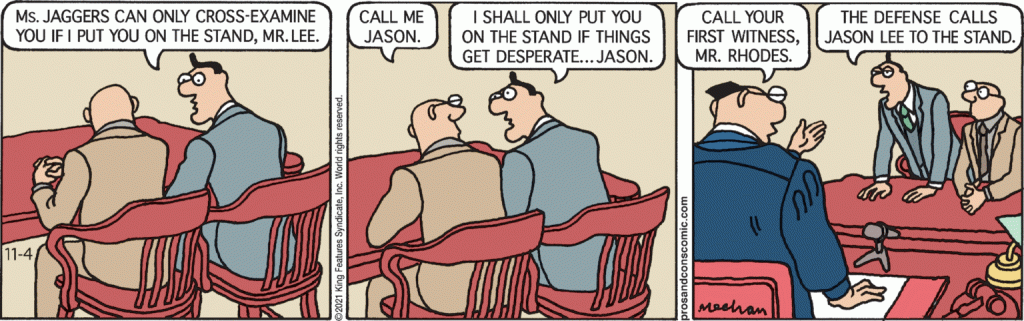
I’m just not making some connections.
(Wednesday)
(Thursday)
This Wrong Hands is almost a good Oy, playing on “usher” being both a family name and a role in a wedding. But do we make sense of the different kinds of dwelling the two people have?


This Pardon My Planet is not really wrong. But it’s not right, either.
Sent in by Max C. Webster, III, who says “I assume Old Jake is the dog, and the familiar sight is his boy, but as for the joke . . . huh?”

This one from Ken Berkun.. The zombie could have said something about “Brains!” and the scarecrow may connect to the Oz Scarecrow who felt the lack of brains. But do those line up right for a “I hear that”?

Wait up, I’m still stuck on “I hear that”. Does that somewhat less common expression offer any advantages (besides maybe shortness) over the more modern / natural sounding “Now you’re talking!” or “You said it!”?
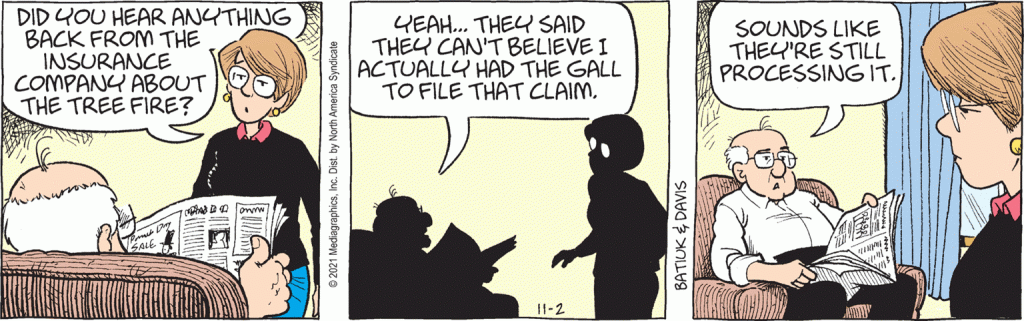
Crankshaft often uses a pun or attempted pun as the punch. Can it be that “processing” is meant to work that way here?
I guess this is meant as a critique of how some people think of the process of teaching and learning?

Frequently Lay Lines does have a definite joke and a punch line, but not always. The times when it doesn’t are often when she’s in the throes of a long continuing story; but that doesn’t seem to be the case here. So: does anybody see a distinct joke – or are we just going to enjoy the account of Carol’s history with bats?

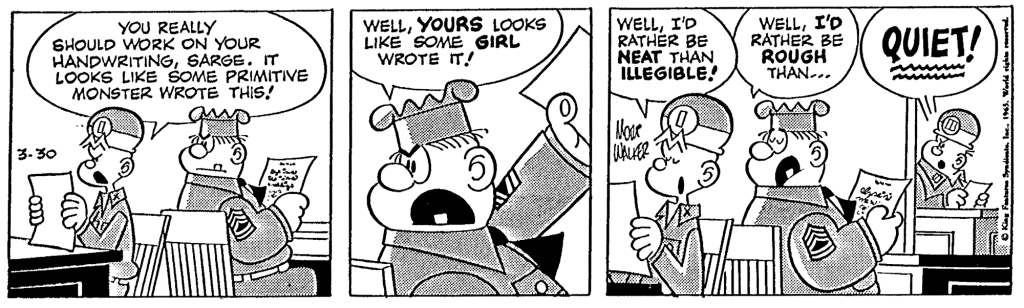
I suspect the 1965 audience was expected to read-in a gender-based insult; but probably a mild one?
P.S. This one above appeared for an Arnold Zwicky analysis shortly after its GoComics reprint.

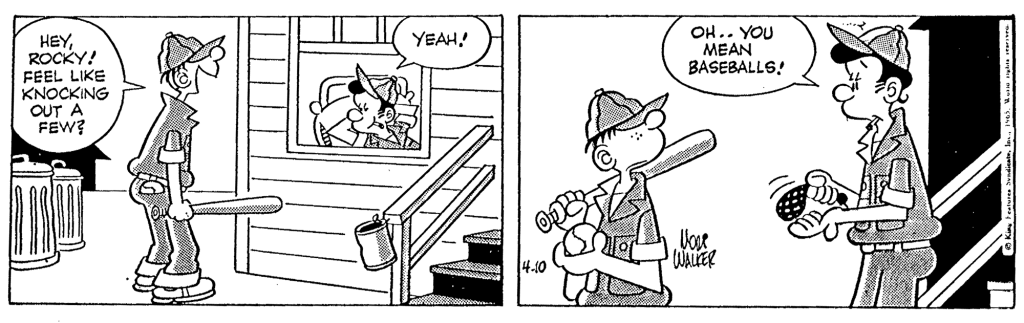
I was almost going to say the casual acceptance of violence is actually a bit shocking. But on second thought, Beetle’s reaction is not fully accepting. (Yes, we regularly see Sarge beating on Beetle, but that’s mostly about raising a ball of dust, while Rocky’s “blackjack” or “sap” strikes a more sinister air, something like underworld associations.)
… but I couldn’t say what the joke is in a narrow sense, nor if there are correspondences to a specific target. The credits for The Oldersons do a cute quick job of telling the story of how legacy strips get managed.

From Le Vieux Lapin, this is probably not an overall-CIDU: notice the classic joke structure, with setup in panel 3 (along with 5) and the payoff in the final one. But along the way there are several bits which can stand in need of explication, for different readers.
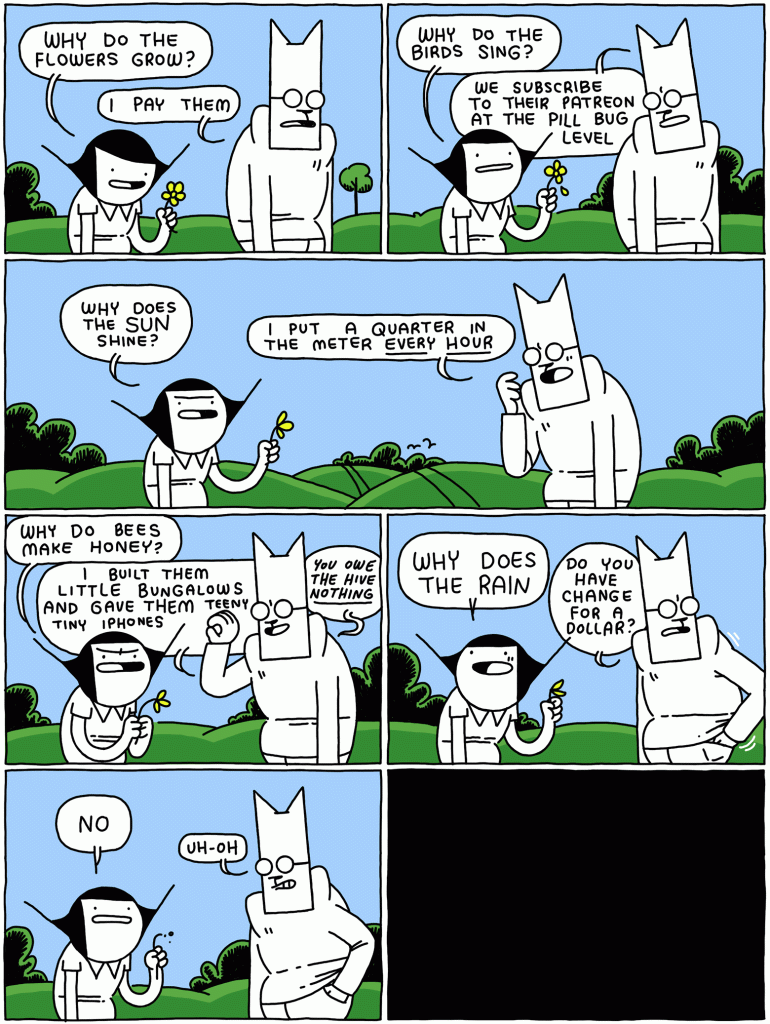
For instance, I have never run into pay-as-you-go gas meters in real life (for tenants to get heat or hot water), but sort of know about them from vintage British movies and some novels. (Though it says a quarter and not a shilling so this may be American.) Maybe somebody understands them better — is electricity paid for this way anywhere? And the Patreon structure of “levels” — is this known widely outside of Patreon users? And does the girl’s litany of questions come from anywhere else in this wording?

Help! Has there been a prominent Franken in the news? Not Al? And what does that have to do with bad math?
Okay I tried a little searching, but Franken and Math, while it does turn up a story with Al Franken, it was from 2012. https://www.washingtonpost.com/…/02/gIQAI63kqS_blog.html
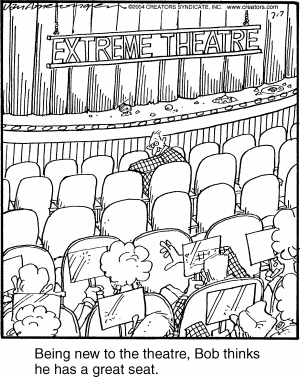
It’s certainly true that in most proscenium-style auditoriums, the first few rows are not the most coveted, for a variety of reasons but mostly related to not being able to see up and over the front of the stage, hence not really getting the stage layout or being able to see the actors when they are upstage (or the different instruments, in a musical context). See for example the Chicago Symphony Center seating charts below, with pricing strata color-coded.
But in this particular instance, is there more going on? Are the other attendees holding their program booklets, or are those some kind of splash shields? Does the “Extreme” name and the debris in front of the curtain indicate that there has been stuff flying around? So, the front row would be the most vulnerable of all?


From Boise Ed and Andréa.

So this one is the Yeti? And it lives in a Crane Game booth? And this kid is the first one to notice it there? And it knows about iPads, but mostly as distractions for kids?
 Comics I Don't Understand