July, 1931. The Great Depression is in full swing. Still over a year until the 1932 election. The New Yorker has always had a subscriber base with a richer demographic than average, but these cartoons from the 7/4/31 and 7/11/31 don’t show much awareness of the Great Depression.
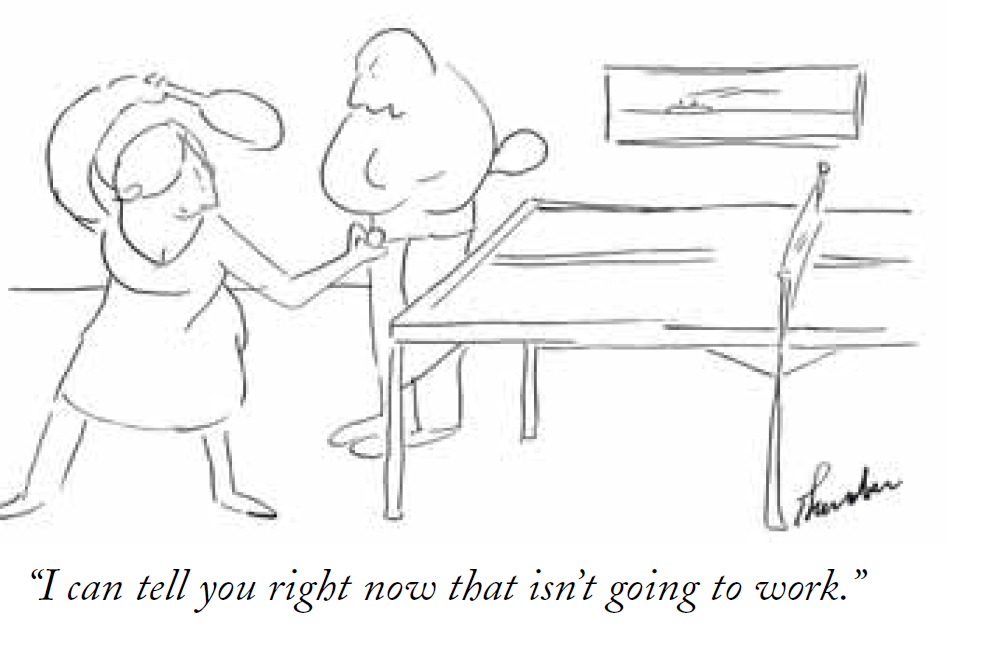
Another ping-pong related cartoon. Was there a ping-pong boom in 1931?
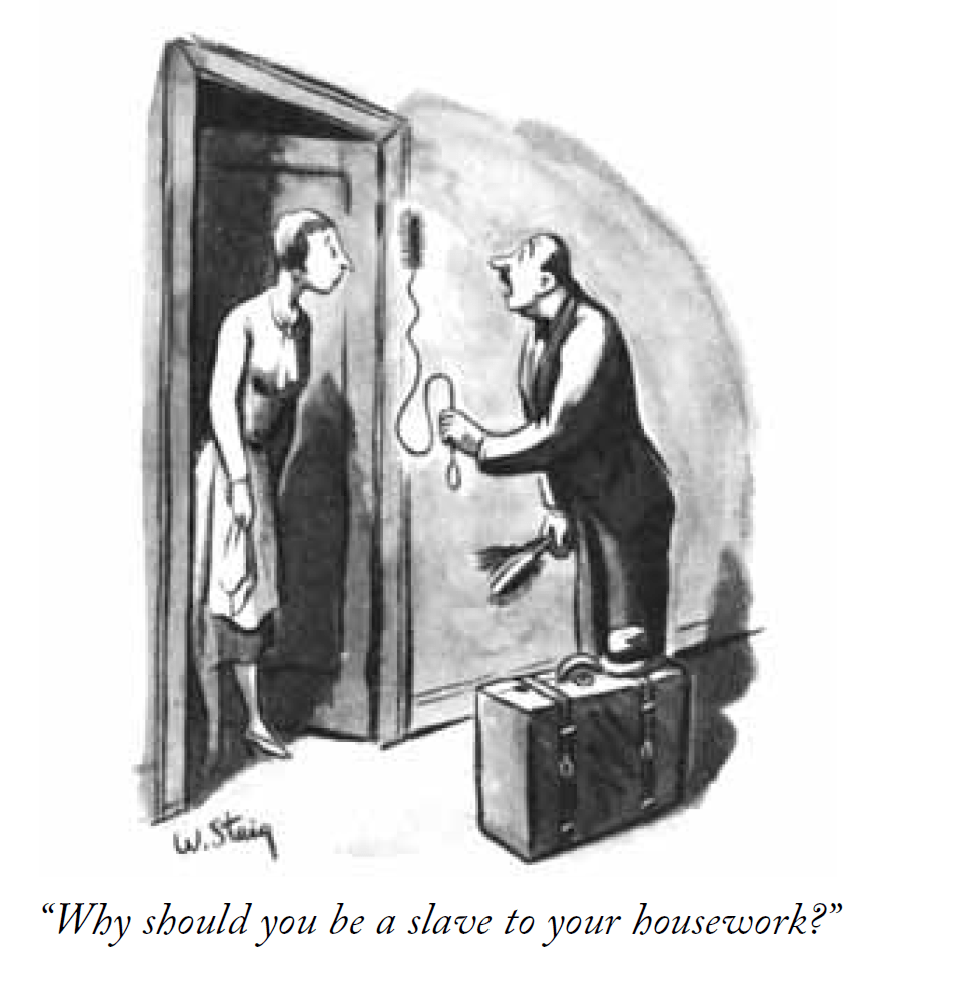
What is that device?
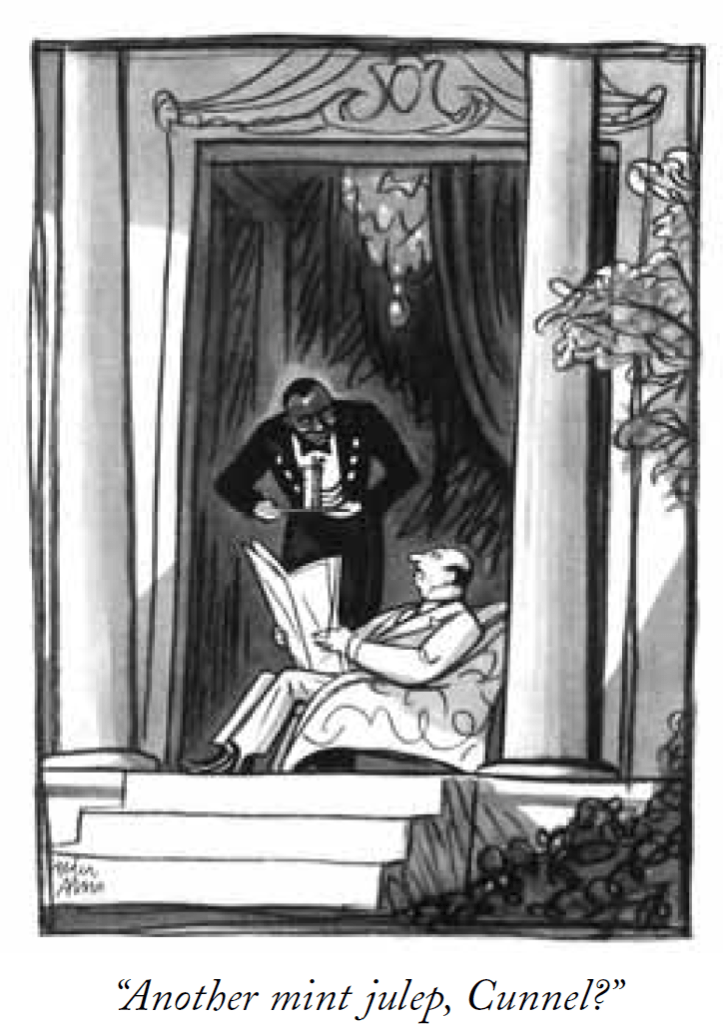
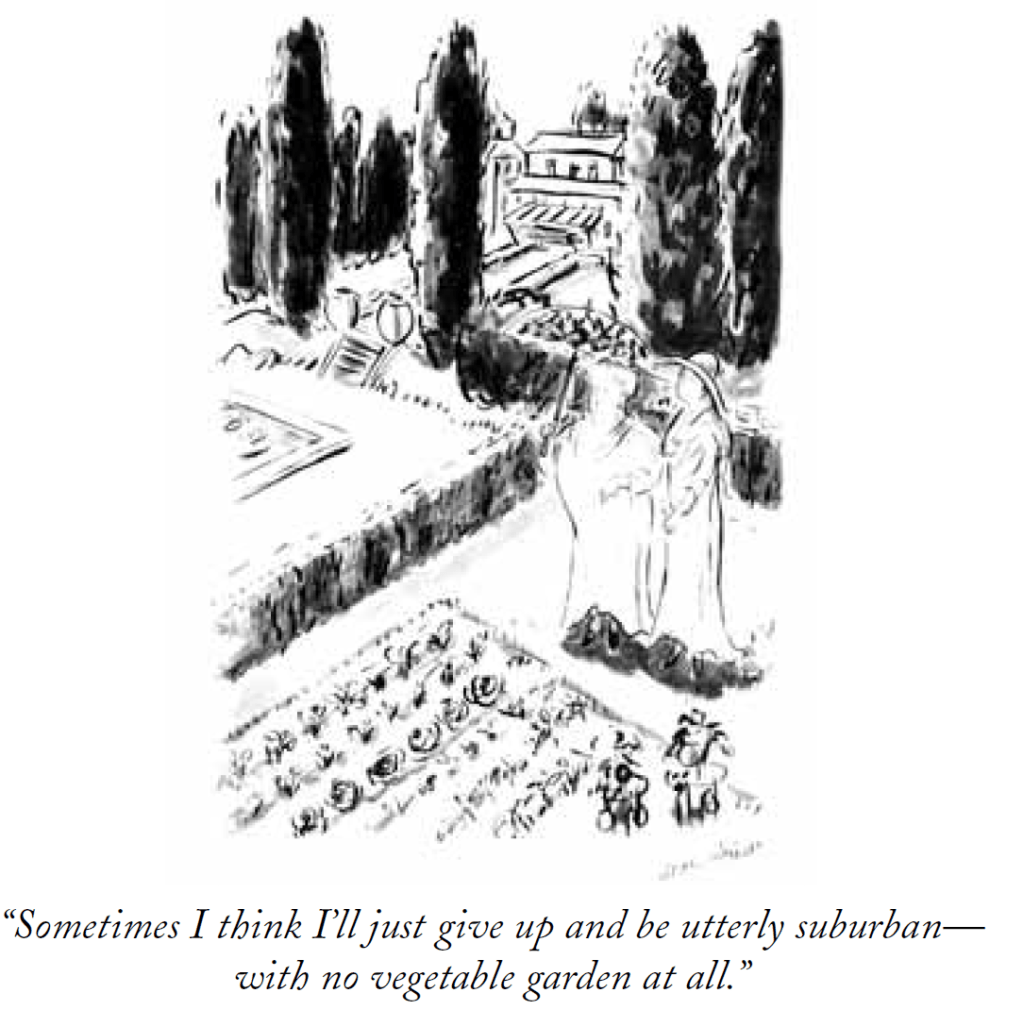


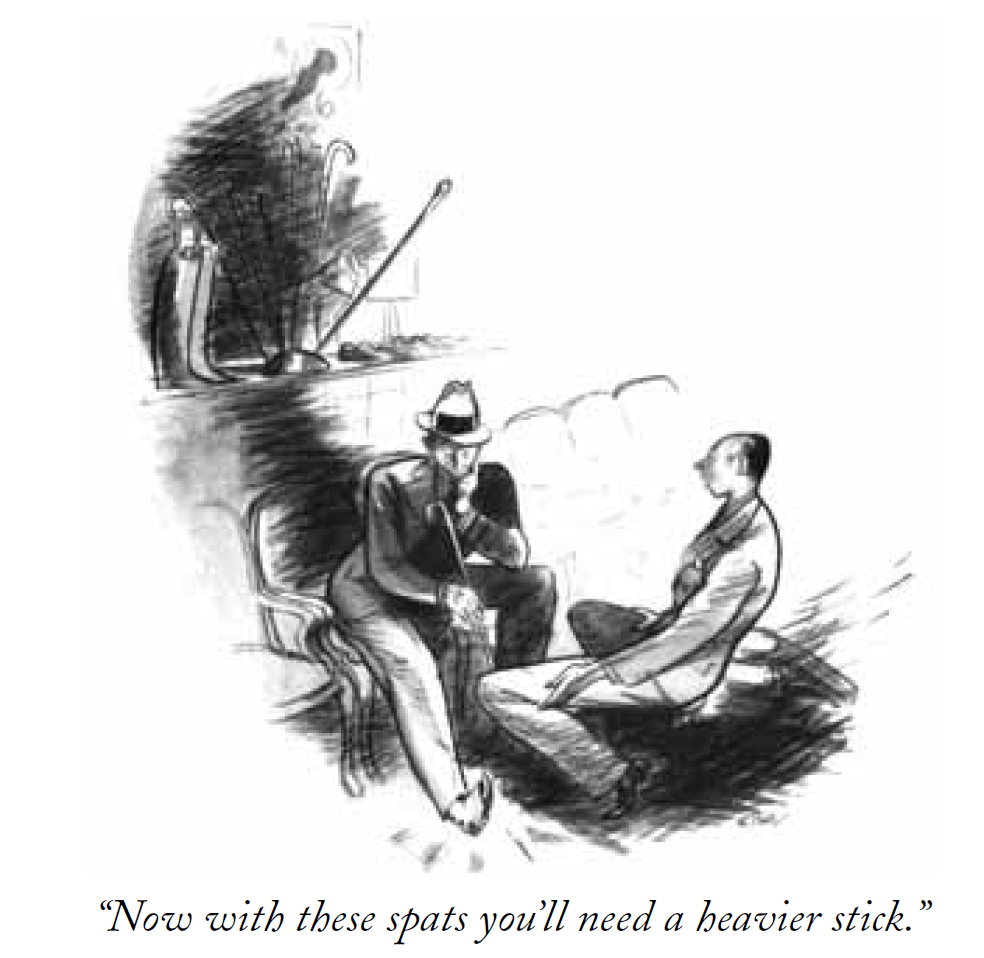
Wow. I think I understood three of those.
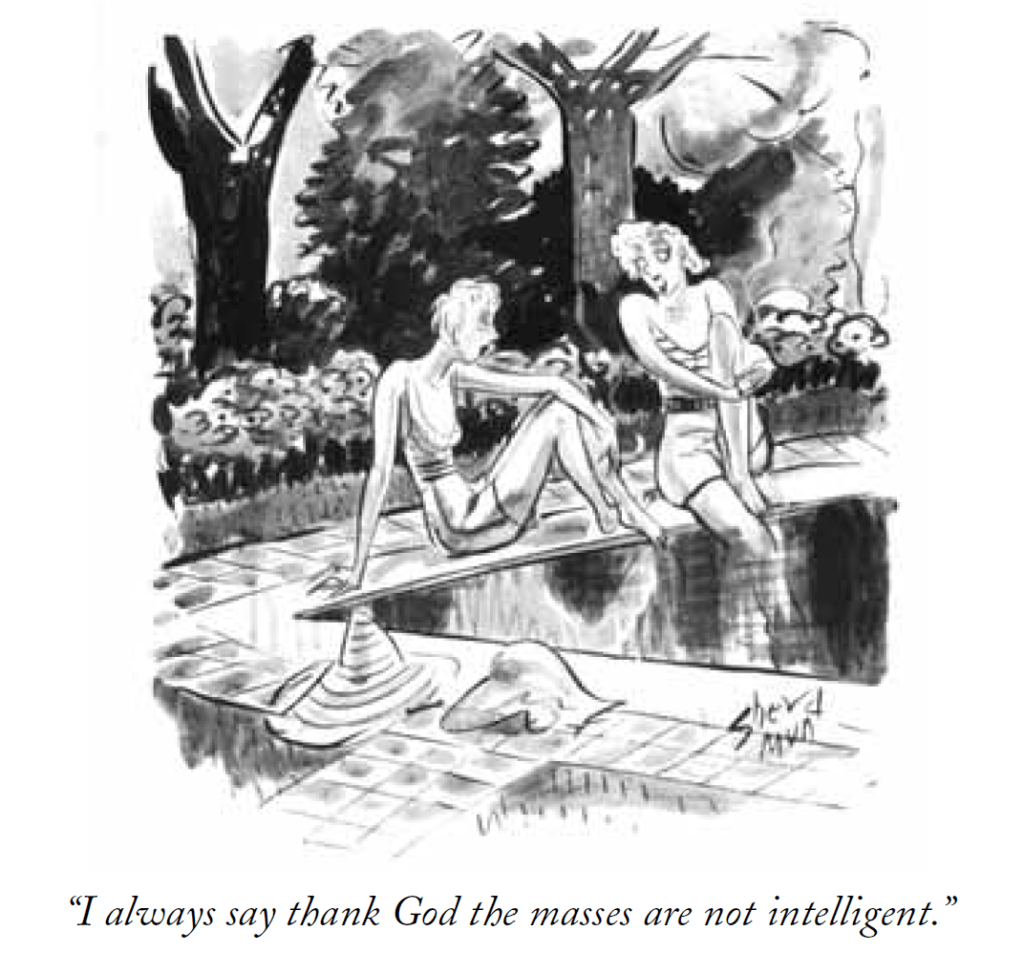
The “masses are not intelligent” one is just a riff on the terrible attitude of some of the idle rich.
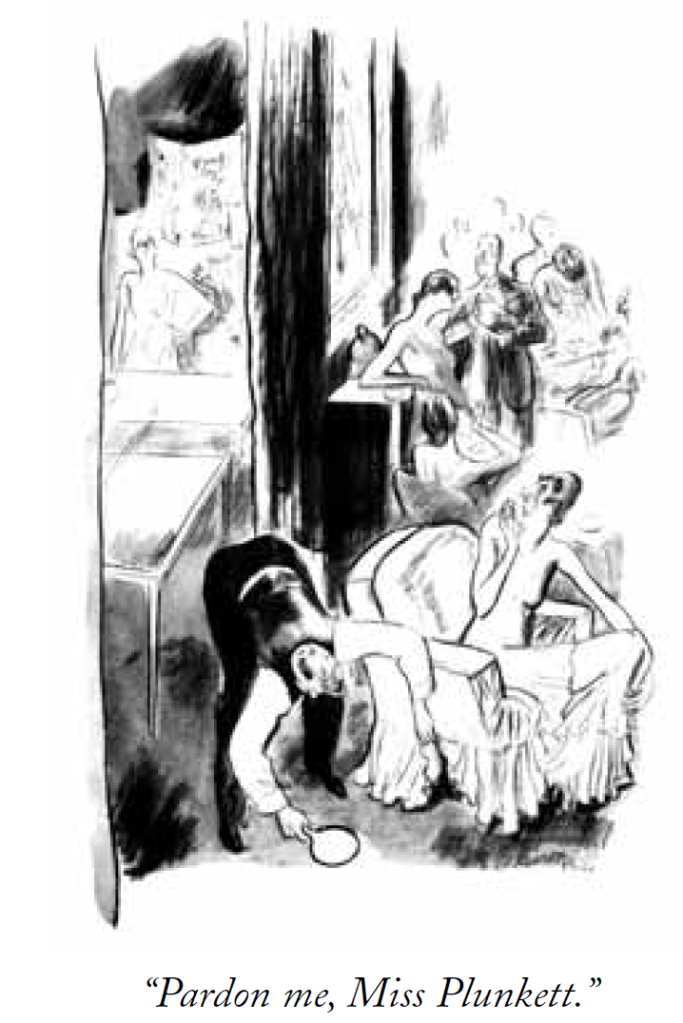
“Miss Plunkett” is upset because it looks like the table tennis player is peeking up her skirt.
“That device” is a Fisher brush, a pre-electric domestic labor-saving device, only the cartoon is mocking them by having it be over-elaborate and clearly useless.
LikeLiked by 1 person
Ping pong then, pickleball now… Plus ça change…
LikeLiked by 1 person
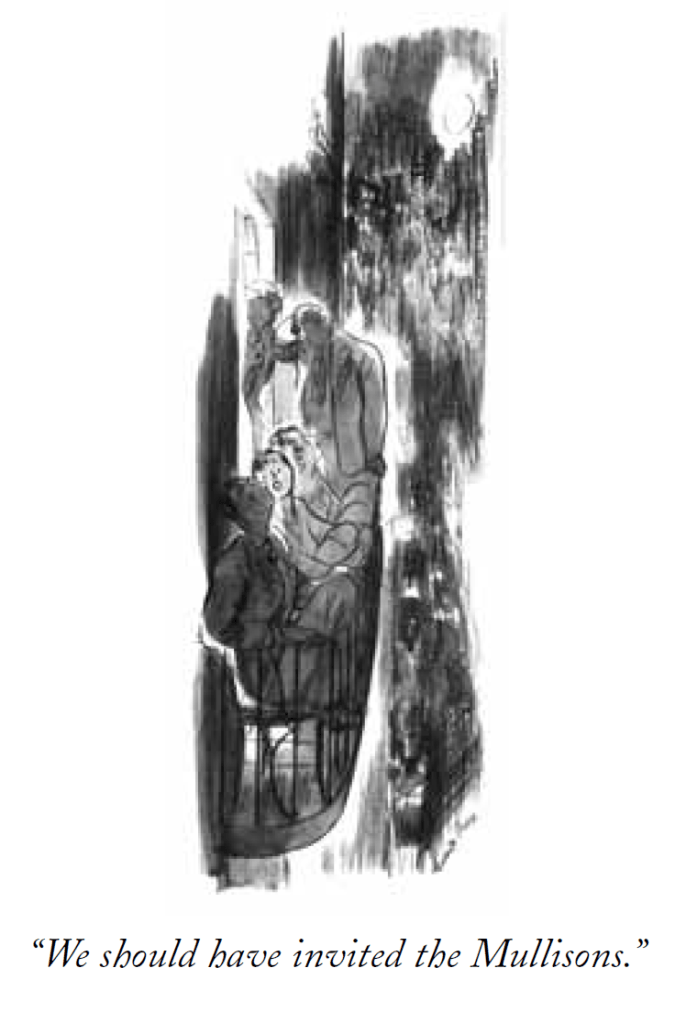
The ‘We should have invited the Mullisons’ one is so dark, it’s hard to tell what the occasion is.
LikeLike
The Mullisons one seems to be an overcrowded, very shallow balcony. I suppose the joke is that there’s no room for the Mullisons (or anyone else).
LikeLiked by 1 person
Perhaps it’s that the woman is so unaware that, even though the balcony is completely jammed, she wishes they had invited MORE people. That’s all I got.
LikeLiked by 1 person
Maybe the balcony belongs to the Mullisons! And if they had been invited, they would have been more hospitable to the partiers..
LikeLike
Cartoonists like William Steig and George Price often presented scenes that were blue collar at best, but the economy wasn’t always the center of the gag. By then there was likely a sense that not every joke had to be about the depression. Some WWII entertainment could likewise relegate the war to background, a passing reference, or nothing at all. I found a book of Jimmy Halto cartoons published during the war with zero acknowledgment of it.
It was either New Yorker or Esquire that had a 30s page of two fat plutocrats drinking as a sexy woman reclined on a lounge in the background. One plutocrat says, “I never told her about the depression. She would have worried.”
Thinking of 30s cartoons and two-reel comedies: animated and live-action clowns could fall anywhere on the social spectrum with each new film. Laurel and Hardy could be homeless tramps, prosperous businessmen, middle-class husbands, cops, moving men, etc. Mickey Mouse had a similar range up to the war, but with peace he was emphatically middle class.
LikeLike
is the lady in the first one about to use a tennis style serve?
LikeLike
Grawlix: Maybe a first rough of later Thurber cartoon, where a large and determined-looking woman prepares to launch a bowling ball like a shot put.
LikeLike