Sometimes “translation” means moving to a different place

Here are two more instances of creative translation in “Macanudo”.

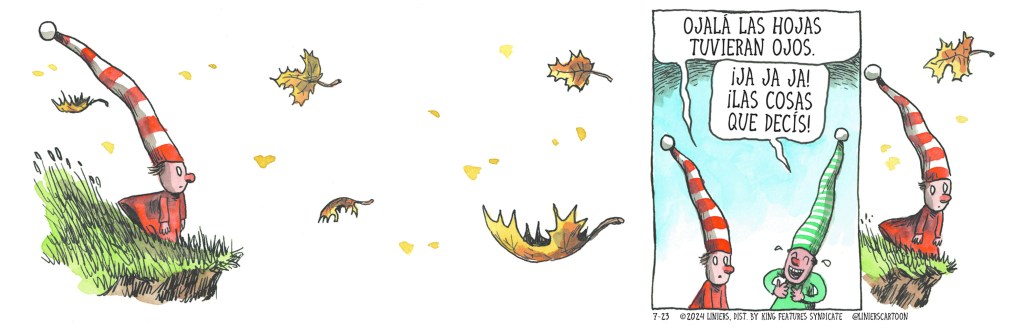
The Spanish dialog means: “I wish the leaves had eyes.” – “Ha ha ha! The things you say!

In both cases the gag is a simple (auditory) pun: in English twofold on “leave(s)” (noun/verb); in Spanish threefold on “ojalá“=”wish”, “hojas“=”leaves”, and “ojos“=”eyes” (one verb and two nouns; all three words sound very similar).


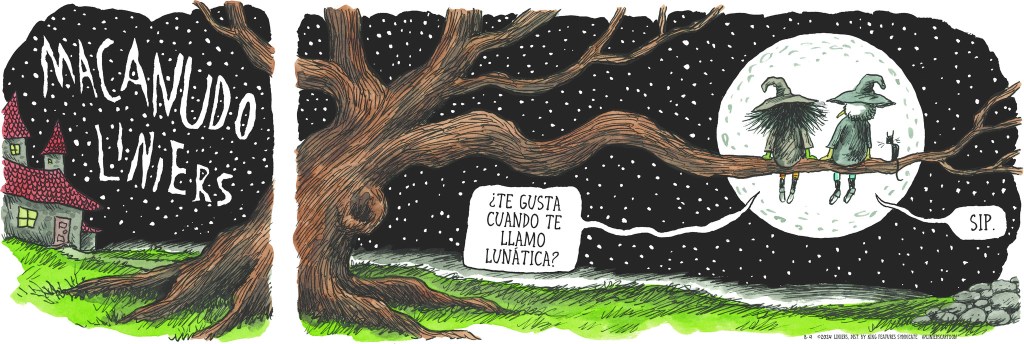
In this second case the difference between the two language versions is more extreme:


In Spanish: “Do you like it when I call you a lunatic?” – “Yup.

Perhaps the translator did not trust English-speaking readers to recognize the “lunar” etymology of “lunatic”, or maybe she simply loved the song lyrics more.


P.S. Several months ago I looked up the meaning of the name “macanudo“, discovering that it meant “a person or thing considered admirable or excellent because of its positive qualities“. Besides being an eminently appropriate name for the comic strip, this also explains why it is the name of a cigar brand. I was in Copenhagen (on vacation) just a few days before I created this post, and just happened to run into this shop:

Impossible!

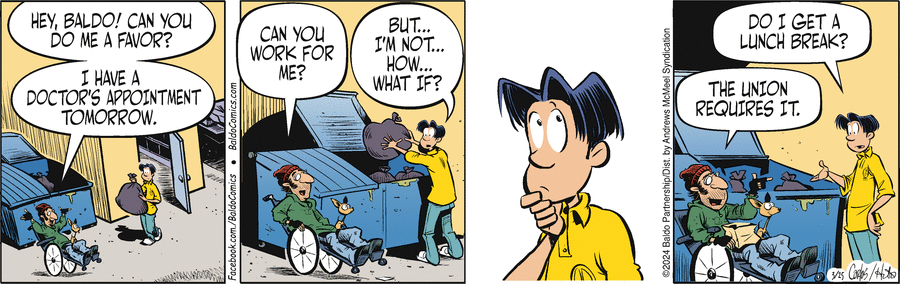
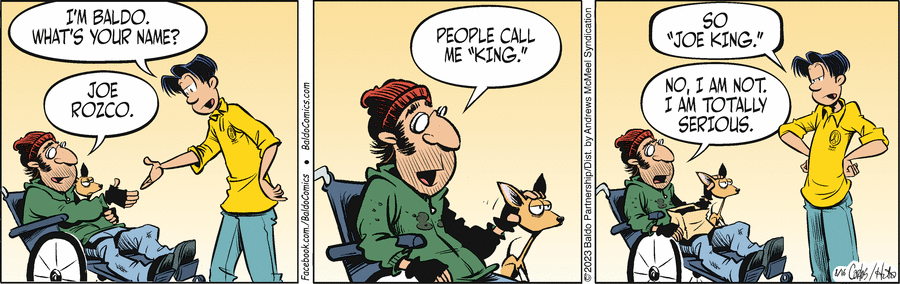
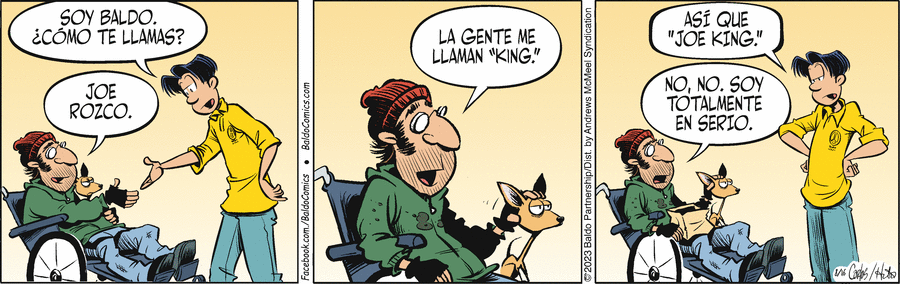
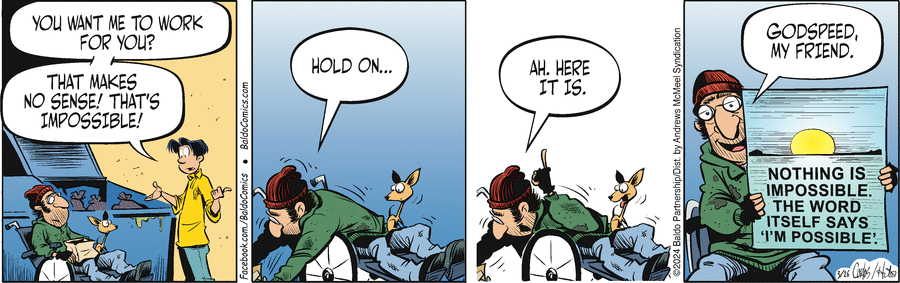
Let’s revisit a topic we’ve seen in different lights at different times: How the English and Spanish versions of Baldo may differ in how a joke works.

Here the joke comes off okay in English, as based in written language (or anyhow spelling). The specifics won’t work in Spanish, so they settle for a less striking point.

P.S. The previous day’s comic clarifies that “work for me” probably means more like “as a substitute” than like “as an employee”.

Creative alternatives to translation

I recall a memoirish article by someone who had been a simultaneous-translation officer at the UN. They recounted most proudly the occasion when they were doing the key Russian-to-English translation for a top Soviet official, who made a point using a very familiar (to Russians) quoted phrase from Pushkin [I’m guessing at this memory], and our protagonist came up with a Shakespeare phrase covering much the same idea, which they substituted! On the fly! [Or maybe they saw a written text just before going on?] Gosh, I hope it wasn’t That one may smile, and smile, and be a villain.

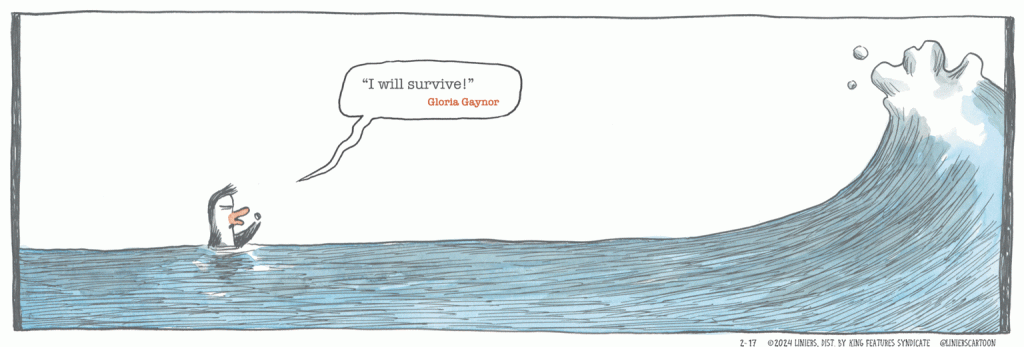
Well, whatever issues that sort of thing may present for literalist fans, there is no problem if an artist or writer is doing their own translation; or, indeed, preparing versions in different languages without picking out an “original” and a “translation”. And since these paired Macanudo strips give the sources for the quotations, this is a fine thing.

I didn’t know anything about Charly García, but here’s Wikipedia to the rescue.

Oh, and with some help from Google Translate, the Charly García line put in English could be “This is endurance”, and the Gloria Gaynor line put in Spanish could be “[Yo] Sobreviviré”.


CIDU QUEUE REMINDER

As always — but it needs saying explicitly again now and then — we like to think of this as a reader-participation site, and not just for your invaluable (or anyhow amusing) comments, but for suggestions of comics to run and discuss.

Please share your specific suggestions of panels or strips, in CIDU, LOL, and OY categories, either by direct email to

(that’s “CIDU.Submissions” at gmail dot com), or by using the handy-dandy Suggest A CIDU form page!

WELL, ALBEE DAMNED!

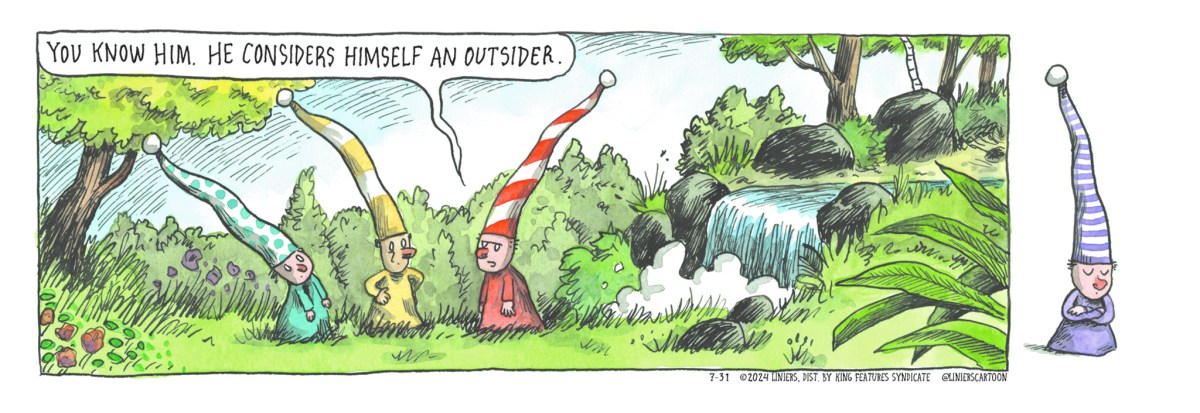
There is an excellent pun behind this, which requires just a bit of Disney to recognize. But then there is the sub-question of whether Liniers (the Macanudo creator) is coming up with it spontaneously on their own, or is making an allusion to 1960s U.S. avant-garde theater where a famous campus-set domestic melodrama of psychological cruelty used the pun as its title — as would be familiar to theater and movie fans of a certain age [geecoughzers!].


(BTW, de paso, here for completeness is the version in Spanish, which does not attempt to re-create the pun. Leaving the question, is there then any joke left at all?)