Boise Ed: “Actually, I have a tee-shirt with a fisherman in a lake of bass-clef signs.” . . . This comic was also submitted anonymously as an Oy
Related
58 Comments
I’m not sure how much of an exaggeration the first one is. The main difference between “…wedding” and “…bar mitzvah” is that in the former, the victim goes through with it to keep the bride’s parents happy, whereas in the latter, it’s for his own parents. I would have thought that this is the primary motivation for most bar mitzvahs(*), but perhaps some kids are just in it for the presents.
P.S. (*) – I’m sure that someone here knows the native plural form; perhaps “bar mitzvot”?
P.P.S. For the second one: I always thought that “bass” (fish) rhymes with “ass” (donkey), whereas the instrument “bass” rhymes with “ace” (card). I’m not sure whether this “ruins” the pun, but it does seem to fracture it considerably.
“B’nai mitzvah” makes a lot of sense, now that it’s pointed out, though Leo Rosten, in The Joys of Yiddish, says, “If you want to know more about bar mitzvas, go to one.”
No, Kilby, the bayss/bæss pun doesn’t work aurally, but yes, it has long been a fertile one orthographically. If I knew how to insert a photo here, I’d show it to you.
@ Boise Ed – A quick Internet search turned up a huge number of angler t-shirts with some unbelievably bad puns(*), but nothing similar to what you described. Perhaps Bill would be willing to add a photo to this thread if you send one to him.
P.S. Two of the most prevalent ones were “The Rodfather” and “Master Baiter“.
Kilby #1: the connotation of a shotgun wedding is that the father of the bride is defending the family’s honor in the deflowering of the bride (particularly if she is in the family way). What event would lead to a hurried or enforced bar/bas mitzvah … in particular when the enforcer is not dressed in synagogue wear … has me stymied.
I do have first hand knowledge of a bar mitzvah that took place solely because a very Reformed spurned ex-wife wanted to get vengeance on the ex-husband who rebelled against his very Orthodox family, by having their son bar mitzvahed … by the husband’s own relatives (rabbis).
FWIW, there is a band out of Chicago called Shogun Wedding.
I’m still trying to figure out why Deering made his cartoon much worse by refusing to draw centaurs, and instead drew these weird half-ungulate creatures which:
a)Are not found in mythology, and
b)Have nonhuman parts from animals not actually ridden by humans, ruining the joke.
One of the ways of distinguishing when L1 is “borrowing” or has “adopted” or has “adapted” a term from L2 is how things like plurals and other tenses etc are formed. If the L1 speakers attempt to reproduce or imitate the L2 inflections, it’s probably still on “borrowed term” status; but if they start using a regular L1 pattern, it’s been pretty fully adapted; and we would start to call it “from L2″ rather than “using an L2 word”.
Here is Sam Levenson’s take on bar mitzvahs – https://www.youtube.com/watch?v=asjpn94ZLi0
My mother had this 78 and we played it often. Mine was close to shotgun – I went to Hebrew School because those who did got the coveted Saturday morning bar mitzvah slots, and my father wanted on so he could throw a big party.
To get really specific, “Bar” is Aramaic for the English word “Son” or “Son (of)” in this context. The Hebrew equivalent is “Ben” (“Son” or “Son (of)”. “B’nai” is the plural of “Ben”.
(The idiom “Bar Mitzvah” aleays uses term adopted from Aramaic. No one says “Ben Mitzvah”.)
If my note about borrowed, adopted, and adapted terms was unclear, I was trying to say that of course it’s perfectly normal to start using the English form of plural (and so on), once a foreign term is really incorporated into English speech. So “bar mitzvahs” would be fine. Though for the not-gender-restricted form we might be stuck saying “bar and bat mitzvahs”.
(Though it is fun learning about the Hebrew and Aramaic forms too.)
Nice question, Carl. A quick answer is, sure, it might happen, if enough people started wanting to do it that way.
A longer answer is that there is a big difference in the processes envisioned. In fact they’re sort of opposite strategies. One is using the target-language (or host language, in this case English) inflections with the untranslated imported word in approximately its original (or adapted, borrowed form) — so that base is not translated. The second would be a matter of translating, as opposed to importing a foreign form.
Both processes do happen. Probably the people who really study this could say more about what makes one or the other more likely; but I suppose there would be a residue of unexplained chance.
Actually, depending on context, “B’nai Mitzvah” would translate as either “Sons of Commandments” or “Children of Commandments”. In Hebrew it is the masculine plural that also represents the all gender plural.
And one last really technical correction of my earlier comment. “B’nai” means specifically “Sons of” or “Children of”. “Banim” would mean “Sons” or “Children” (without the “of”).
I started the book, ‘The Golem and the Jinni’ this afternoon, and on page 42, I came to the sentence, ” . . . his only income came from teaching Hebrew to young boys studying to be bar mitzvot”. I assume, from the context, this is the adverbial form, as in bar mitzvah’d or bar mitzvahed. Or am I way off base here?
Andrea, despite the colloquial usage as a rite of passage, or a verb, the phrase “Bar Mitzvah” is literally a description of the person himself, i.e., he is now a person responsible for keeping the commandments, i.e., a “Son of Mitzvah” or even more technically “A Mitzvah Son”. Technically a group of such people would be “Mitzvah Sons” or “B’nai Mitzvah” however as someone has explained, once the phrase is adopted into another language it tends to be pluralized as would any other term in its adopted language, so “Bar Mitzvahs”. However the author of what you read decided to go one step further and pluralize the 2nd word in order to pluralize the phrase, but chose to pluralize it using its Hebrew form (Mitzvos/Mitzvot is the plural of Mitzvah). However it now looks like “Mitzvot Son” rather than “Mitzvah Sons” which is what they obviously intended.
Regarding referring to Jesus, I came across this some time back:
“Jesus” comes from a shortening of the Hebrew version of the name Joshua, while “Christ” simply means “the anointed one”. To make this clearer to modern Christians, I propose a new Bible translation where Jesus is referred to only as “oily Josh”.
Arthur’s comment reminded me of my sometime claim that English translations of the New Testament passage where Jesus renames Simon as Peter (it turns out to be Matthew 16:18) do not convey the pun on the word for ‘rock’ or ‘stone’ (also works in Aramaic, with the name given as Cephas) which explains the point of the naming when he says “and on this rock I will found my church”.
However, at https://biblehub.com/matthew/16-18.htm I found that some of the English bibles do say something in explanation. Such as “Now I say to you that you are Peter (which means ‘rock’), and upon this rock I will build my church, ” (New Living Translation). Or “So I will call you Peter, which means “a rock.” On this rock I will build my church,” (Contemporary English Version).
But still, who likes to have a pun *explained*?
So I like to propose that we start referring to him as Saint Rocky. And then it will be right there in the name.
@ Bill – I don’t think that’s the picture that Boise Ed meant (at least not on the shirt he was talking about in the subtitle below the Non Sequitur comic).
@ Bill – I don’t use the “feed”, just the normal URL, and I don’t see anything in this thread from Boise Ed that speaks of a “comic”, just the subscript under the Non-Sequitur at the top (which still says “tee-shirt”), and a later comment which mentions a “photo”, presumably of that t-shirt. If Ed mentioned a comic, then that comment must still be in moderation, visible only to you.
@Kilby: Yes, Ed described images in two places in this thread, as you point out. I didn’t take his “𝐼𝑓 𝐼 𝑘𝑛𝑒𝑤 ℎ𝑜𝑤 𝑡𝑜 𝑖𝑛𝑠𝑒𝑟𝑡 𝑎 𝑝ℎ𝑜𝑡𝑜 ℎ𝑒𝑟𝑒, 𝐼’𝑑 𝑠ℎ𝑜𝑤 𝑖𝑡 𝑡𝑜 𝑦𝑜𝑢.” as meaning the tee-shirt necessarily, just something which would illustrate his point that : “𝑁𝑜, 𝐾𝑖𝑙𝑏𝑦, 𝑡ℎ𝑒 𝑏𝑎𝑦𝑠𝑠/𝑏æ𝑠𝑠 𝑝𝑢𝑛 𝑑𝑜𝑒𝑠𝑛’𝑡 𝑤𝑜𝑟𝑘 𝑎𝑢𝑟𝑎𝑙𝑙𝑦, 𝑏𝑢𝑡 𝑦𝑒𝑠, 𝑖𝑡 ℎ𝑎𝑠 𝑙𝑜𝑛𝑔 𝑏𝑒𝑒𝑛 𝑎 𝑓𝑒𝑟𝑡𝑖𝑙𝑒 𝑜𝑛𝑒 𝑜𝑟𝑡ℎ𝑜𝑔𝑟𝑎𝑝ℎ𝑖𝑐𝑎𝑙𝑙𝑦.”
@CIDU Bill: But the Bizarro you posted at 10:03 PM does not, to me, fit either “𝐴 𝐹𝐼𝑆𝐻𝐸𝑅𝑀𝐴𝑁 𝐼𝑁 𝐴 𝐿𝐴𝐾𝐸 𝑂𝐹 𝐵𝐴𝑆𝑆-𝐶𝐿𝐸𝐹 𝑆𝐼𝐺𝑁𝑆.” or 𝑡ℎ𝑒 𝑏𝑎𝑦𝑠𝑠/𝑏æ𝑠𝑠 𝑝𝑢𝑛 𝘸𝘰𝘳𝘬𝘪𝘯𝘨 𝘰𝘳𝘵𝘩𝘰𝘨𝘳𝘢𝘱𝘩𝘪𝘤𝘢𝘭𝘭𝘺 𝘵𝘩𝘰𝘶𝘨𝘩 𝘯𝘰𝘵 𝘢𝘶𝘳𝘢𝘭𝘭𝘺. It just seems to be about bass players (as musicians) being outcasts.
@ Mitch4 – I wish I could show you a screenshot of the hieroglyphic hash that was produced by your text decoration utility. It has looked cute before (when it worked), but if you happen to pick a font that is not supported by older browsers (like this time), it turns out to completely block the message.
@Kilby: Yes, Ed described images in two places in this thread, as you point out. I didn’t take his If I knew how to insert a photo here, I’d show it to you. as meaning the tee-shirt necessarily, just something which would illustrate his point that : “ No, Kilby, the bayss/bæss pun doesn’t work aurally, but yes, it has long been a fertile one orthographically.”
@CIDU Bill: But the Bizarro you posted at 10:03 PM does not, to me, fit either “A fisherman in a lake of bass-clef signs” or the bayss/baess pun working orthographically though not aurally. It just seems to be about bass players (as musicians) being outcasts.
I hope you really don’t mind one more. This one is a parody by one of my favorite a cappella groups, Straight No Chaser, with lyrics that stress bass = low voice.
Back when I went to Hebrew school I learned Ashkenazi Hebrew. So had I stuck it out I would have been a bas mitzvah. I actually have some trouble with prayers in Hebrew as I read them/remember them in Ashkenazi and everyone is reading them in Sephardic.
Seders when I was young consisted of my older boy cousin reciting the 4 questions in Sephardic Hebrew, me reciting them in Ashkenazi Hebrew and his kid brother reciting them in English.
As the years passed my uncle’s seders got more and more complete – with my dad, his older brother, sitting at the other table doing family member’s tax returns – well, at least that’s how I remember it.



 Comics I Don't Understand
I’m not sure how much of an exaggeration the first one is. The main difference between “…wedding” and “…bar mitzvah” is that in the former, the victim goes through with it to keep the bride’s parents happy, whereas in the latter, it’s for his own parents. I would have thought that this is the primary motivation for most bar mitzvahs(*), but perhaps some kids are just in it for the presents.
P.S. (*) – I’m sure that someone here knows the native plural form; perhaps “bar mitzvot”?
P.P.S. For the second one: I always thought that “bass” (fish) rhymes with “ass” (donkey), whereas the instrument “bass” rhymes with “ace” (card). I’m not sure whether this “ruins” the pun, but it does seem to fracture it considerably.
LikeLike
As a Sagittarius, I felt sorry for the hardworking centaur.
LikeLike
The plural of bar mitzvah is b’nai mitzvah.
I don’t think I knew this before my cousin’s twins had… you know…
LikeLike
” For the second one: I always thought that “bass” (fish) rhymes with “ass” (donkey), whereas the instrument “bass” rhymes with “ace” (card).”
I always thought that because I pronounce them as you do, that they were the rare example of homophones that sound different.
… Because there is absolutely no doubt in my mind they *are* homophones….
(they just are…. don’t know why they are but they are….)
LikeLike
“B’nai mitzvah” makes a lot of sense, now that it’s pointed out, though Leo Rosten, in The Joys of Yiddish, says, “If you want to know more about bar mitzvas, go to one.”
LikeLike
Arthur, “b’nai mitzvah” might be correct, but “bar mitzvahs” is infinitely more likely to be understood.
LikeLike
No, Kilby, the bayss/bæss pun doesn’t work aurally, but yes, it has long been a fertile one orthographically. If I knew how to insert a photo here, I’d show it to you.
LikeLike
@ Boise Ed – A quick Internet search turned up a huge number of angler t-shirts with some unbelievably bad puns(*), but nothing similar to what you described. Perhaps Bill would be willing to add a photo to this thread if you send one to him.
P.S. Two of the most prevalent ones were “The Rodfather” and “Master Baiter“.
LikeLike
Kilby #1: the connotation of a shotgun wedding is that the father of the bride is defending the family’s honor in the deflowering of the bride (particularly if she is in the family way). What event would lead to a hurried or enforced bar/bas mitzvah … in particular when the enforcer is not dressed in synagogue wear … has me stymied.
I do have first hand knowledge of a bar mitzvah that took place solely because a very Reformed spurned ex-wife wanted to get vengeance on the ex-husband who rebelled against his very Orthodox family, by having their son bar mitzvahed … by the husband’s own relatives (rabbis).
FWIW, there is a band out of Chicago called Shogun Wedding.
LikeLike
I’m still trying to figure out why Deering made his cartoon much worse by refusing to draw centaurs, and instead drew these weird half-ungulate creatures which:
a)Are not found in mythology, and
b)Have nonhuman parts from animals not actually ridden by humans, ruining the joke.
LikeLike
Well, THAT didn’ work. Maybe this will . . .
https://safr.kingfeatures.com/api/img.php?e=png&s=c&file=Qml6YXJyby8yMDIwLzA2L0JpemFycm9fcC4yMDIwMDYxM182NTcucG5n
LikeLike
. . . and here is Mr. Centaur, at the pharmacy . . .
…
LikeLike
“Bars mitzvah”? ;)
LikeLike
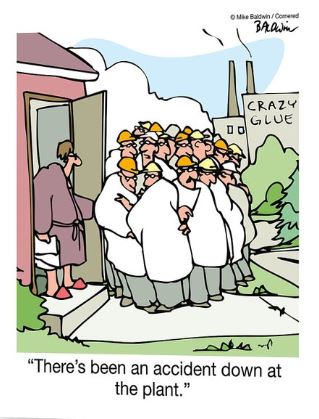
The Muppets did the super-glue-accident gag during the Gilda Radner episode:
LikeLike
One of the ways of distinguishing when L1 is “borrowing” or has “adopted” or has “adapted” a term from L2 is how things like plurals and other tenses etc are formed. If the L1 speakers attempt to reproduce or imitate the L2 inflections, it’s probably still on “borrowed term” status; but if they start using a regular L1 pattern, it’s been pretty fully adapted; and we would start to call it “from L2″ rather than “using an L2 word”.
LikeLike
I suspect the second (?) reason kids go through with the bar mitzvah is the party and the presents.
LikeLike
I would be happy to, of course.
LikeLike
Here is Sam Levenson’s take on bar mitzvahs – https://www.youtube.com/watch?v=asjpn94ZLi0
My mother had this 78 and we played it often. Mine was close to shotgun – I went to Hebrew School because those who did got the coveted Saturday morning bar mitzvah slots, and my father wanted on so he could throw a big party.
LikeLike
At our synagogue, attending Hebrew school was mandatory if you wanted your bar/bat mitzvah there.
A lot of kids thought of their bar/bat mitzvah as de facto graduation: they never showed up to Hebrew school again.
[note: a bat mitzvah is the female version]
LikeLike
You’re actually right, lazarusjohn, since “b’nai” is the plural of “bar.”
LikeLike
@ Bill – So what is the plural of “bat”?
LikeLike
B’not.
LikeLike
To get really specific, “Bar” is Aramaic for the English word “Son” or “Son (of)” in this context. The Hebrew equivalent is “Ben” (“Son” or “Son (of)”. “B’nai” is the plural of “Ben”.
(The idiom “Bar Mitzvah” aleays uses term adopted from Aramaic. No one says “Ben Mitzvah”.)
LikeLike
So what is the plural of “bat”?
colony
LikeLike
If my note about borrowed, adopted, and adapted terms was unclear, I was trying to say that of course it’s perfectly normal to start using the English form of plural (and so on), once a foreign term is really incorporated into English speech. So “bar mitzvahs” would be fine. Though for the not-gender-restricted form we might be stuck saying “bar and bat mitzvahs”.
(Though it is fun learning about the Hebrew and Aramaic forms too.)
LikeLike
@Mitch4, if we do that why not just say, “children of the Commandments”?
LikeLike
Nice question, Carl. A quick answer is, sure, it might happen, if enough people started wanting to do it that way.
A longer answer is that there is a big difference in the processes envisioned. In fact they’re sort of opposite strategies. One is using the target-language (or host language, in this case English) inflections with the untranslated imported word in approximately its original (or adapted, borrowed form) — so that base is not translated. The second would be a matter of translating, as opposed to importing a foreign form.
Both processes do happen. Probably the people who really study this could say more about what makes one or the other more likely; but I suppose there would be a residue of unexplained chance.
LikeLike
Why, is that what the Hebrew term translates to?
LikeLike
Actually, depending on context, “B’nai Mitzvah” would translate as either “Sons of Commandments” or “Children of Commandments”. In Hebrew it is the masculine plural that also represents the all gender plural.
LikeLike
And one last really technical correction of my earlier comment. “B’nai” means specifically “Sons of” or “Children of”. “Banim” would mean “Sons” or “Children” (without the “of”).
LikeLike
In “Ben Hur”, did we ever learn who Hur was?
LikeLike
@Mitch4: Judah Ben-Hur’s father.
LikeLike
I started the book, ‘The Golem and the Jinni’ this afternoon, and on page 42, I came to the sentence, ” . . . his only income came from teaching Hebrew to young boys studying to be bar mitzvot”. I assume, from the context, this is the adverbial form, as in bar mitzvah’d or bar mitzvahed. Or am I way off base here?
LikeLike
Have you run across the fashion of referring to Jesus (yes, that one) as “Yeshua Ben Yosef” or variations thereon?
LikeLike
Andrea, despite the colloquial usage as a rite of passage, or a verb, the phrase “Bar Mitzvah” is literally a description of the person himself, i.e., he is now a person responsible for keeping the commandments, i.e., a “Son of Mitzvah” or even more technically “A Mitzvah Son”. Technically a group of such people would be “Mitzvah Sons” or “B’nai Mitzvah” however as someone has explained, once the phrase is adopted into another language it tends to be pluralized as would any other term in its adopted language, so “Bar Mitzvahs”. However the author of what you read decided to go one step further and pluralize the 2nd word in order to pluralize the phrase, but chose to pluralize it using its Hebrew form (Mitzvos/Mitzvot is the plural of Mitzvah). However it now looks like “Mitzvot Son” rather than “Mitzvah Sons” which is what they obviously intended.
LikeLike
[Mitch4 was that person who explained about borrowed and adopted terms. Sorry, your name slipped my mind when I posted my latest message.]
LikeLike
Oh, I’m just happy you agree on the point at hand, I don’t require mentions! :-)
LikeLike
Regarding referring to Jesus, I came across this some time back:
“Jesus” comes from a shortening of the Hebrew version of the name Joshua, while “Christ” simply means “the anointed one”. To make this clearer to modern Christians, I propose a new Bible translation where Jesus is referred to only as “oily Josh”.
LikeLike
Arthur’s comment reminded me of my sometime claim that English translations of the New Testament passage where Jesus renames Simon as Peter (it turns out to be Matthew 16:18) do not convey the pun on the word for ‘rock’ or ‘stone’ (also works in Aramaic, with the name given as Cephas) which explains the point of the naming when he says “and on this rock I will found my church”.
However, at https://biblehub.com/matthew/16-18.htm I found that some of the English bibles do say something in explanation. Such as “Now I say to you that you are Peter (which means ‘rock’), and upon this rock I will build my church, ” (New Living Translation). Or “So I will call you Peter, which means “a rock.” On this rock I will build my church,” (Contemporary English Version).
But still, who likes to have a pun *explained*?
So I like to propose that we start referring to him as Saint Rocky. And then it will be right there in the name.
“Saint Rocky don’t you call me, cos I can’t go …”
Cartoons of Saint Rocky presiding at the gates.
And so forth….
LikeLike
Hey, Rocky, watch me pull some illness out of a leper.
LikeLike
The comic of which Boise Ed spoke:
LikeLike
@ Bill – I don’t think that’s the picture that Boise Ed meant (at least not on the shirt he was talking about in the subtitle below the Non Sequitur comic).
LikeLike
Hey, Rocky, watch me pull some illness out of a leper.
That trick never works.
LikeLike
Kilby, my comment said “t-shirt” for about 10 seconds. As soon as I saw the graphic, I changed it.
Unfortunately, everybody who uses the feed sees what’s first posted, even if it’s actually online for a millisecond.
LikeLike
@ Bill – I don’t use the “feed”, just the normal URL, and I don’t see anything in this thread from Boise Ed that speaks of a “comic”, just the subscript under the Non-Sequitur at the top (which still says “tee-shirt”), and a later comment which mentions a “photo”, presumably of that t-shirt. If Ed mentioned a comic, then that comment must still be in moderation, visible only to you.
LikeLike
Pinny: Thanks for the explanation; makes a lot more sense than what I had assumed.
LikeLike
@Kilby: Yes, Ed described images in two places in this thread, as you point out. I didn’t take his “𝐼𝑓 𝐼 𝑘𝑛𝑒𝑤 ℎ𝑜𝑤 𝑡𝑜 𝑖𝑛𝑠𝑒𝑟𝑡 𝑎 𝑝ℎ𝑜𝑡𝑜 ℎ𝑒𝑟𝑒, 𝐼’𝑑 𝑠ℎ𝑜𝑤 𝑖𝑡 𝑡𝑜 𝑦𝑜𝑢.” as meaning the tee-shirt necessarily, just something which would illustrate his point that : “𝑁𝑜, 𝐾𝑖𝑙𝑏𝑦, 𝑡ℎ𝑒 𝑏𝑎𝑦𝑠𝑠/𝑏æ𝑠𝑠 𝑝𝑢𝑛 𝑑𝑜𝑒𝑠𝑛’𝑡 𝑤𝑜𝑟𝑘 𝑎𝑢𝑟𝑎𝑙𝑙𝑦, 𝑏𝑢𝑡 𝑦𝑒𝑠, 𝑖𝑡 ℎ𝑎𝑠 𝑙𝑜𝑛𝑔 𝑏𝑒𝑒𝑛 𝑎 𝑓𝑒𝑟𝑡𝑖𝑙𝑒 𝑜𝑛𝑒 𝑜𝑟𝑡ℎ𝑜𝑔𝑟𝑎𝑝ℎ𝑖𝑐𝑎𝑙𝑙𝑦.”
@CIDU Bill: But the Bizarro you posted at 10:03 PM does not, to me, fit either “𝐴 𝐹𝐼𝑆𝐻𝐸𝑅𝑀𝐴𝑁 𝐼𝑁 𝐴 𝐿𝐴𝐾𝐸 𝑂𝐹 𝐵𝐴𝑆𝑆-𝐶𝐿𝐸𝐹 𝑆𝐼𝐺𝑁𝑆.” or 𝑡ℎ𝑒 𝑏𝑎𝑦𝑠𝑠/𝑏æ𝑠𝑠 𝑝𝑢𝑛 𝘸𝘰𝘳𝘬𝘪𝘯𝘨 𝘰𝘳𝘵𝘩𝘰𝘨𝘳𝘢𝘱𝘩𝘪𝘤𝘢𝘭𝘭𝘺 𝘵𝘩𝘰𝘶𝘨𝘩 𝘯𝘰𝘵 𝘢𝘶𝘳𝘢𝘭𝘭𝘺. It just seems to be about bass players (as musicians) being outcasts.
LikeLike
@ Mitch4 – I wish I could show you a screenshot of the hieroglyphic hash that was produced by your text decoration utility. It has looked cute before (when it worked), but if you happen to pick a font that is not supported by older browsers (like this time), it turns out to completely block the message.
LikeLike
I had dozens of square boxes . . .
LikeLike
Sorry about that!
Thanks for letting me know.
LikeLike
Hopefully more legibly:
@Kilby: Yes, Ed described images in two places in this thread, as you point out. I didn’t take his If I knew how to insert a photo here, I’d show it to you. as meaning the tee-shirt necessarily, just something which would illustrate his point that : “ No, Kilby, the bayss/bæss pun doesn’t work aurally, but yes, it has long been a fertile one orthographically.”
@CIDU Bill: But the Bizarro you posted at 10:03 PM does not, to me, fit either “A fisherman in a lake of bass-clef signs” or the bayss/baess pun working orthographically though not aurally. It just seems to be about bass players (as musicians) being outcasts.
LikeLike
Okay… Boise Ed sent me a comic that’s posted a few inches above where we are now.
This is the t-shirt photo he later sent me:

A few minutes ago Wildebeast sent me this song for Wake-Up Music:
And now I don’t want to hear the word bass again until Opening Day!
LikeLike
Yay!
LikeLike
Postmodern Jukebox! I’ve viewed a number of their videos.
LikeLike
I hope you really don’t mind one more. This one is a parody by one of my favorite a cappella groups, Straight No Chaser, with lyrics that stress bass = low voice.
All About That Bass (No Tenors):
LikeLike
Very nice, Wildebeast! You too, Pinny! I love both versions.
LikeLike
Back when I went to Hebrew school I learned Ashkenazi Hebrew. So had I stuck it out I would have been a bas mitzvah. I actually have some trouble with prayers in Hebrew as I read them/remember them in Ashkenazi and everyone is reading them in Sephardic.
Seders when I was young consisted of my older boy cousin reciting the 4 questions in Sephardic Hebrew, me reciting them in Ashkenazi Hebrew and his kid brother reciting them in English.
As the years passed my uncle’s seders got more and more complete – with my dad, his older brother, sitting at the other table doing family member’s tax returns – well, at least that’s how I remember it.
LikeLike
Speaking of Ben Hur . . .

LikeLike