Today’s Macanudo, twice:


“It was nice while it lasted.” Okay, I’ll buy the pairing. Both are sweetly regretful but have just a tiny bit of a sting, don’t you think?

But now, today’s Baldo, also twice:

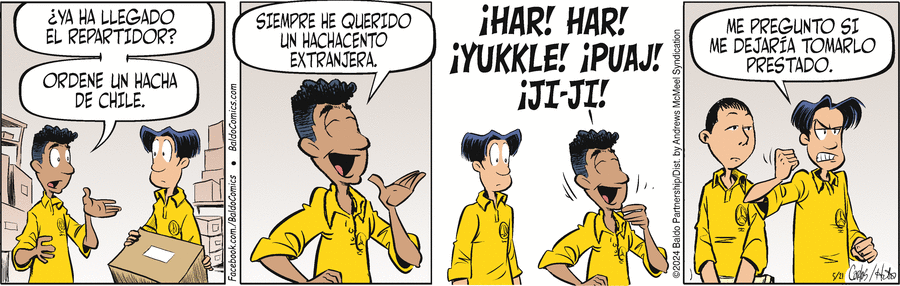
Now at first this looks like something we’ve seen a few times with Baldo: A pun or language-dependent joke in the English version, and then a reduction to a univocal expression in the Spanish version with no attempt to preserve the polysemy needed for the pun.
But not this time!
The key is in hachacento, which does not register as a recognized or translatable Spanish word, at least by Google Translate. But looking at parts:
hatchet ==> hacha
accent ==> acento
So we do get both axe and accent! (But not sent ==> enviad{o/a}. But who cares at this point!)
P.S. Don’t forget to stop and smell the noises in panel 3.

 Comics I Don't Understand