P.S. I cannot see any difference in quality between this embedded image and the one posted above, so the problem may be that wordpress is resampling the image to fit it into the available window space. If you view either image in a separate tab, you may get a more legible result.
P.P.S. According to the author’s comments at GoComics, he replaced the strip to correct a duplication error. Bill must have grabbed the one at the top of the post before Pab could fix it. See up top for the “original”; the embedded one @3 contains the correction.
Thanks, dvandom, that completely clarifies it!
I guess I don’t understand how seeding works in a single-elimination bracketed tournament. Is there a single ruling principle, or small ordered set of them, from which the placement on the branches can be strictly derived?
I see why (within one of the “region” groups of 16) the 1 seed and the 2 should be in different halves — so that potentially they could face each other in the final match (final for the region, quarter-final of the overall tournament), if the outcomes of the actual contests go according to the expectations reflected in the seeding. But shouldn’t 2’s placement within the bottom half be where 6 is now shown? For symmetry/similarity of the two halves?
And why are 3 and 4 in the same half? Wouldn’t it be better to place them in different halves, so that when they both lose their semi-finals, they will play the consolation game for third place? And for that matter, is there a principled way of deciding whether the “expected outcomes” semi-finals should be 1-3 and 2-4 or 1-4 and 2-3? Can that be decided by either “excitement” or “fairness”?
Mitch4 – I’m not seeing seeds 3 and 4 in the same half.
As for placement of the 2 seed, while I don’t know of any general best practices, I’ve always thought about it as “1 on top, 2, 3 at the bottom, 4, 5 back up top, 6, 7 bottom, etc.” until you fill in the “region.” This would explain why 2 is generally at the bottom, but doesn’t really explain the placement of 3. 3 could go in either of 2 spots, so I’m not sure why the lower one was chosen.
Thanks TedD, I was misreading it. Here’s what I think I see, with one layer of grouping marked:
(1 16)(8 9)(5 12)(4 13)(6 11)(3 14)(7 10)(2 15)
Suppose we only had 4 entrants overall. I think they would be (1 4) (2 3) though that my be wrong in terms of where the 2 and the 3 would be written — but the pairing seems correct, on (a) TedD’s pattern (b) what we get in semi-finals from a larger elimination if all contests are decided by seed rank (c) some combination of “fairness” and “excitement” principles.
Here are the halves lined up:
(1 16)(8 9) (5 12) (4 13)
(6 11)(3 14)(7 10) (2 15)
Now if we look at each half AND RENUMBER THE POSITIONS FROM 1 TO 8 within that subset, will they match?
They aren’t the same, if we look at specific ordering — but they do have the same pairings, to two levels.
[ (1 8) (4 5) ] [ (3 6) (2 7) ]
So if we ask how an elimination with 8 starters would be arranged, is it that? This would fit TedD’s “1 on top, 2, 3 at the bottom, 4, 5 back up top, 6, 7 bottom, etc.” but is there a rule for secondary placements?
So did NAQV actually go forward with this tournament or tournament-like process? I have to confess, I do not understand how it is supposed to work. For example, is the winner of each bracket supposed to be the best fighter? The coolest? The nerdiest?
Can someone explain the Arlo and Janis to me? Did Arlo just turn on the TV to drown out the music that Gene is playing?
Usual John – Janis turned on the TV to drown out Gene’s music, which now wakes up Arlo. You can see the remote in her hand in the last panel.
The main thing about the pairings is that with no upsets the total seeds in any match, by rounds, will be 17-9-5-3, ie 1 more than the number of entrants remaining in the section.
MITCH4 – Looking around at a few brackets for some different sports, if there is a standard it doesn’t really speak to placement of rank 3 within the two spots available for it.
There are probably more degrees of freedom with brackets larger than 16, but with 16 there really isn’t much freedom. 1 and 2 are given. 3 then has two options. 4 has two options, but I’ve always seen it listed as far away from 1 as possible. The rest are constrained. I’ve always thought of it as putting eventual opponents as far away from each other as possible. But the NCAA basketball brackets have (3,14) listed below (6,11). Others have had that reversed.

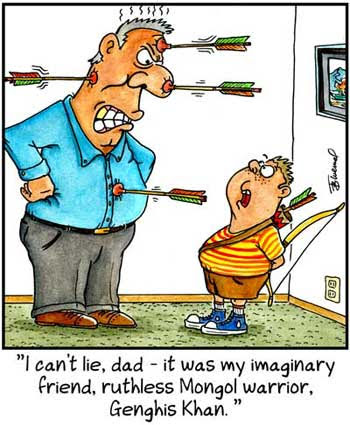
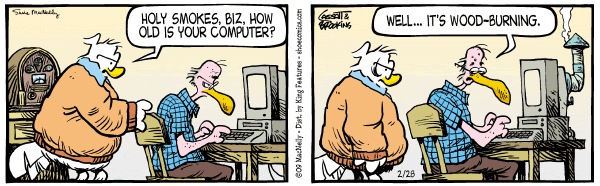


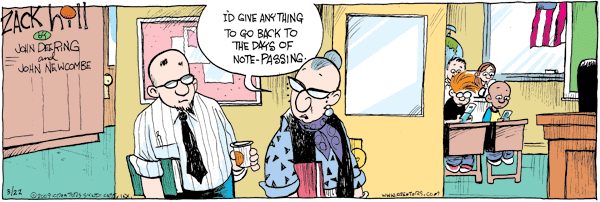





 Comics I Don't Understand
Instead of a check(ered) suit, it’s a check in a suit (which may be checkered, the art is iffy).
Anyone got a readable version of the NAQV bracket? The site listed appears to no longer exist.
@ Powers (2) – That NAVQ bracket was originally published on Sun-22-Mar-2009:
P.S. I cannot see any difference in quality between this embedded image and the one posted above, so the problem may be that wordpress is resampling the image to fit it into the available window space. If you view either image in a separate tab, you may get a more legible result.
P.P.S. According to the author’s comments at GoComics, he replaced the strip to correct a duplication error. Bill must have grabbed the one at the top of the post before Pab could fix it. See up top for the “original”; the embedded one @3 contains the correction.
Thanks, dvandom, that completely clarifies it!
I guess I don’t understand how seeding works in a single-elimination bracketed tournament. Is there a single ruling principle, or small ordered set of them, from which the placement on the branches can be strictly derived?
I see why (within one of the “region” groups of 16) the 1 seed and the 2 should be in different halves — so that potentially they could face each other in the final match (final for the region, quarter-final of the overall tournament), if the outcomes of the actual contests go according to the expectations reflected in the seeding. But shouldn’t 2’s placement within the bottom half be where 6 is now shown? For symmetry/similarity of the two halves?
And why are 3 and 4 in the same half? Wouldn’t it be better to place them in different halves, so that when they both lose their semi-finals, they will play the consolation game for third place? And for that matter, is there a principled way of deciding whether the “expected outcomes” semi-finals should be 1-3 and 2-4 or 1-4 and 2-3? Can that be decided by either “excitement” or “fairness”?
Mitch4 – I’m not seeing seeds 3 and 4 in the same half.
As for placement of the 2 seed, while I don’t know of any general best practices, I’ve always thought about it as “1 on top, 2, 3 at the bottom, 4, 5 back up top, 6, 7 bottom, etc.” until you fill in the “region.” This would explain why 2 is generally at the bottom, but doesn’t really explain the placement of 3. 3 could go in either of 2 spots, so I’m not sure why the lower one was chosen.
Thanks TedD, I was misreading it. Here’s what I think I see, with one layer of grouping marked:
(1 16)(8 9)(5 12)(4 13)(6 11)(3 14)(7 10)(2 15)
Suppose we only had 4 entrants overall. I think they would be (1 4) (2 3) though that my be wrong in terms of where the 2 and the 3 would be written — but the pairing seems correct, on (a) TedD’s pattern (b) what we get in semi-finals from a larger elimination if all contests are decided by seed rank (c) some combination of “fairness” and “excitement” principles.
Here are the halves lined up:
(1 16)(8 9) (5 12) (4 13)
(6 11)(3 14)(7 10) (2 15)
Now if we look at each half AND RENUMBER THE POSITIONS FROM 1 TO 8 within that subset, will they match?
(1 16)(8 9) (5 12) (4 13) ==>
1 8 4 5 3 6 2 7
(6 11)(3 14)(7 10) (2 15) ==>
3 6 2 7 4 5 1 8
They aren’t the same, if we look at specific ordering — but they do have the same pairings, to two levels.
[ (1 8) (4 5) ] [ (3 6) (2 7) ]
So if we ask how an elimination with 8 starters would be arranged, is it that? This would fit TedD’s “1 on top, 2, 3 at the bottom, 4, 5 back up top, 6, 7 bottom, etc.” but is there a rule for secondary placements?
So did NAQV actually go forward with this tournament or tournament-like process? I have to confess, I do not understand how it is supposed to work. For example, is the winner of each bracket supposed to be the best fighter? The coolest? The nerdiest?
Can someone explain the Arlo and Janis to me? Did Arlo just turn on the TV to drown out the music that Gene is playing?
I was happy to see that the Wikipedia entry s.v. “single-elimination tournament” when it gets to seeding describes a usual pattern but looks into doubts and arguments too.
Usual John – Janis turned on the TV to drown out Gene’s music, which now wakes up Arlo. You can see the remote in her hand in the last panel.
The main thing about the pairings is that with no upsets the total seeds in any match, by rounds, will be 17-9-5-3, ie 1 more than the number of entrants remaining in the section.
MITCH4 – Looking around at a few brackets for some different sports, if there is a standard it doesn’t really speak to placement of rank 3 within the two spots available for it.
There are probably more degrees of freedom with brackets larger than 16, but with 16 there really isn’t much freedom. 1 and 2 are given. 3 then has two options. 4 has two options, but I’ve always seen it listed as far away from 1 as possible. The rest are constrained. I’ve always thought of it as putting eventual opponents as far away from each other as possible. But the NCAA basketball brackets have (3,14) listed below (6,11). Others have had that reversed.