…of being often incomprehensible:
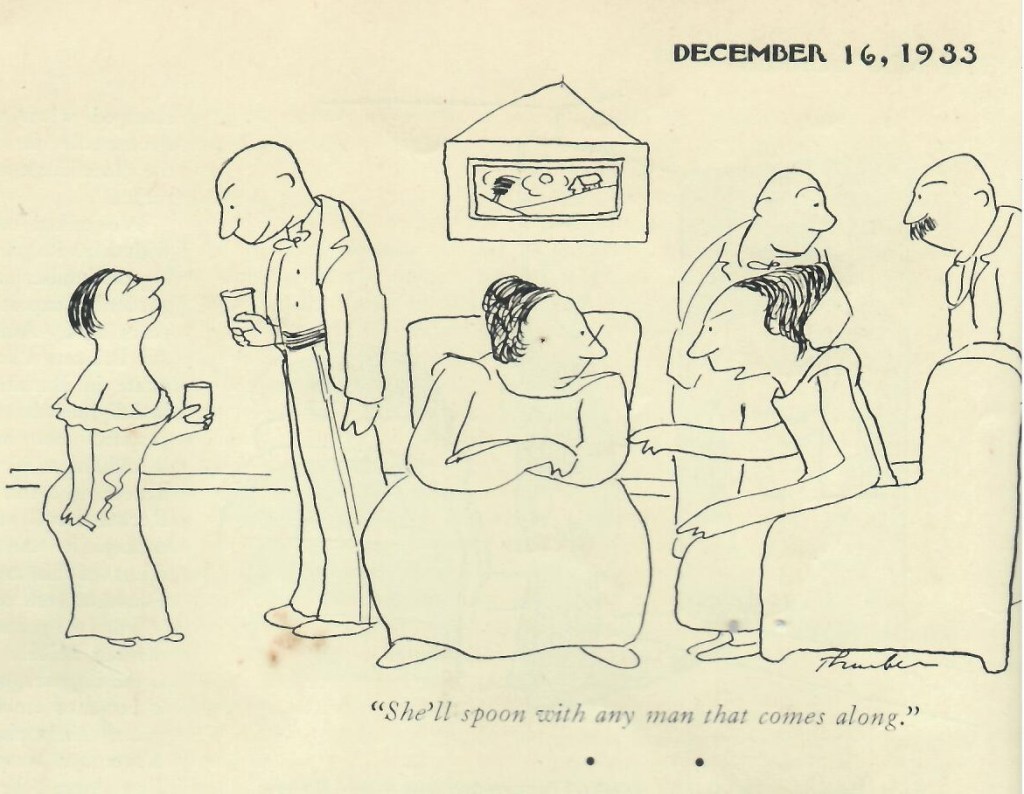
I know what “spoon” means here, but???
This is a scan of a page my sister found in my parents’ house after they passed, with a note from my dad:
The summer I was six I was sent to camp for about six weeks. I didn’t particularly enjoy it, but it wasn’t really bad. The best part, of course, was leaving to go home. My mother came in the Model A touring car and fetched me at the end of August. The camp was in Maine, not too far up into that state, and we were headed for Arlington, Massachusetts, where we were living with Aunt Fawny and her children.
Our travels took us along the seashore for a considerable distance, first the coast of Maine, then the small amount of New Hampshire shoreline, and finally the ocean north of Boston. Throughout the journey I clamored to get out and go swimming in the ocean, but it was rainy almost the whole way.
My mother promised, though, that if the rain stopped we could go swimming. Finally, when we were nearly home in Arlington, the rain stopped and the sky cleared. Filled with camp spirit I let out a cheer: “Two, four, six, eight; Who do we appreciate; God! God! God!”
My mother thought this was very cute and told it to all her friends. One of them wrote it up and sent it to The New Yorker, which published it. When Mother died I found that December 1933 copy of The New Yorker among her possessions.
Kinda neat. The cartoon happened to be on that page. Curiously, in TNY’s version, my dad’s name was Roger and it was ice cream he wanted, not a swim. Doesn’t matter to the punchline but I’ll always wonder if the details got lost in transmission, or some editor needed to assert his [presumably, in that era] power.
 Comics I Don't Understand
Thurber’s cartoon is a bit creepy to me. The woman at the left is much shorter than everyone else; is she intended to be a teenager just past puberty, and taking to flirting, smoking, wearing low cut dresses, spooning and pretending she is older?
Perhaps that short woman has difficulty being noticed, so she makes the most of any opportunity. I am fully aware that some tall women feel that they are noticed all too readily, and consequently avoided.
She has a pronounced curvy shape, especially compared to the other characters, so my first inclination would be to think that her shape makes her particularly suited to “spooning” as I understand it: lying in bed with another person cuddled close in the manner of spoons in a drawer. But is that the correct understanding of “spooning”, and is that at all appropriate for The New Yorker in 1933? I have no idea.
(Given that it appears on the same page as a heartwarming anecdote about a boy cheering God, I would have to think absolutely not!)
larK, no, to spoon here means to flirt with or to court. While there could be physical intimacy involved, such as kissing or cuddling, it is not a reference to lying close together in the manner of spoons.
I am not sure exactly what James Thurber was going for here, but I think it is significant that the woman is very short and is wearing an extremely low-cut dress, such that a tall man will necessarily be looking down at her and at her prominently displayed breasts. She likes to flirt, she is a showoff, and she is willing to disregard social norms, as shown by her smoking in public.
I took it as illustrating the fact that whenever a young woman smiles at a man, all the biddies (that men no longer look at) call her a slut.
From the 1937 play “The Cradle Will Rock”: Croon Spoon https://youtu.be/lKssvPZgb3g?si=8QPe8WTQrwZ-5eui
I tend to agree with Chak on this, but that guy certainly seems to be enjoying the view. And that décolleté latéral is not what you would expect in a 1933 New Yorker cartoon. This may well be an early contender for the Arlo award.
I took “spoon” as just an odd, slightly quaint sex-adjacent activity to single out. A bit like describing a naked man as “flaunting his knees”.
Per my what my parents told me when I was – more decades ago than I like to admit to – young. spooning was similar to at least necking, if not more. (Is necking a term too old to use and it gives away my age?)
And if you ever hear from back “then” the song “get out and get under” it is not suggestive – it means there is a problem with the engine and it has to be fixed (by the driver).
Mark (#6): Van Halen was around in 1937? :)
From “By The Light of the Silvery Moon” , published 1909:
By the light of the silvery moon I want to spoon To my honey, I’ll croon love’s tune
Meryl A: Maybe Get Out and Get Under is not suggestive, but consider this from “In My Merry Oldsmobile”:
“They love to “spark” in the dark old park
As they go flying along
She says she knows why the motor goes
The “sparker” is awfully strong.”
Evidently she really does like a man with a strong sparker, because:
“Each day they “spoon” to the engine’s tune
Their honeymoon will happen soon
He’ll win Lucille with his Oldsmobile
And then he’ll fondly croon…”
Will they “go all the way”?
“You can go as far as you like with me
In my merry Oldsmobile!”
In emptying out the dishwasher just now, my forks “spoon” much better and neatly than my spoons do…
Mark in Boston :-)
And I remember the song “get out and get under” very well.
When two people spoon, one is the “big spoon” on the outside, and the other is the “little spoon” on the inside.This tiny woman makes an exceptional little spoon.
@OXFace, that’s a good characterization of the contemporary usage. But it seems pretty much agreed that at the time Thurber drew and captioned this cartoon (1933) that more-explicit meaning was not yet around, and “spooning” was likely mostly “flirting” or maybe “heavy flirting, with smooching”.