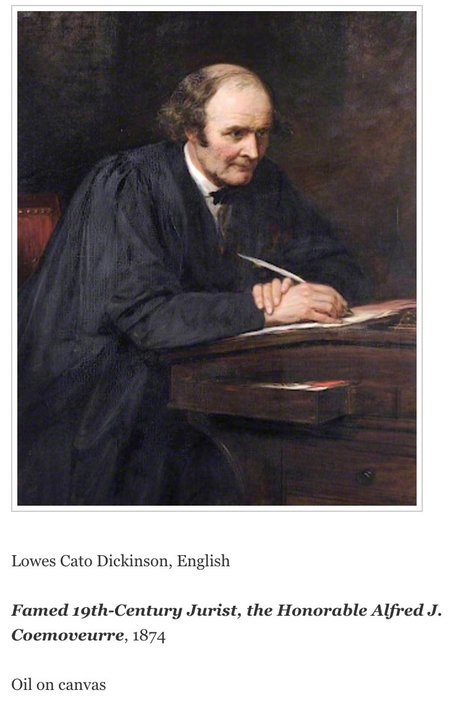
I’m guessing the guy looks like a creepy weirdo and the captionist is making a reference a childhood joke of his where you give a fancy sounding name but the last name is actually a creepy phrase, in this case “come over”.
Which reminds me of another joke my grandfather used to tell: The French actress said to her American paramour who was visiting her in her dressing room: “Je t’adore” to which the American paramour said: “I did. And I locked it.”
Which is a grand sight more relevant and appealing than “Coemoveurre”.
Oh! “Comb Over”!
Yep, Comb Over.
But… is this really a comb over? Wouldn’t that be moving the longer hair from the side of his head to cover the bald area?
“But… is this really a comb over? Wouldn’t that be moving the longer hair from the side of his head to cover the bald area?”
And … isn’t that what the guy in the picture did?
That’s not at all what I think I’m seeing here, Woozy: I see longer hair growing on the right side of his head that could be clumsily combed over to the middle where here are just some wisps of hair. Maybe I’m just not getting the concept?
Wouldn’t be the first or last failed comb over attempt I’ve seen on guys who can’t admit to themselves they don’t have enough hair to pull it off.
See that stripe right over the top of the head that looks like a terrible headband? That’s a deeply failed attempt at a comb-over. It’s so unsuccessful that I’m not surprised you missed it — but that’s what it is.
You know what “CIDU” stands for today, right?
You can sometimes tell that person normally indulges in a combover but, at a specific instant in time, the hair is not combed over. Our nation’s leader has been caught in the wind a couple of times…
Not that it helps, but that’s a portrait of mathematician Arthur Cayley (1821-1895). He was known for, umm, I don’t even understand the description of what he was known for.
I am guessing this has nothing to do with it as it is not exactly the same word, but in earlier times a woman was either a femme sole or a femme couverte. The latter is a married woman (she is covered by husband) and the former is a single woman, widow or (rarely) a divorced woman – she is alone and sole.
 Comics I Don't Understand
I’m guessing the guy looks like a creepy weirdo and the captionist is making a reference a childhood joke of his where you give a fancy sounding name but the last name is actually a creepy phrase, in this case “come over”.
Which reminds me of another joke my grandfather used to tell: The French actress said to her American paramour who was visiting her in her dressing room: “Je t’adore” to which the American paramour said: “I did. And I locked it.”
Which is a grand sight more relevant and appealing than “Coemoveurre”.
Oh! “Comb Over”!
Yep, Comb Over.
But… is this really a comb over? Wouldn’t that be moving the longer hair from the side of his head to cover the bald area?
“But… is this really a comb over? Wouldn’t that be moving the longer hair from the side of his head to cover the bald area?”
And … isn’t that what the guy in the picture did?
That’s not at all what I think I’m seeing here, Woozy: I see longer hair growing on the right side of his head that could be clumsily combed over to the middle where here are just some wisps of hair. Maybe I’m just not getting the concept?
Wouldn’t be the first or last failed comb over attempt I’ve seen on guys who can’t admit to themselves they don’t have enough hair to pull it off.
See that stripe right over the top of the head that looks like a terrible headband? That’s a deeply failed attempt at a comb-over. It’s so unsuccessful that I’m not surprised you missed it — but that’s what it is.
You know what “CIDU” stands for today, right?
You can sometimes tell that person normally indulges in a combover but, at a specific instant in time, the hair is not combed over. Our nation’s leader has been caught in the wind a couple of times…
Not that it helps, but that’s a portrait of mathematician Arthur Cayley (1821-1895). He was known for, umm, I don’t even understand the description of what he was known for.
Portrait:
https://artuk.org/discover/artworks/arthur-cayley-18211895-fellow-and-mathematician-sadlerian-professor-18631895-134687
Photo, sans combover:
https://en.wikipedia.org/wiki/Arthur_Cayley
I am guessing this has nothing to do with it as it is not exactly the same word, but in earlier times a woman was either a femme sole or a femme couverte. The latter is a married woman (she is covered by husband) and the former is a single woman, widow or (rarely) a divorced woman – she is alone and sole.