The implication here seems to be that the quarter was changed to look more like a nickel.
It has???
Related
22 Comments
The quarter used to be made out of silver. but now consists of copper core covered with a 75%/25% mixture of copper and tin, which is the same composition currently used for the nickel. To someone used to silver coinage, it looks cheap, like a nickel.
I meant nickel… not tin. duh.
Presumably, Washington thinks the Quarter looks like a nickel did back in the late 1700s or early 1800s, when he would have seen them. We might have to wait for Meryl to tell us about THAT.
But the Quarter has been redesigned over 100 times in the last couple of decades. It was nice and stable for a while, then there was a year-long switch for the 1976 mintage year, then back and stable again, and then… boom! We need 56 different designs (all the statehood designs) and then when that wrapped up, the mint decided messing with quarters was fun, and we got another set of variant quarters, this time featuring national parks.
They mostly stuck with making variant quarters, but they did do a set of variant nickels, as well, for the bicentennial of Lewis & Clark’s westward journey. The penny got a redesign, but I don’t think it’s part of a variant set, that’s just what pennies look like now.
Did they change size? In the UK our various coins, like the 50p and the 10p pieces, have got smaller and lighter over recent years. And the modern decimal penny is a tiny thing compared to the massive pre-decimal pennies that used to wear holes in my shorts in my pre-teen years (I turned 13 a month after decimalisation in 1971).
“Did they change size?”
No. There’s a tremendous install base of various things that depend on the size and weight of the coins. Vending machines, parking meters, coin-sorting machines in banks and grocery stores. Everyone that has such a device would be opposed to changing the size or weight of the coinage. To a smaller extent, the blind folks tend to prefer that things not needlessly change, either.
On the other hand, we’ve been through a couple of iterations of dollar coins… Eisenhower, Susan B. Anthony, Sacajawea. AFAIK, the only real use Eisenhower dollars ever had was in Nevada slot machines. When my grandmother would return from a trip to Reno, she’d bring back a bunch of Eisenhower dollars for the various grandchildren. The Susan B. Anthony dollar suffered from being almost the same size and weight as a quarter, and a giant installed base of cash register drawer that had no bin for dollar coins. Sacajawea or “golden dollars” are taken and given as change in the vending machines in the post offices, but aren’t really popular much of anywhere.
Canada had more success introducing dollar coins (and also two-dollar coins). The U.S. is… more subject to inertia.
Ah, Susan B. Anthony! That coin helped me be one of the winners of the Illinois Liars Contest a few years ago.
I claimed to be the world’s worst liar. To demonstrate, I held up a Susan B. Anthony dollar coin, and asked what I was holding up. The audience said “a quarter”. I then gave the dollar coin to a woman in the front row, and said. “This proves I am the worst liar in the world. I have just passed off a dollar coin as a quarter!”
The light rail system here gives dollar coins in change from larger bills, or at least did last time I rode it some years ago. Some vending machines were set up to take the Anthony dollar, and the Sacajawea dollar was designed to be compatible.
George Washington would not have been familiar with a nickel: the 5 cent coin of the early U.S. was a small silver coin called a half dime. Due to a push by nickel lobbyists in the 1860s, the US introduced 3c and 5c coins made from nickel. The half-dime stuck around for another several years but was eventually dropped in favor of the larger-sized 5c nickel coin. People called the new coin a “nickel” to differentiate it from the silver half-dime and the name stuck…
“George Washington would not have been familiar with a nickel:”
This isn’t George Washington. This is apparition imagined by Arlo..
The UK stopped having a pound note & changed to a coin in 1988. That single-metal milled-edge round coin was replaced last year by a bi-metallic 12-sided half-milled half-plain object with an iSIS in it (Integrated Secure Identification Systems, acc to WikiP). It did take a bit of changing the nation’s coin devices.
So, citizens of the UK went through the torment of decimalization, and didn’t convert to the euro. Surely, though, a good number of euros found their way into circulation. How did the population take to euros? Did businesses regularly take them as payment, or did they treat it as similar to, but not quite the same as, “real” money?
@ JP – Euros are not in circulation anywhere in Great Britain, unless you are at a bank or a major airport (some shops at European airports will make on the spot conversions, but only for major currencies, and the rates are less than favorable).
“This isn’t George Washington. This is apparition imagined by Arlo..”
I agree. And since the apparition has presumably has been around since George’s death, it knows what “real” silver quarters ought to look like, and what a nickel looks like. I still think, as I said in my first response, that this is about the metal the coin is minted in and not the actual design.
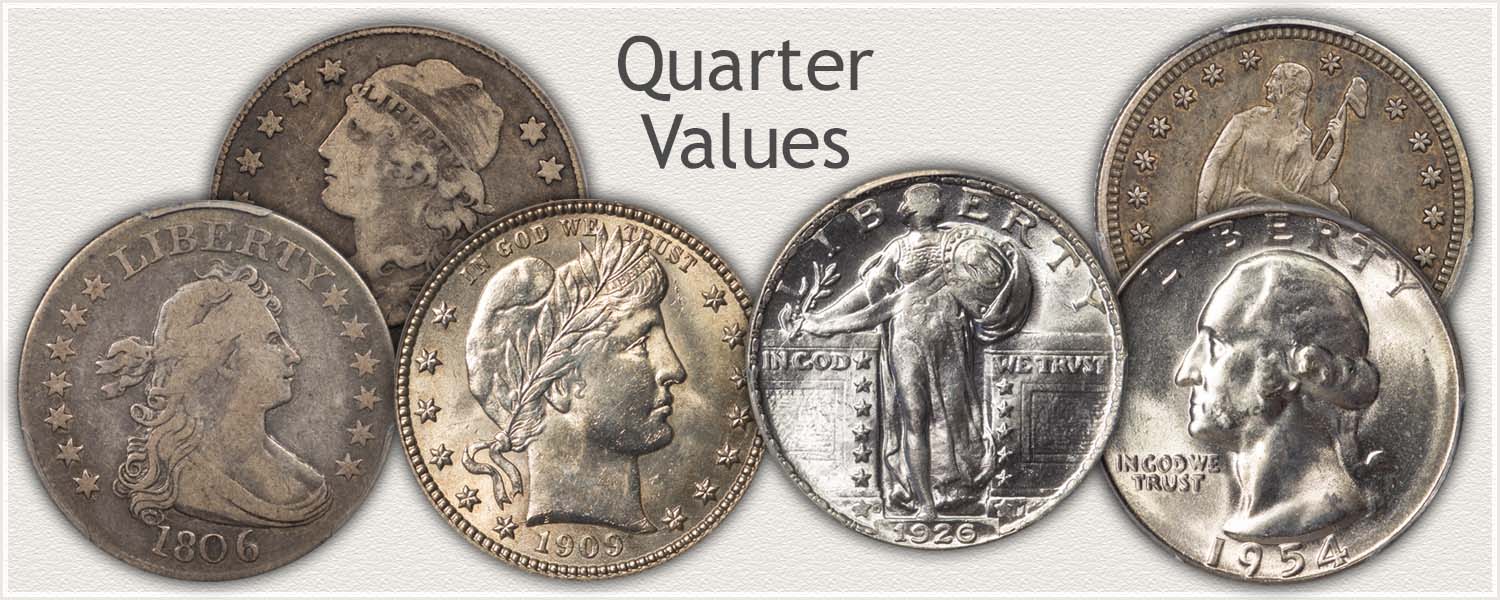
I thought the early quarters were larger, but it appears that even the first 1796 quarter dollar was nearly the same size.
Having gone directly from Germany to England last June, I can safely say that the Euro is as much a foreign currency in England as the dollar is.
A “Monty” comic many years ago had a character trying to sell a dollar bill that was so old that Washington was a teenager.
“Canada had more success introducing dollar coins (and also two-dollar coins). The U.S. is… more subject to inertia”
Success or not, the secret was to stop printing $1, and later $2, bills ($2s were not “bad luck” in Canada, except parts of the prairies). The paper versions soon wore out, leaving the “loonie” ($1 – most versions depict a loon on the reverse) and “toonie” ($2 – “the Queen with a bear behind”) to weigh us down until we can waddle home and throw them in a jar. If paper currency were an alternative, the loonie would likely be no more popular than U.S. dollar coins.
“Success or not”
What you didn’t have was mobs of people going to the legislature, and throwing handfuls of coins at the legislators, literally howling in protest. My contrymen DID do that with Susan B. Anthony dollars, and that’s why we still have $1 bills, despite the fact that replacing the bills with coins would have saved the mint huge piles of money. It costs more to strike a coin than to print a bill, but the coin LASTS.
We were also going to be converted over to the metric system, fully, by 1985. The process was underway… all the cars had Km/h on the speedometers, the food in the stores were all labeled in liters as well as fluid ounces. Then Reagan was elected, and announced a “pause” in metric conversion. It’s not that individual U.S. Americans are capable of being more resistant to government… you guys have the Freemen on the Land, we have Sovereign Citizens… but there’s just more of us. And, we didn’t have dollar coins when we were little, so no amount of logic can make a dollar coin something we want to have. $2 bills were never more than novelties, but there’s no drawer for them in any of the cash registers in any of the stores. So the stores don’t want them. If the stores don’t want them, why would we? Dollar coins have the same problem… no bin for them in the cash register, AND most vending machines won’t accept a dollar coin. The only reasons to carry coins is to make change for a dollar (not much call for that except for banks and merchants) or put it in a vending machine.
I remember a time when the opposite problem occurred… transit fares were paid in coin from time immemorial, because they were low. “The man who never returned” from the MTA was stuck over a raise in fare of a nickel. But, locally, the transit fare rose from 85 cents to 90 cents, and what happened caught the transit agency by surprise. People started paying their fares with dollar bills. The fareboxes and counting rooms at headquarters were set up to take coins, and had no provisions to handle bills. The fareboxes would jam with wadded-up dollar bills, and literally stacks and piles of dollar bills were in the counting room because they didn’t have a way to count and store them.
Now, they’re switching to a new system where you have a transit-specific debit card, and load it with a machine at the train stops or online. The writing’s on the wall for cash money. That’s why the futurists started playing with cryptocurrency.
Okay – Neither of us knew that quarter dollars came in as early as 1796 learn something new every day. The reason we were surprised is that there is no purpose to it.
If I have posted this before – forgive me –
Money used to be different. Coins which is what was considered “real money” were worth their weight in the metal in them. When one bought something and paid for it with a coin, the coin was weighed – to make sure no metal had been slivered off of it (milled edge coins are started to come in – such as the Spanish milled dollar so this cannot be as easily done). If one was to buy something worth a quarter of a pound (or shilling, etc) the coin would be cut in half and then in half again and the quarter of the coin kept and the remaining 3/4 of the coin returned to the purchaser. For a half the value of the coin, of course the coin would only be cut in half. If only 1/8 of the value of the coin was needed it, the quarter would be again cut in half into 2 “bits” – hence why a quarter was called “2 bits” through at least the 1960s here. (“Shave and a hair cut – 2 bits”)
To stop the colonists from doing business directly with other countries there was very little British coinage sent to the colonies. Colonists would use whatever coins came through – French Louis, Dutch Thalers, Spanish dollars (which take the name “pieces of 8” from being cut into bits). Since the value of the coin was based on the metal in it this was not a problem. There were conversion charts of what each coin was worth in comparison to the others.
To further facilitate commerce within a colony, the colonies would each issue paper money. Money from one colony was generally not accepted in another colony – if one only had money from their home colony while in another colony one would have to find a merchant or someone else who did business in their home colony to exchange it for them. North Carolina was known for having their money counterfeited.
The colony issued new money each year and retired the old money – which was suppose to be destroyed, but was not always destroyed as some still exists and there was a scandal in VA once of money not being destroyed. The expected expenses of the government of the colony (in colonies which had a state religion the religion was part of the government and the expenses of same were included) and paper money would be issued in the amount of same. During the year the money would circulate in the colony – colonists confident that at the end of the year when they had to pay their taxes to the colony, its paper money would be accepted in payment – which is the only backing the money had to give it value.
Taxes, at least in VA, were paid per worker in the household. All men – white or black were each a “tithable”. All black women were “tithables” – white women were not. I forget if black children were tithables – or at which age they became so.
I am not sure when coins stopped being worth their weight of their metal and switched to a fixed price – probably when the metal in the coins changed.
A few years back the nickels were redesigned. There is now a large,off center portrait of Thomas Jefferson on the nickel. Perhaps this is what Arlo is talking about – one larger faced “old guy” looks like another?
“I am not sure when coins stopped being worth their weight of their metal”
Well, 1933 was a big change in coinage. I know this because of the 1933 Double Eagle $20 coin. They made a bunch of them, then decided that money was worth money because they were backed by the full faith and credit of the United States, and NOT because they were made of precious metals. So the 1933 Double Eagle $20 coins were not distributed to the public. One was given as a gift to a foreign dignitary, and all the rest were destroyed. Except that they were NOT all destroyed, and a cache of them was discovered some 60 or 70 years later. The value for the one existing Double Eagle coin goes far beyond the value of the gold in it, it’s worth a lot because it is the rarest coin, and only one person can have one in their coin collection. So if you have a dozen of them in your safe-deposit box, they’re not worth 12 times what the value of the one is (and the one does get sold at auction from time to time.).
So the family that has the coins contacts the Treasury and asks them to verify that the coins are real and not counterfeit. “Sure”, says the Treasury, “send them over and we’ll take a look.” The coins were inspected, and the Treasury says “yep, these are real, genuine 1933 Double Eagle coins. Which means they’re stolen property, and you can’t have them back. Your government thanks you. Have a nice day.” (I made up that last part). Much legal expense was incurred, and over the course of the case both the government and the family won (the government won the final round, I think.) (The suspicion is that a Treasury official was bribed back in the day to issue some coins early to a dealer, who held them in secret for the rest of his life.)

 Comics I Don't Understand
The quarter used to be made out of silver. but now consists of copper core covered with a 75%/25% mixture of copper and tin, which is the same composition currently used for the nickel. To someone used to silver coinage, it looks cheap, like a nickel.
I meant nickel… not tin. duh.
Presumably, Washington thinks the Quarter looks like a nickel did back in the late 1700s or early 1800s, when he would have seen them. We might have to wait for Meryl to tell us about THAT.
But the Quarter has been redesigned over 100 times in the last couple of decades. It was nice and stable for a while, then there was a year-long switch for the 1976 mintage year, then back and stable again, and then… boom! We need 56 different designs (all the statehood designs) and then when that wrapped up, the mint decided messing with quarters was fun, and we got another set of variant quarters, this time featuring national parks.
They mostly stuck with making variant quarters, but they did do a set of variant nickels, as well, for the bicentennial of Lewis & Clark’s westward journey. The penny got a redesign, but I don’t think it’s part of a variant set, that’s just what pennies look like now.
Did they change size? In the UK our various coins, like the 50p and the 10p pieces, have got smaller and lighter over recent years. And the modern decimal penny is a tiny thing compared to the massive pre-decimal pennies that used to wear holes in my shorts in my pre-teen years (I turned 13 a month after decimalisation in 1971).
“Did they change size?”
No. There’s a tremendous install base of various things that depend on the size and weight of the coins. Vending machines, parking meters, coin-sorting machines in banks and grocery stores. Everyone that has such a device would be opposed to changing the size or weight of the coinage. To a smaller extent, the blind folks tend to prefer that things not needlessly change, either.
On the other hand, we’ve been through a couple of iterations of dollar coins… Eisenhower, Susan B. Anthony, Sacajawea. AFAIK, the only real use Eisenhower dollars ever had was in Nevada slot machines. When my grandmother would return from a trip to Reno, she’d bring back a bunch of Eisenhower dollars for the various grandchildren. The Susan B. Anthony dollar suffered from being almost the same size and weight as a quarter, and a giant installed base of cash register drawer that had no bin for dollar coins. Sacajawea or “golden dollars” are taken and given as change in the vending machines in the post offices, but aren’t really popular much of anywhere.
Canada had more success introducing dollar coins (and also two-dollar coins). The U.S. is… more subject to inertia.
Ah, Susan B. Anthony! That coin helped me be one of the winners of the Illinois Liars Contest a few years ago.
I claimed to be the world’s worst liar. To demonstrate, I held up a Susan B. Anthony dollar coin, and asked what I was holding up. The audience said “a quarter”. I then gave the dollar coin to a woman in the front row, and said. “This proves I am the worst liar in the world. I have just passed off a dollar coin as a quarter!”
The light rail system here gives dollar coins in change from larger bills, or at least did last time I rode it some years ago. Some vending machines were set up to take the Anthony dollar, and the Sacajawea dollar was designed to be compatible.
George Washington would not have been familiar with a nickel: the 5 cent coin of the early U.S. was a small silver coin called a half dime. Due to a push by nickel lobbyists in the 1860s, the US introduced 3c and 5c coins made from nickel. The half-dime stuck around for another several years but was eventually dropped in favor of the larger-sized 5c nickel coin. People called the new coin a “nickel” to differentiate it from the silver half-dime and the name stuck…
“George Washington would not have been familiar with a nickel:”
This isn’t George Washington. This is apparition imagined by Arlo..
The UK stopped having a pound note & changed to a coin in 1988. That single-metal milled-edge round coin was replaced last year by a bi-metallic 12-sided half-milled half-plain object with an iSIS in it (Integrated Secure Identification Systems, acc to WikiP). It did take a bit of changing the nation’s coin devices.
So, citizens of the UK went through the torment of decimalization, and didn’t convert to the euro. Surely, though, a good number of euros found their way into circulation. How did the population take to euros? Did businesses regularly take them as payment, or did they treat it as similar to, but not quite the same as, “real” money?
@ JP – Euros are not in circulation anywhere in Great Britain, unless you are at a bank or a major airport (some shops at European airports will make on the spot conversions, but only for major currencies, and the rates are less than favorable).
“This isn’t George Washington. This is apparition imagined by Arlo..”
I agree. And since the apparition has presumably has been around since George’s death, it knows what “real” silver quarters ought to look like, and what a nickel looks like. I still think, as I said in my first response, that this is about the metal the coin is minted in and not the actual design.
I thought the early quarters were larger, but it appears that even the first 1796 quarter dollar was nearly the same size.
Having gone directly from Germany to England last June, I can safely say that the Euro is as much a foreign currency in England as the dollar is.
A “Monty” comic many years ago had a character trying to sell a dollar bill that was so old that Washington was a teenager.
“Canada had more success introducing dollar coins (and also two-dollar coins). The U.S. is… more subject to inertia”
Success or not, the secret was to stop printing $1, and later $2, bills ($2s were not “bad luck” in Canada, except parts of the prairies). The paper versions soon wore out, leaving the “loonie” ($1 – most versions depict a loon on the reverse) and “toonie” ($2 – “the Queen with a bear behind”) to weigh us down until we can waddle home and throw them in a jar. If paper currency were an alternative, the loonie would likely be no more popular than U.S. dollar coins.
“Success or not”
What you didn’t have was mobs of people going to the legislature, and throwing handfuls of coins at the legislators, literally howling in protest. My contrymen DID do that with Susan B. Anthony dollars, and that’s why we still have $1 bills, despite the fact that replacing the bills with coins would have saved the mint huge piles of money. It costs more to strike a coin than to print a bill, but the coin LASTS.
We were also going to be converted over to the metric system, fully, by 1985. The process was underway… all the cars had Km/h on the speedometers, the food in the stores were all labeled in liters as well as fluid ounces. Then Reagan was elected, and announced a “pause” in metric conversion. It’s not that individual U.S. Americans are capable of being more resistant to government… you guys have the Freemen on the Land, we have Sovereign Citizens… but there’s just more of us. And, we didn’t have dollar coins when we were little, so no amount of logic can make a dollar coin something we want to have. $2 bills were never more than novelties, but there’s no drawer for them in any of the cash registers in any of the stores. So the stores don’t want them. If the stores don’t want them, why would we? Dollar coins have the same problem… no bin for them in the cash register, AND most vending machines won’t accept a dollar coin. The only reasons to carry coins is to make change for a dollar (not much call for that except for banks and merchants) or put it in a vending machine.
I remember a time when the opposite problem occurred… transit fares were paid in coin from time immemorial, because they were low. “The man who never returned” from the MTA was stuck over a raise in fare of a nickel. But, locally, the transit fare rose from 85 cents to 90 cents, and what happened caught the transit agency by surprise. People started paying their fares with dollar bills. The fareboxes and counting rooms at headquarters were set up to take coins, and had no provisions to handle bills. The fareboxes would jam with wadded-up dollar bills, and literally stacks and piles of dollar bills were in the counting room because they didn’t have a way to count and store them.
Now, they’re switching to a new system where you have a transit-specific debit card, and load it with a machine at the train stops or online. The writing’s on the wall for cash money. That’s why the futurists started playing with cryptocurrency.
Okay – Neither of us knew that quarter dollars came in as early as 1796 learn something new every day. The reason we were surprised is that there is no purpose to it.
If I have posted this before – forgive me –
Money used to be different. Coins which is what was considered “real money” were worth their weight in the metal in them. When one bought something and paid for it with a coin, the coin was weighed – to make sure no metal had been slivered off of it (milled edge coins are started to come in – such as the Spanish milled dollar so this cannot be as easily done). If one was to buy something worth a quarter of a pound (or shilling, etc) the coin would be cut in half and then in half again and the quarter of the coin kept and the remaining 3/4 of the coin returned to the purchaser. For a half the value of the coin, of course the coin would only be cut in half. If only 1/8 of the value of the coin was needed it, the quarter would be again cut in half into 2 “bits” – hence why a quarter was called “2 bits” through at least the 1960s here. (“Shave and a hair cut – 2 bits”)
To stop the colonists from doing business directly with other countries there was very little British coinage sent to the colonies. Colonists would use whatever coins came through – French Louis, Dutch Thalers, Spanish dollars (which take the name “pieces of 8” from being cut into bits). Since the value of the coin was based on the metal in it this was not a problem. There were conversion charts of what each coin was worth in comparison to the others.
To further facilitate commerce within a colony, the colonies would each issue paper money. Money from one colony was generally not accepted in another colony – if one only had money from their home colony while in another colony one would have to find a merchant or someone else who did business in their home colony to exchange it for them. North Carolina was known for having their money counterfeited.
The colony issued new money each year and retired the old money – which was suppose to be destroyed, but was not always destroyed as some still exists and there was a scandal in VA once of money not being destroyed. The expected expenses of the government of the colony (in colonies which had a state religion the religion was part of the government and the expenses of same were included) and paper money would be issued in the amount of same. During the year the money would circulate in the colony – colonists confident that at the end of the year when they had to pay their taxes to the colony, its paper money would be accepted in payment – which is the only backing the money had to give it value.
Taxes, at least in VA, were paid per worker in the household. All men – white or black were each a “tithable”. All black women were “tithables” – white women were not. I forget if black children were tithables – or at which age they became so.
I am not sure when coins stopped being worth their weight of their metal and switched to a fixed price – probably when the metal in the coins changed.
A few years back the nickels were redesigned. There is now a large,off center portrait of Thomas Jefferson on the nickel. Perhaps this is what Arlo is talking about – one larger faced “old guy” looks like another?
“I am not sure when coins stopped being worth their weight of their metal”
Well, 1933 was a big change in coinage. I know this because of the 1933 Double Eagle $20 coin. They made a bunch of them, then decided that money was worth money because they were backed by the full faith and credit of the United States, and NOT because they were made of precious metals. So the 1933 Double Eagle $20 coins were not distributed to the public. One was given as a gift to a foreign dignitary, and all the rest were destroyed. Except that they were NOT all destroyed, and a cache of them was discovered some 60 or 70 years later. The value for the one existing Double Eagle coin goes far beyond the value of the gold in it, it’s worth a lot because it is the rarest coin, and only one person can have one in their coin collection. So if you have a dozen of them in your safe-deposit box, they’re not worth 12 times what the value of the one is (and the one does get sold at auction from time to time.).
So the family that has the coins contacts the Treasury and asks them to verify that the coins are real and not counterfeit. “Sure”, says the Treasury, “send them over and we’ll take a look.” The coins were inspected, and the Treasury says “yep, these are real, genuine 1933 Double Eagle coins. Which means they’re stolen property, and you can’t have them back. Your government thanks you. Have a nice day.” (I made up that last part). Much legal expense was incurred, and over the course of the case both the government and the family won (the government won the final round, I think.) (The suspicion is that a Treasury official was bribed back in the day to issue some coins early to a dealer, who held them in secret for the rest of his life.)
Thank you James Pollock