What more could you ask for? (What else would a robot sketch artist use?)
And the suspect may have been a more squared-off design than the newscaster bot, and the etch-a-sketch is the perfect medium for capturing his appearance.
This is really more of a Zach Weinersmith joke.
The sketch may be accurate, despite being drawn on an Etch-a-sketch, because the suspect is a robot. Because Etch a Sketches are great for drawing perfect vertical lines, perfect horizontal lines, and totally spastic curves and diagonals.
For diagonals, try stretching a wide rubber band around both knobs. To change direction, loop the rubber band as a figure-8. It’s not perfect, but it used to work pretty well, if the rubber band was the correct size.
P.S. One of those knobs in the comic could have been a perfect hiding place for the eyeball Easter egg.
I think the joke would have worked better if the newsbot was also made entirely of straight lines, but he’s covered in curves.
Etch-a-sketches were always supposed to be associated (rightly or wrongly) with high tech automation. They look like televisions (they epitome of technology at the time) and they perform by controlling a finite two orthogonal variables in multiple of combinations (a basic concept of representation theory) which are not controlled directly but inorganically through dials. So a high tech world of robots would use etch-a-sketches as sketch pads.
beckoningchasm: I agree, but there’s a limited number of ways to draw a robot in straight lines, so we might have had the problem of thinking that the newsbot was the robot in the sketch.
” They look like televisions (they epitome of technology at the time)”
They do? I’ve never seen a flatscreen set with dials on it. Back in the day, televisions were as deep as they are wide. I’ve seen comparisons of Etch-a-Sketches to laptops or tablets, but not TV. If you go back to the earliest days of Etch-a-Sketch, TV’s had round screens, not square.
” So a high tech world of robots would use etch-a-sketches as sketch pads.”
FAR more likely they would use Turtle graphics. (If you don’t know what Turtle graphics are, it’s because you’re too young. Turtle graphics use a robot to draw pictures according to instructions from the user. So, to draw a square, you’d have PEN DOWN. FORWARD 100. TURN RIGHT. FORWARD 100. TURN RIGHT. FORWARD 100. TURN RIGHT. FORWARD 100. PEN UP.
Unlike an Etch-a-Sketch, Turtle graphics can do diagonals, and have disconnected line segments. The theory was that small children would get interested in Turtle graphics at a basic scale, and then learn more and more complicated programming to create more intricate drawings. Most people draw a few squares and called it good, from my experience, although there are some people who got really good at drawing with a Turtle.
” If you go back to the earliest days of Etch-a-Sketch, TV’s had round screens, not square.”
The Etch-a-sketch was first marketed in 1960. TVs were well established to be rectangular by then.
” I’ve seen comparisons of Etch-a-Sketches to laptops or tablets, but not TV” Then you simply weren’t paying attention. Also you are too young. Etch-a-sketches weren’t being compared to laptops or tablets; tablets and laptops were compared to Etch-a-sketches. Seeing as neither etch a sketches nor televisions are are particularly new to people our age we never would have compared either to each other but it’s pretty clear from the design and the frame they were meant to resemble televisions (fronts).
“If you don’t know what Turtle graphics are, it’s because you’re too young.” I don’t think Turtle graphics was that well known in the early 60s or late 50’s. I never thought the turtle cursor was meant to be a robot; It always seemed like a turtle to me. Karol the Robot; (Fortran for freshman) was the programming language that used robots. Karol would pick up and put down beacons and you used simple Fortran commands to tell it to look for, pick up, and put down beacons.
I never had a problem drawing a circle with an Etch-A-Sketch. Turn the left knob slowly at first, the faster, then slow down, then do the same in reverse. Think about driving a car a very short distance: speed up then brake, then back up the same way. While doing this, do the same with the right knob but start at the highest speed. There’s your circle!
” I never thought the turtle cursor was meant to be a robot; It always seemed like a turtle to me.”
IIRC, the original turtle graphics didn’t control a cursor on a screen. It controlled an actual turtle-shaped robot that drew with pens on paper.
“The Etch-a-sketch was first marketed in 1960. TVs were well established to be rectangular by then.”
CRTs had round edges. You don’t get straight edges until flat panels became available. Did this happen in 1960?
“Etch-a-sketches weren’t being compared to laptops or tablets; tablets and laptops were compared to Etch-a-sketches.”
This relationship isn’t transitive?
” I don’t think Turtle graphics was that well known in the early 60s or late 50’s. I never thought the turtle cursor was meant to be a robot”
Turtle graphics didn’t become popular until they replaced the robot with a virtual representation on a CRT. The Turtle’s origin as a robot that produced hard copy is shown by commands such as “pen up” and “pen down”.
What Mitch4 said at first. The robot design shown is an ideal complex form to “draw” on an Etch-A-Sketch because it’s all straight horizontal and verticle lines. And diagonals and curves on that toy take a finesse that many of us were never able to master. The result was usually anything but horizontal and vertical lines coming out somewhat squiggly.
“CRTs had round edges. You don’t get straight edges until flat panels became available. Did this happen in 1960?”
” I’ve seen comparisons of Etch-a-Sketches to laptops or tablets, but not TV. ”
You also don’t think the Arlo tag applies jokes about erectile dysfunction so you aren’t you really aren’t that observant
In fact, TV was a major influence on the toy from the very beginning. Cassagnes originally named it a “L’Ecran Magique,” as it is still referred to in France today, because with its screen and two knobs, it resembled a TV set. The Ohio Art Company initially thought to keep that connection alive with the English translation of the title, “Magic Screen,” but the company changed the name to Etch A Sketch some time between January 1960 and the product’s official launch that summer. Still, the Ohio Art Company didn’t completely abandon the Etch A Sketch’s resemblance to a TV set, as you can see today.
“You think about, well, why does the Etch A Sketch look like it does today? I think that TV was really coming on. It was becoming really popular. It was the high-tech thing,” Killgallon said. “I like to think that the designers of that time took his drawing concept, said how do we make this look more like the hot, innovative thing right now, which is a TV, which is how we believe it got its look and feel today.”
(While scrounging around to find this, I came to realize how much funnier Rose is Rose was back in the day.0
“I came to realize how much funnier Rose is Rose was back in the day.”
Is there anything of which that is NOT true? Or is it just me?
“This relationship isn’t transitive?” <- word you're looking for is "symmetric".
Meanwhile, Logo (and its turtle) was invented in 1967, but there's also no viable way to use it in this cartoon. Or any cartoon, really, as the physical turtle robots are not well enough known to be recognizable.
Gee, when the search results show up on MY screen, there’s a whole bunch of TV’s with round edges. Did you see something different?
“You also don’t think the Arlo tag applies jokes about erectile dysfunction so you aren’t you really aren’t that observant”
Point to where I said anything of the sort?
” there’s also no viable way to use it in this cartoon. Or any cartoon, really, as the physical turtle robots are not well enough known to be recognizable.”
OK. Who said otherwise?
The point is Etch-a-sketches were designed to look like Television Sets.
It is inherent in the original french name “the magic screen” and in the uses of dials, the silver color, and the 3:4 proportion. And the fact that every write up of the history of the Etch-a-Sketch explicitly states they were designed to look like televisions.
The fact that 50 years later televisions would be redesigned to have flat screens that would in comparison make the older televisions curved edges more noticeable does not alter the fact that people who looked at the televisions would have viewed and described them as rectangular rather than round. Yes, they would have realized the edges were somewhat curved but that would not have be a very important or pertinent detail (or even more than barely noticeable– no-one would have called them “round”) and the rounded corners of the etch-a-sketch would have been seen as ample compensation in designing a toy meant to resemble one.
The fact that the similarity to televisions never occurred to you and that you have a compelling need to deny it only reflects on you.
Mark in Boston wrote:
“I never had a problem drawing a circle with an Etch-A-Sketch. Turn the left knob slowly at first, the faster, then slow down, then do the same in reverse. Think about driving a car a very short distance: speed up then brake, then back up the same way. While doing this, do the same with the right knob but start at the highest speed. There’s your circle!”
Wow, Mark… You make it sound so simple. Between the two of us, you definitely have the superior Etch-A-Sketch skills!
To me, using both knobs at the same time is like trying to drive two cars at the same time. Maybe both are driven for a very short distance, but it’s as if I’m parking one car, while driving the other away, at the same time. It’s not something I have a lot of experience doing.
Dave in Boston: My son recently got a Python for Dummies (or kids?) book, and I was amused to find that it had examples using a Logo emulator library in Python.
I thought Python was for dummies.
Brian: I feel like your comment is out-of-date. In recent years, Python has become the primary language for machine learning and data mining. Most of the top research papers describing a new machine learning algorithm include a GitHub link to a python library implementing the algorithm.
Did we recently have a panel comic in a bookstore with a display table of “Self-esteem for Dummies”?
I dunno, but according to Amazon, that’s a real book.
My first thought was that this was a book for someone who wanted to keep pythons (the snake; here in FL, where they’re taking over the Everglades, that thought is always first); my second thought was MONTY Python, for those who didn’t ‘get’ their jokes.
I can draw pretty well on an Etch-a-Sketch but I can barely draw at all with pencil and paper. I don’t know why. I guess limitations are liberating.
Found it! (Not on CIDU I mean.) Pardon my Planet for Saturday, Apr1l 14, 2018.
Both of these seem to be real books, but I don’t think they make the “Pardon My Planet” comic less funny.
“Brian: I feel like your comment is out-of-date.”
It was a snide comment from a long-time software engineer. Python is promoted as a language to let the masses learn programming quickly and easily. There’s nothing wrong with it. Languages are tools.
My youngest sister has been enrolled in a local non-profit program that teaches software development to non-traditional students. I helped her get started. That meant that I needed to achieve some base proficiency in Python, as that was the intro language for their courses. I knew a far bit about Python but hadn’t used it. As it is yet another C-derived language, that didn’t take long.
Looking at the depiction of the Etch-A-Sketch, I’m struck by the almost photographic accuracy. Made me wonder if it was a product placement.
@ DanV – He even drew in the Ohio Arts logo. I expected that the “squiggles” were replacements for “patent” & “pending”, but the correct words in those locations turn out to be “magic” & “screen”.
Brian: I understood the reputation of Python that you were referring to. I meant that that reputation seems out-of-date. I’m seeing more and more recent Ph.D. CS graduates for which Python is their main language of choice. And while this might be an occasion for scoffing at young whippersnappers who don’t want to deal with pointers or memory management, when Google’s AI research team is doing all their algorithms in Python, it’s clear things have changed.
I’m not arguing that Python is better or worse than other languages. Like you said, it’s just a tool. It’s more that your comment seemed like a jab at “kids with their cell phones” – sort of obsolete now that almost everyone has a cell phone.
(Although, going back to my original comment, part of the reason I got this book for my son, is that he’s 8 years old, and I didn’t want him dealing with pointers or memory management. So that’s a win for you. :) )
Well, you seem more worried about it than I, so, okay.
Not worried, I just thought it was an interesting shift. YMMV.
You can do a lot worse than Python to start off with.
(as for machine learning, it’s not that implementing algorithms directly in Python is particularly desirable, as it’s not; Python is very slow and not parallelizable. It’s that there are libraries (numpy, scipy, pytorch, etc.) with nice Python interfaces to fast and tuned building blocks, and Python turns out to be adequate for gluing these together to make research-quality implementations, and it’s not as painful as alternatives in other ways. At least sometimes. i haven’t been that impressed.)
In the early days of Perl and Python, they were known as “scripting languages” mainly because they were “lite” programming languages — that is, you could use them to read input and files, do some calculations and manipulations, and write out output. But for something more substantial, you’d need a more complex language that let you deal with pointers, like C, C++, or Java.
(I’m making generalizations here, so please don’t be too picky picking this apart.)
Fast-forward twenty-five years, and you see that so much has been added to the Perl and Python languages, that some projects are a better fit in Perl and Python than in straight C, C++, or Java. Perl and Python may still be “lite” in that they’re a bit easier to learn and program in than C, C++, and Java, but over the years they’ve had some heavyweight additions. As Winter Wallaby noted, Python can now emulate the old Logo turtle.
And today it can do so much more — it can even display graphical user interfaces (like windows and dialog boxes), once almost exclusive to the realm of the “non-lite” languages.
Scripting languages are normally ones with run-time support so the source can be interpreted without having to compile them first. That sort of drives the simplicity of the language.
It’s not that stuff has been added to Python (or Perl) — they’ve always had a lot of stuff. The difference is that with today’s hardware they run fast enough to be able to do things that once upon a time required efficient implementation.

 Comics I Don't Understand
What more could you ask for? (What else would a robot sketch artist use?)
And the suspect may have been a more squared-off design than the newscaster bot, and the etch-a-sketch is the perfect medium for capturing his appearance.
This is really more of a Zach Weinersmith joke.
The sketch may be accurate, despite being drawn on an Etch-a-sketch, because the suspect is a robot. Because Etch a Sketches are great for drawing perfect vertical lines, perfect horizontal lines, and totally spastic curves and diagonals.
For diagonals, try stretching a wide rubber band around both knobs. To change direction, loop the rubber band as a figure-8. It’s not perfect, but it used to work pretty well, if the rubber band was the correct size.
P.S. One of those knobs in the comic could have been a perfect hiding place for the eyeball Easter egg.
I think the joke would have worked better if the newsbot was also made entirely of straight lines, but he’s covered in curves.
Etch-a-sketches were always supposed to be associated (rightly or wrongly) with high tech automation. They look like televisions (they epitome of technology at the time) and they perform by controlling a finite two orthogonal variables in multiple of combinations (a basic concept of representation theory) which are not controlled directly but inorganically through dials. So a high tech world of robots would use etch-a-sketches as sketch pads.
beckoningchasm: I agree, but there’s a limited number of ways to draw a robot in straight lines, so we might have had the problem of thinking that the newsbot was the robot in the sketch.
” They look like televisions (they epitome of technology at the time)”
They do? I’ve never seen a flatscreen set with dials on it. Back in the day, televisions were as deep as they are wide. I’ve seen comparisons of Etch-a-Sketches to laptops or tablets, but not TV. If you go back to the earliest days of Etch-a-Sketch, TV’s had round screens, not square.
” So a high tech world of robots would use etch-a-sketches as sketch pads.”
FAR more likely they would use Turtle graphics. (If you don’t know what Turtle graphics are, it’s because you’re too young. Turtle graphics use a robot to draw pictures according to instructions from the user. So, to draw a square, you’d have PEN DOWN. FORWARD 100. TURN RIGHT. FORWARD 100. TURN RIGHT. FORWARD 100. TURN RIGHT. FORWARD 100. PEN UP.
Unlike an Etch-a-Sketch, Turtle graphics can do diagonals, and have disconnected line segments. The theory was that small children would get interested in Turtle graphics at a basic scale, and then learn more and more complicated programming to create more intricate drawings. Most people draw a few squares and called it good, from my experience, although there are some people who got really good at drawing with a Turtle.
” If you go back to the earliest days of Etch-a-Sketch, TV’s had round screens, not square.”
The Etch-a-sketch was first marketed in 1960. TVs were well established to be rectangular by then.
” I’ve seen comparisons of Etch-a-Sketches to laptops or tablets, but not TV” Then you simply weren’t paying attention. Also you are too young. Etch-a-sketches weren’t being compared to laptops or tablets; tablets and laptops were compared to Etch-a-sketches. Seeing as neither etch a sketches nor televisions are are particularly new to people our age we never would have compared either to each other but it’s pretty clear from the design and the frame they were meant to resemble televisions (fronts).
“If you don’t know what Turtle graphics are, it’s because you’re too young.” I don’t think Turtle graphics was that well known in the early 60s or late 50’s. I never thought the turtle cursor was meant to be a robot; It always seemed like a turtle to me. Karol the Robot; (Fortran for freshman) was the programming language that used robots. Karol would pick up and put down beacons and you used simple Fortran commands to tell it to look for, pick up, and put down beacons.
I never had a problem drawing a circle with an Etch-A-Sketch. Turn the left knob slowly at first, the faster, then slow down, then do the same in reverse. Think about driving a car a very short distance: speed up then brake, then back up the same way. While doing this, do the same with the right knob but start at the highest speed. There’s your circle!
” I never thought the turtle cursor was meant to be a robot; It always seemed like a turtle to me.”
IIRC, the original turtle graphics didn’t control a cursor on a screen. It controlled an actual turtle-shaped robot that drew with pens on paper.
“The Etch-a-sketch was first marketed in 1960. TVs were well established to be rectangular by then.”
CRTs had round edges. You don’t get straight edges until flat panels became available. Did this happen in 1960?
“Etch-a-sketches weren’t being compared to laptops or tablets; tablets and laptops were compared to Etch-a-sketches.”
This relationship isn’t transitive?
” I don’t think Turtle graphics was that well known in the early 60s or late 50’s. I never thought the turtle cursor was meant to be a robot”
Turtle graphics didn’t become popular until they replaced the robot with a virtual representation on a CRT. The Turtle’s origin as a robot that produced hard copy is shown by commands such as “pen up” and “pen down”.
What Mitch4 said at first. The robot design shown is an ideal complex form to “draw” on an Etch-A-Sketch because it’s all straight horizontal and verticle lines. And diagonals and curves on that toy take a finesse that many of us were never able to master. The result was usually anything but horizontal and vertical lines coming out somewhat squiggly.
“CRTs had round edges. You don’t get straight edges until flat panels became available. Did this happen in 1960?”
Um, no. It happens much earlier:
https://www.google.com/search?client=firefox-b-1&biw=1366&bih=611&tbm=isch&sa=1&ei=u2-BW_SXC4PUjwScga5o&q=60s+television+sets&oq=60s+television+sets&gs_l=img.3…61578.62355.0.62575.5.5.0.0.0.0.124.548.1j4.5.0….0…1c.1.64.img..0.4.448…0j0i30k1j0i24k1.0.CYi_FpO6_pQ
” I’ve seen comparisons of Etch-a-Sketches to laptops or tablets, but not TV. ”
You also don’t think the Arlo tag applies jokes about erectile dysfunction so you aren’t you really aren’t that observant
In fact, TV was a major influence on the toy from the very beginning. Cassagnes originally named it a “L’Ecran Magique,” as it is still referred to in France today, because with its screen and two knobs, it resembled a TV set. The Ohio Art Company initially thought to keep that connection alive with the English translation of the title, “Magic Screen,” but the company changed the name to Etch A Sketch some time between January 1960 and the product’s official launch that summer. Still, the Ohio Art Company didn’t completely abandon the Etch A Sketch’s resemblance to a TV set, as you can see today.
“You think about, well, why does the Etch A Sketch look like it does today? I think that TV was really coming on. It was becoming really popular. It was the high-tech thing,” Killgallon said. “I like to think that the designers of that time took his drawing concept, said how do we make this look more like the hot, innovative thing right now, which is a TV, which is how we believe it got its look and feel today.”
—-
https://www.techtimes.com/articles/67257/20150710/etch-a-sketch-history.htm
http://dilbert.com/strip/1995-04-03
https://www.gocomics.com/roseisrose/1986/10/07
(While scrounging around to find this, I came to realize how much funnier Rose is Rose was back in the day.0
“I came to realize how much funnier Rose is Rose was back in the day.”
Is there anything of which that is NOT true? Or is it just me?
“This relationship isn’t transitive?” <- word you're looking for is "symmetric".
Meanwhile, Logo (and its turtle) was invented in 1967, but there's also no viable way to use it in this cartoon. Or any cartoon, really, as the physical turtle robots are not well enough known to be recognizable.
“Um, no. It happens much earlier:
(https://www.google.com/search)
Gee, when the search results show up on MY screen, there’s a whole bunch of TV’s with round edges. Did you see something different?
“You also don’t think the Arlo tag applies jokes about erectile dysfunction so you aren’t you really aren’t that observant”
Point to where I said anything of the sort?
” there’s also no viable way to use it in this cartoon. Or any cartoon, really, as the physical turtle robots are not well enough known to be recognizable.”
OK. Who said otherwise?
The point is Etch-a-sketches were designed to look like Television Sets.
It is inherent in the original french name “the magic screen” and in the uses of dials, the silver color, and the 3:4 proportion. And the fact that every write up of the history of the Etch-a-Sketch explicitly states they were designed to look like televisions.
The fact that 50 years later televisions would be redesigned to have flat screens that would in comparison make the older televisions curved edges more noticeable does not alter the fact that people who looked at the televisions would have viewed and described them as rectangular rather than round. Yes, they would have realized the edges were somewhat curved but that would not have be a very important or pertinent detail (or even more than barely noticeable– no-one would have called them “round”) and the rounded corners of the etch-a-sketch would have been seen as ample compensation in designing a toy meant to resemble one.
The fact that the similarity to televisions never occurred to you and that you have a compelling need to deny it only reflects on you.
Mark in Boston wrote:
“I never had a problem drawing a circle with an Etch-A-Sketch. Turn the left knob slowly at first, the faster, then slow down, then do the same in reverse. Think about driving a car a very short distance: speed up then brake, then back up the same way. While doing this, do the same with the right knob but start at the highest speed. There’s your circle!”
Wow, Mark… You make it sound so simple. Between the two of us, you definitely have the superior Etch-A-Sketch skills!
To me, using both knobs at the same time is like trying to drive two cars at the same time. Maybe both are driven for a very short distance, but it’s as if I’m parking one car, while driving the other away, at the same time. It’s not something I have a lot of experience doing.
Dave in Boston: My son recently got a Python for Dummies (or kids?) book, and I was amused to find that it had examples using a Logo emulator library in Python.
I thought Python was for dummies.
Brian: I feel like your comment is out-of-date. In recent years, Python has become the primary language for machine learning and data mining. Most of the top research papers describing a new machine learning algorithm include a GitHub link to a python library implementing the algorithm.
Did we recently have a panel comic in a bookstore with a display table of “Self-esteem for Dummies”?
I dunno, but according to Amazon, that’s a real book.
My first thought was that this was a book for someone who wanted to keep pythons (the snake; here in FL, where they’re taking over the Everglades, that thought is always first); my second thought was MONTY Python, for those who didn’t ‘get’ their jokes.
I can draw pretty well on an Etch-a-Sketch but I can barely draw at all with pencil and paper. I don’t know why. I guess limitations are liberating.
Found it! (Not on CIDU I mean.) Pardon my Planet for Saturday, Apr1l 14, 2018.
Try try try again
https://comicskingdom.com/pardon-my-planet/2018-04-14
And, similarly,
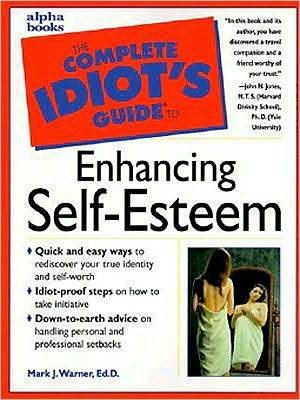
Both of these seem to be real books, but I don’t think they make the “Pardon My Planet” comic less funny.
“Brian: I feel like your comment is out-of-date.”
It was a snide comment from a long-time software engineer. Python is promoted as a language to let the masses learn programming quickly and easily. There’s nothing wrong with it. Languages are tools.
My youngest sister has been enrolled in a local non-profit program that teaches software development to non-traditional students. I helped her get started. That meant that I needed to achieve some base proficiency in Python, as that was the intro language for their courses. I knew a far bit about Python but hadn’t used it. As it is yet another C-derived language, that didn’t take long.
Looking at the depiction of the Etch-A-Sketch, I’m struck by the almost photographic accuracy. Made me wonder if it was a product placement.
@ DanV – He even drew in the Ohio Arts logo. I expected that the “squiggles” were replacements for “patent” & “pending”, but the correct words in those locations turn out to be “magic” & “screen”.
Brian: I understood the reputation of Python that you were referring to. I meant that that reputation seems out-of-date. I’m seeing more and more recent Ph.D. CS graduates for which Python is their main language of choice. And while this might be an occasion for scoffing at young whippersnappers who don’t want to deal with pointers or memory management, when Google’s AI research team is doing all their algorithms in Python, it’s clear things have changed.
I’m not arguing that Python is better or worse than other languages. Like you said, it’s just a tool. It’s more that your comment seemed like a jab at “kids with their cell phones” – sort of obsolete now that almost everyone has a cell phone.
(Although, going back to my original comment, part of the reason I got this book for my son, is that he’s 8 years old, and I didn’t want him dealing with pointers or memory management. So that’s a win for you. :) )
Well, you seem more worried about it than I, so, okay.
Not worried, I just thought it was an interesting shift. YMMV.
You can do a lot worse than Python to start off with.
(as for machine learning, it’s not that implementing algorithms directly in Python is particularly desirable, as it’s not; Python is very slow and not parallelizable. It’s that there are libraries (numpy, scipy, pytorch, etc.) with nice Python interfaces to fast and tuned building blocks, and Python turns out to be adequate for gluing these together to make research-quality implementations, and it’s not as painful as alternatives in other ways. At least sometimes. i haven’t been that impressed.)
In the early days of Perl and Python, they were known as “scripting languages” mainly because they were “lite” programming languages — that is, you could use them to read input and files, do some calculations and manipulations, and write out output. But for something more substantial, you’d need a more complex language that let you deal with pointers, like C, C++, or Java.
(I’m making generalizations here, so please don’t be too picky picking this apart.)
Fast-forward twenty-five years, and you see that so much has been added to the Perl and Python languages, that some projects are a better fit in Perl and Python than in straight C, C++, or Java. Perl and Python may still be “lite” in that they’re a bit easier to learn and program in than C, C++, and Java, but over the years they’ve had some heavyweight additions. As Winter Wallaby noted, Python can now emulate the old Logo turtle.
And today it can do so much more — it can even display graphical user interfaces (like windows and dialog boxes), once almost exclusive to the realm of the “non-lite” languages.
Scripting languages are normally ones with run-time support so the source can be interpreted without having to compile them first. That sort of drives the simplicity of the language.
It’s not that stuff has been added to Python (or Perl) — they’ve always had a lot of stuff. The difference is that with today’s hardware they run fast enough to be able to do things that once upon a time required efficient implementation.